Author: abhishek2019cs034abesit@gmail.com

  • KIS Group Forms JV with Toyota Tsusho for Biomethane Production

    KIS Group Forms JV with Toyota Tsusho for Biomethane Production

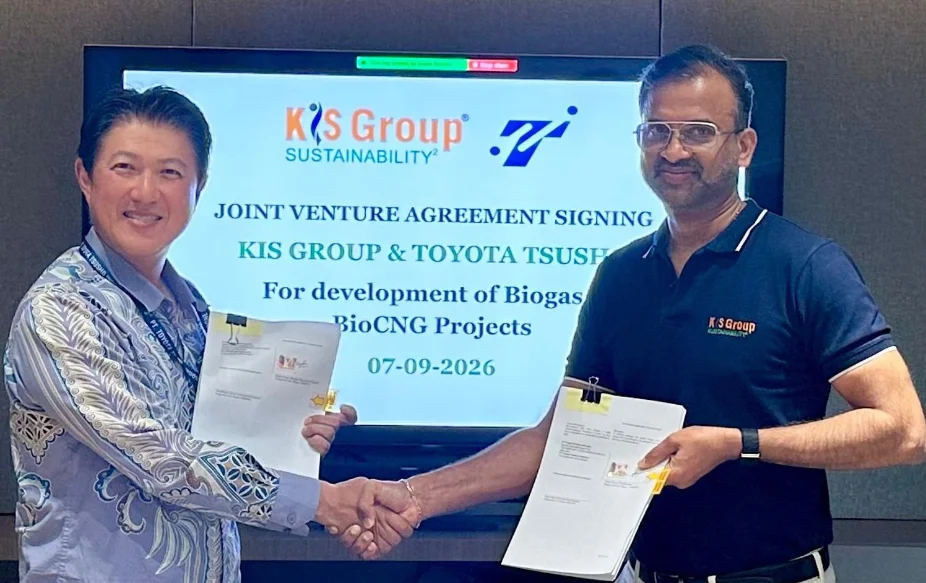
    Toyota Tsusho Corporation has established PT KIS Toyota Tsusho Biomethane Indonesia (KTBI), a joint venture with PT KIS Biofuels Indonesia (KBI), to develop a biomethane production and sales business in Indonesia. The joint venture was established in September 2026, with commercial operations targeted to begin in 2027.

    The initiative aims to tap Indonesia’s abundant biomass resources, particularly palm oil mill effluent (POME), while supporting the country’s growing demand for lower-carbon energy sources.

    Indonesia is one of the world’s leading natural gas producers and exporters. However, declining domestic gas production alongside rising demand has increased the importance of securing a stable energy supply. At the same time, Indonesia is the world’s largest palm oil producer, generating significant volumes of biomass resources such as POME.

    Against this backdrop, KTBI plans to produce high-purity biomethane by upgrading biogas generated from POME at a palm oil mill in South Sumatra Province. The biomethane will then be transported and supplied to customers, including manufacturers in West Java Province.

    The project plans to utilise the existing pipeline network operated by PT Perusahaan Gas Negara (Persero) Tbk (PGN), Indonesia’s state-owned gas company. Annual biomethane sales of approximately 150,000 MMBTU are targeted.

    The project is expected to contribute to greenhouse gas emissions reduction through two routes: preventing methane generated from POME from being released into the atmosphere and replacing conventional fossil-based fuels with biomethane.

    By using existing gas pipelines and customer-side gas-consuming equipment, the project is expected to allow industrial customers to pursue decarbonisation without requiring significant additional capital expenditure.

    KTBI also plans to obtain International Sustainability and Carbon Certification (ISCC) for the project. The certification is expected to help quantify the environmental attributes of the biomethane and improve their potential market value.

    KBI, Toyota Tsusho’s partner in the venture, is the Indonesian subsidiary of KIS Group, which develops biogas and biomethane projects internationally. According to Toyota Tsusho, the KIS Group has undertaken more than 90 biogas projects across more than 20 countries and has experience in launching Indonesia’s first commercial biomethane production and sales operation.

    The project follows a memorandum of understanding signed between Toyota Tsusho and PGN in 2023 for the commercialisation of biomethane. The planned development will also mark the first project in Indonesia to supply biomethane produced in Sumatra, where the palm oil industry is concentrated, to customers in Java, one of the country’s major manufacturing and industrial hubs.

    Toyota Tsusho will combine KBI’s biomethane expertise with its business platform and customer network in Indonesia, particularly across the manufacturing sector. The company aims to support the decarbonisation requirements of industrial customers, including Japanese companies operating in Indonesia, while contributing to the wider adoption of biomethane and the development of a more sustainable energy system.

    The planned annual sales volume of 150,000 MMBTU represents a significant step in Toyota Tsusho’s efforts to develop Indonesia’s biomethane market and establish cross-regional renewable gas supply infrastructure.
  • KIS Group Forms JV with Toyota Tsusho for Biomethane Production

    KIS Group Forms JV with Toyota Tsusho for Biomethane Production

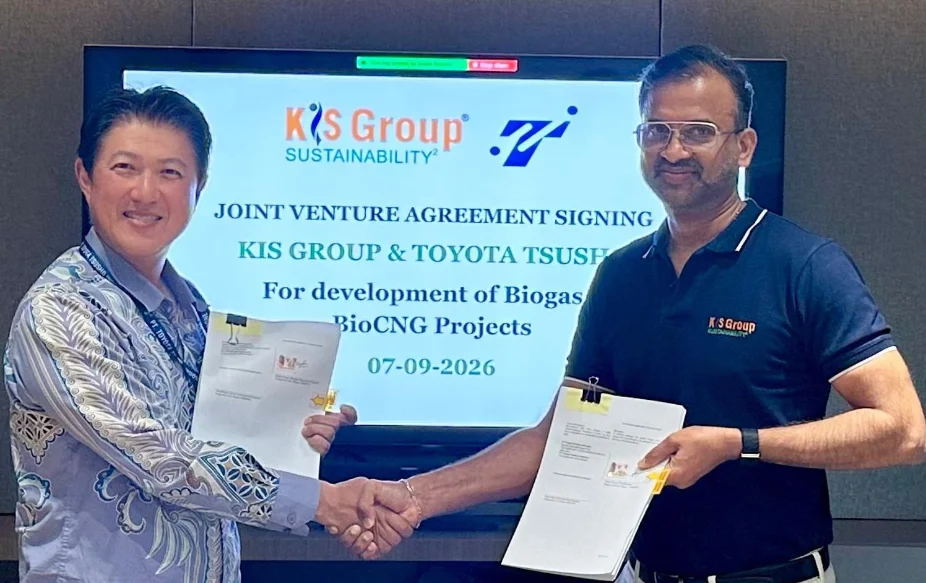
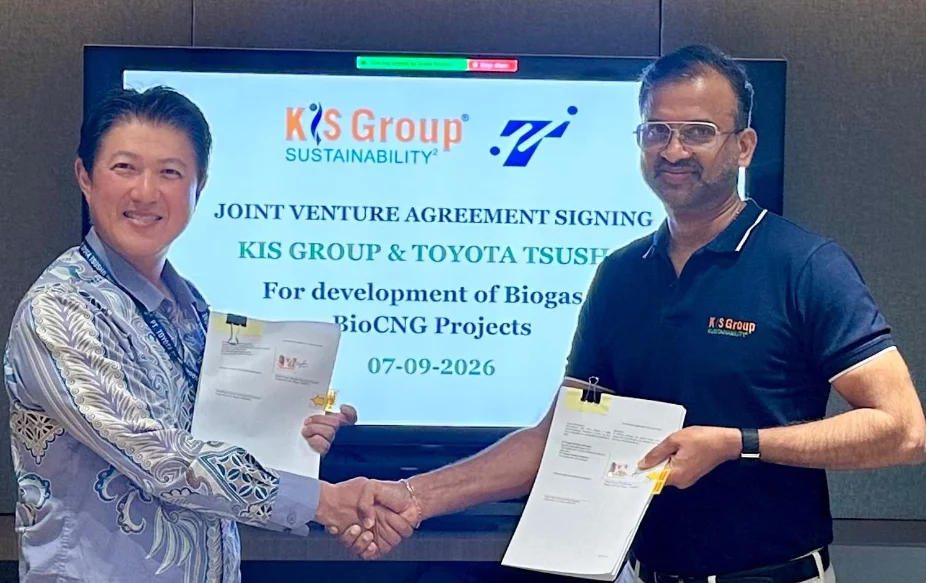
    Toyota Tsusho Corporation has established PT KIS Toyota Tsusho Biomethane Indonesia (KTBI), a joint venture with PT KIS Biofuels Indonesia (KBI), to develop a biomethane production and sales business in Indonesia. The joint venture was established in September 2026, with commercial operations targeted to begin in 2027.

    The initiative aims to tap Indonesia’s abundant biomass resources, particularly palm oil mill effluent (POME), while supporting the country’s growing demand for lower-carbon energy sources.

    Indonesia is one of the world’s leading natural gas producers and exporters. However, declining domestic gas production alongside rising demand has increased the importance of securing a stable energy supply. At the same time, Indonesia is the world’s largest palm oil producer, generating significant volumes of biomass resources such as POME.

    Against this backdrop, KTBI plans to produce high-purity biomethane by upgrading biogas generated from POME at a palm oil mill in South Sumatra Province. The biomethane will then be transported and supplied to customers, including manufacturers in West Java Province.

    The project plans to utilise the existing pipeline network operated by PT Perusahaan Gas Negara (Persero) Tbk (PGN), Indonesia’s state-owned gas company. Annual biomethane sales of approximately 150,000 MMBTU are targeted.

    The project is expected to contribute to greenhouse gas emissions reduction through two routes: preventing methane generated from POME from being released into the atmosphere and replacing conventional fossil-based fuels with biomethane.

    By using existing gas pipelines and customer-side gas-consuming equipment, the project is expected to allow industrial customers to pursue decarbonisation without requiring significant additional capital expenditure.

    KTBI also plans to obtain International Sustainability and Carbon Certification (ISCC) for the project. The certification is expected to help quantify the environmental attributes of the biomethane and improve their potential market value.

    KBI, Toyota Tsusho’s partner in the venture, is the Indonesian subsidiary of KIS Group, which develops biogas and biomethane projects internationally. According to Toyota Tsusho, the KIS Group has undertaken more than 90 biogas projects across more than 20 countries and has experience in launching Indonesia’s first commercial biomethane production and sales operation.

    The project follows a memorandum of understanding signed between Toyota Tsusho and PGN in 2023 for the commercialisation of biomethane. The planned development will also mark the first project in Indonesia to supply biomethane produced in Sumatra, where the palm oil industry is concentrated, to customers in Java, one of the country’s major manufacturing and industrial hubs.

    Toyota Tsusho will combine KBI’s biomethane expertise with its business platform and customer network in Indonesia, particularly across the manufacturing sector. The company aims to support the decarbonisation requirements of industrial customers, including Japanese companies operating in Indonesia, while contributing to the wider adoption of biomethane and the development of a more sustainable energy system.

    The planned annual sales volume of 150,000 MMBTU represents a significant step in Toyota Tsusho’s efforts to develop Indonesia’s biomethane market and establish cross-regional renewable gas supply infrastructure.
  • KIS Group Forms JV with Toyota Tsusho for Biomethane Production

    KIS Group Forms JV with Toyota Tsusho for Biomethane Production

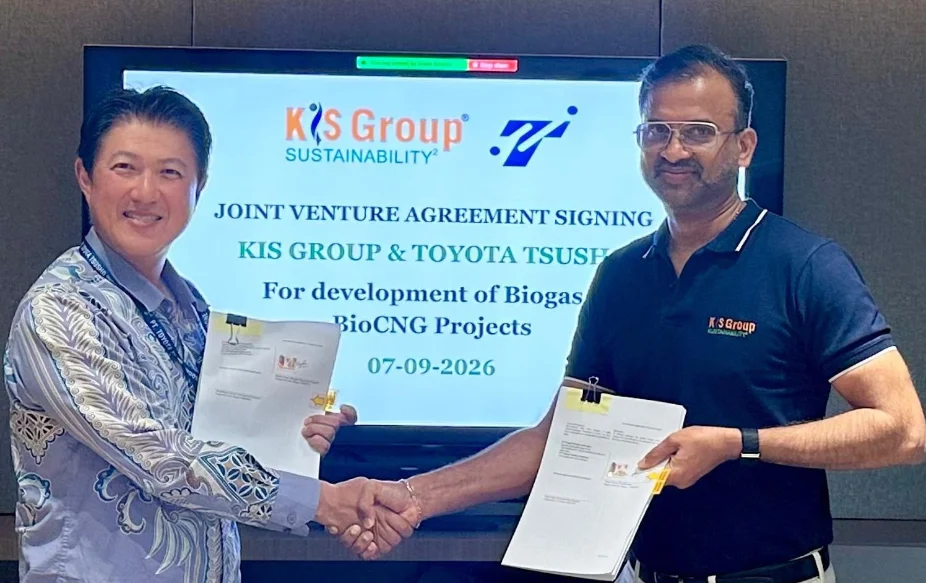
    Toyota Tsusho Corporation has established PT KIS Toyota Tsusho Biomethane Indonesia (KTBI), a joint venture with PT KIS Biofuels Indonesia (KBI), to develop a biomethane production and sales business in Indonesia. The joint venture was established in September 2026, with commercial operations targeted to begin in 2027.

    The initiative aims to tap Indonesia’s abundant biomass resources, particularly palm oil mill effluent (POME), while supporting the country’s growing demand for lower-carbon energy sources.

    Indonesia is one of the world’s leading natural gas producers and exporters. However, declining domestic gas production alongside rising demand has increased the importance of securing a stable energy supply. At the same time, Indonesia is the world’s largest palm oil producer, generating significant volumes of biomass resources such as POME.

    Against this backdrop, KTBI plans to produce high-purity biomethane by upgrading biogas generated from POME at a palm oil mill in South Sumatra Province. The biomethane will then be transported and supplied to customers, including manufacturers in West Java Province.

    The project plans to utilise the existing pipeline network operated by PT Perusahaan Gas Negara (Persero) Tbk (PGN), Indonesia’s state-owned gas company. Annual biomethane sales of approximately 150,000 MMBTU are targeted.

    The project is expected to contribute to greenhouse gas emissions reduction through two routes: preventing methane generated from POME from being released into the atmosphere and replacing conventional fossil-based fuels with biomethane.

    By using existing gas pipelines and customer-side gas-consuming equipment, the project is expected to allow industrial customers to pursue decarbonisation without requiring significant additional capital expenditure.

    KTBI also plans to obtain International Sustainability and Carbon Certification (ISCC) for the project. The certification is expected to help quantify the environmental attributes of the biomethane and improve their potential market value.

    KBI, Toyota Tsusho’s partner in the venture, is the Indonesian subsidiary of KIS Group, which develops biogas and biomethane projects internationally. According to Toyota Tsusho, the KIS Group has undertaken more than 90 biogas projects across more than 20 countries and has experience in launching Indonesia’s first commercial biomethane production and sales operation.

    The project follows a memorandum of understanding signed between Toyota Tsusho and PGN in 2023 for the commercialisation of biomethane. The planned development will also mark the first project in Indonesia to supply biomethane produced in Sumatra, where the palm oil industry is concentrated, to customers in Java, one of the country’s major manufacturing and industrial hubs.

    Toyota Tsusho will combine KBI’s biomethane expertise with its business platform and customer network in Indonesia, particularly across the manufacturing sector. The company aims to support the decarbonisation requirements of industrial customers, including Japanese companies operating in Indonesia, while contributing to the wider adoption of biomethane and the development of a more sustainable energy system.

    The planned annual sales volume of 150,000 MMBTU represents a significant step in Toyota Tsusho’s efforts to develop Indonesia’s biomethane market and establish cross-regional renewable gas supply infrastructure.
  • KIS Group Forms JV with Toyota Tsusho for Biomethane Production

    KIS Group Forms JV with Toyota Tsusho for Biomethane Production

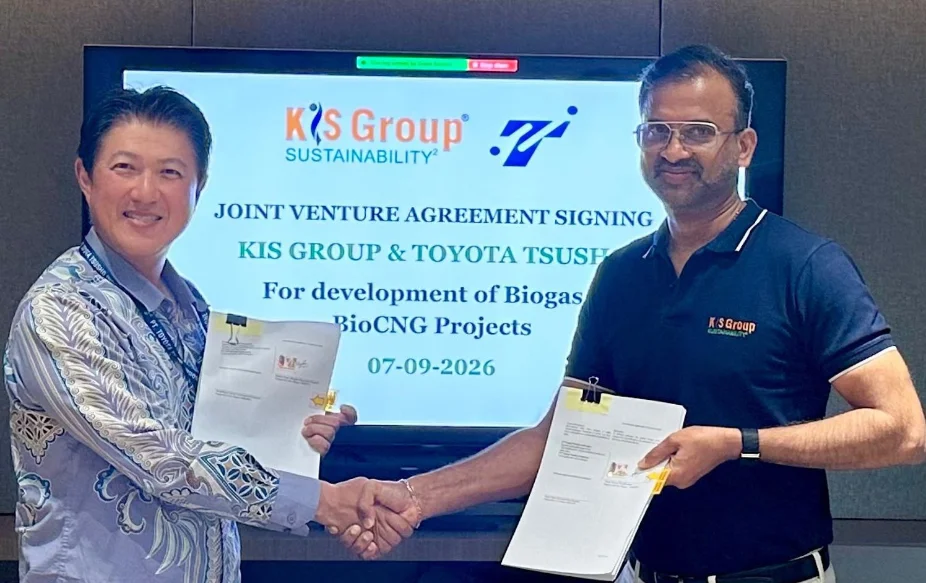
    Toyota Tsusho Corporation has established PT KIS Toyota Tsusho Biomethane Indonesia (KTBI), a joint venture with PT KIS Biofuels Indonesia (KBI), to develop a biomethane production and sales business in Indonesia. The joint venture was established in September 2026, with commercial operations targeted to begin in 2027.

    The initiative aims to tap Indonesia’s abundant biomass resources, particularly palm oil mill effluent (POME), while supporting the country’s growing demand for lower-carbon energy sources.

    Indonesia is one of the world’s leading natural gas producers and exporters. However, declining domestic gas production alongside rising demand has increased the importance of securing a stable energy supply. At the same time, Indonesia is the world’s largest palm oil producer, generating significant volumes of biomass resources such as POME.

    Against this backdrop, KTBI plans to produce high-purity biomethane by upgrading biogas generated from POME at a palm oil mill in South Sumatra Province. The biomethane will then be transported and supplied to customers, including manufacturers in West Java Province.

    The project plans to utilise the existing pipeline network operated by PT Perusahaan Gas Negara (Persero) Tbk (PGN), Indonesia’s state-owned gas company. Annual biomethane sales of approximately 150,000 MMBTU are targeted.

    The project is expected to contribute to greenhouse gas emissions reduction through two routes: preventing methane generated from POME from being released into the atmosphere and replacing conventional fossil-based fuels with biomethane.

    By using existing gas pipelines and customer-side gas-consuming equipment, the project is expected to allow industrial customers to pursue decarbonisation without requiring significant additional capital expenditure.

    KTBI also plans to obtain International Sustainability and Carbon Certification (ISCC) for the project. The certification is expected to help quantify the environmental attributes of the biomethane and improve their potential market value.

    KBI, Toyota Tsusho’s partner in the venture, is the Indonesian subsidiary of KIS Group, which develops biogas and biomethane projects internationally. According to Toyota Tsusho, the KIS Group has undertaken more than 90 biogas projects across more than 20 countries and has experience in launching Indonesia’s first commercial biomethane production and sales operation.

    The project follows a memorandum of understanding signed between Toyota Tsusho and PGN in 2023 for the commercialisation of biomethane. The planned development will also mark the first project in Indonesia to supply biomethane produced in Sumatra, where the palm oil industry is concentrated, to customers in Java, one of the country’s major manufacturing and industrial hubs.

    Toyota Tsusho will combine KBI’s biomethane expertise with its business platform and customer network in Indonesia, particularly across the manufacturing sector. The company aims to support the decarbonisation requirements of industrial customers, including Japanese companies operating in Indonesia, while contributing to the wider adoption of biomethane and the development of a more sustainable energy system.

    The planned annual sales volume of 150,000 MMBTU represents a significant step in Toyota Tsusho’s efforts to develop Indonesia’s biomethane market and establish cross-regional renewable gas supply infrastructure.

  • KIS Group Forms JV with Toyota Tsusho for Biomethane Production

    KIS Group Forms JV with Toyota Tsusho for Biomethane Production

    Toyota Tsusho Corporation has established PT KIS Toyota Tsusho Biomethane Indonesia (KTBI), a joint venture with PT KIS Biofuels Indonesia (KBI), to develop a biomethane production and sales business in Indonesia. The joint venture was established in September 2026, with commercial operations targeted to begin in 2027.

    The initiative aims to tap Indonesia’s abundant biomass resources, particularly palm oil mill effluent (POME), while supporting the country’s growing demand for lower-carbon energy sources.

    Indonesia is one of the world’s leading natural gas producers and exporters. However, declining domestic gas production alongside rising demand has increased the importance of securing a stable energy supply. At the same time, Indonesia is the world’s largest palm oil producer, generating significant volumes of biomass resources such as POME.

    Against this backdrop, KTBI plans to produce high-purity biomethane by upgrading biogas generated from POME at a palm oil mill in South Sumatra Province. The biomethane will then be transported and supplied to customers, including manufacturers in West Java Province.

    The project plans to utilise the existing pipeline network operated by PT Perusahaan Gas Negara (Persero) Tbk (PGN), Indonesia’s state-owned gas company. Annual biomethane sales of approximately 150,000 MMBTU are targeted.

    The project is expected to contribute to greenhouse gas emissions reduction through two routes: preventing methane generated from POME from being released into the atmosphere and replacing conventional fossil-based fuels with biomethane.

    By using existing gas pipelines and customer-side gas-consuming equipment, the project is expected to allow industrial customers to pursue decarbonisation without requiring significant additional capital expenditure.

    KTBI also plans to obtain International Sustainability and Carbon Certification (ISCC) for the project. The certification is expected to help quantify the environmental attributes of the biomethane and improve their potential market value.

    KBI, Toyota Tsusho’s partner in the venture, is the Indonesian subsidiary of KIS Group, which develops biogas and biomethane projects internationally. According to Toyota Tsusho, the KIS Group has undertaken more than 90 biogas projects across more than 20 countries and has experience in launching Indonesia’s first commercial biomethane production and sales operation.

    The project follows a memorandum of understanding signed between Toyota Tsusho and PGN in 2023 for the commercialisation of biomethane. The planned development will also mark the first project in Indonesia to supply biomethane produced in Sumatra, where the palm oil industry is concentrated, to customers in Java, one of the country’s major manufacturing and industrial hubs.

    Toyota Tsusho will combine KBI’s biomethane expertise with its business platform and customer network in Indonesia, particularly across the manufacturing sector. The company aims to support the decarbonisation requirements of industrial customers, including Japanese companies operating in Indonesia, while contributing to the wider adoption of biomethane and the development of a more sustainable energy system.

    The planned annual sales volume of 150,000 MMBTU represents a significant step in Toyota Tsusho’s efforts to develop Indonesia’s biomethane market and establish cross-regional renewable gas supply infrastructure.

  • KIS Group Forms JV with Toyota Tsusho for Biomethane Production

    Toyota Tsusho Corporation has established PT KIS Toyota Tsusho Biomethane Indonesia (KTBI), a joint venture with PT KIS Biofuels Indonesia (KBI), to develop a biomethane production and sales business in Indonesia. The joint venture was established in September 2026, with commercial operations targeted to begin in 2027.

    The initiative aims to tap Indonesia’s abundant biomass resources, particularly palm oil mill effluent (POME), while supporting the country’s growing demand for lower-carbon energy sources.

    Indonesia is one of the world’s leading natural gas producers and exporters. However, declining domestic gas production alongside rising demand has increased the importance of securing a stable energy supply. At the same time, Indonesia is the world’s largest palm oil producer, generating significant volumes of biomass resources such as POME.

    Against this backdrop, KTBI plans to produce high-purity biomethane by upgrading biogas generated from POME at a palm oil mill in South Sumatra Province. The biomethane will then be transported and supplied to customers, including manufacturers in West Java Province.

    The project plans to utilise the existing pipeline network operated by PT Perusahaan Gas Negara (Persero) Tbk (PGN), Indonesia’s state-owned gas company. Annual biomethane sales of approximately 150,000 MMBTU are targeted.

    The project is expected to contribute to greenhouse gas emissions reduction through two routes: preventing methane generated from POME from being released into the atmosphere and replacing conventional fossil-based fuels with biomethane.

    By using existing gas pipelines and customer-side gas-consuming equipment, the project is expected to allow industrial customers to pursue decarbonisation without requiring significant additional capital expenditure.

    KTBI also plans to obtain International Sustainability and Carbon Certification (ISCC) for the project. The certification is expected to help quantify the environmental attributes of the biomethane and improve their potential market value.

    KBI, Toyota Tsusho’s partner in the venture, is the Indonesian subsidiary of KIS Group, which develops biogas and biomethane projects internationally. According to Toyota Tsusho, the KIS Group has undertaken more than 90 biogas projects across more than 20 countries and has experience in launching Indonesia’s first commercial biomethane production and sales operation.

    The project follows a memorandum of understanding signed between Toyota Tsusho and PGN in 2023 for the commercialisation of biomethane. The planned development will also mark the first project in Indonesia to supply biomethane produced in Sumatra, where the palm oil industry is concentrated, to customers in Java, one of the country’s major manufacturing and industrial hubs.

    Toyota Tsusho will combine KBI’s biomethane expertise with its business platform and customer network in Indonesia, particularly across the manufacturing sector. The company aims to support the decarbonisation requirements of industrial customers, including Japanese companies operating in Indonesia, while contributing to the wider adoption of biomethane and the development of a more sustainable energy system.

    The planned annual sales volume of 150,000 MMBTU represents a significant step in Toyota Tsusho’s efforts to develop Indonesia’s biomethane market and establish cross-regional renewable gas supply infrastructure.

  • Tata Power Partners with Ocean Sun for 300 kWp Floating Solar Pilot in Maharashtra

    Tata Power Partners with Ocean Sun for 300 kWp Floating Solar Pilot in Maharashtra

    Tata Power has entered into a collaboration agreement with Norway-based renewable energy technology company Ocean Sun to deploy a 300 kWp floating solar pilot project at Tata Power’s Mulshi reservoir in Maharashtra. The partnership was formalised on the sidelines of the 2nd India–EFTA Prosperity Summit.

    The pilot will evaluate Ocean Sun’s proprietary membrane-based floating solar technology under Indian conditions, with a focus on its performance, reliability, cost competitiveness and scalability. The project is also expected to generate practical operating insights that could support the future deployment of the technology in India.

    Unlike conventional floating solar systems that generally use interconnected pontoon structures, Ocean Sun’s technology places photovoltaic modules on a thin, hydro-elastic membrane that floats directly on the water surface. The lightweight design is intended to simplify transportation and installation while reducing structural requirements.

    The proximity of the solar modules to the water surface may also provide a cooling effect, which could potentially support improved generation performance.

    As part of the pilot, Tata Power will compare the membrane-based system with conventional floating solar solutions across several parameters, including energy generation, capacity utilisation factor (CUF), installation methodology and time, reliability, operations and maintenance requirements, capital cost and overall commercial viability.

    The project comes against the backdrop of India’s significant potential for floating solar deployment. According to estimates from the National Institute of Solar Energy (NISE), India has more than 102 GWp of floating solar potential. Floating solar can complement ground-mounted and rooftop installations while making use of available water surfaces for renewable power generation.

    Dr Praveer Sinha, CEO and Managing Director of Tata Power, said the pilot would help generate operating insights and assess the technology’s potential to deliver reliable, scalable and cost-effective clean power solutions.

    Kristian Tørvold, CEO of Ocean Sun, highlighted India’s attractiveness as a floating solar market while noting the complexity of operating in the country. He said Tata Power’s experience and local market understanding would be important to the partnership.

    The 300 kWp Mulshi project will therefore serve primarily as a technology-validation initiative. Its findings on performance, installation, O&M and economics could help determine the potential for wider adoption of membrane-based floating solar technology in India.

  • Tata Power Partners with Ocean Sun for 300 kWp Floating Solar Pilot in Maharashtra

    Tata Power Partners with Ocean Sun for 300 kWp Floating Solar Pilot in Maharashtra

    Tata Power has entered into a collaboration agreement with Norway-based renewable energy technology company Ocean Sun to deploy a 300 kWp floating solar pilot project at Tata Power’s Mulshi reservoir in Maharashtra. The partnership was formalised on the sidelines of the 2nd India–EFTA Prosperity Summit.

    The pilot will evaluate Ocean Sun’s proprietary membrane-based floating solar technology under Indian conditions, with a focus on its performance, reliability, cost competitiveness and scalability. The project is also expected to generate practical operating insights that could support the future deployment of the technology in India.

    Unlike conventional floating solar systems that generally use interconnected pontoon structures, Ocean Sun’s technology places photovoltaic modules on a thin, hydro-elastic membrane that floats directly on the water surface. The lightweight design is intended to simplify transportation and installation while reducing structural requirements.

    The proximity of the solar modules to the water surface may also provide a cooling effect, which could potentially support improved generation performance.

    As part of the pilot, Tata Power will compare the membrane-based system with conventional floating solar solutions across several parameters, including energy generation, capacity utilisation factor (CUF), installation methodology and time, reliability, operations and maintenance requirements, capital cost and overall commercial viability.

    The project comes against the backdrop of India’s significant potential for floating solar deployment. According to estimates from the National Institute of Solar Energy (NISE), India has more than 102 GWp of floating solar potential. Floating solar can complement ground-mounted and rooftop installations while making use of available water surfaces for renewable power generation.

    Dr Praveer Sinha, CEO and Managing Director of Tata Power, said the pilot would help generate operating insights and assess the technology’s potential to deliver reliable, scalable and cost-effective clean power solutions.

    Kristian Tørvold, CEO of Ocean Sun, highlighted India’s attractiveness as a floating solar market while noting the complexity of operating in the country. He said Tata Power’s experience and local market understanding would be important to the partnership.

    The 300 kWp Mulshi project will therefore serve primarily as a technology-validation initiative. Its findings on performance, installation, O&M and economics could help determine the potential for wider adoption of membrane-based floating solar technology in India.

  • Tata Power Partners with Ocean Sun for 300 kWp Floating Solar Pilot in Maharashtra

    Tata Power Partners with Ocean Sun for 300 kWp Floating Solar Pilot in Maharashtra

    Tata Power has entered into a collaboration agreement with Norway-based renewable energy technology company Ocean Sun to deploy a 300 kWp floating solar pilot project at Tata Power’s Mulshi reservoir in Maharashtra. The partnership was formalised on the sidelines of the 2nd India–EFTA Prosperity Summit.

    The pilot will evaluate Ocean Sun’s proprietary membrane-based floating solar technology under Indian conditions, with a focus on its performance, reliability, cost competitiveness and scalability. The project is also expected to generate practical operating insights that could support the future deployment of the technology in India.

    Unlike conventional floating solar systems that generally use interconnected pontoon structures, Ocean Sun’s technology places photovoltaic modules on a thin, hydro-elastic membrane that floats directly on the water surface. The lightweight design is intended to simplify transportation and installation while reducing structural requirements.

    The proximity of the solar modules to the water surface may also provide a cooling effect, which could potentially support improved generation performance.

    As part of the pilot, Tata Power will compare the membrane-based system with conventional floating solar solutions across several parameters, including energy generation, capacity utilisation factor (CUF), installation methodology and time, reliability, operations and maintenance requirements, capital cost and overall commercial viability.

    The project comes against the backdrop of India’s significant potential for floating solar deployment. According to estimates from the National Institute of Solar Energy (NISE), India has more than 102 GWp of floating solar potential. Floating solar can complement ground-mounted and rooftop installations while making use of available water surfaces for renewable power generation.

    Dr Praveer Sinha, CEO and Managing Director of Tata Power, said the pilot would help generate operating insights and assess the technology’s potential to deliver reliable, scalable and cost-effective clean power solutions.

    Kristian Tørvold, CEO of Ocean Sun, highlighted India’s attractiveness as a floating solar market while noting the complexity of operating in the country. He said Tata Power’s experience and local market understanding would be important to the partnership.

    The 300 kWp Mulshi project will therefore serve primarily as a technology-validation initiative. Its findings on performance, installation, O&M and economics could help determine the potential for wider adoption of membrane-based floating solar technology in India.

  • Tata Power Partners with Ocean Sun for 300 kWp Floating Solar Pilot in Maharashtra

    Tata Power has entered into a collaboration agreement with Norway-based renewable energy technology company Ocean Sun to deploy a 300 kWp floating solar pilot project at Tata Power’s Mulshi reservoir in Maharashtra. The partnership was formalised on the sidelines of the 2nd India–EFTA Prosperity Summit.

    The pilot will evaluate Ocean Sun’s proprietary membrane-based floating solar technology under Indian conditions, with a focus on its performance, reliability, cost competitiveness and scalability. The project is also expected to generate practical operating insights that could support the future deployment of the technology in India.

    Unlike conventional floating solar systems that generally use interconnected pontoon structures, Ocean Sun’s technology places photovoltaic modules on a thin, hydro-elastic membrane that floats directly on the water surface. The lightweight design is intended to simplify transportation and installation while reducing structural requirements.

    The proximity of the solar modules to the water surface may also provide a cooling effect, which could potentially support improved generation performance.

    As part of the pilot, Tata Power will compare the membrane-based system with conventional floating solar solutions across several parameters, including energy generation, capacity utilisation factor (CUF), installation methodology and time, reliability, operations and maintenance requirements, capital cost and overall commercial viability.

    The project comes against the backdrop of India’s significant potential for floating solar deployment. According to estimates from the National Institute of Solar Energy (NISE), India has more than 102 GWp of floating solar potential. Floating solar can complement ground-mounted and rooftop installations while making use of available water surfaces for renewable power generation.

    Dr Praveer Sinha, CEO and Managing Director of Tata Power, said the pilot would help generate operating insights and assess the technology’s potential to deliver reliable, scalable and cost-effective clean power solutions.

    Kristian Tørvold, CEO of Ocean Sun, highlighted India’s attractiveness as a floating solar market while noting the complexity of operating in the country. He said Tata Power’s experience and local market understanding would be important to the partnership.

    The 300 kWp Mulshi project will therefore serve primarily as a technology-validation initiative. Its findings on performance, installation, O&M and economics could help determine the potential for wider adoption of membrane-based floating solar technology in India.