Author: abhishek2019cs034abesit@gmail.com

  • Solis Powers India’s Digital Infrastructure with First EverCore Energy Storage Deployment for Chennai IT Data Center

    Solis Powers India’s Digital Infrastructure with First EverCore Energy Storage Deployment for Chennai IT Data Center

    Background: Why Data Center Need Energy Storage

    As India’s digital economy expands, IT data center must manage rapidly rising electricity demand while guaranteeing uninterrupted operation. For these energy-intensive, mission-critical facilities, even a brief power interruption can disrupt essential services and threaten business continuity.

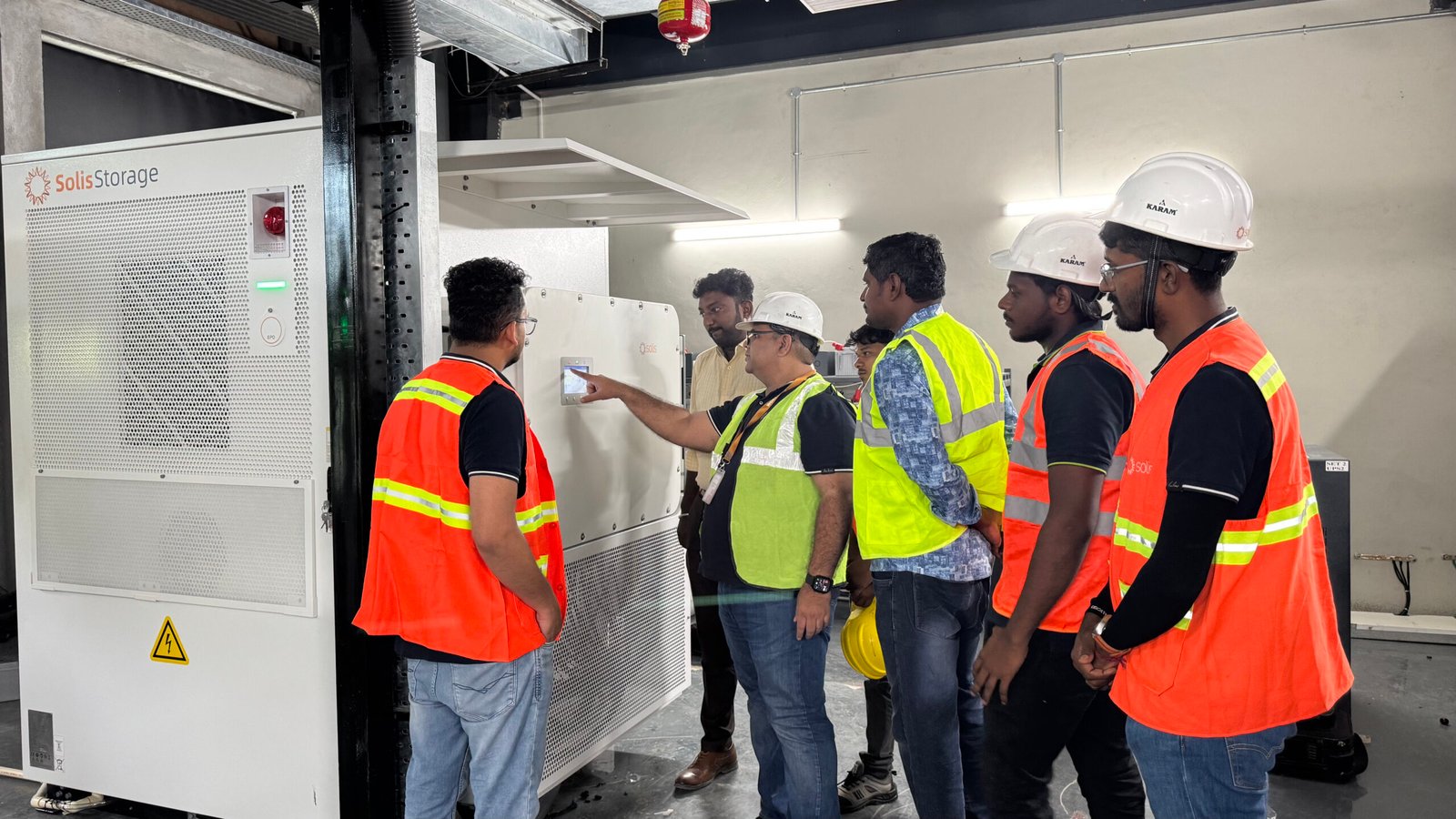
    Solis addressed this challenge by commissioning its first EverCore Energy Storage System (ESS) project in India — an integrated solar-plus-storage solution for a software IT data center in Chennai, Tamil Nadu, developed in collaboration with Inforce Engineering Solutions LLP (Inforce Solar).

    What Is SolisStorage EverCore? 

    SolisStorage EverCore is the commercial and industrial (C&I) battery energy storage product line. Each EverCore unit delivers 261 kWh of storage and is engineered to pair with Solis hybrid inverters, allowing businesses to capture surplus solar energy and dispatch it when needed. In this project, four EverCore units run in parallel to provide reliable, flexible backup and peak-shaving capacity for the data center.

    System Architecture & Key Specifications

    ComponentSpecification
    Rooftop solar PV870 kW (615 Wp TOPCon modules)
    Battery energy storage500 kW power / 1.04 MWh capacity
    EverCore storage units4 × 261 kWh (parallel configuration)
    Hybrid inverters4 × Solis S6-EH3P125K
    Implementation partnerInforce Engineering Solutions LLP (Inforce Solar)
    Primary benefitHigher renewable self-consumption + diesel reduction

    During daylight, the rooftop array generates solar power; surplus energy is stored in the EverCore batteries and released when demand peaks or grid conditions require — maximizing on-site renewable self-consumption throughout daily operations.

    How the Project Reduces Diesel Dependency

    Data centers have traditionally relied on diesel generators for backup power. Rising fuel costs and corporate sustainability targets are pushing operators toward cleaner alternatives. By integrating solar PV with battery storage, this system adds a low-carbon energy resource that can reduce diesel-generator runtime under suitable operating conditions.

    ·Renewable optimization — maximizes on-site solar utilization

    ·Peak-demand management — supplies stored energy during high-tariff periods

    ·Operational flexibility — enables smarter, automated energy scheduling

    ·Lower carbon impact — cuts fuel consumption and diesel-generator usage

    Why This Matters for India’s C&I Storage Market

    India’s commercial and industrial sectors are rapidly adopting renewable energy to manage rising demand, grid instability, and sustainability commitments. The successful Chennai deployment demonstrates how integrated solar-plus-storage supports critical infrastructure and helps businesses extract more value from renewable investments. By combining hybrid-inverter technology, intelligent energy management, and modular storage design, Solis is expanding access to resilient, lower-carbon power for Indian industry.

    Solis’s Commitment

    “As India transitions toward a cleaner, more resilient energy future, Solis remains committed to delivering innovative energy-storage solutions that give industries smarter, safer and more sustainable power management.”

    — said Honey Raza, Country Manager, Solis India

    Frequently Asked Questions (FAQ)

    Q: What is the SolisStorgae EverCore IT data center project?

    A: It is Solis’s first EverCore battery storage deployment in India — a 1.04 MWh solar-plus-storage system for a software data center in Chennai, Tamil Nadu, built with partner Inforce Solar.

    Q: What is the storage capacity of the Solis EverCore IT data center system?

    A: The system provides 500 kW of power output and 1.04 MWh of energy capacity, built from four 261 kWh EverCore units.

    Q: How does Solis EverCore help data centers reduce diesel use?

    A: By storing excess solar energy and discharging it during peak demand or grid outages, EverCore lowers reliance on diesel backup generators and reduces fuel consumption and carbon emissions.

    Q: Who partnered with Solis on this project?

    A: Inforce Engineering Solutions LLP, also known as Inforce Solar.

    Q: What inverters does the Solis EverCore system use?

    A: Four Solis S6-EH3P125K10-NV-YD-H hybrid inverters.
  • Solis Powers India’s Digital Infrastructure with First EverCore Energy Storage Deployment for Chennai IT Data Center

    Background: Why Data Center Need Energy Storage

    As India’s digital economy expands, IT data center must manage rapidly rising electricity demand while guaranteeing uninterrupted operation. For these energy-intensive, mission-critical facilities, even a brief power interruption can disrupt essential services and threaten business continuity.

    Solis addressed this challenge by commissioning its first EverCore Energy Storage System (ESS) project in India — an integrated solar-plus-storage solution for a software IT data center in Chennai, Tamil Nadu, developed in collaboration with Inforce Engineering Solutions LLP (Inforce Solar).

    What Is SolisStorage EverCore? 

    SolisStorage EverCore is the commercial and industrial (C&I) battery energy storage product line. Each EverCore unit delivers 261 kWh of storage and is engineered to pair with Solis hybrid inverters, allowing businesses to capture surplus solar energy and dispatch it when needed. In this project, four EverCore units run in parallel to provide reliable, flexible backup and peak-shaving capacity for the data center.

    System Architecture & Key Specifications

    ComponentSpecification
    Rooftop solar PV870 kW (615 Wp TOPCon modules)
    Battery energy storage500 kW power / 1.04 MWh capacity
    EverCore storage units4 × 261 kWh (parallel configuration)
    Hybrid inverters4 × Solis S6-EH3P125K
    Implementation partnerInforce Engineering Solutions LLP (Inforce Solar)
    Primary benefitHigher renewable self-consumption + diesel reduction

    During daylight, the rooftop array generates solar power; surplus energy is stored in the EverCore batteries and released when demand peaks or grid conditions require — maximizing on-site renewable self-consumption throughout daily operations.

    How the Project Reduces Diesel Dependency

    Data centers have traditionally relied on diesel generators for backup power. Rising fuel costs and corporate sustainability targets are pushing operators toward cleaner alternatives. By integrating solar PV with battery storage, this system adds a low-carbon energy resource that can reduce diesel-generator runtime under suitable operating conditions.

    ·Renewable optimization — maximizes on-site solar utilization

    ·Peak-demand management — supplies stored energy during high-tariff periods

    ·Operational flexibility — enables smarter, automated energy scheduling

    ·Lower carbon impact — cuts fuel consumption and diesel-generator usage

    Why This Matters for India’s C&I Storage Market

    India’s commercial and industrial sectors are rapidly adopting renewable energy to manage rising demand, grid instability, and sustainability commitments. The successful Chennai deployment demonstrates how integrated solar-plus-storage supports critical infrastructure and helps businesses extract more value from renewable investments. By combining hybrid-inverter technology, intelligent energy management, and modular storage design, Solis is expanding access to resilient, lower-carbon power for Indian industry.

    Solis’s Commitment

    “As India transitions toward a cleaner, more resilient energy future, Solis remains committed to delivering innovative energy-storage solutions that give industries smarter, safer and more sustainable power management.”

    — said Honey Raza, Country Manager, Solis India

    Frequently Asked Questions (FAQ)

    Q: What is the SolisStorgae EverCore IT data center project?

    A: It is Solis’s first EverCore battery storage deployment in India — a 1.04 MWh solar-plus-storage system for a software data center in Chennai, Tamil Nadu, built with partner Inforce Solar.

    Q: What is the storage capacity of the Solis EverCore IT data center system?

    A: The system provides 500 kW of power output and 1.04 MWh of energy capacity, built from four 261 kWh EverCore units.

    Q: How does Solis EverCore help data centers reduce diesel use?

    A: By storing excess solar energy and discharging it during peak demand or grid outages, EverCore lowers reliance on diesel backup generators and reduces fuel consumption and carbon emissions.

    Q: Who partnered with Solis on this project?

    A: Inforce Engineering Solutions LLP, also known as Inforce Solar.

    Q: What inverters does the Solis EverCore system use?

    A: Four Solis S6-EH3P125K10-NV-YD-H hybrid inverters.
  • NLC India Renewables Secures 275 MW/550 MWh BESS Project from GUVNL

    NLC India Renewables Secures 275 MW/550 MWh BESS Project from GUVNL

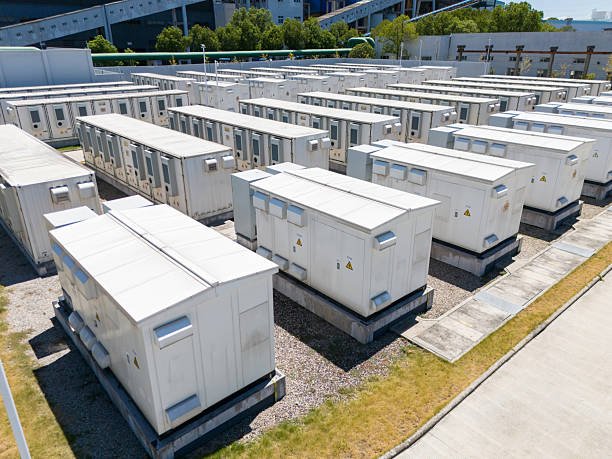
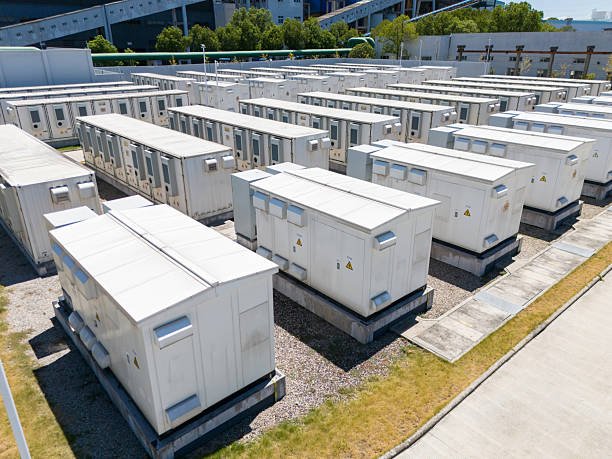
    NLC India Renewables Limited (NIRL), a wholly owned subsidiary of NLC India Limited, has received a Letter of Intent (LoI) from Gujarat Urja Vikas Nigam Limited (GUVNL) to develop a 275 MW/550 MWh standalone Battery Energy Storage System (BESS) project in Gujarat.

    NIRL secured the project through GUVNL’s tariff-based competitive bidding process for 450 MW/900 MWh of standalone BESS capacity in Gujarat. The auction, conducted in August 2026 following a tender issued in June, resulted in NIRL securing 275 MW at a tariff of ₹2,31,989 per MW per month.

    Under the arrangement, GUVNL will enter into a 12-year Battery Energy Storage Purchase Agreement (BESPA) with NIRL. The BESS facility will be made available to GUVNL for charging and discharging on an on-demand basis, supporting the state’s requirements for flexible energy storage.

    The project will be connected to Gujarat’s transmission network, with NIRL responsible for establishing the BESS and its interconnection. The system will draw electricity from the Gujarat Energy Transmission Corporation Limited (GETCO) network for charging and inject stored power back into the grid based on dispatch instructions issued by the State Load Despatch Centre (SLDC) in consultation with GUVNL.

    The BESS is required to operate at a 0.5 C-rate for both charging and discharging and must support operation in blocks ranging from 50 MW/100 MWh to 100 MW/200 MWh, up to the project’s total contracted capacity.

    The project also comes with defined performance and localisation requirements. The BESS developer must maintain at least 95% annual system availability and achieve a minimum 85% AC-to-AC round-trip efficiency on a monthly basis. The Energy Management System (EMS) software must be developed indigenously in India, while refurbished battery cells will not be permitted.

    The project is eligible for Viability Gap Funding (VGF) support of ₹18 lakh per MWh. Under the VGF framework, at least 20% of the total project cost in BESS procurement must meet local-content requirements, including the indigenously developed EMS software.

    The award strengthens NLC India Renewables’ growing presence in the energy storage segment and contributes to Gujarat’s efforts to deploy large-scale storage infrastructure capable of supporting grid flexibility and the integration of renewable power.

  • NLC India Renewables Secures 275 MW/550 MWh BESS Project from GUVNL

    NLC India Renewables Secures 275 MW/550 MWh BESS Project from GUVNL

    NLC India Renewables Limited (NIRL), a wholly owned subsidiary of NLC India Limited, has received a Letter of Intent (LoI) from Gujarat Urja Vikas Nigam Limited (GUVNL) to develop a 275 MW/550 MWh standalone Battery Energy Storage System (BESS) project in Gujarat.

    NIRL secured the project through GUVNL’s tariff-based competitive bidding process for 450 MW/900 MWh of standalone BESS capacity in Gujarat. The auction, conducted in August 2026 following a tender issued in June, resulted in NIRL securing 275 MW at a tariff of ₹2,31,989 per MW per month.

    Under the arrangement, GUVNL will enter into a 12-year Battery Energy Storage Purchase Agreement (BESPA) with NIRL. The BESS facility will be made available to GUVNL for charging and discharging on an on-demand basis, supporting the state’s requirements for flexible energy storage.

    The project will be connected to Gujarat’s transmission network, with NIRL responsible for establishing the BESS and its interconnection. The system will draw electricity from the Gujarat Energy Transmission Corporation Limited (GETCO) network for charging and inject stored power back into the grid based on dispatch instructions issued by the State Load Despatch Centre (SLDC) in consultation with GUVNL.

    The BESS is required to operate at a 0.5 C-rate for both charging and discharging and must support operation in blocks ranging from 50 MW/100 MWh to 100 MW/200 MWh, up to the project’s total contracted capacity.

    The project also comes with defined performance and localisation requirements. The BESS developer must maintain at least 95% annual system availability and achieve a minimum 85% AC-to-AC round-trip efficiency on a monthly basis. The Energy Management System (EMS) software must be developed indigenously in India, while refurbished battery cells will not be permitted.

    The project is eligible for Viability Gap Funding (VGF) support of ₹18 lakh per MWh. Under the VGF framework, at least 20% of the total project cost in BESS procurement must meet local-content requirements, including the indigenously developed EMS software.

    The award strengthens NLC India Renewables’ growing presence in the energy storage segment and contributes to Gujarat’s efforts to deploy large-scale storage infrastructure capable of supporting grid flexibility and the integration of renewable power.

  • NLC India Renewables Secures 275 MW/550 MWh BESS Project from GUVNL

    NLC India Renewables Secures 275 MW/550 MWh BESS Project from GUVNL

    NLC India Renewables Limited (NIRL), a wholly owned subsidiary of NLC India Limited, has received a Letter of Intent (LoI) from Gujarat Urja Vikas Nigam Limited (GUVNL) to develop a 275 MW/550 MWh standalone Battery Energy Storage System (BESS) project in Gujarat.

    NIRL secured the project through GUVNL’s tariff-based competitive bidding process for 450 MW/900 MWh of standalone BESS capacity in Gujarat. The auction, conducted in August 2026 following a tender issued in June, resulted in NIRL securing 275 MW at a tariff of ₹2,31,989 per MW per month.

    Under the arrangement, GUVNL will enter into a 12-year Battery Energy Storage Purchase Agreement (BESPA) with NIRL. The BESS facility will be made available to GUVNL for charging and discharging on an on-demand basis, supporting the state’s requirements for flexible energy storage.

    The project will be connected to Gujarat’s transmission network, with NIRL responsible for establishing the BESS and its interconnection. The system will draw electricity from the Gujarat Energy Transmission Corporation Limited (GETCO) network for charging and inject stored power back into the grid based on dispatch instructions issued by the State Load Despatch Centre (SLDC) in consultation with GUVNL.

    The BESS is required to operate at a 0.5 C-rate for both charging and discharging and must support operation in blocks ranging from 50 MW/100 MWh to 100 MW/200 MWh, up to the project’s total contracted capacity.

    The project also comes with defined performance and localisation requirements. The BESS developer must maintain at least 95% annual system availability and achieve a minimum 85% AC-to-AC round-trip efficiency on a monthly basis. The Energy Management System (EMS) software must be developed indigenously in India, while refurbished battery cells will not be permitted.

    The project is eligible for Viability Gap Funding (VGF) support of ₹18 lakh per MWh. Under the VGF framework, at least 20% of the total project cost in BESS procurement must meet local-content requirements, including the indigenously developed EMS software.

    The award strengthens NLC India Renewables’ growing presence in the energy storage segment and contributes to Gujarat’s efforts to deploy large-scale storage infrastructure capable of supporting grid flexibility and the integration of renewable power.

  • NLC India Renewables Secures 275 MW/550 MWh BESS Project from GUVNL

    NLC India Renewables Limited (NIRL), a wholly owned subsidiary of NLC India Limited, has received a Letter of Intent (LoI) from Gujarat Urja Vikas Nigam Limited (GUVNL) to develop a 275 MW/550 MWh standalone Battery Energy Storage System (BESS) project in Gujarat.

    NIRL secured the project through GUVNL’s tariff-based competitive bidding process for 450 MW/900 MWh of standalone BESS capacity in Gujarat. The auction, conducted in August 2026 following a tender issued in June, resulted in NIRL securing 275 MW at a tariff of ₹2,31,989 per MW per month.

    Under the arrangement, GUVNL will enter into a 12-year Battery Energy Storage Purchase Agreement (BESPA) with NIRL. The BESS facility will be made available to GUVNL for charging and discharging on an on-demand basis, supporting the state’s requirements for flexible energy storage.

    The project will be connected to Gujarat’s transmission network, with NIRL responsible for establishing the BESS and its interconnection. The system will draw electricity from the Gujarat Energy Transmission Corporation Limited (GETCO) network for charging and inject stored power back into the grid based on dispatch instructions issued by the State Load Despatch Centre (SLDC) in consultation with GUVNL.

    The BESS is required to operate at a 0.5 C-rate for both charging and discharging and must support operation in blocks ranging from 50 MW/100 MWh to 100 MW/200 MWh, up to the project’s total contracted capacity.

    The project also comes with defined performance and localisation requirements. The BESS developer must maintain at least 95% annual system availability and achieve a minimum 85% AC-to-AC round-trip efficiency on a monthly basis. The Energy Management System (EMS) software must be developed indigenously in India, while refurbished battery cells will not be permitted.

    The project is eligible for Viability Gap Funding (VGF) support of ₹18 lakh per MWh. Under the VGF framework, at least 20% of the total project cost in BESS procurement must meet local-content requirements, including the indigenously developed EMS software.

    The award strengthens NLC India Renewables’ growing presence in the energy storage segment and contributes to Gujarat’s efforts to deploy large-scale storage infrastructure capable of supporting grid flexibility and the integration of renewable power.

  • Blueleaf Energy and Universal Peak Reach Financial Close for 100 MW/400 MWh BESS Project in Malaysia

    Blueleaf Energy and Universal Peak Reach Financial Close for 100 MW/400 MWh BESS Project in Malaysia

    Blueleaf Energy, a pan-Asian renewable energy platform owned by a fund managed by Macquarie Asset Management, and Malaysia-based electrical infrastructure solutions provider Universal Peak Sdn Bhd (UP) have achieved financial close with UOB for a 100 MW/400 MWh Battery Energy Storage System (BESS) project in Malaysia.

    The project will now move into construction under a Build, Own, and Operate (BOO) model and is targeted for commissioning in mid-2027.

    The facility is being developed under Malaysia’s inaugural MyBeST (Battery Energy Storage System) programme, overseen by the Energy Commission (Suruhanjaya Tenaga). The project is designed to strengthen grid reliability and flexibility while supporting greater integration of renewable energy into Malaysia’s electricity system.

    The BESS project is aligned with Malaysia’s National Energy Transition Roadmap (NETR) and the country’s goal of achieving net-zero emissions by 2050. The milestone also comes alongside the launch of the Large Scale Solar 6 (LSS6) tender, reflecting Malaysia’s push to expand renewable energy and supporting infrastructure.

    The project is being developed through BKHM BESS Sdn Bhd, a joint venture between Blueleaf Energy and Universal Peak. UOB is providing financing for the project.

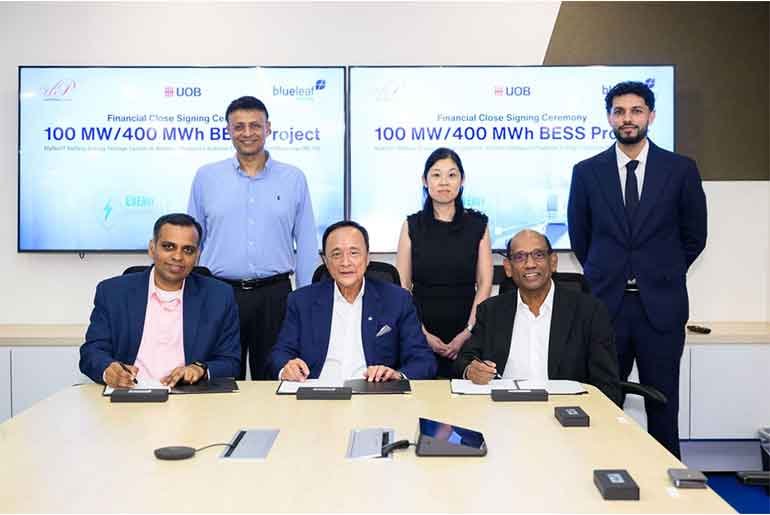
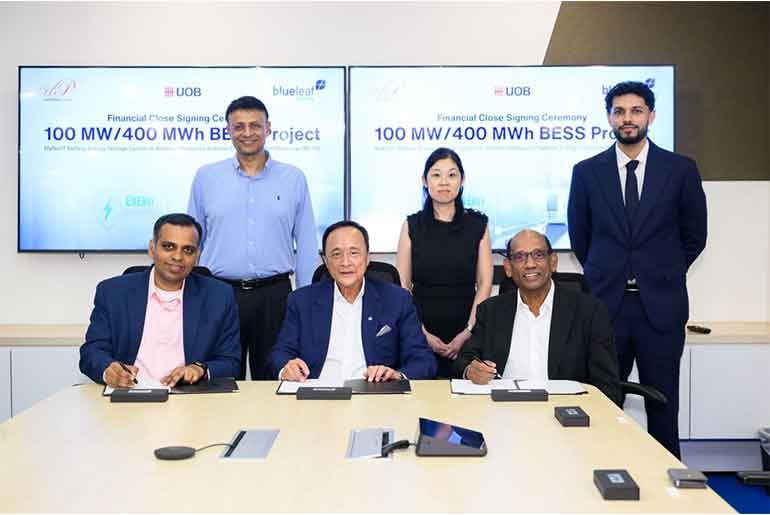
    The financial close was marked by a signing ceremony at Blueleaf Energy’s offices in Singapore, attended by senior representatives from Blueleaf Energy, Universal Peak and UOB.

    Blueleaf Energy said the project, together with its wider development pipeline in Malaysia, will support the country’s energy transition by strengthening grid resilience and enabling increased renewable energy integration.

    Blueleaf Energy currently has more than 1.3 GWp of projects in operation or under construction across its portfolio. Its development pipeline includes more than 13 GWp of generation capacity and approximately 7 GWh of storage assets across Southeast Asia, India and Japan.

  • Blueleaf Energy and Universal Peak Reach Financial Close for 100 MW/400 MWh BESS Project in Malaysia

    Blueleaf Energy and Universal Peak Reach Financial Close for 100 MW/400 MWh BESS Project in Malaysia

    Blueleaf Energy, a pan-Asian renewable energy platform owned by a fund managed by Macquarie Asset Management, and Malaysia-based electrical infrastructure solutions provider Universal Peak Sdn Bhd (UP) have achieved financial close with UOB for a 100 MW/400 MWh Battery Energy Storage System (BESS) project in Malaysia.

    The project will now move into construction under a Build, Own, and Operate (BOO) model and is targeted for commissioning in mid-2027.

    The facility is being developed under Malaysia’s inaugural MyBeST (Battery Energy Storage System) programme, overseen by the Energy Commission (Suruhanjaya Tenaga). The project is designed to strengthen grid reliability and flexibility while supporting greater integration of renewable energy into Malaysia’s electricity system.

    The BESS project is aligned with Malaysia’s National Energy Transition Roadmap (NETR) and the country’s goal of achieving net-zero emissions by 2050. The milestone also comes alongside the launch of the Large Scale Solar 6 (LSS6) tender, reflecting Malaysia’s push to expand renewable energy and supporting infrastructure.

    The project is being developed through BKHM BESS Sdn Bhd, a joint venture between Blueleaf Energy and Universal Peak. UOB is providing financing for the project.

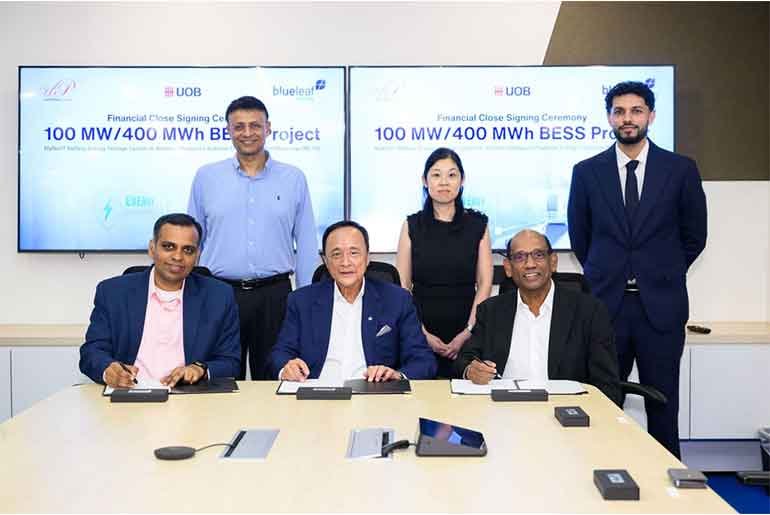
    The financial close was marked by a signing ceremony at Blueleaf Energy’s offices in Singapore, attended by senior representatives from Blueleaf Energy, Universal Peak and UOB.

    Blueleaf Energy said the project, together with its wider development pipeline in Malaysia, will support the country’s energy transition by strengthening grid resilience and enabling increased renewable energy integration.

    Blueleaf Energy currently has more than 1.3 GWp of projects in operation or under construction across its portfolio. Its development pipeline includes more than 13 GWp of generation capacity and approximately 7 GWh of storage assets across Southeast Asia, India and Japan.

  • Blueleaf Energy and Universal Peak Reach Financial Close for 100 MW/400 MWh BESS Project in Malaysia

    Blueleaf Energy and Universal Peak Reach Financial Close for 100 MW/400 MWh BESS Project in Malaysia

    Blueleaf Energy, a pan-Asian renewable energy platform owned by a fund managed by Macquarie Asset Management, and Malaysia-based electrical infrastructure solutions provider Universal Peak Sdn Bhd (UP) have achieved financial close with UOB for a 100 MW/400 MWh Battery Energy Storage System (BESS) project in Malaysia.

    The project will now move into construction under a Build, Own, and Operate (BOO) model and is targeted for commissioning in mid-2027.

    The facility is being developed under Malaysia’s inaugural MyBeST (Battery Energy Storage System) programme, overseen by the Energy Commission (Suruhanjaya Tenaga). The project is designed to strengthen grid reliability and flexibility while supporting greater integration of renewable energy into Malaysia’s electricity system.

    The BESS project is aligned with Malaysia’s National Energy Transition Roadmap (NETR) and the country’s goal of achieving net-zero emissions by 2050. The milestone also comes alongside the launch of the Large Scale Solar 6 (LSS6) tender, reflecting Malaysia’s push to expand renewable energy and supporting infrastructure.

    The project is being developed through BKHM BESS Sdn Bhd, a joint venture between Blueleaf Energy and Universal Peak. UOB is providing financing for the project.

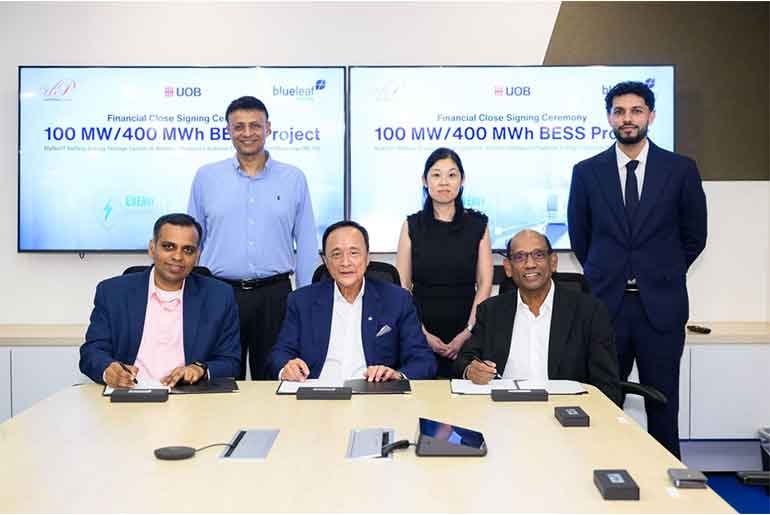
    The financial close was marked by a signing ceremony at Blueleaf Energy’s offices in Singapore, attended by senior representatives from Blueleaf Energy, Universal Peak and UOB.

    Blueleaf Energy said the project, together with its wider development pipeline in Malaysia, will support the country’s energy transition by strengthening grid resilience and enabling increased renewable energy integration.

    Blueleaf Energy currently has more than 1.3 GWp of projects in operation or under construction across its portfolio. Its development pipeline includes more than 13 GWp of generation capacity and approximately 7 GWh of storage assets across Southeast Asia, India and Japan.

  • Blueleaf Energy and Universal Peak Reach Financial Close for 100 MW/400 MWh BESS Project in Malaysia

    Blueleaf Energy and Universal Peak Reach Financial Close for 100 MW/400 MWh BESS Project in Malaysia

    Blueleaf Energy, a pan-Asian renewable energy platform owned by a fund managed by Macquarie Asset Management, and Malaysia-based electrical infrastructure solutions provider Universal Peak Sdn Bhd (UP) have achieved financial close with UOB for a 100 MW/400 MWh Battery Energy Storage System (BESS) project in Malaysia.

    The project will now move into construction under a Build, Own, and Operate (BOO) model and is targeted for commissioning in mid-2027.

    The facility is being developed under Malaysia’s inaugural MyBeST (Battery Energy Storage System) programme, overseen by the Energy Commission (Suruhanjaya Tenaga). The project is designed to strengthen grid reliability and flexibility while supporting greater integration of renewable energy into Malaysia’s electricity system.

    The BESS project is aligned with Malaysia’s National Energy Transition Roadmap (NETR) and the country’s goal of achieving net-zero emissions by 2050. The milestone also comes alongside the launch of the Large Scale Solar 6 (LSS6) tender, reflecting Malaysia’s push to expand renewable energy and supporting infrastructure.

    The project is being developed through BKHM BESS Sdn Bhd, a joint venture between Blueleaf Energy and Universal Peak. UOB is providing financing for the project.

    The financial close was marked by a signing ceremony at Blueleaf Energy’s offices in Singapore, attended by senior representatives from Blueleaf Energy, Universal Peak and UOB.

    Blueleaf Energy said the project, together with its wider development pipeline in Malaysia, will support the country’s energy transition by strengthening grid resilience and enabling increased renewable energy integration.

    Blueleaf Energy currently has more than 1.3 GWp of projects in operation or under construction across its portfolio. Its development pipeline includes more than 13 GWp of generation capacity and approximately 7 GWh of storage assets across Southeast Asia, India and Japan.