Category: All News

  • DEE Development Engineers’ Subsidiary Receives ₹55 Crore Windmill Tower Supply Intent

    DEE Development Engineers’ Subsidiary Receives ₹55 Crore Windmill Tower Supply Intent

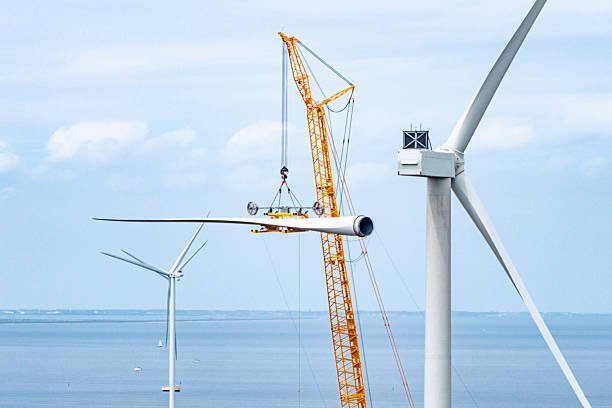
    DEE Development Engineers Limited (BSE: 544198 | NSE: DEEDEV), a leading engineering and process piping solutions provider, announced that its wholly owned subsidiary, DEE Fabricom India Private Limited, has received an email expressing intent for the supply of ENV 5 MW windmill towers, with an estimated value of approximately ₹55 crore, excluding GST.

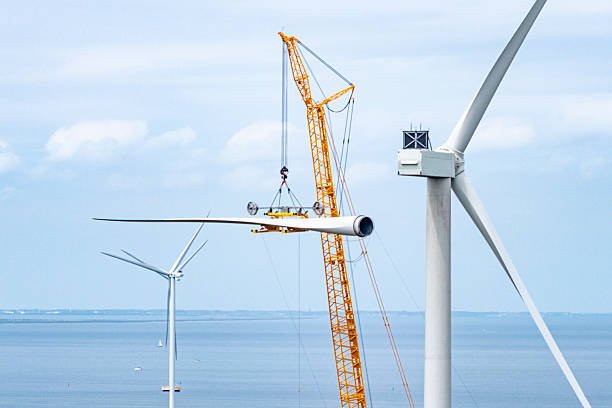
    The mandate adds to DEE Fabricom’s growing participation in the wind energy manufacturing segment and is scheduled to be executed by August 2027. DEE Fabricom operates a dedicated wind tower manufacturing business with an installed capacity of 32,400 MT per annum, forming part of DEE’s broader manufacturing platform and enabling the Company to participate in the renewable energy supply chain alongside its core engineering and process piping operations.

    Commenting on the development, Mr. K. L. Bansal, Chairman and Managing Director, DEE Development Engineers Limited, said: “The intent for supply of 5 MW windmill towers is a positive addition to our renewable energy business and reflects the opportunity we see in applying our manufacturing capabilities across a broader set of infrastructure requirements.

    With DEE Fabricom’s dedicated capacity and growing experience in wind tower manufacturing, we are well placed to participate in the continued expansion of India’s renewable energy infrastructure. Our priority is to put the capacities we have built to work at higher utilisation and convert opportunities across our core and adjacent businesses through consistent execution and disciplined capital allocation.”

    The latest development strengthens DEE Fabricom’s participation in the renewable energy value chain and supports the Company’s broader strategy of leveraging its expanded manufacturing footprint across multiple sectors. DEE remains focused on enhancing operational capabilities, strengthening customer relationships and executing opportunities across its core and adjacent businesses.
  • DEE Development Engineers’ Subsidiary Receives ₹55 Crore Windmill Tower Supply Intent

    DEE Development Engineers’ Subsidiary Receives ₹55 Crore Windmill Tower Supply Intent

    DEE Development Engineers Limited (BSE: 544198 | NSE: DEEDEV), a leading engineering and process piping solutions provider, announced that its wholly owned subsidiary, DEE Fabricom India Private Limited, has received an email expressing intent for the supply of ENV 5 MW windmill towers, with an estimated value of approximately ₹55 crore, excluding GST.

    The mandate adds to DEE Fabricom’s growing participation in the wind energy manufacturing segment and is scheduled to be executed by August 2027. DEE Fabricom operates a dedicated wind tower manufacturing business with an installed capacity of 32,400 MT per annum, forming part of DEE’s broader manufacturing platform and enabling the Company to participate in the renewable energy supply chain alongside its core engineering and process piping operations.

    Commenting on the development, Mr. K. L. Bansal, Chairman and Managing Director, DEE Development Engineers Limited, said: “The intent for supply of 5 MW windmill towers is a positive addition to our renewable energy business and reflects the opportunity we see in applying our manufacturing capabilities across a broader set of infrastructure requirements.

    With DEE Fabricom’s dedicated capacity and growing experience in wind tower manufacturing, we are well placed to participate in the continued expansion of India’s renewable energy infrastructure. Our priority is to put the capacities we have built to work at higher utilisation and convert opportunities across our core and adjacent businesses through consistent execution and disciplined capital allocation.”

    The latest development strengthens DEE Fabricom’s participation in the renewable energy value chain and supports the Company’s broader strategy of leveraging its expanded manufacturing footprint across multiple sectors. DEE remains focused on enhancing operational capabilities, strengthening customer relationships and executing opportunities across its core and adjacent businesses.
  • DEE Development Engineers’ Subsidiary Receives ₹55 Crore Windmill Tower Supply Intent

    DEE Development Engineers Limited (BSE: 544198 | NSE: DEEDEV), a leading engineering and process piping solutions provider, announced that its wholly owned subsidiary, DEE Fabricom India Private Limited, has received an email expressing intent for the supply of ENV 5 MW windmill towers, with an estimated value of approximately ₹55 crore, excluding GST.

    The mandate adds to DEE Fabricom’s growing participation in the wind energy manufacturing segment and is scheduled to be executed by August 2027. DEE Fabricom operates a dedicated wind tower manufacturing business with an installed capacity of 32,400 MT per annum, forming part of DEE’s broader manufacturing platform and enabling the Company to participate in the renewable energy supply chain alongside its core engineering and process piping operations.

    Commenting on the development, Mr. K. L. Bansal, Chairman and Managing Director, DEE Development Engineers Limited, said: “The intent for supply of 5 MW windmill towers is a positive addition to our renewable energy business and reflects the opportunity we see in applying our manufacturing capabilities across a broader set of infrastructure requirements.

    With DEE Fabricom’s dedicated capacity and growing experience in wind tower manufacturing, we are well placed to participate in the continued expansion of India’s renewable energy infrastructure. Our priority is to put the capacities we have built to work at higher utilisation and convert opportunities across our core and adjacent businesses through consistent execution and disciplined capital allocation.”

    The latest development strengthens DEE Fabricom’s participation in the renewable energy value chain and supports the Company’s broader strategy of leveraging its expanded manufacturing footprint across multiple sectors. DEE remains focused on enhancing operational capabilities, strengthening customer relationships and executing opportunities across its core and adjacent businesses.
  • AmpereHour Energy, Ampt Partner to Expand DC-Coupled Storage

    AmpereHour Energy, Ampt Partner to Expand DC-Coupled Storage

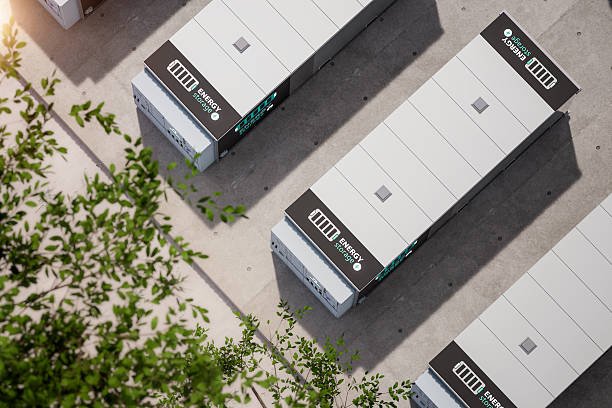
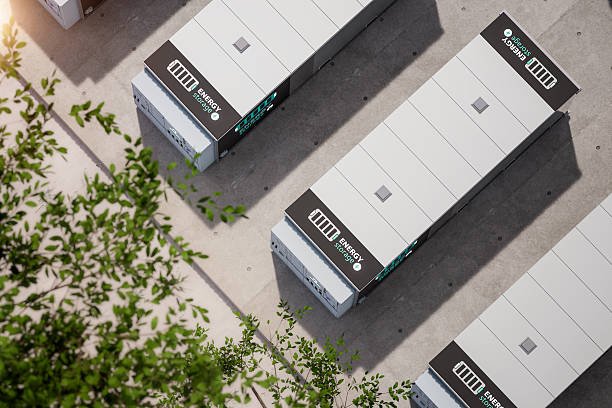
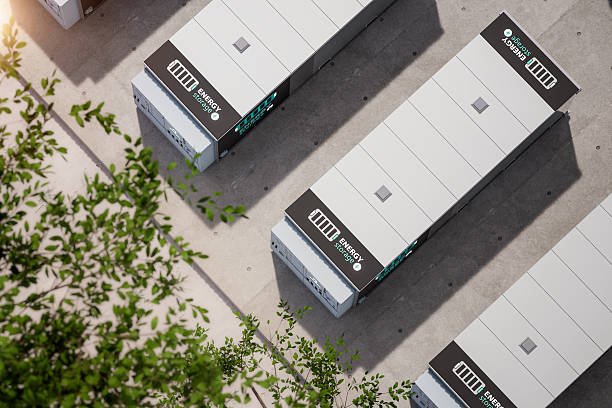
    AmpereHour Energy and Ampt, the DC optimiser company for large-scale systems, has announced a partnership under which AmpereHour will distribute and service Ampt’s DC power management products across India, South Asia, the Middle East and Africa.

    The commercial alliance combines Ampt’s String Optimisers and Direct-to-Battery (D2B) DC-coupled architecture with AmpereHour’s storage integration, energy management software and project service capabilities to enhance project profitability, system efficiency and grid reliability for utility and commercial customers.

    The collaboration focuses on high-impact energy storage applications including DC-coupled storage for utility-scale Solar plus BESS plants, data centres, DC charging infrastructure for EVs, solar repowering, PV-only systems, co-located green hydrogen projects and battery capacity augmentation.

    Ampt’s D2B technology connects PV arrays directly to the battery DC bus, helping lower total system CAPEX, raise round-trip energy efficiency and improve long-term performance and reliability.

    The integrated solution pairs AmpereHour’s energy storage system, DC-recombiner and Energy Management System, including real-time control algorithms for performance, operational safety, and risk management with Ampt String Optimisers.

    The optimisers are DC/DC converters deployed in the PV array that perform string-level Maximum Power Point Tracking (MPPT) to improve solar production while following the battery voltage as it charges and discharges. Because the DC/DC conversion occurs within the PV system rather than through a dedicated battery converter, the battery-centric architecture delivers the responsiveness of a standalone storage system along with lower total system cost to increase project ROI.

    Aaron Gomolak, Chief Executive Officer, Ampt, said, “Firm, dispatchable renewable power is now the defining requirement of the energy transition. Our partnership with AmpereHour accelerates the deployment of high-efficiency DC-coupled storage across India, the Middle East, Africa and other high-growth markets, helping hybrid projects capture more energy, lower capital costs and meet growing demand for clean, around-the-clock power.”

    Aaron Gomolak, Chief Executive Officer, Ampt, said, “Firm, dispatchable renewable power is now the defining requirement of the energy transition. Our partnership with AmpereHour accelerates the deployment of high-efficiency DC-coupled storage across India, the Middle East, Africa and other high-growth markets, helping hybrid projects capture more energy, lower capital costs and meet growing demand for clean, around-the-clock power.”

    Ayush Misra, Co-Founder and CEO, AmpereHour Energy, said, “Partnering with Ampt allows us to deliver state-of-the-art, cost-optimised solar-plus-storage solutions to our project developers and utility clients. Together, we are offering next-generation energy storage architectures engineered specifically for maximum performance and long-term durability.”

  • AmpereHour Energy, Ampt Partner to Expand DC-Coupled Storage

    AmpereHour Energy and Ampt, the DC optimiser company for large-scale systems, has announced a partnership under which AmpereHour will distribute and service Ampt’s DC power management products across India, South Asia, the Middle East and Africa.

    The commercial alliance combines Ampt’s String Optimisers and Direct-to-Battery (D2B) DC-coupled architecture with AmpereHour’s storage integration, energy management software and project service capabilities to enhance project profitability, system efficiency and grid reliability for utility and commercial customers.

    The collaboration focuses on high-impact energy storage applications including DC-coupled storage for utility-scale Solar plus BESS plants, data centres, DC charging infrastructure for EVs, solar repowering, PV-only systems, co-located green hydrogen projects and battery capacity augmentation.

    Ampt’s D2B technology connects PV arrays directly to the battery DC bus, helping lower total system CAPEX, raise round-trip energy efficiency and improve long-term performance and reliability.

    The integrated solution pairs AmpereHour’s energy storage system, DC-recombiner and Energy Management System, including real-time control algorithms for performance, operational safety, and risk management with Ampt String Optimisers.

    The optimisers are DC/DC converters deployed in the PV array that perform string-level Maximum Power Point Tracking (MPPT) to improve solar production while following the battery voltage as it charges and discharges. Because the DC/DC conversion occurs within the PV system rather than through a dedicated battery converter, the battery-centric architecture delivers the responsiveness of a standalone storage system along with lower total system cost to increase project ROI.

    Aaron Gomolak, Chief Executive Officer, Ampt, said, “Firm, dispatchable renewable power is now the defining requirement of the energy transition. Our partnership with AmpereHour accelerates the deployment of high-efficiency DC-coupled storage across India, the Middle East, Africa and other high-growth markets, helping hybrid projects capture more energy, lower capital costs and meet growing demand for clean, around-the-clock power.”

    Aaron Gomolak, Chief Executive Officer, Ampt, said, “Firm, dispatchable renewable power is now the defining requirement of the energy transition. Our partnership with AmpereHour accelerates the deployment of high-efficiency DC-coupled storage across India, the Middle East, Africa and other high-growth markets, helping hybrid projects capture more energy, lower capital costs and meet growing demand for clean, around-the-clock power.”

    Ayush Misra, Co-Founder and CEO, AmpereHour Energy, said, “Partnering with Ampt allows us to deliver state-of-the-art, cost-optimised solar-plus-storage solutions to our project developers and utility clients. Together, we are offering next-generation energy storage architectures engineered specifically for maximum performance and long-term durability.”

  • KIS Group Forms JV with Toyota Tsusho for Biomethane Production

    KIS Group Forms JV with Toyota Tsusho for Biomethane Production

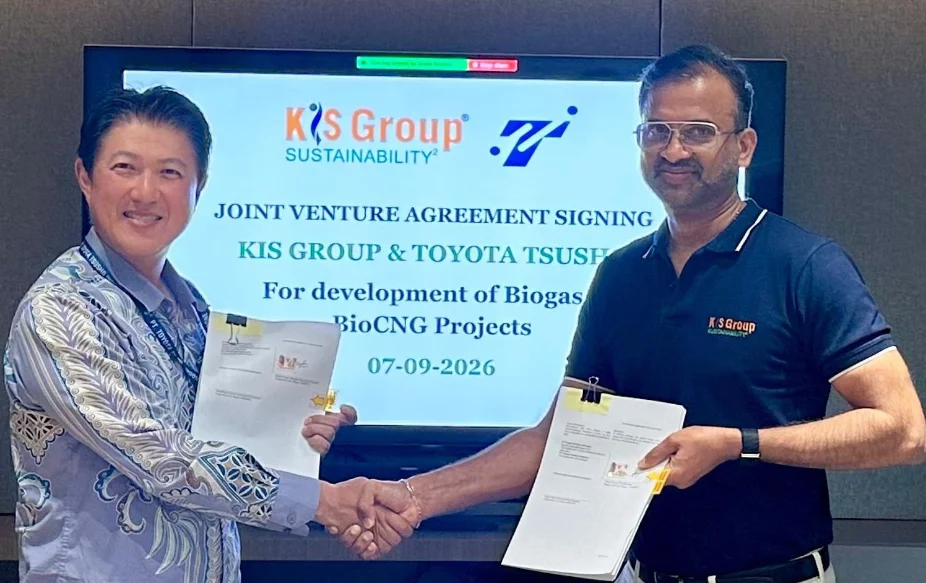
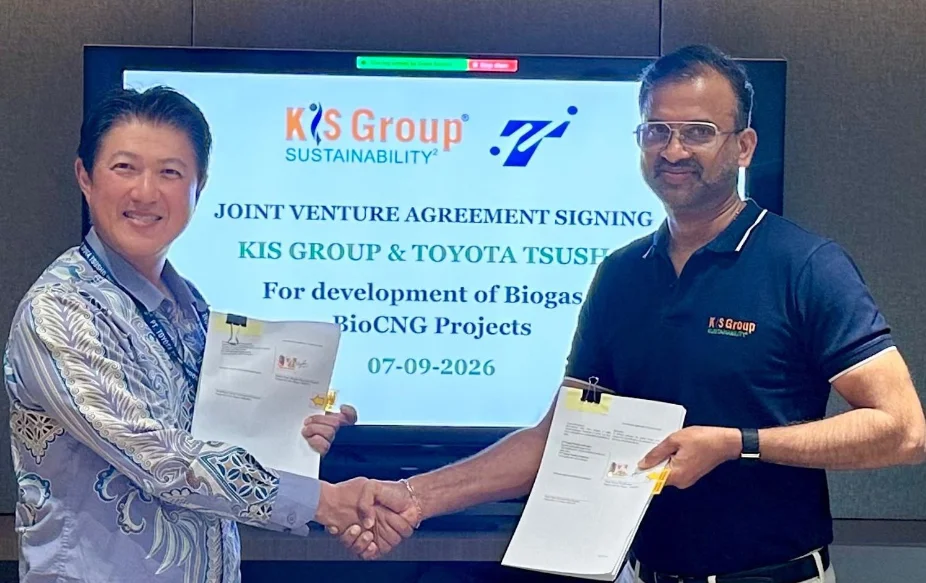
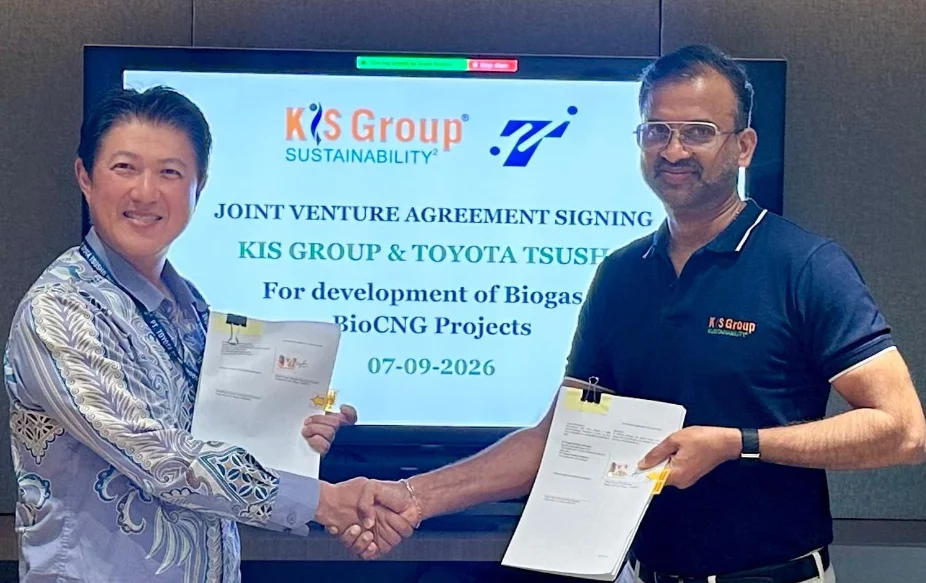
    Toyota Tsusho Corporation has established PT KIS Toyota Tsusho Biomethane Indonesia (KTBI), a joint venture with PT KIS Biofuels Indonesia (KBI), to develop a biomethane production and sales business in Indonesia. The joint venture was established in September 2026, with commercial operations targeted to begin in 2027.

    The initiative aims to tap Indonesia’s abundant biomass resources, particularly palm oil mill effluent (POME), while supporting the country’s growing demand for lower-carbon energy sources.

    Indonesia is one of the world’s leading natural gas producers and exporters. However, declining domestic gas production alongside rising demand has increased the importance of securing a stable energy supply. At the same time, Indonesia is the world’s largest palm oil producer, generating significant volumes of biomass resources such as POME.

    Against this backdrop, KTBI plans to produce high-purity biomethane by upgrading biogas generated from POME at a palm oil mill in South Sumatra Province. The biomethane will then be transported and supplied to customers, including manufacturers in West Java Province.

    The project plans to utilise the existing pipeline network operated by PT Perusahaan Gas Negara (Persero) Tbk (PGN), Indonesia’s state-owned gas company. Annual biomethane sales of approximately 150,000 MMBTU are targeted.

    The project is expected to contribute to greenhouse gas emissions reduction through two routes: preventing methane generated from POME from being released into the atmosphere and replacing conventional fossil-based fuels with biomethane.

    By using existing gas pipelines and customer-side gas-consuming equipment, the project is expected to allow industrial customers to pursue decarbonisation without requiring significant additional capital expenditure.

    KTBI also plans to obtain International Sustainability and Carbon Certification (ISCC) for the project. The certification is expected to help quantify the environmental attributes of the biomethane and improve their potential market value.

    KBI, Toyota Tsusho’s partner in the venture, is the Indonesian subsidiary of KIS Group, which develops biogas and biomethane projects internationally. According to Toyota Tsusho, the KIS Group has undertaken more than 90 biogas projects across more than 20 countries and has experience in launching Indonesia’s first commercial biomethane production and sales operation.

    The project follows a memorandum of understanding signed between Toyota Tsusho and PGN in 2023 for the commercialisation of biomethane. The planned development will also mark the first project in Indonesia to supply biomethane produced in Sumatra, where the palm oil industry is concentrated, to customers in Java, one of the country’s major manufacturing and industrial hubs.

    Toyota Tsusho will combine KBI’s biomethane expertise with its business platform and customer network in Indonesia, particularly across the manufacturing sector. The company aims to support the decarbonisation requirements of industrial customers, including Japanese companies operating in Indonesia, while contributing to the wider adoption of biomethane and the development of a more sustainable energy system.

    The planned annual sales volume of 150,000 MMBTU represents a significant step in Toyota Tsusho’s efforts to develop Indonesia’s biomethane market and establish cross-regional renewable gas supply infrastructure.