Category: All News

  • BikeWo Partners with Yubhas Renewables to Advance Solar-Assisted EVs for Rural Last-Mile Mobility

    BikeWo Partners with Yubhas Renewables to Advance Solar-Assisted EVs for Rural Last-Mile Mobility

    BikeWo Green Tech Limited has partnered with Yubhas Renewables Private Limited to commence operational validation of solar-assisted electric three-wheelers designed for rural and semi-urban mobility applications. Through the collaboration, BikeWo will leverage its rider network and operational expertise to evaluate the vehicle under commercial operating conditions ahead of its planned market deployment.

    The pilot programme will assess the vehicle’s performance across key parameters including range, battery efficiency, payload capacity, ride quality, thermal performance, braking, operating economics, and overall reliability under diverse operating conditions. Operational feedback from BikeWo’s last-mile network will be used to refine the vehicle’s design and performance ahead of wider market deployment.

    Beyond technology validation, the partnership seeks to create a broader ecosystem that combines clean mobility with rural entrepreneurship. The two companies are exploring a rural development initiative to train young people in vehicle operations, maintenance, customer service, and business management, enabling them to become owner-operators and build sustainable livelihoods through clean transportation.

    As part of the initiative, eligible participants may also be able to access financing opportunities under the Pradhan Mantri MUDRA Yojana, subject to applicable eligibility criteria and lender approvals. The long-term objective is to enable trained individuals to become owner-operators of solar-assisted electric vehicles that can support passenger transport, agricultural logistics, village deliveries, healthcare access, and other essential last-mile services while generating sustainable income for rural families.

    Commenting on the partnership, Hiten Pal Saklani, CEO, BikeWo Green Tech Limited, said, “At BikeWo, we are constantly exploring innovative mobility solutions that improve operational efficiency while contributing to a more sustainable future. Partnering with Yubhas Renewables provides an opportunity to evaluate a promising clean mobility technology under commercial operating conditions while exploring new avenues for rural entrepreneurship and livelihood generation.”

    Sai Satyam Pradhan, Founder & CEO, Yubhas Renewables, said, “Our vision is to build a practical solar-assisted mobility platform that addresses the unique transportation needs of rural India. Partnering with BikeWo gives us access to valuable operational feedback that will help refine the vehicle for reliability, affordability, and commercial viability. Beyond the technology, we see this as an opportunity to create a sustainable ecosystem where clean mobility can support entrepreneurship, generate livelihoods, and improve access to essential services across rural communities.”

    The partnership underscores BikeWo’s commitment to supporting next-generation clean mobility technologies while enhancing operational efficiency for its rider network. Together, BikeWo and Yubhas Renewables aim to build a scalable ecosystem that accelerates sustainable transportation, strengthens rural entrepreneurship, and contributes to India’s transition towards greener, more inclusive mobility solutions.
  • BikeWo Partners with Yubhas Renewables to Advance Solar-Assisted EVs for Rural Last-Mile Mobility

    BikeWo Green Tech Limited has partnered with Yubhas Renewables Private Limited to commence operational validation of solar-assisted electric three-wheelers designed for rural and semi-urban mobility applications. Through the collaboration, BikeWo will leverage its rider network and operational expertise to evaluate the vehicle under commercial operating conditions ahead of its planned market deployment.

    The pilot programme will assess the vehicle’s performance across key parameters including range, battery efficiency, payload capacity, ride quality, thermal performance, braking, operating economics, and overall reliability under diverse operating conditions. Operational feedback from BikeWo’s last-mile network will be used to refine the vehicle’s design and performance ahead of wider market deployment.

    Beyond technology validation, the partnership seeks to create a broader ecosystem that combines clean mobility with rural entrepreneurship. The two companies are exploring a rural development initiative to train young people in vehicle operations, maintenance, customer service, and business management, enabling them to become owner-operators and build sustainable livelihoods through clean transportation.

    As part of the initiative, eligible participants may also be able to access financing opportunities under the Pradhan Mantri MUDRA Yojana, subject to applicable eligibility criteria and lender approvals. The long-term objective is to enable trained individuals to become owner-operators of solar-assisted electric vehicles that can support passenger transport, agricultural logistics, village deliveries, healthcare access, and other essential last-mile services while generating sustainable income for rural families.

    Commenting on the partnership, Hiten Pal Saklani, CEO, BikeWo Green Tech Limited, said, “At BikeWo, we are constantly exploring innovative mobility solutions that improve operational efficiency while contributing to a more sustainable future. Partnering with Yubhas Renewables provides an opportunity to evaluate a promising clean mobility technology under commercial operating conditions while exploring new avenues for rural entrepreneurship and livelihood generation.”

    Sai Satyam Pradhan, Founder & CEO, Yubhas Renewables, said, “Our vision is to build a practical solar-assisted mobility platform that addresses the unique transportation needs of rural India. Partnering with BikeWo gives us access to valuable operational feedback that will help refine the vehicle for reliability, affordability, and commercial viability. Beyond the technology, we see this as an opportunity to create a sustainable ecosystem where clean mobility can support entrepreneurship, generate livelihoods, and improve access to essential services across rural communities.”

    The partnership underscores BikeWo’s commitment to supporting next-generation clean mobility technologies while enhancing operational efficiency for its rider network. Together, BikeWo and Yubhas Renewables aim to build a scalable ecosystem that accelerates sustainable transportation, strengthens rural entrepreneurship, and contributes to India’s transition towards greener, more inclusive mobility solutions.

  • DCM Shriram Ltd. signs definitive agreement with Serentica Renewables to source 58 MW of Renewable Energy for its facilities in Bharuch, Gujarat

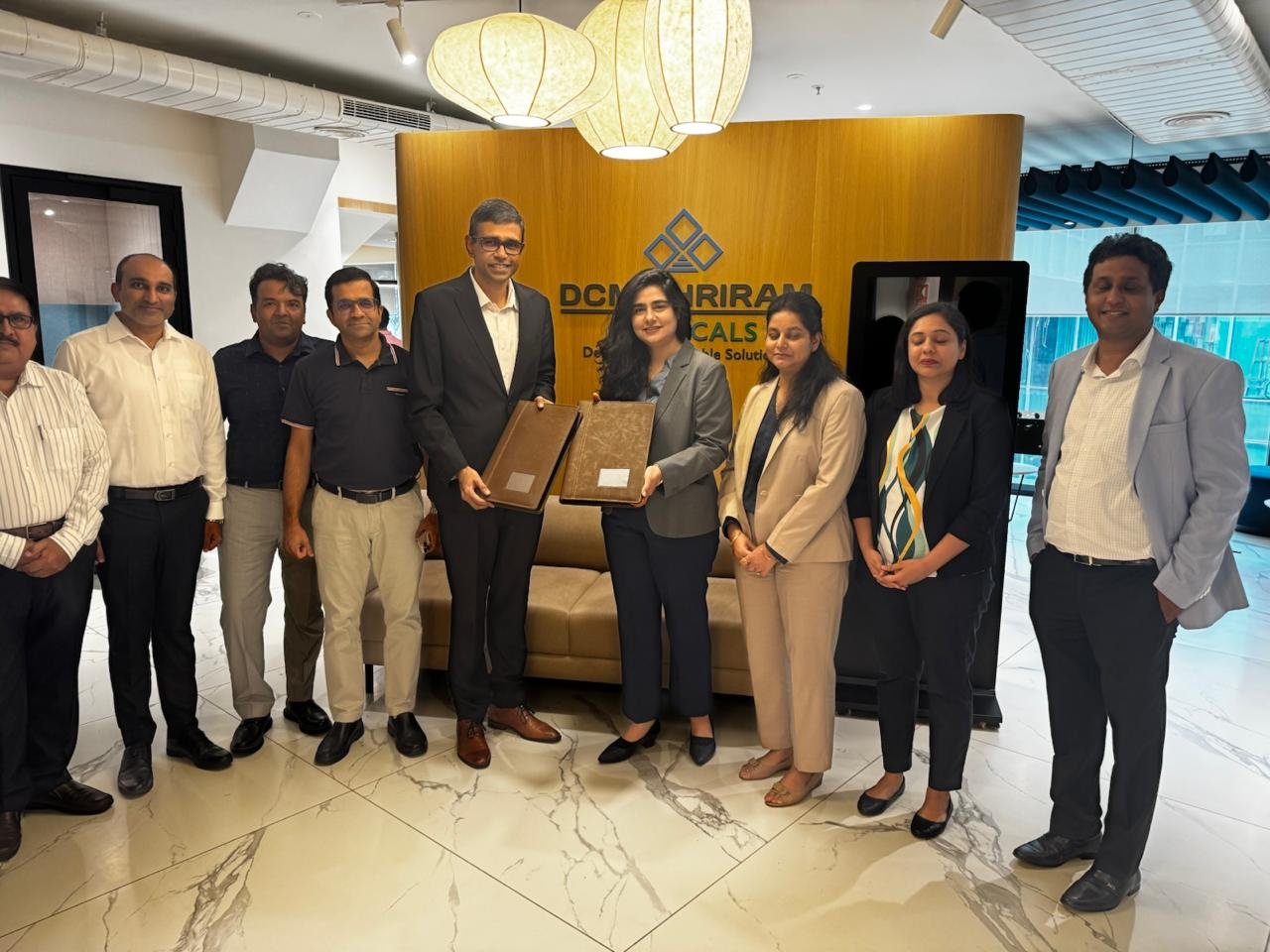
    DCM Shriram Ltd. signs definitive agreement with Serentica Renewables to source 58 MW of Renewable Energy for its facilities in Bharuch, Gujarat

    DCM Shriram Limited has entered into a definitive agreement with Serentica Renewables India 38 Pvt. Ltd. for the development of a 58 MW peak hybrid renewable energy power project, primarily for its energy-intensive business in Bharuch, Gujarat. Upon completion, DCM Shriram’s total renewable energy capacity will rise to 176 MW (peak) across it two sites in Bharuch & Kota, significantly expanding its clean energy base. The project is expected to be commissioned by June 2027. Under the agreement, DCM Shriram Limited will invest up to Rs. 105 crores in one or more tranches to acquire a minimum 26% equity stake in Serentica Renewables India 38 Pvt. Ltd.

    Commenting on the development, Mr. Sabaleel Nandy, Executive Director & CEO, DCM Shriram Chemicals, said, “The agreement is a strategic step in expanding the share of renewable energy across our chemical operations in Bharuch and our ongoing efforts towards making the business more sustainable. The project is expected to help avoid nearly 0.4 million tonnes of CO₂ emissions annually while increasing the share of renewable power. Further given, that power is one of the most significant input costs,this will help improve cost efficiency, provide greater visibility into long-term power costs and reduce exposure to fluctuations in conventional energy prices.”

    Commenting on the partnership, Mr. Akshay Hiranandani, CEO, Serentica Renewables, said, “Our partnership with DCM Shriram Chemicals marks another significant step in advancing India’s industrial decarbonization journey. Through a 190 MW renewable energy project comprising solar power from Rajasthan and wind power from Karnataka, we will supply 58 MW renewable power to DCM Shriram Chemicals Bharuch plant, enabling reliable and sustainable energy for its operations.’’

    The agreement strengthens DCM Shriram Chemicals renewable energy portfolio while supporting the long-term energy requirements of its Bharuch operations. Once commissioned, the project is expected to contribute meaningfully to the company’s efforts to improve energy efficiency, reduce emissions and build a more resilient and sustainable manufacturing base.

  • DCM Shriram Ltd. signs definitive agreement with Serentica Renewables to source 58 MW of Renewable Energy for its facilities in Bharuch, Gujarat

    DCM Shriram Limited has entered into a definitive agreement with Serentica Renewables India 38 Pvt. Ltd. for the development of a 58 MW peak hybrid renewable energy power project, primarily for its energy-intensive business in Bharuch, Gujarat. Upon completion, DCM Shriram’s total renewable energy capacity will rise to 176 MW (peak) across it two sites in Bharuch & Kota, significantly expanding its clean energy base. The project is expected to be commissioned by June 2027. Under the agreement, DCM Shriram Limited will invest up to Rs. 105 crores in one or more tranches to acquire a minimum 26% equity stake in Serentica Renewables India 38 Pvt. Ltd.

    Commenting on the development, Mr. Sabaleel Nandy, Executive Director & CEO, DCM Shriram Chemicals, said, “The agreement is a strategic step in expanding the share of renewable energy across our chemical operations in Bharuch and our ongoing efforts towards making the business more sustainable. The project is expected to help avoid nearly 0.4 million tonnes of CO₂ emissions annually while increasing the share of renewable power. Further given, that power is one of the most significant input costs,this will help improve cost efficiency, provide greater visibility into long-term power costs and reduce exposure to fluctuations in conventional energy prices.”

    Commenting on the partnership, Mr. Akshay Hiranandani, CEO, Serentica Renewables, said, “Our partnership with DCM Shriram Chemicals marks another significant step in advancing India’s industrial decarbonization journey. Through a 190 MW renewable energy project comprising solar power from Rajasthan and wind power from Karnataka, we will supply 58 MW renewable power to DCM Shriram Chemicals Bharuch plant, enabling reliable and sustainable energy for its operations.’’

    The agreement strengthens DCM Shriram Chemicals renewable energy portfolio while supporting the long-term energy requirements of its Bharuch operations. Once commissioned, the project is expected to contribute meaningfully to the company’s efforts to improve energy efficiency, reduce emissions and build a more resilient and sustainable manufacturing base.

  • 655 Million Left in the Dark: Why the 2026 Energy Progress Report Demands Urgent Action

    655 Million Left in the Dark: Why the 2026 Energy Progress Report Demands Urgent Action

    A staggering 655 million people globally still live without access to electricity, while two billion continue to rely on highly polluting fuels for cooking, putting their health and economic futures at risk.

    According to the latest edition of Tracking SDG 7: The Energy Progress Report, the international effort to achieve universal energy access by 2030 is drastically off pace. The findings underscore an urgent need for targeted subsidies, innovative international financing, and a rapid acceleration of domestic renewable energy deployment to prevent vulnerable populations from being left behind entirely.

    The Widening Energy Gap in Sub-Saharan Africa

    While most regions globally are nearing universal access, progress in Sub-Saharan Africa has slowed significantly. The region bears a heavily disproportionate share of the global energy deficit, home to over 560 million people living without power and 970 million lacking access to clean cooking solutions.

    The rural-urban divide also continues to expand. The rural electricity deficit in Sub-Saharan Africa grew from 376 million in 2010 to 447 million in 2024. To achieve Sustainable Development Goal (SDG) 7 targets by 2030, the global pace of electrification must now triple to an annual growth rate of 1.3%.

    Key Findings From the 2026 SDG 7 Report

    The report, jointly published by global custodian agencies—including the IEA, IRENA, World Bank, WHO, and UN DESA—highlights critical structural gaps alongside record milestones in clean energy:

    • The Clean Cooking Crisis: Two billion people—roughly a quarter of the world’s population—still lack clean cooking technologies. The split between urban and rural areas remains stark (89% urban access vs. 56% rural). This crisis carries severe health consequences, with household air pollution responsible for an estimated 3 million deaths per year.
    • Record Renewable Capacity vs. Distribution Disparities: On a positive note, renewable energy now accounts for over 30% of global electricity consumption, hitting a record generating capacity of 544 watts per person. However, stark disparities persist: low-income countries stand at just 33.6 watts per person, compared to 1,224 watts per person in high-income nations.
    • Dwindling Financial Flows to Poor Nations: International public financial flows supporting clean energy in developing countries hovered at US$24.6 billion. Alarmingly, funding directly targeting the least developed countries dropped by 11% to $3.7 billion. Furthermore, debt-based financing makes up 80% of these flows, placing a severe economic strain on developing economies.
    • Stalling Energy Efficiency: Global progress in energy intensity fell from 2.4% in 2022 to 1.5% in 2023, widening the gap between political ambition and real-world execution.

    Overcoming Obstacles: Affordability and Decentralized Renewables

    Expanding global electricity access requires confronting the barrier of affordability. Even where physical infrastructure exists, millions of households cannot afford upfront connection fees, wiring costs, or basic energy services.

    To bridge this divide, the report champions distributed renewable energy solutions, such as off-grid solar and mini-grids. These technologies offer a highly cost-effective path forward and are already serving hundreds of millions of people. Accelerating localized renewables also helps diversify national energy mixes, shielding developing nations from volatile global supply chains and fossil fuel import costs.

    “Recent global energy shocks have made one thing clear: countries with strong renewable energy capacity are better positioned to withstand economic and supply disruptions,” noted Francesco La Camera, Director-General of the International Renewable Energy Agency (IRENA).

    What’s Next?

    The complete findings of the report will be formally presented to international policymakers at a special launch event on July 8, 2026, following an in-depth review of SDG 7 at the High-Level Political Forum on Sustainable Development in New York.

    As the global energy crisis continues to impact broader economies, world leaders are facing an urgent call to action. Complacency is no longer an option; hitting the 2030 target will require an unprecedented scale-up of targeted international grants, private sector investments, and strong political leadership.

  • ACME to Invest USD 4.2 Billion in Expansion of Green Hydrogen and Ammonia Project in Oman

    ACME to Invest USD 4.2 Billion in Expansion of Green Hydrogen and Ammonia Project in Oman

    ACME Group has announced plans to invest approximately USD 4.2 billion in the expansion of its green hydrogen and green ammonia project in Duqm, Oman, reinforcing its commitment to large-scale clean fuel production and supporting Oman’s ambition to become a global green hydrogen hub.

    The investment will fund the second and third phases of the project, following the signing of an investment agreement with Oman’s Public Authority for Special Economic Zones and Free Zones (OPAZ). The expansion forms part of a broader renewable energy development program being advanced within the Special Economic Zone at Duqm.

    Under the expansion plan, each phase is expected to produce around 71,000 tonnes of green hydrogen and 400,000 tonnes of green ammonia annually. Once both phases are operational, the project’s cumulative production capacity is projected to reach 142,000 tonnes of green hydrogen and 800,000 tonnes of green ammonia per year. Commercial operations for Phase 2 and Phase 3 are targeted to commence in 2030 and 2033, respectively.

    The project builds upon ACME’s first phase in Duqm, which is currently under development and is expected to produce 100,000 tonnes of green ammonia annually. The overall development is set to play a significant role in advancing Oman’s national green hydrogen strategy and expanding the country’s renewable energy value chain.

    According to industry estimates, the investment further strengthens Oman’s position as an emerging destination for green hydrogen investments, while supporting global efforts to decarbonize hard-to-abate sectors through the production of sustainable fuels and green ammonia for domestic and export markets.

    The expansion marks another major milestone for ACME’s international clean energy portfolio and underscores the growing momentum of large-scale green hydrogen and ammonia projects across the Middle East.

  • UltraTech Deploys 45 Electric Heavy-Duty Trucks for Clinker Transportation in Northern India

    UltraTech Deploys 45 Electric Heavy-Duty Trucks for Clinker Transportation in Northern India

    UltraTech Cement Limited, the world’s largest cement company by sales volume and capacity, excluding China, has commenced deployment of 45 electric heavy-duty trucks in partnership with Energy In Motion (EIM).

    The fleet will transport clinker from Kotputli Cement Works, UltraTech’s integrated manufacturing unit in Rajasthan, to its grinding units, Dadri Cement Works and Sikandarabad Cement Works, located in the Delhi-NCR region, over a 250-kilometre lead distance, traversing the states of Rajasthan, Haryana, and Uttar Pradesh. The deployment of these 45 electric trucks further strengthens UltraTech’s existing fleet of over 750 green trucks.

    This deployment follows the signing of a transport service contract between UltraTech, EIM and a logistics service provider. The deployment is among the largest of its kind in the cement sector in northern India and marks a significant step in establishing the viability of long-haul electric heavy-duty trucking in the country.

    The fleet, comprising 45 electric trucks, each of 55-tonne capacity, is projected to reduce over 8,900 tons of CO2 emissions annually, displacing the equivalent of about 2.9 million litres of diesel per year. The initiative supports India’s push towards zero-emission commercial transportation, a priority articulated by the Government of India across its EV and logistics policy frameworks.

    Speaking on the development, K C Jhanwar, Managing Director, UltraTech Cement Limited, said, “India’s ambition for clean, energy-secure transportation demands industry action, and UltraTech is committed to being at the forefront. This deployment reflects our belief that decarbonizing logistics is as strategic as decarbonizing production. By shifting long-haul clinker movement to electric, we are aligning with the country’s stated objective to reduce dependence on imported fossil fuels, while building a supply chain that is resilient, responsible, and future-ready.”

    UltraTech has been a pioneer in advancing sustainable transport in the cement sector. The company was among the first in India to introduce ‘Green Logistics’, deploying CNG trucks in 2021, LNG trucks in 2022, and electric trucks in 2024. The Company continues to partner closely with its logistics providers to transition from diesel to cleaner fuels. As of FY26, UltraTech operates 638 CNG trucks, 32 LNG trucks, and 89 electric trucks across its various manufacturing units.

  • Tata Power Launches ‘Vidyut Dhaara’ to Showcase the Human Impact of Energy Beyond the Grid

    Tata Power Launches ‘Vidyut Dhaara’ to Showcase the Human Impact of Energy Beyond the Grid

    Tata Power has unveiled ‘Vidyut Dhaara’, a new purpose-led storytelling initiative that highlights how energy creates impact far beyond powering homes, businesses, and industries. The initiative reflects the company’s commitment to empowering communities, enabling livelihoods, fostering inclusion, and driving sustainable development across India.

    Conceived as a unified expression of Tata Power’s social impact journey, Vidyut Dhaara aligns with the company’s vision of empowering a billion lives through sustainable, affordable, and innovative energy solutions. It showcases how the flow of energy extends into classrooms, entrepreneurial ventures, skill development programs, and community-led sustainability efforts.

    At the heart of the initiative is an original film and title song that illustrate how energy transforms lives beyond the electricity grid. The film follows Dhaara, a young protagonist whose journey takes viewers through classrooms, workshops, fields, and communities, revealing the many ways energy fuels opportunity, resilience, inclusion, and environmental stewardship.

    The narrative highlights several of Tata Power’s flagship social initiatives, including the Tata Power Skill Development Institute (TPSDI), which equips youth with skills for green jobs and the power sector; Anokha Dhaaga, the company’s entrepreneurship and livelihood development program; Pay Autention, a pioneering initiative focused on neurodiversity awareness and inclusion; and Club Enerji, Tata Power’s long-running sustainability and energy literacy program for students.

    To bring the concept to life, Tata Power collaborated with Swarathma, the contemporary folk-rock band known for socially conscious storytelling. The partnership resulted in an original musical composition that serves as the emotional and narrative thread of the film.

    The initiative also reinforces Tata Power’s broader clean energy ambitions. The company has committed to increasing the share of clean and green energy capacity in its portfolio to 70% by 2030, reflecting its long-term focus on sustainability and renewable energy development.

    According to Tata Power, Vidyut Dhaara represents the intersection of business purpose and community progress, emphasizing that the transition to cleaner energy and the creation of more inclusive, empowered communities are interconnected goals. The initiative carries forward the legacy of founder Jamsetji Tata, whose philosophy held that businesses serve as trustees of the communities in which they operate.

    Through Vidyut Dhaara, Tata Power seeks to demonstrate how energy can power not only infrastructure and economic growth, but also aspirations, opportunities, and sustainable futures for generations to come.