Category: All News

  • Shakti Pumps Unveils Next-Generation Patented S4RM Pumps and Advanced Pumping Solutions at IFAT Mumbai 2026

    Shakti Pumps Unveils Next-Generation Patented S4RM Pumps and Advanced Pumping Solutions at IFAT Mumbai 2026

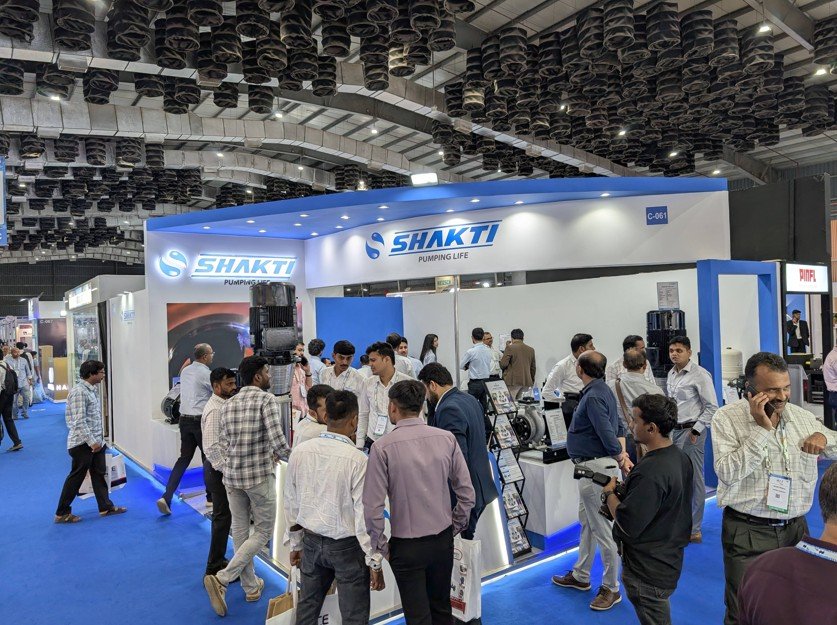
    Shakti Pumps, a leading manufacturer of pumps and pumping solutions, has unveiled its patented next-generation S4RM pumps and advanced pumping equipment at IFAT Mumbai 2026, showcasing technologies designed to improve energy efficiency, operational reliability and pumping performance across agriculture, water management and industrial applications.

    A key highlight of the company’s showcase is the Shakti Slip Start Synchronous Run Motor (S4RM), a patented motor technology that combines the advantages of induction and permanent magnet synchronous motor (PMSM) technologies. The S4RM is a line-start synchronous motor that operates without a Variable Frequency Drive (VFD), making it a direct replacement for conventional induction motors in compatible applications.

    The S4RM technology delivers 5–10% higher runtime efficiency than conventional induction motors, reduces starting current by up to 50%, and offers a power factor close to unity. It also provides higher starting torque and maintains a high and constant discharge even under voltage fluctuations and low-voltage conditions. The technology is available across surface and submersible motor-pump applications.

    Mr Ankit Patidar, CMO Shakti Pumps, said, “At Shakti Pumps, our focus has always been on developing technologies that deliver measurable value to customers through higher efficiency, reliability and lower operating costs. With S4RM, we are bringing together advanced motor technology and practical field performance to help users achieve greater pumping output while reducing energy consumption. Our objective is not simply to make pumps more efficient, but to create a combination of S4RM motor technology and precision stainless-steel fabrication to showcase our commitment to engineering solutions suited to India’s evolving water, agriculture and industrial needs.”

    Compared with conventional induction motors, S4RM operates at around 3000 RPM, has lower starting and full-load current, a power factor close to 1 and consistent discharge despite voltage variation. Conventional induction motors typically draw 7–8 times their full-load current during starting, while S4RM requires approximately 4–5 times, helping reduce electrical stress and contribute to longer motor insulation life.

    Another important focus at IFAT Mumbai is Shakti Pumps’ precision sheet fabrication using SS304 and SS316 stainless steel for pump components, offering greater dimensional accuracy and consistency compared with conventional cast components. Manufactured from uniform-thickness sheets through precision cutting and forming, these components are lighter, easier to install and offer a high strength-to-weight ratio, while improved impeller balance helps minimize vibration and mechanical losses. Precisely engineered flow passages and optimized impeller geometry contribute to higher efficiency, lower energy consumption and up to 40% higher discharge, enhancing productivity across irrigation, water supply and industrial fluid-transfer applications. The use of SS304 and SS316 also provides enhanced durability and corrosion resistance, with SS316 offering greater resistance to chlorides and harsh or mineral-rich water conditions, making these components well suited for demanding operating environments.

    The energy-saving potential of S4RM is demonstrated through Shakti Pumps’ comparative performance data. For a 7.5 kW motor, the S4RM records an efficiency of approximately 91.5%, while the corresponding IE2 system records lower efficiency. In a 22 kW comparison, S4RM efficiency is around 90%, compared with approximately 82% for the conventional induction motor. The company calculates huge annual electricity savings for a 22kW application under specified operating and electricity-cost assumptions.

    Through its participation at IFAT Mumbai 2026, Shakti Pumps is reinforcing its focus on technology-led pumping solutions that address the growing need for energy efficiency, reliability and sustainable water management. The company’s portfolio is designed to support applications ranging from agricultural irrigation and water supply to industrial fluid transfer, helping customers improve productivity while lowering lifecycle energy consumption.
  • Shakti Pumps Unveils Next-Generation Patented S4RM Pumps and Advanced Pumping Solutions at IFAT Mumbai 2026

    Shakti Pumps Unveils Next-Generation Patented S4RM Pumps and Advanced Pumping Solutions at IFAT Mumbai 2026

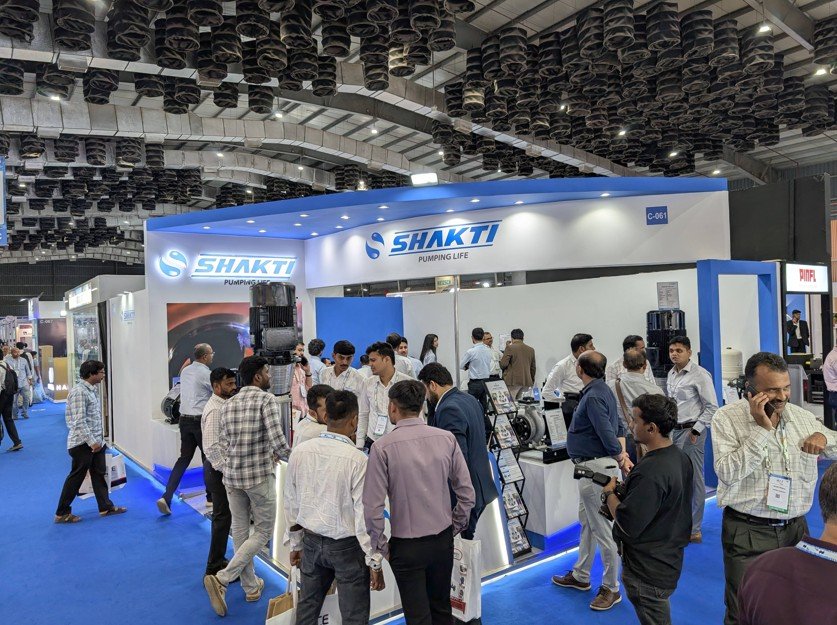
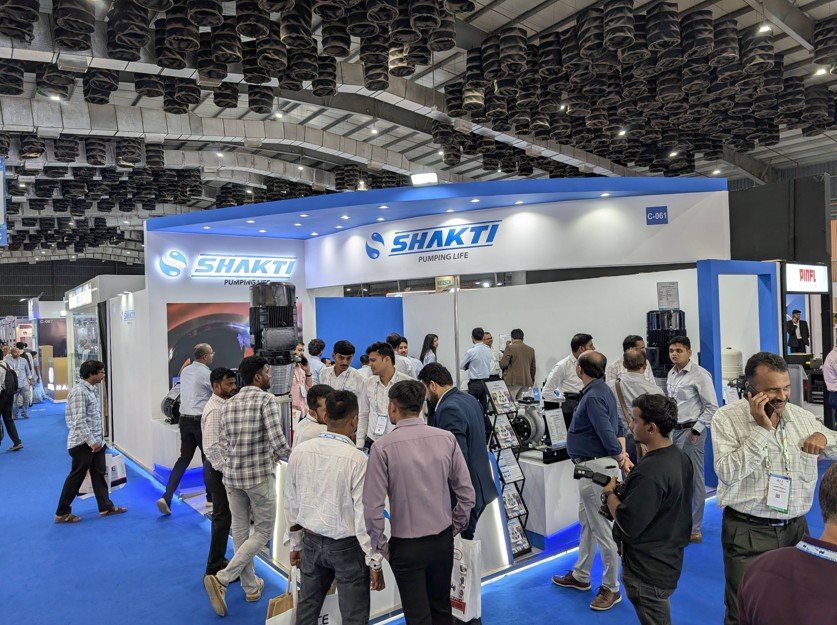
    Shakti Pumps, a leading manufacturer of pumps and pumping solutions, has unveiled its patented next-generation S4RM pumps and advanced pumping equipment at IFAT Mumbai 2026, showcasing technologies designed to improve energy efficiency, operational reliability and pumping performance across agriculture, water management and industrial applications.

    A key highlight of the company’s showcase is the Shakti Slip Start Synchronous Run Motor (S4RM), a patented motor technology that combines the advantages of induction and permanent magnet synchronous motor (PMSM) technologies. The S4RM is a line-start synchronous motor that operates without a Variable Frequency Drive (VFD), making it a direct replacement for conventional induction motors in compatible applications.

    The S4RM technology delivers 5–10% higher runtime efficiency than conventional induction motors, reduces starting current by up to 50%, and offers a power factor close to unity. It also provides higher starting torque and maintains a high and constant discharge even under voltage fluctuations and low-voltage conditions. The technology is available across surface and submersible motor-pump applications.

    Mr Ankit Patidar, CMO Shakti Pumps, said, “At Shakti Pumps, our focus has always been on developing technologies that deliver measurable value to customers through higher efficiency, reliability and lower operating costs. With S4RM, we are bringing together advanced motor technology and practical field performance to help users achieve greater pumping output while reducing energy consumption. Our objective is not simply to make pumps more efficient, but to create a combination of S4RM motor technology and precision stainless-steel fabrication to showcase our commitment to engineering solutions suited to India’s evolving water, agriculture and industrial needs.”

    Compared with conventional induction motors, S4RM operates at around 3000 RPM, has lower starting and full-load current, a power factor close to 1 and consistent discharge despite voltage variation. Conventional induction motors typically draw 7–8 times their full-load current during starting, while S4RM requires approximately 4–5 times, helping reduce electrical stress and contribute to longer motor insulation life.

    Another important focus at IFAT Mumbai is Shakti Pumps’ precision sheet fabrication using SS304 and SS316 stainless steel for pump components, offering greater dimensional accuracy and consistency compared with conventional cast components. Manufactured from uniform-thickness sheets through precision cutting and forming, these components are lighter, easier to install and offer a high strength-to-weight ratio, while improved impeller balance helps minimize vibration and mechanical losses. Precisely engineered flow passages and optimized impeller geometry contribute to higher efficiency, lower energy consumption and up to 40% higher discharge, enhancing productivity across irrigation, water supply and industrial fluid-transfer applications. The use of SS304 and SS316 also provides enhanced durability and corrosion resistance, with SS316 offering greater resistance to chlorides and harsh or mineral-rich water conditions, making these components well suited for demanding operating environments.

    The energy-saving potential of S4RM is demonstrated through Shakti Pumps’ comparative performance data. For a 7.5 kW motor, the S4RM records an efficiency of approximately 91.5%, while the corresponding IE2 system records lower efficiency. In a 22 kW comparison, S4RM efficiency is around 90%, compared with approximately 82% for the conventional induction motor. The company calculates huge annual electricity savings for a 22kW application under specified operating and electricity-cost assumptions.

    Through its participation at IFAT Mumbai 2026, Shakti Pumps is reinforcing its focus on technology-led pumping solutions that address the growing need for energy efficiency, reliability and sustainable water management. The company’s portfolio is designed to support applications ranging from agricultural irrigation and water supply to industrial fluid transfer, helping customers improve productivity while lowering lifecycle energy consumption.
  • Shakti Pumps Unveils Next-Generation Patented S4RM Pumps and Advanced Pumping Solutions at IFAT Mumbai 2026

    Shakti Pumps Unveils Next-Generation Patented S4RM Pumps and Advanced Pumping Solutions at IFAT Mumbai 2026

    Shakti Pumps, a leading manufacturer of pumps and pumping solutions, has unveiled its patented next-generation S4RM pumps and advanced pumping equipment at IFAT Mumbai 2026, showcasing technologies designed to improve energy efficiency, operational reliability and pumping performance across agriculture, water management and industrial applications.

    A key highlight of the company’s showcase is the Shakti Slip Start Synchronous Run Motor (S4RM), a patented motor technology that combines the advantages of induction and permanent magnet synchronous motor (PMSM) technologies. The S4RM is a line-start synchronous motor that operates without a Variable Frequency Drive (VFD), making it a direct replacement for conventional induction motors in compatible applications.

    The S4RM technology delivers 5–10% higher runtime efficiency than conventional induction motors, reduces starting current by up to 50%, and offers a power factor close to unity. It also provides higher starting torque and maintains a high and constant discharge even under voltage fluctuations and low-voltage conditions. The technology is available across surface and submersible motor-pump applications.

    Mr Ankit Patidar, CMO Shakti Pumps, said, “At Shakti Pumps, our focus has always been on developing technologies that deliver measurable value to customers through higher efficiency, reliability and lower operating costs. With S4RM, we are bringing together advanced motor technology and practical field performance to help users achieve greater pumping output while reducing energy consumption. Our objective is not simply to make pumps more efficient, but to create a combination of S4RM motor technology and precision stainless-steel fabrication to showcase our commitment to engineering solutions suited to India’s evolving water, agriculture and industrial needs.”

    Compared with conventional induction motors, S4RM operates at around 3000 RPM, has lower starting and full-load current, a power factor close to 1 and consistent discharge despite voltage variation. Conventional induction motors typically draw 7–8 times their full-load current during starting, while S4RM requires approximately 4–5 times, helping reduce electrical stress and contribute to longer motor insulation life.

    Another important focus at IFAT Mumbai is Shakti Pumps’ precision sheet fabrication using SS304 and SS316 stainless steel for pump components, offering greater dimensional accuracy and consistency compared with conventional cast components. Manufactured from uniform-thickness sheets through precision cutting and forming, these components are lighter, easier to install and offer a high strength-to-weight ratio, while improved impeller balance helps minimize vibration and mechanical losses. Precisely engineered flow passages and optimized impeller geometry contribute to higher efficiency, lower energy consumption and up to 40% higher discharge, enhancing productivity across irrigation, water supply and industrial fluid-transfer applications. The use of SS304 and SS316 also provides enhanced durability and corrosion resistance, with SS316 offering greater resistance to chlorides and harsh or mineral-rich water conditions, making these components well suited for demanding operating environments.

    The energy-saving potential of S4RM is demonstrated through Shakti Pumps’ comparative performance data. For a 7.5 kW motor, the S4RM records an efficiency of approximately 91.5%, while the corresponding IE2 system records lower efficiency. In a 22 kW comparison, S4RM efficiency is around 90%, compared with approximately 82% for the conventional induction motor. The company calculates huge annual electricity savings for a 22kW application under specified operating and electricity-cost assumptions.

    Through its participation at IFAT Mumbai 2026, Shakti Pumps is reinforcing its focus on technology-led pumping solutions that address the growing need for energy efficiency, reliability and sustainable water management. The company’s portfolio is designed to support applications ranging from agricultural irrigation and water supply to industrial fluid transfer, helping customers improve productivity while lowering lifecycle energy consumption.
  • Shakti Pumps Unveils Next-Generation Patented S4RM Pumps and Advanced Pumping Solutions at IFAT Mumbai 2026

    Shakti Pumps, a leading manufacturer of pumps and pumping solutions, has unveiled its patented next-generation S4RM pumps and advanced pumping equipment at IFAT Mumbai 2026, showcasing technologies designed to improve energy efficiency, operational reliability and pumping performance across agriculture, water management and industrial applications.

    A key highlight of the company’s showcase is the Shakti Slip Start Synchronous Run Motor (S4RM), a patented motor technology that combines the advantages of induction and permanent magnet synchronous motor (PMSM) technologies. The S4RM is a line-start synchronous motor that operates without a Variable Frequency Drive (VFD), making it a direct replacement for conventional induction motors in compatible applications.

    The S4RM technology delivers 5–10% higher runtime efficiency than conventional induction motors, reduces starting current by up to 50%, and offers a power factor close to unity. It also provides higher starting torque and maintains a high and constant discharge even under voltage fluctuations and low-voltage conditions. The technology is available across surface and submersible motor-pump applications.

    Mr Ankit Patidar, CMO Shakti Pumps, said, “At Shakti Pumps, our focus has always been on developing technologies that deliver measurable value to customers through higher efficiency, reliability and lower operating costs. With S4RM, we are bringing together advanced motor technology and practical field performance to help users achieve greater pumping output while reducing energy consumption. Our objective is not simply to make pumps more efficient, but to create a combination of S4RM motor technology and precision stainless-steel fabrication to showcase our commitment to engineering solutions suited to India’s evolving water, agriculture and industrial needs.”

    Compared with conventional induction motors, S4RM operates at around 3000 RPM, has lower starting and full-load current, a power factor close to 1 and consistent discharge despite voltage variation. Conventional induction motors typically draw 7–8 times their full-load current during starting, while S4RM requires approximately 4–5 times, helping reduce electrical stress and contribute to longer motor insulation life.

    Another important focus at IFAT Mumbai is Shakti Pumps’ precision sheet fabrication using SS304 and SS316 stainless steel for pump components, offering greater dimensional accuracy and consistency compared with conventional cast components. Manufactured from uniform-thickness sheets through precision cutting and forming, these components are lighter, easier to install and offer a high strength-to-weight ratio, while improved impeller balance helps minimize vibration and mechanical losses. Precisely engineered flow passages and optimized impeller geometry contribute to higher efficiency, lower energy consumption and up to 40% higher discharge, enhancing productivity across irrigation, water supply and industrial fluid-transfer applications. The use of SS304 and SS316 also provides enhanced durability and corrosion resistance, with SS316 offering greater resistance to chlorides and harsh or mineral-rich water conditions, making these components well suited for demanding operating environments.

    The energy-saving potential of S4RM is demonstrated through Shakti Pumps’ comparative performance data. For a 7.5 kW motor, the S4RM records an efficiency of approximately 91.5%, while the corresponding IE2 system records lower efficiency. In a 22 kW comparison, S4RM efficiency is around 90%, compared with approximately 82% for the conventional induction motor. The company calculates huge annual electricity savings for a 22kW application under specified operating and electricity-cost assumptions.

    Through its participation at IFAT Mumbai 2026, Shakti Pumps is reinforcing its focus on technology-led pumping solutions that address the growing need for energy efficiency, reliability and sustainable water management. The company’s portfolio is designed to support applications ranging from agricultural irrigation and water supply to industrial fluid transfer, helping customers improve productivity while lowering lifecycle energy consumption.
  • Exclusive Interview with Mr. Vivek Baj, Partner, Economic Laws Practice

    1.   As India expands its semiconductor manufacturing capacity, what could be the implications for power requirements and the need for reliable renewable energy?

    India’s semiconductor ambitions will create a large electricity demand. Semiconductor fabs are significantly energy-intensive because electricity is required not only for manufacturing equipment but also for cleanrooms, cooling systems, ventilation, ultra-pure water, compressed air, vacuum systems and gas-handling infrastructure. Industry data indicates that for a single semiconductor fab, around 100 megawatt-hours per hour[1] of electricity is required. Further, it is extremely critical to have uninterrupted electricity as even a short power disturbance can disrupt production and result in material losses.

    The Indian Government is now supporting a much broader semiconductor ecosystem. As of July 2026, 12 semiconductor manufacturing units with investments exceeding ₹1.64 lakh crore have been approved[2]. Therefore, the requirement is not simply for more electricity, but for 24×7, high-quality and increasingly low-carbon electricity.

    Renewable energy can meet a significant portion of the energy requirement, but it will need to be combined with storage, grid connectivity and appropriate balancing arrangements to provide the consistency that semiconductor manufacturing requires.

    2.   What role could open-access renewable power play in meeting the growing electricity requirements of semiconductor manufacturing?

    Open access could become one of the most important mechanisms for semiconductor manufacturers to procure renewable electricity directly from the market rather than relying entirely on conventional grid supply.

    The Green Energy Open Access Rules, 2022 lowered the eligibility threshold to 100 kW[3], thereby allowing commercial and industrial consumers to procure renewable power through open access. The framework also provides mechanisms around banking and streamlined approval of open-access transactions.

    For a semiconductor manufacturer, this creates the possibility of entering into long-term renewable power purchase arrangements, including solar, wind or hybrid projects, and potentially combining these with storage.

    3.   How can energy storage solutions support semiconductor manufacturers in meeting their power requirements while using renewable energy?

    Energy storage can ensure that semiconductor manufacturers get reliable, high-quality power even when renewable generation fluctuates.

    Solar and wind generation naturally fluctuate, whereas a semiconductor fab requires continuous electricity. Battery Energy Storage Systems can therefore be used to shift renewable generation to periods of higher demand, manage peak loads and provide short-duration backup. More importantly, storage combined with robust power-management systems can address momentary interruptions, voltage fluctuations and other power-quality issues that can be particularly damaging to semiconductor production.

    India has already recognised the importance of storage in its renewable-energy transition. The Ministry of Power has approved a Viability Gap Funding (VGF) scheme for 30 GWh of Battery Energy Storage Systems (BESS), in addition to the 13.2 GWh already underway and this Rs 5,400 Crore Viability Gap Funding (VGF) scheme for Battery Energy Storage Systems (BESS) aims to attract Rs 33,000 Crore in investment, meeting the country’s BESS requirement by 2028[4].

    For semiconductor manufacturers, therefore, storage should increasingly be viewed not merely as a decarbonisation tool but as part of the core power-reliability infrastructure of the fab.

    4.   What are the key customs and tax implications for companies importing specialised semiconductor equipment and critical inputs into India?

    The Government has specifically identified machinery, electrical equipment, instruments and parts used for semiconductor wafer fabrication and for assembly, testing, marking and packaging for BCD exemptions, subject to the applicable conditions and actual-user requirements. Specified semiconductor inputs and semiconductor-related goods also receive customs-duty concessions under relevant notifications. The positive aspect is that India already provides significant customs-duty support for semiconductor manufacturing and therefore, semiconductor manufacturers need to undertake very detailed product-level customs classification and eligibility analysis.

    Companies should not assume that every item described commercially as “semiconductor equipment” will automatically qualify for an exemption. The HS classification, technical specifications, end-use, notification conditions, actual-user requirements and documentation need to be examined individually.

    Therefore, from a policy perspective, India has made a strong start on customs facilitation, but from an industry perspective, certainty of classification and faster, more consistent customs clearance for highly specialised equipment and inputs will be critical as fabs move from construction into commercial production.

    5.   What policy measures are needed to support semiconductor manufacturing and greater localisation of the semiconductor supply chain?

    The first phase of India’s semiconductor policy has attracted major investments. The Government has now approved Semicon 2.0 with an outlay of ₹1.275 lakh crore[5], with a much stronger emphasis on semiconductor equipment, materials, R&D, design and talent development.  India now needs to simultaneously move from “fab attraction” to “ecosystem development.”

    Going forward, following five priorities should be the focus point:

    • Localise semiconductor equipment and materials particularly specialty chemicals, gases, wafers and precision manufacturing equipment[6].
    • Build reliable infrastructure around semiconductor clusters including uninterrupted power, renewable energy, storage, water and logistics[7].
    • Create a globally competitive tax and customs environment with relevant exemptions and faster clearance.
    • Invest in skills and R&D for sustainable growth and precision manufacturing semiconductor industry
    • Develop downstream demand through sectors such as EVs, renewable energy, telecom, defence, industrial electronics and data centres[8].

    The ultimate objective should therefore be to create an ecosystem where India is not simply assembling or fabricating chips using imported inputs, but is progressively building the entire semiconductor value chain domestically.

    6.   How could semiconductor growth support allied clean-energy sectors such as solar, EVs, batteries and power electronics?

    Semiconductor growth can strengthen clean-energy sectors by supplying critical chips and power electronics for solar inverters, EVs, charging systems, batteries, energy storage and grid equipment. This can create a virtuous cycle: domestic semiconductor manufacturing supports cleaner, more efficient technologies, while renewable energy provides reliable, low-carbon power to semiconductor fabs.

    7.   What opportunities could India’s semiconductor expansion create for the renewable energy and power ecosystem, particularly in renewable power and energy storage?

    This is one of the most significant, but less discussed, spillover opportunities from India’s semiconductor programme.

    India’s semiconductor expansion could create major opportunities for renewable power and energy storage by making fabs anchor customers for reliable, round-the-clock clean energy. This could drive long-term renewable PPAs, open-access and captive projects, solar-wind hybrids, battery storage and integrated low-carbon energy infrastructure around semiconductor clusters.

    Therefore, semiconductors and renewable energy are not two separate policy stories, but as complementary pillars of India’s next phase of industrialisation. The semiconductor industry will create substantial demand for reliable clean power, while the clean-energy transition will create a growing domestic market for the very semiconductor technologies.

  • Exide Industries Partners with ExCom Energy Solutions to Expand Battery Business in Europe

    Exide Industries Partners with ExCom Energy Solutions to Expand Battery Business in Europe

    Exide Industries and Germany-based ExCom Energy Solutions GmbH have entered into a long-term strategic cooperation agreement to expand their industrial battery and energy storage business across the European Economic Area, the companies said.

    The agreement, signed on September 15, will see products offered under the ExCom brand, with ExCom serving as the central commercial and technical interface for customers across the EEA. Its responsibilities will include customer development, distribution, technical project support and after-sales coordination.

    The cooperation will initially focus on traction and motive-power batteries for material-handling equipment, logistics operations and other industrial mobility applications, as well as stationary battery systems for industrial, infrastructure and energy storage applications.

    The companies said the partnership will combine Exide India’s manufacturing capabilities, technology portfolio and industrial battery expertise with ExCom’s European market presence, application engineering capabilities and local customer support infrastructure.

    The offering is expected to cover battery systems, charging technologies, system integration, application engineering and lifecycle services, with products tailored to customers’ technical, regulatory and operational requirements in the EEA.
    Exide India and ExCom also plan to explore advanced chemistry solutions in the future as part of their cooperation in industrial energy storage.

    Avik Roy, Managing Director and CEO, Exide Industries, said, “The European Economic Area represents a strategically important market for Exide India’s industrial energy storage business, with growing demand for dependable, efficient, and sustainable energy solutions. ExCom GmbH brings strong market access, deep application expertise, and proven local execution capabilities.”

    Holger Aschke, Managing Director, ExCom Energy Solutions GmbH, added, “Together, we intend to build a robust European platform for traction batteries while exploring next-generation industrial energy storage opportunities. Beyond advanced lead-acid battery technologies, both companies see significant potential to expand their cooperation into selected advanced chemistry applications over time.”

    Exide said it has more than seven decades of experience and offers automotive, industrial, traction and stationary battery solutions. Through its wholly owned subsidiary Exide Energy Solutions, it is also developing advanced chemistry cells, modules and battery packs for mobility and stationary energy storage applications.

  • Exide Industries Partners with ExCom Energy Solutions to Expand Battery Business in Europe

    Exide Industries and Germany-based ExCom Energy Solutions GmbH have entered into a long-term strategic cooperation agreement to expand their industrial battery and energy storage business across the European Economic Area, the companies said.

    The agreement, signed on September 15, will see products offered under the ExCom brand, with ExCom serving as the central commercial and technical interface for customers across the EEA. Its responsibilities will include customer development, distribution, technical project support and after-sales coordination.

    The cooperation will initially focus on traction and motive-power batteries for material-handling equipment, logistics operations and other industrial mobility applications, as well as stationary battery systems for industrial, infrastructure and energy storage applications.

    The companies said the partnership will combine Exide India’s manufacturing capabilities, technology portfolio and industrial battery expertise with ExCom’s European market presence, application engineering capabilities and local customer support infrastructure.

    The offering is expected to cover battery systems, charging technologies, system integration, application engineering and lifecycle services, with products tailored to customers’ technical, regulatory and operational requirements in the EEA.
    Exide India and ExCom also plan to explore advanced chemistry solutions in the future as part of their cooperation in industrial energy storage.

    Avik Roy, Managing Director and CEO, Exide Industries, said, “The European Economic Area represents a strategically important market for Exide India’s industrial energy storage business, with growing demand for dependable, efficient, and sustainable energy solutions. ExCom GmbH brings strong market access, deep application expertise, and proven local execution capabilities.”

    Holger Aschke, Managing Director, ExCom Energy Solutions GmbH, added, “Together, we intend to build a robust European platform for traction batteries while exploring next-generation industrial energy storage opportunities. Beyond advanced lead-acid battery technologies, both companies see significant potential to expand their cooperation into selected advanced chemistry applications over time.”

    Exide said it has more than seven decades of experience and offers automotive, industrial, traction and stationary battery solutions. Through its wholly owned subsidiary Exide Energy Solutions, it is also developing advanced chemistry cells, modules and battery packs for mobility and stationary energy storage applications.

  • ACME Solar Commissions 66.68 MW Solar Capacity and 300 MWh BESS Capacity in Rajasthan

    ACME Solar Commissions 66.68 MW Solar Capacity and 300 MWh BESS Capacity in Rajasthan

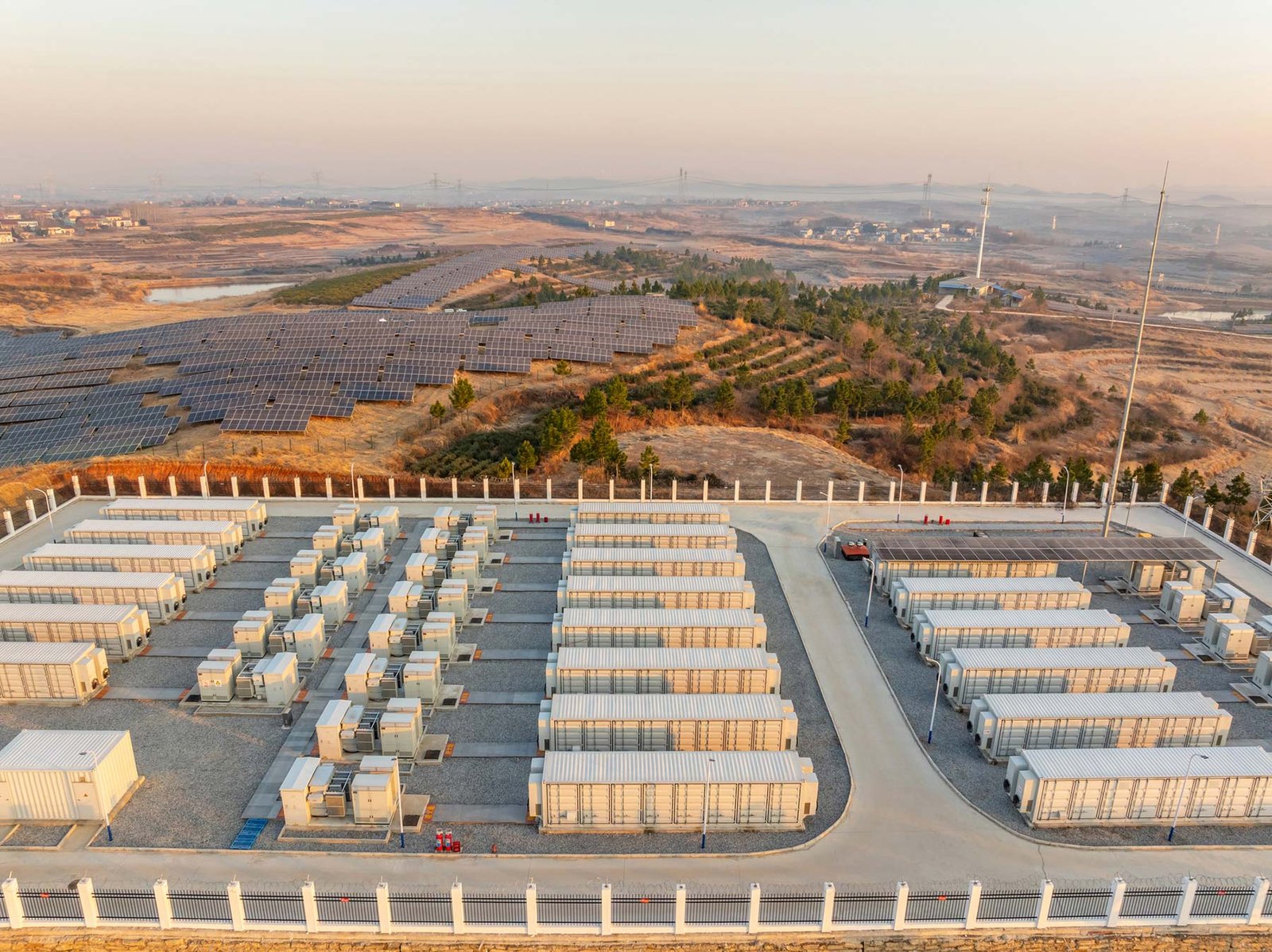
    ACME Solar Holdings Limited (ACME Solar), through its subsidiaries has commissioned 66.68 MW of Solar and 300 MWh of Battery Energy Storage System (BESS) capacities in Bikaner, Rajasthan, expanding its operational portfolio.

    ACME Solar, through its subsidiary, ACME Renewtech Private Limited, has commissioned Phase-l, comprising 66.68 MW solar out of the total 300 MW Solar capacity. The solar capacity is located at Kelan Village in Bikaner, Rajasthan. The capacity forms part of ACME Solar’s first hybrid renewable energy project, combining 300 MW of solar capacity with 100 MW of wind capacity.

    The Power Purchase Agreement (PPA) for the project has been signed with NTPC Limited and long-term project financing with PFC. ACME Solar expects to commission entire 300 MW solar capacity by the end of Q3 FY27. Following the commissioning of this project, the renewable energy operational capacity of ACME Solar is now approximately 3,057 MW.

    Separately, ACME Solar, through its subsidiary ACME Greentech Seventh Private Limited, has commissioned Phase-l of the Battery Energy Storage System (BESS) component of its FDRE project located at the same site. Phase-l comprises 53.63 MW / 300 MWh of BESS capacity out of the project’s total 300 MW / 1581 MWh BESS capacity. The project marks ACME Solar’s first assured off-peak power supply project for which the Power Purchase Agreement (PPA) for the project has been signed with SJVN Limited and long-term project finance is with REC. ACME Solar expects to commission the entire BESS capacity for this project by Q3 of the current fiscal.

    With this commissioning milestone, ACME Solar has crossed 4 GWh milestone in operational BESS capacity with total operational capacity of 4.16 GWh.