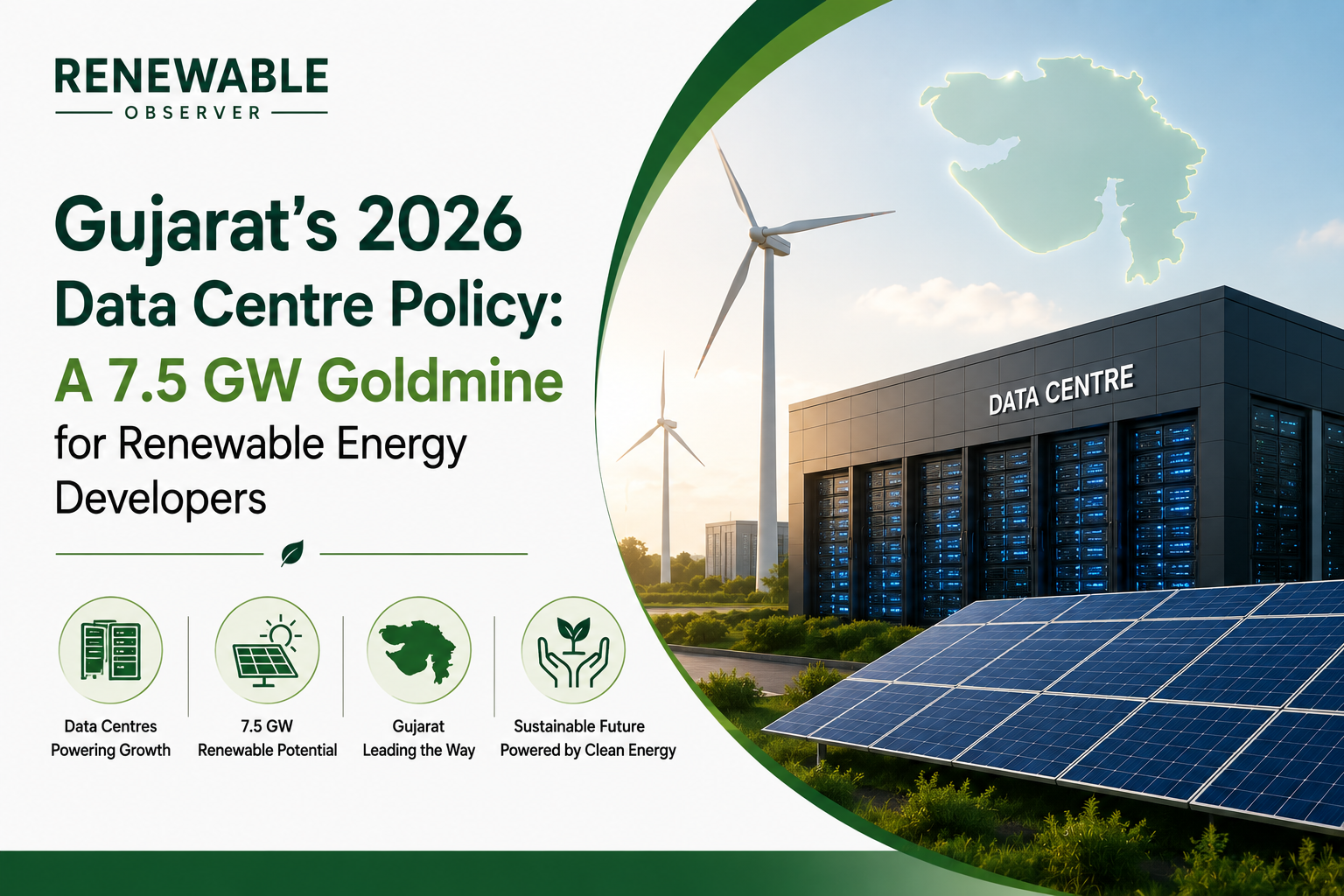
The explosion of Artificial Intelligence (AI) and cloud computing in India is creating an unprecedented demand for data centres. However, these hyperscale facilities are incredibly energy-intensive. To support this digital boom sustainably, the Gujarat government has launched the Viksit Gujarat Data Center Policy (2026-29).
For renewable energy developers and Independent Power Producers (IPPs), this policy represents one of the largest single-state opportunities of the decade. Here is a breakdown of the policy mandates and how it translates into massive power purchase agreements (PPAs) for clean energy.
1. The 7.5 GW Ambition
Gujarat’s new policy targets total investments of ₹6 lakh crore and aims the creation of 7.5 gigawatts (GW) of new data centre capacity by 2029, making it the most ambitious state-level framework in the country.
To put this into perspective, a single 150 MW data centre requires the equivalent power of a small city. Scaling up to 7.5 GW of IT load will require dedicated, gigawatt-scale power generation assets acting as the backbone for these technological hubs.
2. The 51% Green Energy Mandate
The most critical aspect of the policy for the clean tech sector is its strict sustainability requirement. Under the new framework, any data centre entity setting up in Gujarat must ensure that at least 51% of the electricity consumed for its core operations comes from green and renewable sources.
This mandate is already reshaping how tech giants secure power:
- Reliance and Meta: Reliance Industries recently partnered with Meta to lease a 168 MW AI-enabled data centre in Jamnagar, Gujarat. The facility will be powered entirely by renewable energy.
- AdaniConneX: The Adani Group is building a 5 GW data centre platform across India, which will be heavily powered by the massive Adani Green Energy park located at Khavda in Kutch.
This 51% threshold ensures that every new data centre built in the state will automatically trigger corresponding demand for utility-scale solar, wind, and battery storage projects.
3. Deep Financial Incentives Driving Growth
To attract hyperscalers and ensure these projects are economically viable, the state government has rolled out aggressive financial incentives. These indirectly benefit power producers by ensuring the long-term financial health of their primary off-takers (the data centres).
- Electricity Duty Reimbursement: The policy offers a 100% reimbursement on electricity duty for a period of 20 years.
- Power Subsidy: It provides an additional subsidy at the rate of ₹1 per unit of power consumed by the data centre for 20 years from the commencement of commercial operations.
- Infrastructure Support: Total exemption on stamp duty and registration fees for leasing or buying land, along with full reimbursement of eligible expenses on plant, machinery, and building infrastructure.
4. What This Means for EPCs and Developers
The intersection of tech and energy is the new frontier. Data centres require high reliability—often aiming for 99.999% uptime. Because solar and wind are intermittent, renewable developers bidding for these lucrative corporate PPAs cannot simply offer daytime solar.
To capture this market, EPCs must pivot toward Round-The-Clock (RTC) renewable solutions. This means integrating massive Battery Energy Storage Systems (BESS) or Pumped Hydro Storage with solar-wind hybrid parks to guarantee firm, dispatchable clean power to these digital fortresses.
For more insights into the broader government initiatives shaping this sector, you can check out this Budget 2026: Fresh Push for Renewable Energy. This video discusses the broader government policy frameworks and budget incentives driving the expansion of clean infrastructure across India.