Category: Wind Power

  • Onshore Wind Remains Backbone of Global Energy Transition as Capacity Additions Surge Worldwide

    Onshore Wind Remains Backbone of Global Energy Transition as Capacity Additions Surge Worldwide

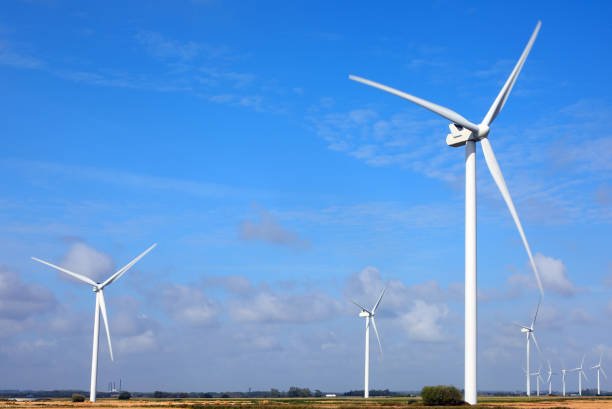
    Onshore wind energy continues to dominate global wind power development, accounting for the vast majority of new installations worldwide and reinforcing its position as one of the most cost-effective sources of renewable electricity.

    According to the latest Global Wind Report, the world added 165 GW of new wind power capacity in the previous year, of which 155.3 GW came from onshore wind projects, while offshore installations contributed 9.3 GW. The trend is largely driven by economic factors, with onshore wind recognized as the second-cheapest source of electricity globally after large-scale solar photovoltaic plants.

    A study by Fraunhofer ISE highlights that the construction, operation, and maintenance of onshore wind turbines are significantly more cost-efficient than offshore wind projects, making onshore deployment increasingly attractive for countries seeking affordable and scalable clean energy solutions.

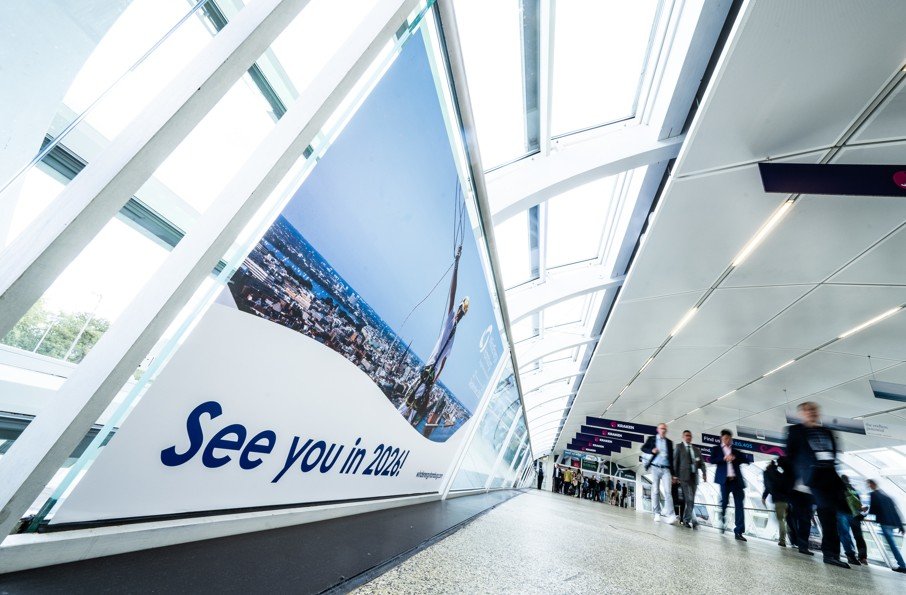
    “Onshore wind energy is the foundation of the global energy transition,” said Andreas Arnheim, Director of WindEnergy Hamburg. At WindEnergy Hamburg, scheduled from September 22–25, more than 1,600 exhibitors will showcase their latest innovations. While many technologies serve both offshore and onshore applications, approximately 60 percent of exhibitors are focused on the onshore wind segment.

    Industry Growth Continues Despite Market Challenges

    Although the wind sector continues to face supply chain constraints, rising costs, and permitting delays, industry growth remains strong.

    The International Energy Agency (IEA) projects that global wind power capacity will nearly double to more than 2,000 GW by 2030 as advanced and developing economies work to overcome these challenges.

    The IEA further estimates that around 85 percent of all future wind capacity additions will come from onshore projects, underlining the segment’s critical role in achieving global renewable energy targets.

    Energy Security Strengthens the Case for Wind Power

    Beyond climate goals, energy security is becoming a major driver for renewable energy adoption.

    Recent geopolitical tensions, including disruptions affecting global oil and gas supply routes, have reinforced the importance of reducing dependence on imported fossil fuels. Industry leaders believe renewable energy, particularly wind power, will play a central role in strengthening national energy resilience.

    “The blockade of the Strait of Hormuz and the resulting steep increase in oil and gas prices have once more impressed on all policy-makers the urgent need to boost resilience,” said Claus Ulrich Selbach, Vice President Exhibitions at Hamburg Messe und Congress.

    China’s leadership in wind energy deployment is largely attributed to its strong domestic market. Meanwhile, European manufacturers continue to rely on technological expertise and innovation to remain competitive globally.

    Dr. Dennis Rendschmidt, Managing Director of VDMA Power Systems, emphasized the importance of strengthening Europe’s wind industry supply chain, stating that maintaining a strong regional value chain is essential for preserving know-how and improving technological and political resilience.

    José Luis Blanco, CEO of Nordex Group, echoed similar concerns, noting that the European wind industry requires greater scale to maintain global relevance. Nordex was the leading supplier in Germany’s onshore wind market for the second consecutive year in 2025, accounting for 31.5 percent of all newly connected turbines. The company operates manufacturing facilities in Germany, Spain, Brazil, India, and the United States and focuses on onshore turbine platforms in the 4 MW to 7+ MW range.

    Repowering Emerges as a Key Growth Strategy

    As land availability and grid limitations become increasingly important considerations, repowering is gaining momentum across key wind markets.

    Repowering involves replacing older turbines with newer, larger, and more efficient models capable of generating significantly higher outputs.

    According to market research firm Mordor Intelligence, approximately 37 percent of Germany’s onshore capacity growth in 2024 came from replacing first-generation 2 MW turbines with modern 6 MW machines.

    Enercon, another major industry player and exhibitor at WindEnergy Hamburg, is benefiting from this trend. The company’s flagship E-175 EP5 E2 turbine features a rated capacity of 7 MW and a rotor diameter of 175 meters, making it one of the most powerful onshore wind turbines currently available.

    “The E-175 EP5 E2 is the leading turbine type among new approvals in Germany, and a growing number of international customers view it as a key solution for maximizing energy output,” said Enercon CEO Udo Bauer.

    The company has secured orders for projects across Turkey, Canada, the Netherlands, Austria, Lithuania, and Portugal. Enercon attributes part of its success to continuous performance upgrades that optimize turbine operations throughout their lifecycle.

    Expanding Project Pipelines and Future Outlook

    Wind farm developer and operator wpd is also expanding its presence across Europe, Asia, and the Americas. The company currently maintains an onshore project pipeline exceeding 38 GW of installed capacity.

    In Germany alone, nearly 1 GW of projects are under construction, while the company has recently secured additional contracts through public tenders.

    However, industry leaders continue to caution against market uncertainties.

    “At the same time, however, we are facing an extremely challenging market environment marked by falling prices and rising costs. The federal government’s so-called Grid Package along with the overhaul of the Renewable Energies Act risk undesirable developments that could slow the expansion of wind energy,” warned Dr. Hartmut Brösamle, CEO of wpd.

    WindEnergy Hamburg 2026 to Focus on Industry Transformation

    WindEnergy Hamburg 2026 will bring together industry stakeholders, policymakers, researchers, and technology providers to discuss the future of wind energy and the broader energy transition.

    Key themes will include smart grids, digitalization, energy storage integration, supply chain resilience, and next-generation wind technologies.

    “Networking is the key to the continued successful development of wind energy, and our global flagship fair provides an ideal platform for it,” said Andreas Arnheim. “All that in the interest of a secure, future-ready energy supply and effective climate protection worldwide.”

    With onshore wind continuing to account for the majority of global installations and expected future growth, industry stakeholders increasingly view the sector as a cornerstone of both climate action and long-term energy security.
  • Siemens Energy and NSORe Secure 50Hertz Contract for Offshore Wind Grid Connection in Germany

    Siemens Energy and NSORe Secure 50Hertz Contract for Offshore Wind Grid Connection in Germany

    Siemens Energy and Neptun Smulders Offshore Renewables (NSORe) have been awarded a contract to deliver a new grid connection system for offshore wind farms in the North Sea for German transmission system operator, 50Hertz.

    The connection, known as North Sea Connector 2, will enable up to 2 gigawatts of wind power to be transmitted from offshore to onshore in the future. The offshore converter platform will be fabricated by NSORe, a joint venture between Neptun Werft – part of the German Meyer Werft Group – and the Belgian construction company Smulders, primarily at the Neptun Werft shipyard in Rostock-Warnemünde.

    Siemens Energy will equip the platform with electrical transmission technologies, which will largely be manufactured at the company’s German factories. Siemens Energy has also been awarded a long-term service contract to cover maintenance, IT services, and on-call support. The company expects to fully book the order in the next fiscal year, starting on October 1, 2026.

    Tim Holt, Member of the Executive Board of Siemens Energy, said: “Expanding offshore grid connections is currently one of the most demanding tasks of the energy transition, especially at the pace now required. To help this, we have specifically expanded our capacities in Germany. Technology is only one piece of the puzzle, to ensure that our technologies can be deployed, we rely on strong partners in the maritime sector. We welcome the additional, much-needed capacity being created by Neptun Werft.”

    Stefan Kapferer, CEO of 50Hertz, said: “As the transmission system operator for eastern Germany, Berlin and Hamburg, we are pleased that, in a transparent and open tendering process, a consortium was able to prevail both in terms of price and technology, and will manufacture key components at a shipyard within our grid area. This demonstrates that domestic shipyards are now capable of offering competitive bids for the construction of offshore platforms.”

    Around 95 percent of Siemens Energy’s project scope for North Sea Connector 2 will be delivered in Germany: Transformers and converters will come from Nuremberg, while SF₆-free gas-insulated switchgear will be supplied from Berlin. Siemens Energy is currently investing several hundred million euros in expanding these sites to meet growing demand for energy transition technologies.

    To efficiently transmit electricity from offshore wind farms located far from shore, the power is converted from alternating current (AC) to direct current (DC) at sea. This is done on an offshore converter platform, which consists of two main components: A jacket foundation and a topside structure roughly the height of a building. The topside for the North Sea Connector 2 project will be built by Meyer Werft in Rostock-Warnemünde and subsequently equipped with the necessary power transmission technology by Siemens Energy. At the same time, Smulders will manufacture the jacket in the Netherlands, on which the topside will later be installed approximately 200 kilometers west of the island of Sylt in the North Sea.

    Once commissioned, the platform will convert the alternating current generated by the wind turbines into direct current and transmit it to shore via subsea cables. At an onshore converter station, the electricity will then be converted back into alternating current and fed into the grid.

  • Siemens Energy to Build 2 GW Converter Platform with German Shipyard for First Time

    Siemens Energy to Build 2 GW Converter Platform with German Shipyard for First Time

    Siemens Energy and Neptun Smulders Offshore Renewables (NSORe) have been awarded a contract to deliver a new grid connection system for offshore wind farms in the North Sea for German transmission system operator, 50Hertz.

    The connection, known as North Sea Connector 2, will enable up to 2 gigawatts of wind power to be transmitted from offshore to onshore in the future. The offshore converter platform will be fabricated by NSORe, a joint venture between Neptun Werft – part of the German Meyer Werft Group – and the Belgian construction company Smulders, primarily at the Neptun Werft shipyard in Rostock-Warnemünde.

    Siemens Energy will equip the platform with electrical transmission technologies, which will largely be manufactured at the company’s German factories. Siemens Energy has also been awarded a long-term service contract to cover maintenance, IT services, and on-call support. The company expects to fully book the order in the next fiscal year, starting on October 1, 2026.

    Tim Holt, Member of the Executive Board of Siemens Energy, said: “Expanding offshore grid connections is currently one of the most demanding tasks of the energy transition, especially at the pace now required. To help this, we have specifically expanded our capacities in Germany. Technology is only one piece of the puzzle, to ensure that our technologies can be deployed, we rely on strong partners in the maritime sector. We welcome the additional, much-needed capacity being created by Neptun Werft.”

    Stefan Kapferer, CEO of 50Hertz, said: “As the transmission system operator for eastern Germany, Berlin and Hamburg, we are pleased that, in a transparent and open tendering process, a consortium was able to prevail both in terms of price and technology, and will manufacture key components at a shipyard within our grid area. This demonstrates that domestic shipyards are now capable of offering competitive bids for the construction of offshore platforms.”

    Around 95 percent of Siemens Energy’s project scope for North Sea Connector 2 will be delivered in Germany: Transformers and converters will come from Nuremberg, while SF₆-free gas-insulated switchgear will be supplied from Berlin. Siemens Energy is currently investing several hundred million euros in expanding these sites to meet growing demand for energy transition technologies.

    To efficiently transmit electricity from offshore wind farms located far from shore, the power is converted from alternating current (AC) to direct current (DC) at sea. This is done on an offshore converter platform, which consists of two main components: A jacket foundation and a topside structure roughly the height of a building. The topside for the North Sea Connector 2 project will be built by Meyer Werft in Rostock-Warnemünde and subsequently equipped with the necessary power transmission technology by Siemens Energy. At the same time, Smulders will manufacture the jacket in the Netherlands, on which the topside will later be installed approximately 200 kilometers west of the island of Sylt in the North Sea.

    Once commissioned, the platform will convert the alternating current generated by the wind turbines into direct current and transmit it to shore via subsea cables. At an onshore converter station, the electricity will then be converted back into alternating current and fed into the grid.