Blog

  • Solex Energy Hosts Ghana High Commissioner to Advance India–Ghana Renewable Energy Collaboration

    In a significant step towards strengthening international cooperation in renewable energy, Solex Energy Limited (NSE: SOLEX), welcomed H.E. Prof. Kwasi Obiri-Danso, High Commissioner of Ghana to India, along with a distinguished Ghana delegation, to its corporate headquarters in Surat for strategic discussions on accelerating clean energy adoption and fostering bilateral collaboration in the solar sector.

    The visit comes at a time when emerging economies are increasingly prioritising renewable energy to enhance energy security, drive sustainable economic growth and meet global climate commitments. Ghana has set ambitious targets to diversify its energy mix and expand renewable energy generation, creating significant opportunities for international partnerships in technology, manufacturing and infrastructure development.

    As part of the strategic discussions, Solex Energy proposed partnering with Ghana to establish an end-to-end solar manufacturing ecosystem in phases, encompassing the local production of renewable energy components, technology transfer, and capacity building. The company also emphasized the importance of developing indigenous talent by introducing skill development and technical training programmes to create a sustainable renewable energy workforce in Ghana. Solex further expressed its intent to collaborate with the International Solar Alliance (ISA) to support Ghana’s clean energy transition, foster international cooperation, and contribute to achieving global climate and energy access goals.

    With an operational manufacturing capacity of 4 GW, and a strategic roadmap to establish 10 GW of solar module manufacturing and 10 GW of solar cell manufacturing capacity under its Vision 2030, Solex Energy continues to strengthen India’s position as a global clean energy manufacturing hub.

    Speaking on the occasion, Dr. Chetan Shah, Chairman & Managing Director, Solex Energy Limited, said:

    “We were honoured to host H.E. Prof. Kwasi Obiri-Danso and the distinguished delegation from Ghana. The discussions reflected not only the immense renewable energy potential that Ghana possesses but also our shared belief that international partnerships will be instrumental in shaping the next phase of the global energy transition. At Solex Energy, we view such engagements as an opportunity to build enduring relationships founded on innovation, trust and sustainable development. We look forward to exploring avenues where our manufacturing capabilities and technological expertise can complement Ghana’s renewable energy aspirations, creating long-term value for both nations.”

    The visit reflects Solex Energy’s continued focus on building strategic international partnerships and expanding its global footprint in high-growth renewable energy markets. As countries accelerate their transition towards clean energy, the company remains committed to supporting governments, utilities and private enterprises with world-class solar technologies manufactured in India.
  • Solex Energy Hosts Ghana High Commissioner to Advance India–Ghana Renewable Energy Collaboration

    In a significant step towards strengthening international cooperation in renewable energy, Solex Energy Limited (NSE: SOLEX), welcomed H.E. Prof. Kwasi Obiri-Danso, High Commissioner of Ghana to India, along with a distinguished Ghana delegation, to its corporate headquarters in Surat for strategic discussions on accelerating clean energy adoption and fostering bilateral collaboration in the solar sector.

    The visit comes at a time when emerging economies are increasingly prioritising renewable energy to enhance energy security, drive sustainable economic growth and meet global climate commitments. Ghana has set ambitious targets to diversify its energy mix and expand renewable energy generation, creating significant opportunities for international partnerships in technology, manufacturing and infrastructure development.

    As part of the strategic discussions, Solex Energy proposed partnering with Ghana to establish an end-to-end solar manufacturing ecosystem in phases, encompassing the local production of renewable energy components, technology transfer, and capacity building. The company also emphasized the importance of developing indigenous talent by introducing skill development and technical training programmes to create a sustainable renewable energy workforce in Ghana. Solex further expressed its intent to collaborate with the International Solar Alliance (ISA) to support Ghana’s clean energy transition, foster international cooperation, and contribute to achieving global climate and energy access goals.

    With an operational manufacturing capacity of 4 GW, and a strategic roadmap to establish 10 GW of solar module manufacturing and 10 GW of solar cell manufacturing capacity under its Vision 2030, Solex Energy continues to strengthen India’s position as a global clean energy manufacturing hub.

    Speaking on the occasion, Dr. Chetan Shah, Chairman & Managing Director, Solex Energy Limited, said:

    “We were honoured to host H.E. Prof. Kwasi Obiri-Danso and the distinguished delegation from Ghana. The discussions reflected not only the immense renewable energy potential that Ghana possesses but also our shared belief that international partnerships will be instrumental in shaping the next phase of the global energy transition. At Solex Energy, we view such engagements as an opportunity to build enduring relationships founded on innovation, trust and sustainable development. We look forward to exploring avenues where our manufacturing capabilities and technological expertise can complement Ghana’s renewable energy aspirations, creating long-term value for both nations.”

    The visit reflects Solex Energy’s continued focus on building strategic international partnerships and expanding its global footprint in high-growth renewable energy markets. As countries accelerate their transition towards clean energy, the company remains committed to supporting governments, utilities and private enterprises with world-class solar technologies manufactured in India.
  • Nagpur Commissions First 4 MW Solar Park, Supplies Daytime Power to 1,000 Farmers Across Nine Villages

    Nagpur Commissions First 4 MW Solar Park, Supplies Daytime Power to 1,000 Farmers Across Nine Villages

    Maharashtra has commissioned Nagpur’s first 4 MW solar park, a project designed to provide reliable daytime electricity to nearly 1,000 farmers across nine villages under the Mukhyamantri Saur Krishi Vahini Yojana 2.0 (MSKVY 2.0). The initiative is expected to improve the quality of agricultural power supply while reducing dependence on conventional energy sources.

    Developed by Mahatma Phule Renewable Energy and Infrastructure Technology Ltd. (MAHAPREIT) in collaboration with the Maharashtra State Electricity Distribution Company Ltd. (MSEDCL), the solar park has been commissioned at Bela village in Umred taluka of Nagpur district. The project will directly feed solar power into dedicated agricultural feeders, enabling farmers to receive electricity during daylight hours for irrigation and other farming activities.

    The 4 MW facility is expected to generate around 7 million units (MU) of clean electricity annually, helping offset carbon emissions while ensuring a stable and uninterrupted power supply to agricultural consumers. By shifting farm power consumption to solar energy during the day, the project will also reduce the load on the conventional power grid and improve overall distribution efficiency.

    The solar park forms part of the state’s broader plan to solarise agricultural feeders under MSKVY 2.0, which aims to provide farmers with dependable daytime electricity through decentralised renewable energy projects. The programme also seeks to lower power procurement costs for the distribution utility while promoting sustainable farming practices.

    Officials said the commissioning of Nagpur’s first solar park marks an important milestone in Maharashtra’s clean energy transition. Similar decentralised solar projects are planned across the state to expand access to daytime agricultural power, strengthen rural electricity infrastructure and accelerate the adoption of renewable energy in the farm sector.

  • Nagpur Commissions First 4 MW Solar Park, Supplies Daytime Power to 1,000 Farmers Across Nine Villages

    Maharashtra has commissioned Nagpur’s first 4 MW solar park, a project designed to provide reliable daytime electricity to nearly 1,000 farmers across nine villages under the Mukhyamantri Saur Krishi Vahini Yojana 2.0 (MSKVY 2.0). The initiative is expected to improve the quality of agricultural power supply while reducing dependence on conventional energy sources.

    Developed by Mahatma Phule Renewable Energy and Infrastructure Technology Ltd. (MAHAPREIT) in collaboration with the Maharashtra State Electricity Distribution Company Ltd. (MSEDCL), the solar park has been commissioned at Bela village in Umred taluka of Nagpur district. The project will directly feed solar power into dedicated agricultural feeders, enabling farmers to receive electricity during daylight hours for irrigation and other farming activities.

    The 4 MW facility is expected to generate around 7 million units (MU) of clean electricity annually, helping offset carbon emissions while ensuring a stable and uninterrupted power supply to agricultural consumers. By shifting farm power consumption to solar energy during the day, the project will also reduce the load on the conventional power grid and improve overall distribution efficiency.

    The solar park forms part of the state’s broader plan to solarise agricultural feeders under MSKVY 2.0, which aims to provide farmers with dependable daytime electricity through decentralised renewable energy projects. The programme also seeks to lower power procurement costs for the distribution utility while promoting sustainable farming practices.

    Officials said the commissioning of Nagpur’s first solar park marks an important milestone in Maharashtra’s clean energy transition. Similar decentralised solar projects are planned across the state to expand access to daytime agricultural power, strengthen rural electricity infrastructure and accelerate the adoption of renewable energy in the farm sector.

  • Nagpur Commissions First 4 MW Solar Park, Supplies Daytime Power to 1,000 Farmers Across Nine Villages

    Maharashtra has commissioned Nagpur’s first 4 MW solar park, a project designed to provide reliable daytime electricity to nearly 1,000 farmers across nine villages under the Mukhyamantri Saur Krishi Vahini Yojana 2.0 (MSKVY 2.0). The initiative is expected to improve the quality of agricultural power supply while reducing dependence on conventional energy sources.

    Developed by Mahatma Phule Renewable Energy and Infrastructure Technology Ltd. (MAHAPREIT) in collaboration with the Maharashtra State Electricity Distribution Company Ltd. (MSEDCL), the solar park has been commissioned at Bela village in Umred taluka of Nagpur district. The project will directly feed solar power into dedicated agricultural feeders, enabling farmers to receive electricity during daylight hours for irrigation and other farming activities.

    The 4 MW facility is expected to generate around 7 million units (MU) of clean electricity annually, helping offset carbon emissions while ensuring a stable and uninterrupted power supply to agricultural consumers. By shifting farm power consumption to solar energy during the day, the project will also reduce the load on the conventional power grid and improve overall distribution efficiency.

    The solar park forms part of the state’s broader plan to solarise agricultural feeders under MSKVY 2.0, which aims to provide farmers with dependable daytime electricity through decentralised renewable energy projects. The programme also seeks to lower power procurement costs for the distribution utility while promoting sustainable farming practices.

    Officials said the commissioning of Nagpur’s first solar park marks an important milestone in Maharashtra’s clean energy transition. Similar decentralised solar projects are planned across the state to expand access to daytime agricultural power, strengthen rural electricity infrastructure and accelerate the adoption of renewable energy in the farm sector.

  • Hon’ble Lieutenant Governor of Ladakh Marks ONGC’s LandmarkCompletion of Two Deep Geothermal Wells at Puga

    Hon’ble Lieutenant Governor of Ladakh Marks ONGC’s LandmarkCompletion of Two Deep Geothermal Wells at Puga

    India’s geothermal energy ambitions received a significant boost as ONGC Energy Centre successfully completed two deep geothermal wells, GT#02 and GT#03, at the Puga Geothermal Project in Ladakh. Marking the milestone, Hon’ble Lieutenant Governor of Ladakh Shri Vinai Kumar Saxena unveiled a commemorative plaque at the project site, underscoring the progress of India’s first demonstration-scale geothermal power project aimed at delivering reliable, round-the-clock clean energy to the region while strengthening the nation’s clean energy and energy security goals.

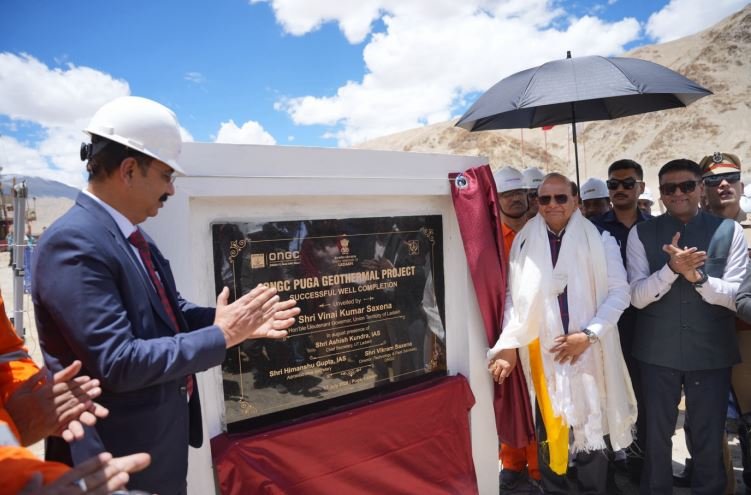
    Hon’ble Lieutenant Governor of the Union Territory of Ladakh Shri Vinai Kumar Saxena unveiled a commemorative plaque at the Puga Geothermal Project site, marking the successful completion of geothermal wells GT#02 and GT#03 by ONGC Energy Centre

    The milestone advances the development of India’s first demonstration-scale geothermal power project at Puga and opens new possibilities for clean, dependable and round-the-clock energy in Ladakh. The project shall help strengthen energy access in remote areas, reduce dependence on conventional fuels and support reliable power availability during the region’s severe winters.

    Beyond electricity generation, geothermal energy has the potential to support space heating, greenhouse cultivation, year-round agriculture, food processing, geotourism and sustainable livelihoods. These applications could contribute significantly to Ladakh’s socio-economic development and its aspiration to emerge as a carbon-neutral region.

    At the national level, the project strengthens India’s clean-energy portfolio, advances technological self-reliance and supports the country’s long-term energy-security and Net Zero objectives. The initiative is being advanced jointly by ONGC Energy Centre, the UT Administration of Ladakh and LAHDC-Leh under a five-year collaboration renewed in June 2026.

    The occasion was attended by Administrative Secretary Shri Himanshu Gupta, IAS; Secretary to the Hon’ble Lieutenant Governor Ms Shashanka Ala, IAS; Deputy Commissioner, Changthang, Shri Nitish Rajora; and Superintendent of Police, Changthang, Shri Abbas Jaffari.

    The Hon’ble Lieutenant Governor highlighted the project’s national and regional significance and commended the ONGC Energy Centre team. Representing ONGC, Director (Technology and Field Services) Shri Vikram Saxena said the achievement reaffirmed ONGC’s commitment to innovation, energy security and a sustainable future for Ladakh and India.

  • Hon’ble Lieutenant Governor of Ladakh Marks ONGC’s LandmarkCompletion of Two Deep Geothermal Wells at Puga

    India’s geothermal energy ambitions received a significant boost as ONGC Energy Centre successfully completed two deep geothermal wells, GT#02 and GT#03, at the Puga Geothermal Project in Ladakh. Marking the milestone, Hon’ble Lieutenant Governor of Ladakh Shri Vinai Kumar Saxena unveiled a commemorative plaque at the project site, underscoring the progress of India’s first demonstration-scale geothermal power project aimed at delivering reliable, round-the-clock clean energy to the region while strengthening the nation’s clean energy and energy security goals.

    Hon’ble Lieutenant Governor of the Union Territory of Ladakh Shri Vinai Kumar Saxena unveiled a commemorative plaque at the Puga Geothermal Project site, marking the successful completion of geothermal wells GT#02 and GT#03 by ONGC Energy Centre

    The milestone advances the development of India’s first demonstration-scale geothermal power project at Puga and opens new possibilities for clean, dependable and round-the-clock energy in Ladakh. The project shall help strengthen energy access in remote areas, reduce dependence on conventional fuels and support reliable power availability during the region’s severe winters.

    Beyond electricity generation, geothermal energy has the potential to support space heating, greenhouse cultivation, year-round agriculture, food processing, geotourism and sustainable livelihoods. These applications could contribute significantly to Ladakh’s socio-economic development and its aspiration to emerge as a carbon-neutral region.

    At the national level, the project strengthens India’s clean-energy portfolio, advances technological self-reliance and supports the country’s long-term energy-security and Net Zero objectives. The initiative is being advanced jointly by ONGC Energy Centre, the UT Administration of Ladakh and LAHDC-Leh under a five-year collaboration renewed in June 2026.

    The occasion was attended by Administrative Secretary Shri Himanshu Gupta, IAS; Secretary to the Hon’ble Lieutenant Governor Ms Shashanka Ala, IAS; Deputy Commissioner, Changthang, Shri Nitish Rajora; and Superintendent of Police, Changthang, Shri Abbas Jaffari.

    The Hon’ble Lieutenant Governor highlighted the project’s national and regional significance and commended the ONGC Energy Centre team. Representing ONGC, Director (Technology and Field Services) Shri Vikram Saxena said the achievement reaffirmed ONGC’s commitment to innovation, energy security and a sustainable future for Ladakh and India.

  • Hon’ble Lieutenant Governor of Ladakh Marks ONGC’s LandmarkCompletion of Two Deep Geothermal Wells at Puga

    India’s geothermal energy ambitions received a significant boost as ONGC Energy Centre successfully completed two deep geothermal wells, GT#02 and GT#03, at the Puga Geothermal Project in Ladakh. Marking the milestone, Hon’ble Lieutenant Governor of Ladakh Shri Vinai Kumar Saxena unveiled a commemorative plaque at the project site, underscoring the progress of India’s first demonstration-scale geothermal power project aimed at delivering reliable, round-the-clock clean energy to the region while strengthening the nation’s clean energy and energy security goals.

    Hon’ble Lieutenant Governor of the Union Territory of Ladakh Shri Vinai Kumar Saxena unveiled a commemorative plaque at the Puga Geothermal Project site, marking the successful completion of geothermal wells GT#02 and GT#03 by ONGC Energy Centre

    The milestone advances the development of India’s first demonstration-scale geothermal power project at Puga and opens new possibilities for clean, dependable and round-the-clock energy in Ladakh. The project shall help strengthen energy access in remote areas, reduce dependence on conventional fuels and support reliable power availability during the region’s severe winters.

    Beyond electricity generation, geothermal energy has the potential to support space heating, greenhouse cultivation, year-round agriculture, food processing, geotourism and sustainable livelihoods. These applications could contribute significantly to Ladakh’s socio-economic development and its aspiration to emerge as a carbon-neutral region.

    At the national level, the project strengthens India’s clean-energy portfolio, advances technological self-reliance and supports the country’s long-term energy-security and Net Zero objectives. The initiative is being advanced jointly by ONGC Energy Centre, the UT Administration of Ladakh and LAHDC-Leh under a five-year collaboration renewed in June 2026.

    The occasion was attended by Administrative Secretary Shri Himanshu Gupta, IAS; Secretary to the Hon’ble Lieutenant Governor Ms Shashanka Ala, IAS; Deputy Commissioner, Changthang, Shri Nitish Rajora; and Superintendent of Police, Changthang, Shri Abbas Jaffari.

    The Hon’ble Lieutenant Governor highlighted the project’s national and regional significance and commended the ONGC Energy Centre team. Representing ONGC, Director (Technology and Field Services) Shri Vikram Saxena said the achievement reaffirmed ONGC’s commitment to innovation, energy security and a sustainable future for Ladakh and India.

  • India Adds 30.6 GW Renewable Energy Capacity in H1 2026, Up 25% Year-on-Year

    India Adds 30.6 GW Renewable Energy Capacity in H1 2026, Up 25% Year-on-Year

    India added 30.6 GW of renewable energy capacity during the January–June 2026 period, marking a 25% increase over the 24.5 GW added in the corresponding period last year. The growth was driven primarily by record solar installations, reflecting the country’s continued push towards expanding clean energy capacity.

    Solar power accounted for the bulk of the additions, with 26 GW of new capacity installed in the first six months of the year, a 43% year-on-year increase. The surge was led by strong growth in utility-scale projects as well as rooftop solar installations, supported by policy initiatives and rising demand. In contrast, wind capacity additions declined to around 3 GW, down 16% from the year-ago period.

    India’s total installed renewable energy capacity reached about 230 GW by the end of June 2026, further strengthening the country’s position among the world’s leading renewable energy markets. Solar continued to account for the largest share of the renewable energy mix, followed by wind, large hydro, bioenergy and small hydro projects.

    The report noted that rooftop solar recorded exceptional growth during the period, aided by the PM Surya Ghar: Muft Bijli Yojana, while utility-scale solar installations also maintained strong momentum. At the same time, the pace of wind power additions remained relatively subdued despite continued capacity expansion.

    India has been accelerating renewable energy deployment to achieve its target of 500 GW of non-fossil fuel-based installed power capacity by 2030. The robust capacity addition during the first half of 2026 highlights the sector’s sustained growth, with solar energy continuing to lead the country’s clean energy transition.

  • India Adds 30.6 GW Renewable Energy Capacity in H1 2026, Up 25% Year-on-Year

    India added 30.6 GW of renewable energy capacity during the January–June 2026 period, marking a 25% increase over the 24.5 GW added in the corresponding period last year. The growth was driven primarily by record solar installations, reflecting the country’s continued push towards expanding clean energy capacity.

    Solar power accounted for the bulk of the additions, with 26 GW of new capacity installed in the first six months of the year, a 43% year-on-year increase. The surge was led by strong growth in utility-scale projects as well as rooftop solar installations, supported by policy initiatives and rising demand. In contrast, wind capacity additions declined to around 3 GW, down 16% from the year-ago period.

    India’s total installed renewable energy capacity reached about 230 GW by the end of June 2026, further strengthening the country’s position among the world’s leading renewable energy markets. Solar continued to account for the largest share of the renewable energy mix, followed by wind, large hydro, bioenergy and small hydro projects.

    The report noted that rooftop solar recorded exceptional growth during the period, aided by the PM Surya Ghar: Muft Bijli Yojana, while utility-scale solar installations also maintained strong momentum. At the same time, the pace of wind power additions remained relatively subdued despite continued capacity expansion.

    India has been accelerating renewable energy deployment to achieve its target of 500 GW of non-fossil fuel-based installed power capacity by 2030. The robust capacity addition during the first half of 2026 highlights the sector’s sustained growth, with solar energy continuing to lead the country’s clean energy transition.