Blog

  • Envision Energy Launches Model T – EN175/8.0 Onshore Wind Turbine

    Envision Energy Launches Model T – EN175/8.0 Onshore Wind Turbine

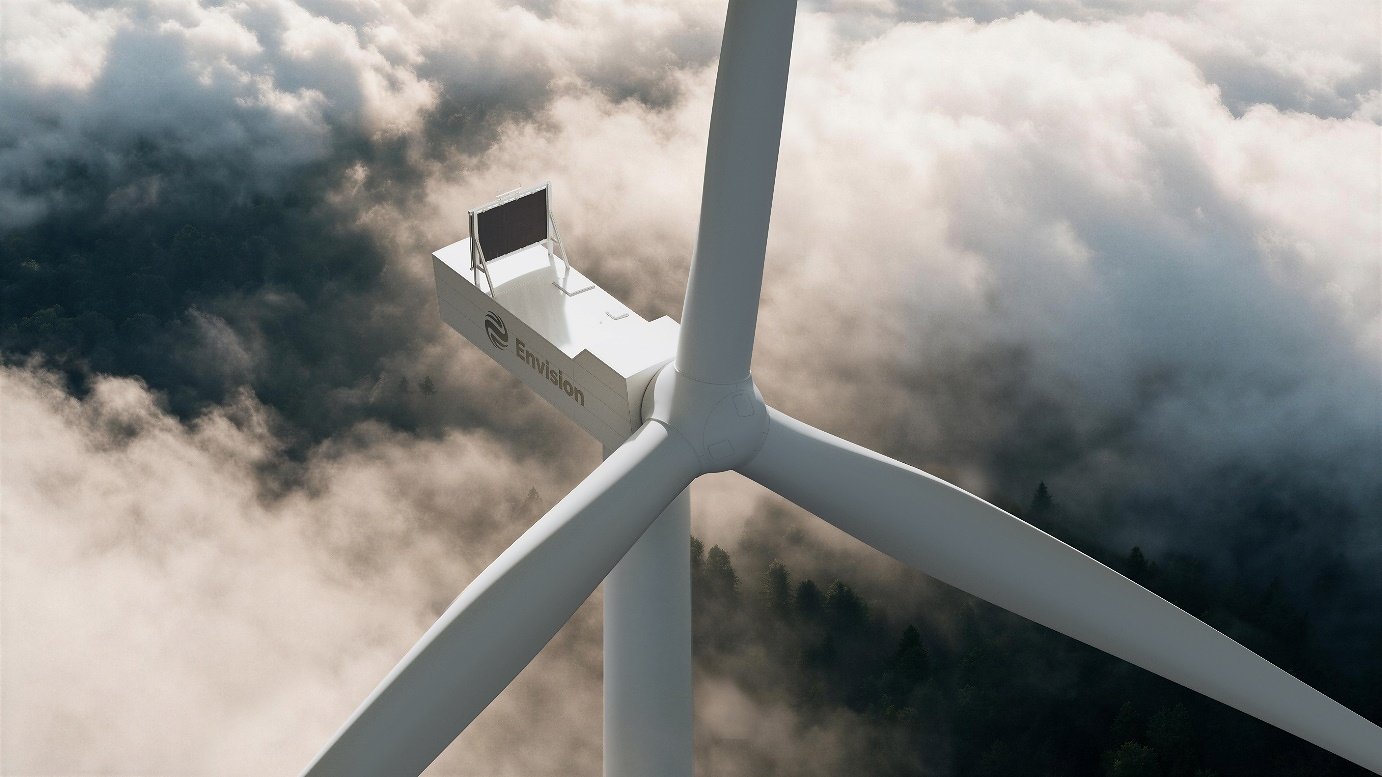
    Envision Energy, a global leader in green technology, today launched the Model T – EN175/8.0, an 8 MW-class smart onshore wind turbine featuring a 175-meter rotor, at WindEnergy Hamburg. Designed for medium-wind-speed sites and complex operating environments, the new turbine combines advanced aerodynamics, integrated drivetrain technologies and AI-powered autonomous optimization to deliver greater energy yield, reliability and lifecycle value.

    The EN175/8.0 is built on Envision’s proven Model T platform, which has accumulated more than 4,000 units ordered and around 1,500 units installed to date. Building on this platform experience, the new turbine integrates Envision’s sixth-generation low-noise aerodynamic technology, in-house designed and manufactured key components, and Galileo autonomous optimization control, powered by Envision’s Tianji Weather Foundation Model and Dubhe Energy Foundation Model.

    “The next generation of wind power is not simply about making turbines larger. It is about making them smarter, more reliable and more valuable throughout their lifecycle.” said Lou Yimin, Senior Vice President & Chief Product Officer of Envision Energy, “With the Model T – EN175/8.0, we are combining proven platform engineering with AI-powered autonomous optimization to help customers capture more energy, operate more efficiently and create greater value at the plant level.”

    With a 175-meter rotor and 8.0 MW rated capacity, the EN175/8.0 is designed to increase energy capture at medium-wind-speed sites. Compared with existing models, the turbine can deliver a 2–12% increase in energy yield, depending on site conditions. Its lifecycle economics are further supported by Envision’s vertically integrated approach to the design and manufacturing of key components, including blades, gearboxes and generators. Coordinated optimization across components, system integration and manufacturing helps improve performance while supporting quality and cost control throughout the turbine lifecycle.

    The turbine also incorporates Envision’s sixth-generation low-noise airfoils and newly developed serrated trailing edges, validated through wind-tunnel testing. The EN175/8.0 targets a sound power level of 107 dB(A), with optional low-noise operating modes available for noise-sensitive projects.

    The EN175/8.0 builds on the Model T platform, which has been deployed at scale and accumulated extensive operating experience. Envision’s vertically integrated system approach enables coordinated optimization across the turbine’s major components. In-house design and manufacturing of blades, gearboxes and generators provide greater control over component performance, manufacturing quality and system integration.

    The platform is also supported by industrial-scale testing capabilities covering materials, components and subsystems. Test results are incorporated into the Galileo digital twin, enabling continuous validation and refinement of design models.

    The EN175/8.0 is designed for diverse and challenging onshore environments, supporting deployment across complex wind conditions and mountainous terrain, with configurations available for regions with higher extreme wind speeds. The turbine offers both normal- and cold-climate configurations. For icing-prone environments, an optional blade ice-prevention system is also available. The system incorporates multiple heating zones for more precise thermal control and is integrated with the turbine’s lightning protection architecture.

    As power systems incorporate increasing shares of variable renewable energy, wind turbines need to contribute more actively to grid stability. The EN175/8.0 combines full-power converter architecture with advanced grid-forming controls, enabling stronger voltage and frequency support, rapid fault ride-through response and reliable operation in weak-grid conditions.

    A key differentiator of the EN175/8.0 is its AI-enabled control architecture. Powered by Envision’s Tianji Weather Foundation Model and Dubhe Energy Foundation Model, the turbine is able to perceive operating conditions, analyze real-time data and autonomously adjust control strategies. Rather than relying solely on predefined control rules, Galileo continuously adapts turbine operation to changing wind and operating conditions. This enables more intelligent optimization across multiple variables, helping improve efficiency, stability and overall turbine performance while reducing the need for manual intervention.

    The Model T platform is designed to extend beyond the optimization of an individual turbine. Through integrated coordination of wind, solar, energy storage and industrial loads, Envision aims to help customers optimize renewable power assets as an integrated energy system. This approach enables value to be optimized across the full chain, from energy generation and asset operation to power management and plant-level economics, helping customers improve flexibility, efficiency and overall returns.

    “The future of wind is increasingly connected to the wider energy system,” added Lou. “The value of a turbine should not stop at the electricity it generates. By connecting AI, wind, storage, solar and loads, we can move from optimizing individual machines to optimizing the value of the entire future energy systems.”

    The Model T – EN175/8.0 is part of Envision’s broader strategy to develop intelligent renewable energy technologies that combine high-performance hardware, AI and digital intelligence to support the evolution of future energy systems.
  • Envision Energy Launches Model T – EN175/8.0 Onshore Wind Turbine

    Envision Energy, a global leader in green technology, today launched the Model T – EN175/8.0, an 8 MW-class smart onshore wind turbine featuring a 175-meter rotor, at WindEnergy Hamburg. Designed for medium-wind-speed sites and complex operating environments, the new turbine combines advanced aerodynamics, integrated drivetrain technologies and AI-powered autonomous optimization to deliver greater energy yield, reliability and lifecycle value.

    The EN175/8.0 is built on Envision’s proven Model T platform, which has accumulated more than 4,000 units ordered and around 1,500 units installed to date. Building on this platform experience, the new turbine integrates Envision’s sixth-generation low-noise aerodynamic technology, in-house designed and manufactured key components, and Galileo autonomous optimization control, powered by Envision’s Tianji Weather Foundation Model and Dubhe Energy Foundation Model.

    “The next generation of wind power is not simply about making turbines larger. It is about making them smarter, more reliable and more valuable throughout their lifecycle.” said Lou Yimin, Senior Vice President & Chief Product Officer of Envision Energy, “With the Model T – EN175/8.0, we are combining proven platform engineering with AI-powered autonomous optimization to help customers capture more energy, operate more efficiently and create greater value at the plant level.”

    With a 175-meter rotor and 8.0 MW rated capacity, the EN175/8.0 is designed to increase energy capture at medium-wind-speed sites. Compared with existing models, the turbine can deliver a 2–12% increase in energy yield, depending on site conditions. Its lifecycle economics are further supported by Envision’s vertically integrated approach to the design and manufacturing of key components, including blades, gearboxes and generators. Coordinated optimization across components, system integration and manufacturing helps improve performance while supporting quality and cost control throughout the turbine lifecycle.

    The turbine also incorporates Envision’s sixth-generation low-noise airfoils and newly developed serrated trailing edges, validated through wind-tunnel testing. The EN175/8.0 targets a sound power level of 107 dB(A), with optional low-noise operating modes available for noise-sensitive projects.

    The EN175/8.0 builds on the Model T platform, which has been deployed at scale and accumulated extensive operating experience. Envision’s vertically integrated system approach enables coordinated optimization across the turbine’s major components. In-house design and manufacturing of blades, gearboxes and generators provide greater control over component performance, manufacturing quality and system integration.

    The platform is also supported by industrial-scale testing capabilities covering materials, components and subsystems. Test results are incorporated into the Galileo digital twin, enabling continuous validation and refinement of design models.

    The EN175/8.0 is designed for diverse and challenging onshore environments, supporting deployment across complex wind conditions and mountainous terrain, with configurations available for regions with higher extreme wind speeds. The turbine offers both normal- and cold-climate configurations. For icing-prone environments, an optional blade ice-prevention system is also available. The system incorporates multiple heating zones for more precise thermal control and is integrated with the turbine’s lightning protection architecture.

    As power systems incorporate increasing shares of variable renewable energy, wind turbines need to contribute more actively to grid stability. The EN175/8.0 combines full-power converter architecture with advanced grid-forming controls, enabling stronger voltage and frequency support, rapid fault ride-through response and reliable operation in weak-grid conditions.

    A key differentiator of the EN175/8.0 is its AI-enabled control architecture. Powered by Envision’s Tianji Weather Foundation Model and Dubhe Energy Foundation Model, the turbine is able to perceive operating conditions, analyze real-time data and autonomously adjust control strategies. Rather than relying solely on predefined control rules, Galileo continuously adapts turbine operation to changing wind and operating conditions. This enables more intelligent optimization across multiple variables, helping improve efficiency, stability and overall turbine performance while reducing the need for manual intervention.

    The Model T platform is designed to extend beyond the optimization of an individual turbine. Through integrated coordination of wind, solar, energy storage and industrial loads, Envision aims to help customers optimize renewable power assets as an integrated energy system. This approach enables value to be optimized across the full chain, from energy generation and asset operation to power management and plant-level economics, helping customers improve flexibility, efficiency and overall returns.

    “The future of wind is increasingly connected to the wider energy system,” added Lou. “The value of a turbine should not stop at the electricity it generates. By connecting AI, wind, storage, solar and loads, we can move from optimizing individual machines to optimizing the value of the entire future energy systems.”

    The Model T – EN175/8.0 is part of Envision’s broader strategy to develop intelligent renewable energy technologies that combine high-performance hardware, AI and digital intelligence to support the evolution of future energy systems.
  • NTPC, EDF Power Solutions Establish 50:50 JV for Clean Energy Projects

    NTPC, EDF Power Solutions Establish 50:50 JV for Clean Energy Projects

    NTPC Limited and EDF Power Solutions India Private Limited, a wholly owned subsidiary of French energy major Électricité de France (EDF), have entered into a 50:50 joint venture agreement to develop, own, and operate a range of low-carbon energy projects in India and neighbouring countries.

    The agreement was signed on September 25, 2026, in the presence of Gurdeep Singh, Chairman and Managing Director of NTPC, and Bernard Fontana, Chairman and CEO of EDF SA, France.

    Under the partnership, the joint venture will focus on the development, ownership, and operation of pumped storage projects, hydropower projects, renewable energy projects, and electricity distribution businesses. The partnership will undertake projects in India as well as neighbouring countries.

    The two companies intend to establish an industrial platform focused on developing, building, and operating low-carbon power plants, flexibility solutions, and transmission assets. The partnership will combine the respective expertise and resources of NTPC and EDF Power Solutions to develop solutions aimed at supporting the decarbonisation and performance of electricity systems.

    Pumped storage is expected to be a key area of focus as India expands its energy storage infrastructure to support the integration of variable renewable energy. The partnership aligns with India’s stated target of reaching 100 GW of installed pumped storage capacity by 2036.

    The JV will also explore opportunities across renewable generation and other power infrastructure, creating a platform for both companies to participate in India’s expanding clean energy market and in projects in neighbouring countries.

    The agreement follows earlier cooperation between NTPC and EDF in the clean energy space. NTPC’s corporate disclosures show that the two companies had previously announced plans to collaborate on pumped storage, hydropower projects and renewable energy opportunities.

    The partnership is expected to bring together NTPC’s experience as a major integrated power utility with EDF Power Solutions’ capabilities in renewable energy and energy systems, with the objective of supporting the development of low-carbon generation and flexibility infrastructure.

  • NTPC, EDF Power Solutions Establish 50:50 JV for Clean Energy Projects

    NTPC, EDF Power Solutions Establish 50:50 JV for Clean Energy Projects

    NTPC Limited and EDF Power Solutions India Private Limited, a wholly owned subsidiary of French energy major Électricité de France (EDF), have entered into a 50:50 joint venture agreement to develop, own, and operate a range of low-carbon energy projects in India and neighbouring countries.

    The agreement was signed on September 25, 2026, in the presence of Gurdeep Singh, Chairman and Managing Director of NTPC, and Bernard Fontana, Chairman and CEO of EDF SA, France.

    Under the partnership, the joint venture will focus on the development, ownership, and operation of pumped storage projects, hydropower projects, renewable energy projects, and electricity distribution businesses. The partnership will undertake projects in India as well as neighbouring countries.

    The two companies intend to establish an industrial platform focused on developing, building, and operating low-carbon power plants, flexibility solutions, and transmission assets. The partnership will combine the respective expertise and resources of NTPC and EDF Power Solutions to develop solutions aimed at supporting the decarbonisation and performance of electricity systems.

    Pumped storage is expected to be a key area of focus as India expands its energy storage infrastructure to support the integration of variable renewable energy. The partnership aligns with India’s stated target of reaching 100 GW of installed pumped storage capacity by 2036.

    The JV will also explore opportunities across renewable generation and other power infrastructure, creating a platform for both companies to participate in India’s expanding clean energy market and in projects in neighbouring countries.

    The agreement follows earlier cooperation between NTPC and EDF in the clean energy space. NTPC’s corporate disclosures show that the two companies had previously announced plans to collaborate on pumped storage, hydropower projects and renewable energy opportunities.

    The partnership is expected to bring together NTPC’s experience as a major integrated power utility with EDF Power Solutions’ capabilities in renewable energy and energy systems, with the objective of supporting the development of low-carbon generation and flexibility infrastructure.

  • NTPC, EDF Power Solutions Establish 50:50 JV for Clean Energy Projects

    NTPC, EDF Power Solutions Establish 50:50 JV for Clean Energy Projects

    NTPC Limited and EDF Power Solutions India Private Limited, a wholly owned subsidiary of French energy major Électricité de France (EDF), have entered into a 50:50 joint venture agreement to develop, own, and operate a range of low-carbon energy projects in India and neighbouring countries.

    The agreement was signed on September 25, 2026, in the presence of Gurdeep Singh, Chairman and Managing Director of NTPC, and Bernard Fontana, Chairman and CEO of EDF SA, France.

    Under the partnership, the joint venture will focus on the development, ownership, and operation of pumped storage projects, hydropower projects, renewable energy projects, and electricity distribution businesses. The partnership will undertake projects in India as well as neighbouring countries.

    The two companies intend to establish an industrial platform focused on developing, building, and operating low-carbon power plants, flexibility solutions, and transmission assets. The partnership will combine the respective expertise and resources of NTPC and EDF Power Solutions to develop solutions aimed at supporting the decarbonisation and performance of electricity systems.

    Pumped storage is expected to be a key area of focus as India expands its energy storage infrastructure to support the integration of variable renewable energy. The partnership aligns with India’s stated target of reaching 100 GW of installed pumped storage capacity by 2036.

    The JV will also explore opportunities across renewable generation and other power infrastructure, creating a platform for both companies to participate in India’s expanding clean energy market and in projects in neighbouring countries.

    The agreement follows earlier cooperation between NTPC and EDF in the clean energy space. NTPC’s corporate disclosures show that the two companies had previously announced plans to collaborate on pumped storage, hydropower projects and renewable energy opportunities.

    The partnership is expected to bring together NTPC’s experience as a major integrated power utility with EDF Power Solutions’ capabilities in renewable energy and energy systems, with the objective of supporting the development of low-carbon generation and flexibility infrastructure.

  • NTPC, EDF Power Solutions Establish 50:50 JV for Clean Energy Projects

    NTPC Limited and EDF Power Solutions India Private Limited, a wholly owned subsidiary of French energy major Électricité de France (EDF), have entered into a 50:50 joint venture agreement to develop, own, and operate a range of low-carbon energy projects in India and neighbouring countries.

    The agreement was signed on September 25, 2026, in the presence of Gurdeep Singh, Chairman and Managing Director of NTPC, and Bernard Fontana, Chairman and CEO of EDF SA, France.

    Under the partnership, the joint venture will focus on the development, ownership, and operation of pumped storage projects, hydropower projects, renewable energy projects, and electricity distribution businesses. The partnership will undertake projects in India as well as neighbouring countries.

    The two companies intend to establish an industrial platform focused on developing, building, and operating low-carbon power plants, flexibility solutions, and transmission assets. The partnership will combine the respective expertise and resources of NTPC and EDF Power Solutions to develop solutions aimed at supporting the decarbonisation and performance of electricity systems.

    Pumped storage is expected to be a key area of focus as India expands its energy storage infrastructure to support the integration of variable renewable energy. The partnership aligns with India’s stated target of reaching 100 GW of installed pumped storage capacity by 2036.

    The JV will also explore opportunities across renewable generation and other power infrastructure, creating a platform for both companies to participate in India’s expanding clean energy market and in projects in neighbouring countries.

    The agreement follows earlier cooperation between NTPC and EDF in the clean energy space. NTPC’s corporate disclosures show that the two companies had previously announced plans to collaborate on pumped storage, hydropower projects and renewable energy opportunities.

    The partnership is expected to bring together NTPC’s experience as a major integrated power utility with EDF Power Solutions’ capabilities in renewable energy and energy systems, with the objective of supporting the development of low-carbon generation and flexibility infrastructure.

  • Brookfield-Backed Avaada Electro Begins Roadshows for ₹7,600 Crore IPO

    Brookfield-Backed Avaada Electro Begins Roadshows for ₹7,600 Crore IPO

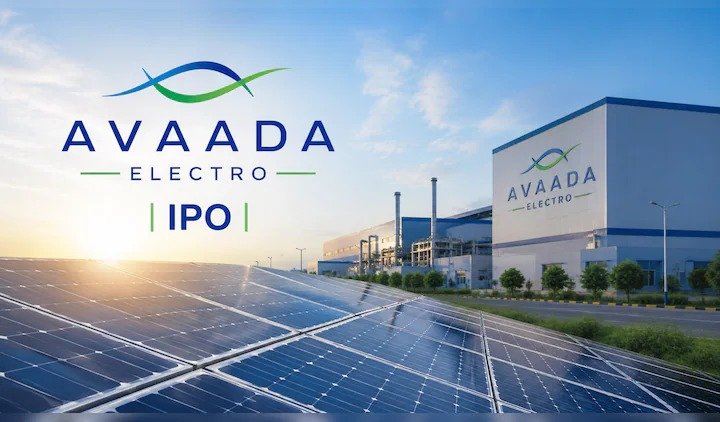
    Avaada Electro, the solar manufacturing arm of Avaada Group, has started investor roadshows for its proposed ₹7,600 crore initial public offering (IPO), with the company targeting a stock market listing in India before the end of the year, according to people familiar with the matter.

    The proposed IPO comprises a fresh issue of shares worth ₹1,600 crore and an offer for sale (OFS) of up to ₹6,000 crore by promoter Avaada Ventures. The final issue size, structure and timing remain subject to change as discussions continue.

    Of the proceeds from the fresh issue, ₹1,200 crore is proposed to be used for repayment or prepayment of certain borrowings and obligations under letters of credit. The remaining amount will be used for general corporate purposes.

    Avaada Electro had initially filed its draft IPO papers through the confidential filing route in October 2025 and received regulatory approval in April 2026. It subsequently filed updated public draft offer documents with the Securities and Exchange Board of India (SEBI) in August.

    The company operates solar module manufacturing facilities with an operational capacity of 8.5 GW as of July 31, 2026. Its operational solar cell manufacturing capacity stood at 3 GW. Avaada Electro plans to expand its module manufacturing capacity to 13.6 GW and solar cell capacity to 12 GW by FY28, alongside plans to establish 3 GW of ingot and wafer capacity.

    The proposed expansion is aimed at creating an integrated solar manufacturing chain covering ingots, wafers, cells and modules. The company also plans to introduce energy storage solutions under the Avaada Halo brand and enter the third-party engineering, procurement and construction (EPC) and operations and maintenance (O&M) segments.

    Avaada Electro operates manufacturing facilities at Dadri in Uttar Pradesh and Nagpur in Maharashtra. Its module manufacturing capacity increased from 1.5 GW to 8.5 GW within a year, while its order book expanded to 19,106 MW from 2,555 MW.

    The company reported revenue from operations of ₹5,303.52 crore in FY26, compared with ₹911.62 crore in FY25. Profit after tax increased to ₹888.74 crore from ₹173 crore during the same period.

    The IPO comes as renewable energy companies increasingly tap India’s equity markets to fund expansion. Avaada Electro joins a pipeline of renewable energy businesses preparing to access the public markets as domestic solar manufacturing capacity expands.

    Brookfield does not directly hold a stake in Avaada Electro. It had backed parent Avaada Ventures through a financing commitment of up to $1 billion in optionally convertible debentures. The final structure of the IPO and the timing of the listing remain subject to regulatory and market processes.

  • Brookfield-Backed Avaada Electro Begins Roadshows for ₹7,600 Crore IPO

    Avaada Electro, the solar manufacturing arm of Avaada Group, has started investor roadshows for its proposed ₹7,600 crore initial public offering (IPO), with the company targeting a stock market listing in India before the end of the year, according to people familiar with the matter.

    The proposed IPO comprises a fresh issue of shares worth ₹1,600 crore and an offer for sale (OFS) of up to ₹6,000 crore by promoter Avaada Ventures. The final issue size, structure and timing remain subject to change as discussions continue.

    Of the proceeds from the fresh issue, ₹1,200 crore is proposed to be used for repayment or prepayment of certain borrowings and obligations under letters of credit. The remaining amount will be used for general corporate purposes.

    Avaada Electro had initially filed its draft IPO papers through the confidential filing route in October 2025 and received regulatory approval in April 2026. It subsequently filed updated public draft offer documents with the Securities and Exchange Board of India (SEBI) in August.

    The company operates solar module manufacturing facilities with an operational capacity of 8.5 GW as of July 31, 2026. Its operational solar cell manufacturing capacity stood at 3 GW. Avaada Electro plans to expand its module manufacturing capacity to 13.6 GW and solar cell capacity to 12 GW by FY28, alongside plans to establish 3 GW of ingot and wafer capacity.

    The proposed expansion is aimed at creating an integrated solar manufacturing chain covering ingots, wafers, cells and modules. The company also plans to introduce energy storage solutions under the Avaada Halo brand and enter the third-party engineering, procurement and construction (EPC) and operations and maintenance (O&M) segments.

    Avaada Electro operates manufacturing facilities at Dadri in Uttar Pradesh and Nagpur in Maharashtra. Its module manufacturing capacity increased from 1.5 GW to 8.5 GW within a year, while its order book expanded to 19,106 MW from 2,555 MW.

    The company reported revenue from operations of ₹5,303.52 crore in FY26, compared with ₹911.62 crore in FY25. Profit after tax increased to ₹888.74 crore from ₹173 crore during the same period.

    The IPO comes as renewable energy companies increasingly tap India’s equity markets to fund expansion. Avaada Electro joins a pipeline of renewable energy businesses preparing to access the public markets as domestic solar manufacturing capacity expands.

    Brookfield does not directly hold a stake in Avaada Electro. It had backed parent Avaada Ventures through a financing commitment of up to $1 billion in optionally convertible debentures. The final structure of the IPO and the timing of the listing remain subject to regulatory and market processes.

  • Maxvolt Energy Takes Next Growth Step with Bhoomi Pujan of INR 700 Crore Aligarh Battery Plant

    Maxvolt Energy Takes Next Growth Step with Bhoomi Pujan of INR 700 Crore Aligarh Battery Plant

    Maxvolt Energy Industries Limited has taken a significant step in its manufacturing expansion strategy with the Bhoomi Pujan of its upcoming ₹700-crore advanced battery manufacturing facility in Aligarh, Uttar Pradesh. It is designed to expand Maxvolt Energy’s manufacturing capabilities across electric mobility, energy storage and OEM applications while supporting the company’s move into four-wheeler EV batteries.

    Spread across approximately 23,576 square metres, nearly six acres, the facility will be developed in two phases of 5 GWh each, taking the planned annual manufacturing capacity to 10 GWh. At full development, planned combined capacity across the two sites reaches 12.5 GWh a year. The project is positioned as the largest upcoming battery manufacturing project in Uttar Pradesh and among the significant upcoming battery manufacturing projects in India.

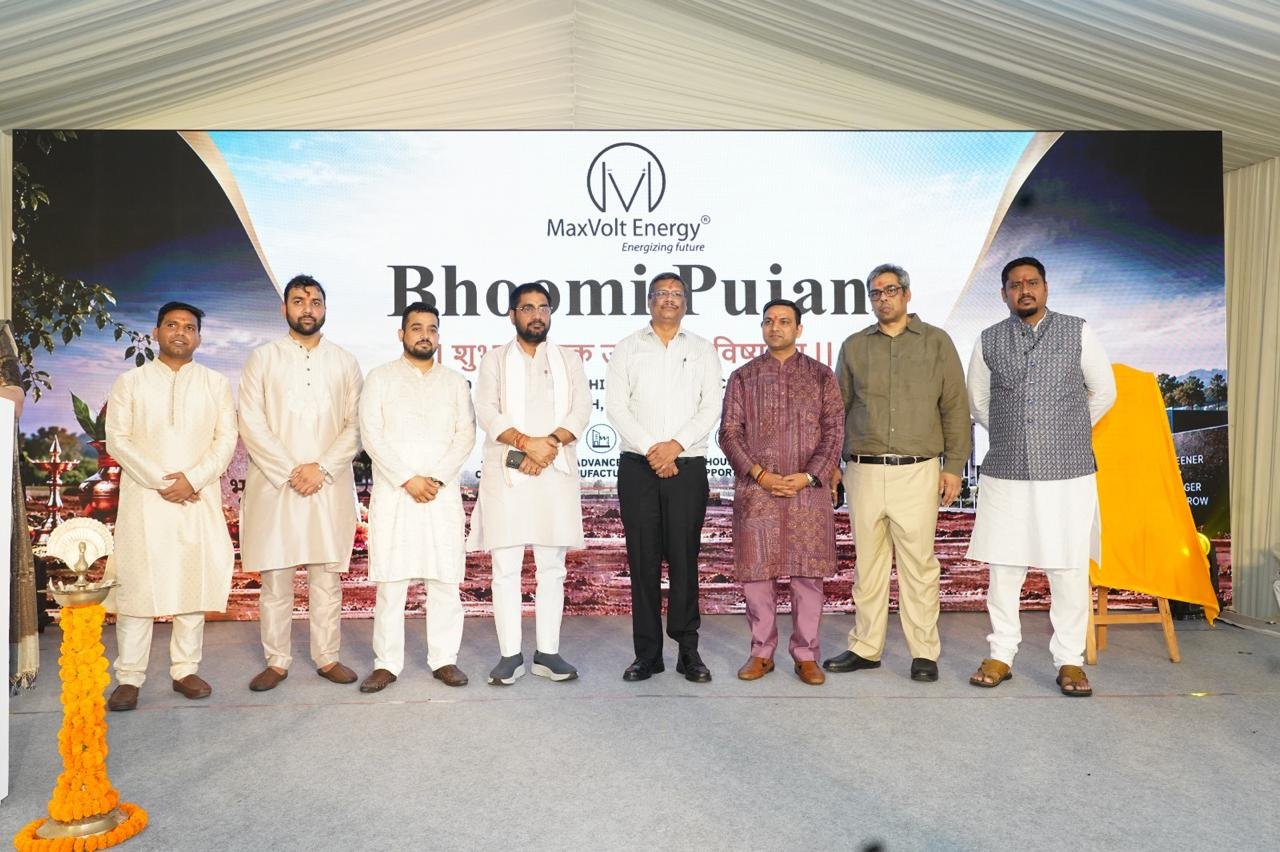
    The Bhoomi Pujan ceremony was attended by Shri Alok Kumar, IAS, Additional Chief Secretary, MSME; Shri Pravin Singh, Director, UPICON; and Shri Satish Kumar Gautam, Member of Parliament, Aligarh, along with Maxvolt Energy’s leadership and other stakeholders.

    Satendra Shukla, Co-Founder & CEO, Maxvolt Energy, said, “India’s battery demand is not arriving through one door. E-rickshaw fleets, solar installers, telecom operators, hospitals and households are all moving to lithium at the same time, and every one of them wants a different pack. Aligarh is built for that reality. We are not adding capacity for a single segment, we are scaling a platform that already serves several, and four-wheeler EV batteries are the next application we take on rather than the reason we are building. Dedicated OEM lines let us build to a customer’s specification at volume, which is the difference between being a supplier and being a manufacturing partner.”

    Mukesh Gupta, Co-Founder & CMO, Maxvolt Energy, said, “The Aligarh facility is an important milestone in Maxvolt Energy’s journey from expanding capacity to building a broader manufacturing ecosystem. The focus is not only on producing more batteries, but on creating the capabilities to serve different applications, from electric mobility and energy storage to telecom, power backup and OEM requirements. With dedicated production lines and the planned expansion into four-wheeler EV batteries, we are building greater flexibility into our manufacturing platform while creating opportunities for customers and partners across the value chain.”

    The facility will manufacture battery solutions ranging from 1 kW to 5 MW, with BMS capabilities for slow charging as well as L3 and L5 fast-charging applications. Dedicated OEM production lines will enable the company to manufacture batteries according to individual customer specifications. The facility will also expand Maxvolt Energy’s portfolio into four-wheeler EV batteries, alongside its existing two-wheeler and three-wheeler offerings.

    Shri Alok Kumar, IAS, Additional Chief Secretary, MSME, Government of Uttar Pradesh, said: “Uttar Pradesh set out to build a battery and EV manufacturing base, and projects of this scale are how that base takes shape. The state’s Electric Vehicle Manufacturing and Mobility Policy was framed to attract exactly this kind of investment. What follows a plant of this size, from component suppliers to skilled employment, is what turns a single factory into an industrial cluster.”

    The project represents an investment of approximately ₹700 crore and has a full-capacity annual turnover potential of more than ₹6,800 crore. The facility is expected to create 1,500–2,000 direct jobs and 7,500–10,000 indirect employment opportunities across manufacturing, engineering, quality control, logistics and the wider supply chain.

    Bhuvneshwar Pal Singh, Co-Founder, MD & CFO, Maxvolt Energy, said, “The Aligarh project represents a substantial investment in our next phase of manufacturing scale. Our expansion has been supported by a combination of IPO proceeds, debt and internal accruals, while project-specific funding details will be communicated through the company’s regular disclosures. The phased approach will allow us to build capacity in line with market requirements.”

    The expansion comes as India’s battery demand is expected to increase significantly across electric mobility and energy storage. Maxvolt Energy’s briefing estimates Indian battery demand could rise from 3 GWh in 2022 to 54 GWh by 2027 and 127 GWh by 2030. The Aligarh facility is being developed to address multiple applications rather than a single mobility segment, including EVs, energy storage and OEM-specific requirements.

    Vishal Gupta, Co-Founder, CTO & Whole Time Director, Maxvolt Energy, said, “Scaling battery manufacturing requires equal attention to engineering, testing and safety. Our work with IIT Roorkee on BMS enhancement, along with our wider research engagement with IIT Delhi and ARCI, supports the development of these capabilities. The Aligarh facility will bring these strengths together across a broader range of EV and energy-storage applications.”

    Maxvolt Energy’s battery packs are manufactured and tested in accordance with AIS 156 requirements, while the company operates under an ISO 9001:2015-certified quality system. Its R&D ecosystem also includes auto-ancillary partners working on battery safety enhancement.

    Sachin Gupta, Co-Founder and Chief Operating Officer, MaxVolt Energy, said: “Two phases of 5 GWh is an operating decision before it is a financial one. Commissioning a plant of this size in a single step means validating every line, every supplier and every test protocol at once. Phasing lets us prove the first 5 GWh in live production, carry those learnings into the second, and keep the supply chain ramping at a pace it can actually hold. That is how you close the gap between announced capacity and shipped product, which is where most manufacturing expansions come unstuck.”

    The company’s broader expansion strategy includes strengthening its manufacturing footprint, diversifying its product portfolio and building capabilities for domestic and international markets. Its recycling arm, ReEarth, is targeting recovery of 500,000 batteries annually through more than 100 collection centres by 2030.

    Shri Pravin Singh, Director, UPICON, said, “The project by Maxvolt Energy is a part of the state’s push to build a battery and EV manufacturing base and diversify its industrial economy beyond traditional sectors. Aligarh’s connectivity, industrial infrastructure and workforce make it a strong fit for this project.”

    The Aligarh expansion is being led by Maxvolt Energy’s leadership team comprising Satendra Shukla, Bhuvneshwar Pal Singh, Vishal Gupta, Sachin Gupta and Mukesh Gupta, supported by its OEM, technology, research and auto-ancillary ecosystem. The company serves over 950+ dealers across 22 states and more than 1,300+ Pincodes, and works with over 30+ OEM partners.

    With the Bhoomi Pujan, Maxvolt Energy has moved its Aligarh project into the next stage of development, adding significant planned capacity while expanding into new EV and energy-storage applications and strengthening its position within India’s growing battery manufacturing ecosystem.

  • Maxvolt Energy Takes Next Growth Step with Bhoomi Pujan of INR 700 Crore Aligarh Battery Plant

    Maxvolt Energy Takes Next Growth Step with Bhoomi Pujan of INR 700 Crore Aligarh Battery Plant

    Maxvolt Energy Industries Limited has taken a significant step in its manufacturing expansion strategy with the Bhoomi Pujan of its upcoming ₹700-crore advanced battery manufacturing facility in Aligarh, Uttar Pradesh. It is designed to expand Maxvolt Energy’s manufacturing capabilities across electric mobility, energy storage and OEM applications while supporting the company’s move into four-wheeler EV batteries.

    Spread across approximately 23,576 square metres, nearly six acres, the facility will be developed in two phases of 5 GWh each, taking the planned annual manufacturing capacity to 10 GWh. At full development, planned combined capacity across the two sites reaches 12.5 GWh a year. The project is positioned as the largest upcoming battery manufacturing project in Uttar Pradesh and among the significant upcoming battery manufacturing projects in India.

    The Bhoomi Pujan ceremony was attended by Shri Alok Kumar, IAS, Additional Chief Secretary, MSME; Shri Pravin Singh, Director, UPICON; and Shri Satish Kumar Gautam, Member of Parliament, Aligarh, along with Maxvolt Energy’s leadership and other stakeholders.

    Satendra Shukla, Co-Founder & CEO, Maxvolt Energy, said, “India’s battery demand is not arriving through one door. E-rickshaw fleets, solar installers, telecom operators, hospitals and households are all moving to lithium at the same time, and every one of them wants a different pack. Aligarh is built for that reality. We are not adding capacity for a single segment, we are scaling a platform that already serves several, and four-wheeler EV batteries are the next application we take on rather than the reason we are building. Dedicated OEM lines let us build to a customer’s specification at volume, which is the difference between being a supplier and being a manufacturing partner.”

    Mukesh Gupta, Co-Founder & CMO, Maxvolt Energy, said, “The Aligarh facility is an important milestone in Maxvolt Energy’s journey from expanding capacity to building a broader manufacturing ecosystem. The focus is not only on producing more batteries, but on creating the capabilities to serve different applications, from electric mobility and energy storage to telecom, power backup and OEM requirements. With dedicated production lines and the planned expansion into four-wheeler EV batteries, we are building greater flexibility into our manufacturing platform while creating opportunities for customers and partners across the value chain.”

    The facility will manufacture battery solutions ranging from 1 kW to 5 MW, with BMS capabilities for slow charging as well as L3 and L5 fast-charging applications. Dedicated OEM production lines will enable the company to manufacture batteries according to individual customer specifications. The facility will also expand Maxvolt Energy’s portfolio into four-wheeler EV batteries, alongside its existing two-wheeler and three-wheeler offerings.

    Shri Alok Kumar, IAS, Additional Chief Secretary, MSME, Government of Uttar Pradesh, said: “Uttar Pradesh set out to build a battery and EV manufacturing base, and projects of this scale are how that base takes shape. The state’s Electric Vehicle Manufacturing and Mobility Policy was framed to attract exactly this kind of investment. What follows a plant of this size, from component suppliers to skilled employment, is what turns a single factory into an industrial cluster.”

    The project represents an investment of approximately ₹700 crore and has a full-capacity annual turnover potential of more than ₹6,800 crore. The facility is expected to create 1,500–2,000 direct jobs and 7,500–10,000 indirect employment opportunities across manufacturing, engineering, quality control, logistics and the wider supply chain.

    Bhuvneshwar Pal Singh, Co-Founder, MD & CFO, Maxvolt Energy, said, “The Aligarh project represents a substantial investment in our next phase of manufacturing scale. Our expansion has been supported by a combination of IPO proceeds, debt and internal accruals, while project-specific funding details will be communicated through the company’s regular disclosures. The phased approach will allow us to build capacity in line with market requirements.”

    The expansion comes as India’s battery demand is expected to increase significantly across electric mobility and energy storage. Maxvolt Energy’s briefing estimates Indian battery demand could rise from 3 GWh in 2022 to 54 GWh by 2027 and 127 GWh by 2030. The Aligarh facility is being developed to address multiple applications rather than a single mobility segment, including EVs, energy storage and OEM-specific requirements.

    Vishal Gupta, Co-Founder, CTO & Whole Time Director, Maxvolt Energy, said, “Scaling battery manufacturing requires equal attention to engineering, testing and safety. Our work with IIT Roorkee on BMS enhancement, along with our wider research engagement with IIT Delhi and ARCI, supports the development of these capabilities. The Aligarh facility will bring these strengths together across a broader range of EV and energy-storage applications.”

    Maxvolt Energy’s battery packs are manufactured and tested in accordance with AIS 156 requirements, while the company operates under an ISO 9001:2015-certified quality system. Its R&D ecosystem also includes auto-ancillary partners working on battery safety enhancement.

    Sachin Gupta, Co-Founder and Chief Operating Officer, MaxVolt Energy, said: “Two phases of 5 GWh is an operating decision before it is a financial one. Commissioning a plant of this size in a single step means validating every line, every supplier and every test protocol at once. Phasing lets us prove the first 5 GWh in live production, carry those learnings into the second, and keep the supply chain ramping at a pace it can actually hold. That is how you close the gap between announced capacity and shipped product, which is where most manufacturing expansions come unstuck.”

    The company’s broader expansion strategy includes strengthening its manufacturing footprint, diversifying its product portfolio and building capabilities for domestic and international markets. Its recycling arm, ReEarth, is targeting recovery of 500,000 batteries annually through more than 100 collection centres by 2030.

    Shri Pravin Singh, Director, UPICON, said, “The project by Maxvolt Energy is a part of the state’s push to build a battery and EV manufacturing base and diversify its industrial economy beyond traditional sectors. Aligarh’s connectivity, industrial infrastructure and workforce make it a strong fit for this project.”

    The Aligarh expansion is being led by Maxvolt Energy’s leadership team comprising Satendra Shukla, Bhuvneshwar Pal Singh, Vishal Gupta, Sachin Gupta and Mukesh Gupta, supported by its OEM, technology, research and auto-ancillary ecosystem. The company serves over 950+ dealers across 22 states and more than 1,300+ Pincodes, and works with over 30+ OEM partners.

    With the Bhoomi Pujan, Maxvolt Energy has moved its Aligarh project into the next stage of development, adding significant planned capacity while expanding into new EV and energy-storage applications and strengthening its position within India’s growing battery manufacturing ecosystem.