Author: abhishek2019cs034abesit@gmail.com

  • Adani Green Energy’s FY26 EBITDA Rises 23% to ₹10,865 Crore on Strong Capacity Addition

    Adani Green Energy Ltd. (AGEL) reported a 23% year-on-year increase in EBITDA from power supply to ₹10,865 crore in FY26, supported by robust renewable capacity additions and higher energy generation during the year. Revenue from power supply rose 22% to ₹11,602 crore, while operational renewable energy capacity expanded 35% year-on-year to 19.3 GW.

    The company added 5.1 GW of greenfield renewable energy capacity during FY26, compared with 3.3 GW in the previous year, marking its highest-ever annual capacity addition. Most of the new capacity was commissioned at resource-rich locations in Khavda, Gujarat, and Rajasthan, contributing to higher power generation and operational performance.

    Energy sales during the year increased 34% to 37,567 million units, while the company maintained an EBITDA margin of 91%. Cash profit also rose 11% year-on-year to ₹5,399 crore, reflecting strong cash generation from its operating portfolio.

    AGEL also expanded its energy storage portfolio by installing 1,376 MWh of Battery Energy Storage System (BESS) capacity at Khavda, one of the world’s largest single-location deployments. The company is targeting more than 10,000 MWh of BESS capacity by FY27 to strengthen the integration of renewable energy into the grid.

    Commenting on the performance, Sagar Adani, Executive Director, Adani Green Energy, said FY26 was a landmark year for the company, driven by record greenfield capacity addition and continued progress at the Khavda renewable energy project. He noted that the expansion reinforces AGEL’s leadership in India’s renewable energy sector and supports its long-term growth strategy.
  • Nextpower Completes Acquisition of Prevalon Energy, Launches Advanced Energy Storage Business

    Nextpower Completes Acquisition of Prevalon Energy, Launches Advanced Energy Storage Business

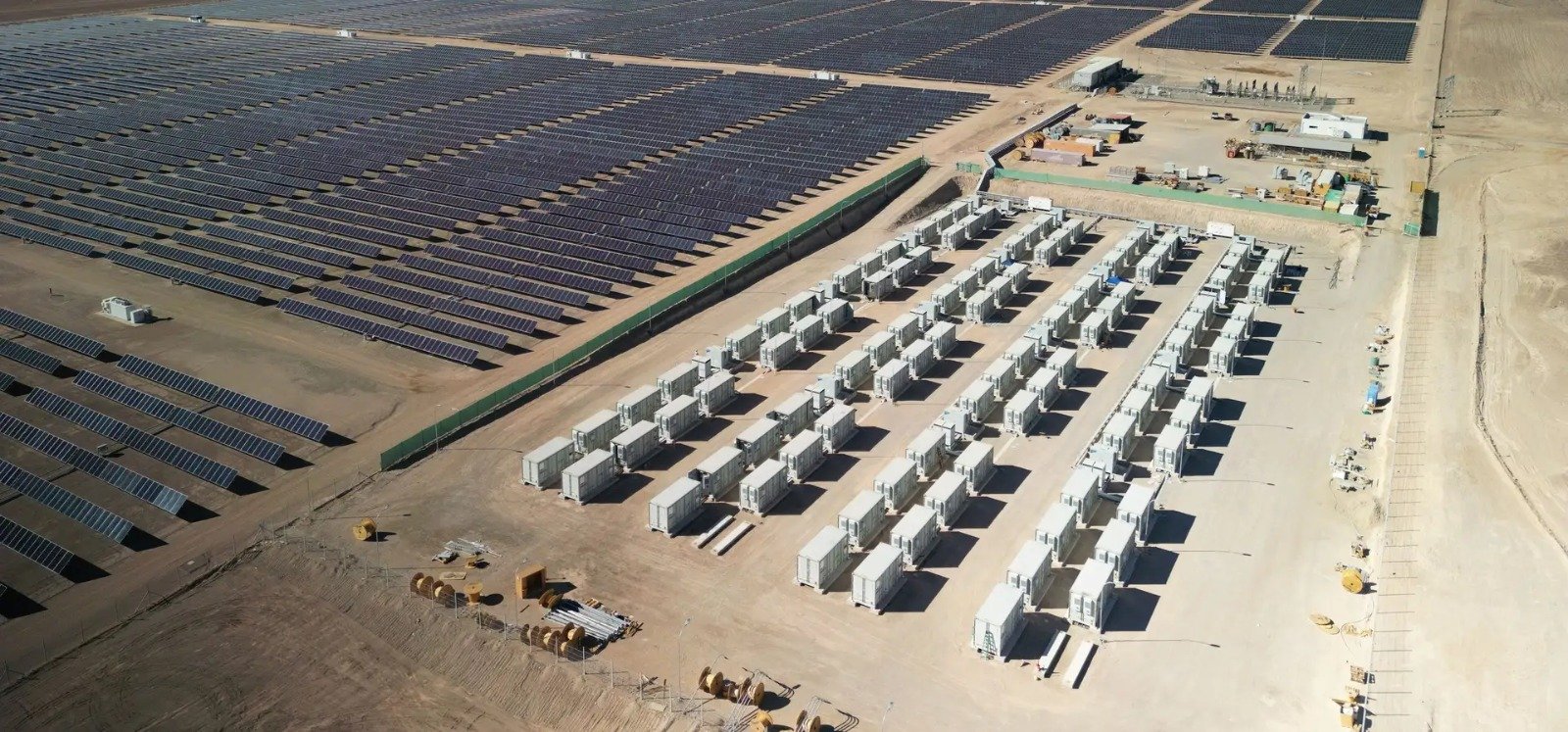
    Nextpower has completed its previously announced acquisition of Prevalon Energy, a U.S.-headquartered provider of large-scale battery energy storage systems (BESS), power stabilization solutions, and lifecycle services.

    This acquisition marks another milestone in Nextpower’s strategy to provide end-to-end solutions spanning power plant design, deployment, optimization, and long-term operations. With the addition of energy storage, Nextpower’s integrated platform extends beyond solar with a proven portfolio of BESS, energy management software, and power control technologies and lifecycle services supporting grid-connected storage, hybrid power plants, AI data center infrastructure, and other critical power applications. The business brings a proven track record with more than 6 GWh of energy storage systems deployed worldwide.

    “We are very pleased to welcome the talented Prevalon team to Nextpower. The team will continue to be run by Tom Cornell, who led Prevalon as CEO since its founding,” said Dan Shugar, founder and CEO of Nextpower. “Reliable energy storage is foundational to designing, building, and operating critical energy infrastructure. The addition of Prevalon expands our ability to serve utility-scale customers and data centers with a broader portfolio of proven technologies from a trusted, bankable partner. It also provides Nextpower with a significant foothold in one of the fastest growing segments of the global power industry.

    “As demand for electricity accelerates, utilities, power producers, data center developers, and grid operators need accountable, bankable partners that can deliver reliable, dispatchable power at unprecedented scale and speed. With our customer-centric approach, reputation for high-quality execution, and proven ability to rapidly scale, Nextpower is uniquely positioned to serve both continued growth of utility-scale solar and the rapidly growing energy storage market.”

  • Nextpower Completes Acquisition of Prevalon Energy, Launches Advanced Energy Storage Business

    Nextpower has completed its previously announced acquisition of Prevalon Energy, a U.S.-headquartered provider of large-scale battery energy storage systems (BESS), power stabilization solutions, and lifecycle services.

    This acquisition marks another milestone in Nextpower’s strategy to provide end-to-end solutions spanning power plant design, deployment, optimization, and long-term operations. With the addition of energy storage, Nextpower’s integrated platform extends beyond solar with a proven portfolio of BESS, energy management software, and power control technologies and lifecycle services supporting grid-connected storage, hybrid power plants, AI data center infrastructure, and other critical power applications. The business brings a proven track record with more than 6 GWh of energy storage systems deployed worldwide.

    “We are very pleased to welcome the talented Prevalon team to Nextpower. The team will continue to be run by Tom Cornell, who led Prevalon as CEO since its founding,” said Dan Shugar, founder and CEO of Nextpower. “Reliable energy storage is foundational to designing, building, and operating critical energy infrastructure. The addition of Prevalon expands our ability to serve utility-scale customers and data centers with a broader portfolio of proven technologies from a trusted, bankable partner. It also provides Nextpower with a significant foothold in one of the fastest growing segments of the global power industry.

    “As demand for electricity accelerates, utilities, power producers, data center developers, and grid operators need accountable, bankable partners that can deliver reliable, dispatchable power at unprecedented scale and speed. With our customer-centric approach, reputation for high-quality execution, and proven ability to rapidly scale, Nextpower is uniquely positioned to serve both continued growth of utility-scale solar and the rapidly growing energy storage market.”

  • Nextpower Completes Acquisition of Prevalon Energy, Launches Advanced Energy Storage Business

    Nextpower has completed its previously announced acquisition of Prevalon Energy, a U.S.-headquartered provider of large-scale battery energy storage systems (BESS), power stabilization solutions, and lifecycle services.

    This acquisition marks another milestone in Nextpower’s strategy to provide end-to-end solutions spanning power plant design, deployment, optimization, and long-term operations. With the addition of energy storage, Nextpower’s integrated platform extends beyond solar with a proven portfolio of BESS, energy management software, and power control technologies and lifecycle services supporting grid-connected storage, hybrid power plants, AI data center infrastructure, and other critical power applications. The business brings a proven track record with more than 6 GWh of energy storage systems deployed worldwide.

    “We are very pleased to welcome the talented Prevalon team to Nextpower. The team will continue to be run by Tom Cornell, who led Prevalon as CEO since its founding,” said Dan Shugar, founder and CEO of Nextpower. “Reliable energy storage is foundational to designing, building, and operating critical energy infrastructure. The addition of Prevalon expands our ability to serve utility-scale customers and data centers with a broader portfolio of proven technologies from a trusted, bankable partner. It also provides Nextpower with a significant foothold in one of the fastest growing segments of the global power industry.

    “As demand for electricity accelerates, utilities, power producers, data center developers, and grid operators need accountable, bankable partners that can deliver reliable, dispatchable power at unprecedented scale and speed. With our customer-centric approach, reputation for high-quality execution, and proven ability to rapidly scale, Nextpower is uniquely positioned to serve both continued growth of utility-scale solar and the rapidly growing energy storage market.”

  • India’s Renewable Energy Capacity Rises to 288.58 GW from 76.38 GW Since 2014: Government

    India’s Renewable Energy Capacity Rises to 288.58 GW from 76.38 GW Since 2014: Government

    India’s installed renewable energy capacity has increased from 76.38 GW in March 2014 to 288.58 GW as of June 30, 2026, reflecting the country’s accelerated transition towards clean energy, Minister of State for New and Renewable Energy Shripad Yesso Naik informed the Rajya Sabha.

    Responding to a parliamentary question, Naik said the growth has been supported by a series of policy measures introduced by the government, including 100% Foreign Direct Investment (FDI) under the automatic route, waiver of Inter-State Transmission System (ISTS) charges for eligible renewable energy projects, renewable purchase obligations (RPOs), competitive bidding for renewable power procurement, and the establishment of Ultra Mega Renewable Energy Power Parks (UMREPPs) across the country.

    The minister also highlighted flagship initiatives such as the PM Surya Ghar: Muft Bijli Yojana, PM-KUSUM, the National Green Hydrogen Mission, and the promotion of offshore wind energy and battery energy storage systems as key drivers of renewable energy deployment. He noted that the government continues to implement measures aimed at strengthening grid infrastructure, facilitating project development and attracting investments into the sector.

    Naik reiterated that the government remains committed to achieving its long-term clean energy objectives, including the target of 500 GW of non-fossil fuel-based installed electricity capacity by 2030, while supporting India’s broader climate commitments and energy transition goals.

  • India’s Renewable Energy Capacity Rises to 288.58 GW from 76.38 GW Since 2014: Government

    India’s installed renewable energy capacity has increased from 76.38 GW in March 2014 to 288.58 GW as of June 30, 2026, reflecting the country’s accelerated transition towards clean energy, Minister of State for New and Renewable Energy Shripad Yesso Naik informed the Rajya Sabha.

    Responding to a parliamentary question, Naik said the growth has been supported by a series of policy measures introduced by the government, including 100% Foreign Direct Investment (FDI) under the automatic route, waiver of Inter-State Transmission System (ISTS) charges for eligible renewable energy projects, renewable purchase obligations (RPOs), competitive bidding for renewable power procurement, and the establishment of Ultra Mega Renewable Energy Power Parks (UMREPPs) across the country.

    The minister also highlighted flagship initiatives such as the PM Surya Ghar: Muft Bijli Yojana, PM-KUSUM, the National Green Hydrogen Mission, and the promotion of offshore wind energy and battery energy storage systems as key drivers of renewable energy deployment. He noted that the government continues to implement measures aimed at strengthening grid infrastructure, facilitating project development and attracting investments into the sector.

    Naik reiterated that the government remains committed to achieving its long-term clean energy objectives, including the target of 500 GW of non-fossil fuel-based installed electricity capacity by 2030, while supporting India’s broader climate commitments and energy transition goals.

  • India’s Renewable Energy Capacity Rises to 288.58 GW from 76.38 GW Since 2014: Government

    India’s installed renewable energy capacity has increased from 76.38 GW in March 2014 to 288.58 GW as of June 30, 2026, reflecting the country’s accelerated transition towards clean energy, Minister of State for New and Renewable Energy Shripad Yesso Naik informed the Rajya Sabha.

    Responding to a parliamentary question, Naik said the growth has been supported by a series of policy measures introduced by the government, including 100% Foreign Direct Investment (FDI) under the automatic route, waiver of Inter-State Transmission System (ISTS) charges for eligible renewable energy projects, renewable purchase obligations (RPOs), competitive bidding for renewable power procurement, and the establishment of Ultra Mega Renewable Energy Power Parks (UMREPPs) across the country.

    The minister also highlighted flagship initiatives such as the PM Surya Ghar: Muft Bijli Yojana, PM-KUSUM, the National Green Hydrogen Mission, and the promotion of offshore wind energy and battery energy storage systems as key drivers of renewable energy deployment. He noted that the government continues to implement measures aimed at strengthening grid infrastructure, facilitating project development and attracting investments into the sector.

    Naik reiterated that the government remains committed to achieving its long-term clean energy objectives, including the target of 500 GW of non-fossil fuel-based installed electricity capacity by 2030, while supporting India’s broader climate commitments and energy transition goals.

  • Indofast Energy and Hala Mobility Partner to Deploy 40,000 EVs by March 2027

    Indofast Energy and Hala Mobility Partner to Deploy 40,000 EVs by March 2027

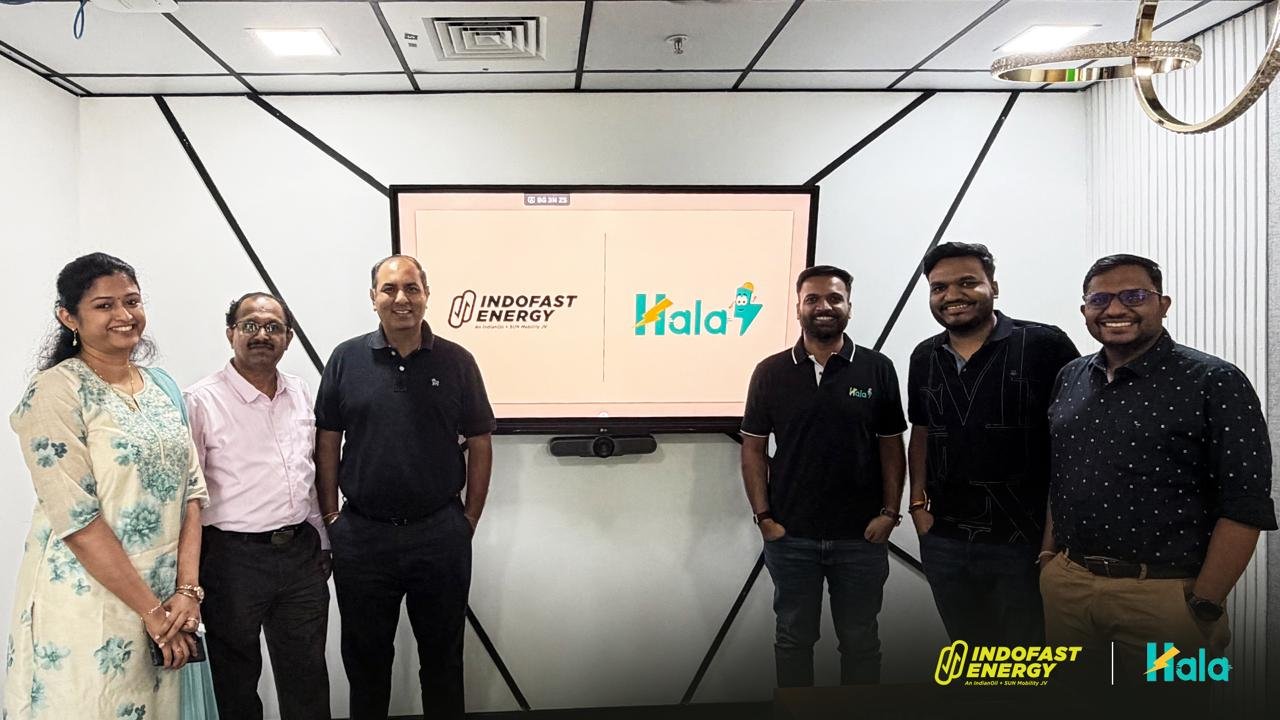
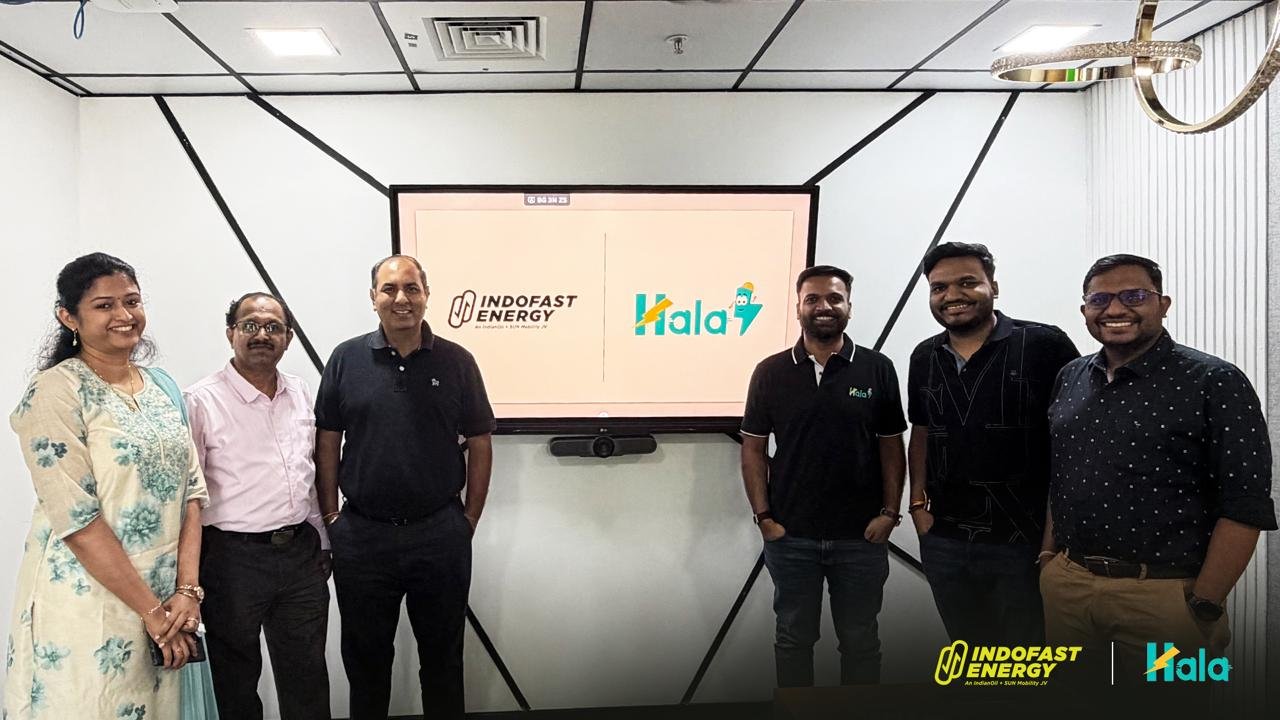
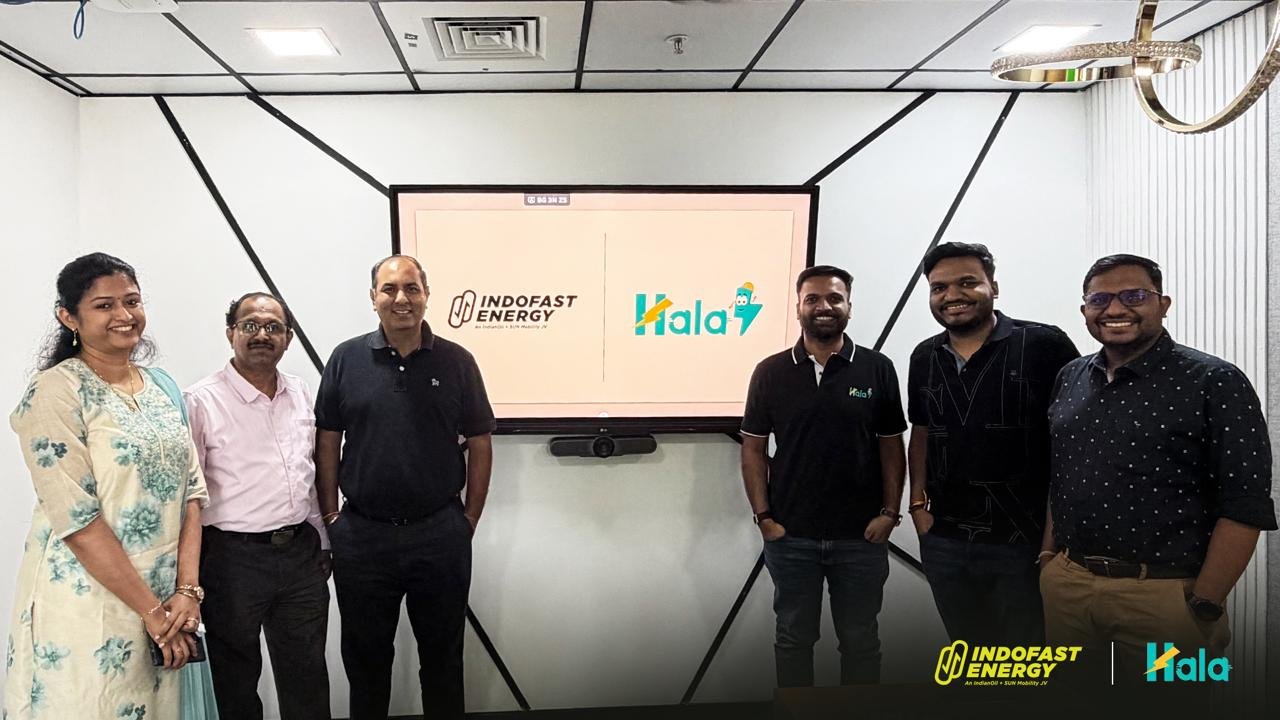
    Indofast Energy, India’s leading battery-swapping solutions provider, announced a strategic partnership with Hala Mobility, an EV-as-a-service platform focused on decarbonising India’s logistics ecosystem. This tie-up is a pivotal step towards accelerating India’s electric mobility adoption, providing seamless, high-uptime energy solutions for a diverse range of fleet operators and gig economy workers.

    The partnership has already demonstrated significant traction, achieving a rapid scale-up to 15,000 vehicles in less than a year – validating the operational viability and fleet-readiness of the swappable battery model for high-utilisation delivery operations. These 15,000 vehicles are currently operational majorly in Hyderabad, Bengaluru, Delhi NCR, and Mumbai. 

    For delivery riders and fleet operators running 80-100 kilometres daily, the two-minute swap directly impacts earnings and fleet productivity. This operational advantage, combined with up to 40% lower running costs compared to petrol, makes the partnership model economically compelling for India’s growing gig economy workforce.

    By combining Indofast Energy’s state-of-the-art battery swapping infrastructure with Hala Mobility’s extensive fleet operations, the partnership will offer unparalleled convenience by effectively eliminating range anxiety and charging downtime, ensuring uninterrupted service delivery for commercial and last-mile delivery fleets.

    Speaking on this partnership, Rajat Malhan, Chief Business Officer, Indofast Energy said, “Our partnership with Hala Mobility demonstrates what happens when reliable energy infrastructure meets ambitious fleet deployment – rapid, scalable EV adoption that works for riders, operators, and the environment. Reaching 15,000 vehicles in under a year validates that battery swapping is the default choice for fleet operators who prioritise uptime and economics. As we scale toward 40,000 vehicles by March 2027 and 1 lakh by 2028, we are building the kind of integrated ecosystem that will define India’s commercial EV transition; making swappable battery EVs the most practical and profitable choice for last-mile logistics.”

    Srikanth Reddy, Founder, Hala Mobility, said, “At Hala Mobility, we are committed to democratizing electric mobility for India’s delivery workforce. Partnering with Indofast Energy allows us to integrate our fleet with robust battery swapping infrastructure, ensuring our riders experience zero downtime and maximum daily earnings. Our rapid scale-up to 15,000 vehicles proves that the model is effective towards creating a highly efficient, sustainable, and inclusive EV ecosystem across India.”

    Indofast Energy has established itself as a key enabler of sustainable urban mobility through strategic partnerships with leading OEMs and fleet operators. The company’s network of 1900+ swap stations across 24 cities supports over 120,000 vehicles and has enabled 2 billion+ kilometres of clean mobility, while helping avoid over 97,000 tonnes of CO₂ emissions.

    Both the companies are committed to working together to make the Last Mile (LM) operation cheaper and sustainable for riders. The new deployments are expected in the current cities and Pune, Chennai and Jaipur. 

  • Indofast Energy and Hala Mobility Partner to Deploy 40,000 EVs by March 2027

    Indofast Energy and Hala Mobility Partner to Deploy 40,000 EVs by March 2027

    Indofast Energy, India’s leading battery-swapping solutions provider, announced a strategic partnership with Hala Mobility, an EV-as-a-service platform focused on decarbonising India’s logistics ecosystem. This tie-up is a pivotal step towards accelerating India’s electric mobility adoption, providing seamless, high-uptime energy solutions for a diverse range of fleet operators and gig economy workers.

    The partnership has already demonstrated significant traction, achieving a rapid scale-up to 15,000 vehicles in less than a year – validating the operational viability and fleet-readiness of the swappable battery model for high-utilisation delivery operations. These 15,000 vehicles are currently operational majorly in Hyderabad, Bengaluru, Delhi NCR, and Mumbai. 

    For delivery riders and fleet operators running 80-100 kilometres daily, the two-minute swap directly impacts earnings and fleet productivity. This operational advantage, combined with up to 40% lower running costs compared to petrol, makes the partnership model economically compelling for India’s growing gig economy workforce.

    By combining Indofast Energy’s state-of-the-art battery swapping infrastructure with Hala Mobility’s extensive fleet operations, the partnership will offer unparalleled convenience by effectively eliminating range anxiety and charging downtime, ensuring uninterrupted service delivery for commercial and last-mile delivery fleets.

    Speaking on this partnership, Rajat Malhan, Chief Business Officer, Indofast Energy said, “Our partnership with Hala Mobility demonstrates what happens when reliable energy infrastructure meets ambitious fleet deployment – rapid, scalable EV adoption that works for riders, operators, and the environment. Reaching 15,000 vehicles in under a year validates that battery swapping is the default choice for fleet operators who prioritise uptime and economics. As we scale toward 40,000 vehicles by March 2027 and 1 lakh by 2028, we are building the kind of integrated ecosystem that will define India’s commercial EV transition; making swappable battery EVs the most practical and profitable choice for last-mile logistics.”

    Srikanth Reddy, Founder, Hala Mobility, said, “At Hala Mobility, we are committed to democratizing electric mobility for India’s delivery workforce. Partnering with Indofast Energy allows us to integrate our fleet with robust battery swapping infrastructure, ensuring our riders experience zero downtime and maximum daily earnings. Our rapid scale-up to 15,000 vehicles proves that the model is effective towards creating a highly efficient, sustainable, and inclusive EV ecosystem across India.”

    Indofast Energy has established itself as a key enabler of sustainable urban mobility through strategic partnerships with leading OEMs and fleet operators. The company’s network of 1900+ swap stations across 24 cities supports over 120,000 vehicles and has enabled 2 billion+ kilometres of clean mobility, while helping avoid over 97,000 tonnes of CO₂ emissions.

    Both the companies are committed to working together to make the Last Mile (LM) operation cheaper and sustainable for riders. The new deployments are expected in the current cities and Pune, Chennai and Jaipur. 

  • Indofast Energy and Hala Mobility Partner to Deploy 40,000 EVs by March 2027

    Indofast Energy and Hala Mobility Partner to Deploy 40,000 EVs by March 2027

    Indofast Energy, India’s leading battery-swapping solutions provider, announced a strategic partnership with Hala Mobility, an EV-as-a-service platform focused on decarbonising India’s logistics ecosystem. This tie-up is a pivotal step towards accelerating India’s electric mobility adoption, providing seamless, high-uptime energy solutions for a diverse range of fleet operators and gig economy workers.

    The partnership has already demonstrated significant traction, achieving a rapid scale-up to 15,000 vehicles in less than a year – validating the operational viability and fleet-readiness of the swappable battery model for high-utilisation delivery operations. These 15,000 vehicles are currently operational majorly in Hyderabad, Bengaluru, Delhi NCR, and Mumbai. 

    For delivery riders and fleet operators running 80-100 kilometres daily, the two-minute swap directly impacts earnings and fleet productivity. This operational advantage, combined with up to 40% lower running costs compared to petrol, makes the partnership model economically compelling for India’s growing gig economy workforce.

    By combining Indofast Energy’s state-of-the-art battery swapping infrastructure with Hala Mobility’s extensive fleet operations, the partnership will offer unparalleled convenience by effectively eliminating range anxiety and charging downtime, ensuring uninterrupted service delivery for commercial and last-mile delivery fleets.

    Speaking on this partnership, Rajat Malhan, Chief Business Officer, Indofast Energy said, “Our partnership with Hala Mobility demonstrates what happens when reliable energy infrastructure meets ambitious fleet deployment – rapid, scalable EV adoption that works for riders, operators, and the environment. Reaching 15,000 vehicles in under a year validates that battery swapping is the default choice for fleet operators who prioritise uptime and economics. As we scale toward 40,000 vehicles by March 2027 and 1 lakh by 2028, we are building the kind of integrated ecosystem that will define India’s commercial EV transition; making swappable battery EVs the most practical and profitable choice for last-mile logistics.”

    Srikanth Reddy, Founder, Hala Mobility, said, “At Hala Mobility, we are committed to democratizing electric mobility for India’s delivery workforce. Partnering with Indofast Energy allows us to integrate our fleet with robust battery swapping infrastructure, ensuring our riders experience zero downtime and maximum daily earnings. Our rapid scale-up to 15,000 vehicles proves that the model is effective towards creating a highly efficient, sustainable, and inclusive EV ecosystem across India.”

    Indofast Energy has established itself as a key enabler of sustainable urban mobility through strategic partnerships with leading OEMs and fleet operators. The company’s network of 1900+ swap stations across 24 cities supports over 120,000 vehicles and has enabled 2 billion+ kilometres of clean mobility, while helping avoid over 97,000 tonnes of CO₂ emissions.

    Both the companies are committed to working together to make the Last Mile (LM) operation cheaper and sustainable for riders. The new deployments are expected in the current cities and Pune, Chennai and Jaipur.