Author: abhishek2019cs034abesit@gmail.com

  • ThunderPlus Deploys 120 kW Fast Charger in Kurnool

    ThunderPlus Deploys 120 kW Fast Charger in Kurnool

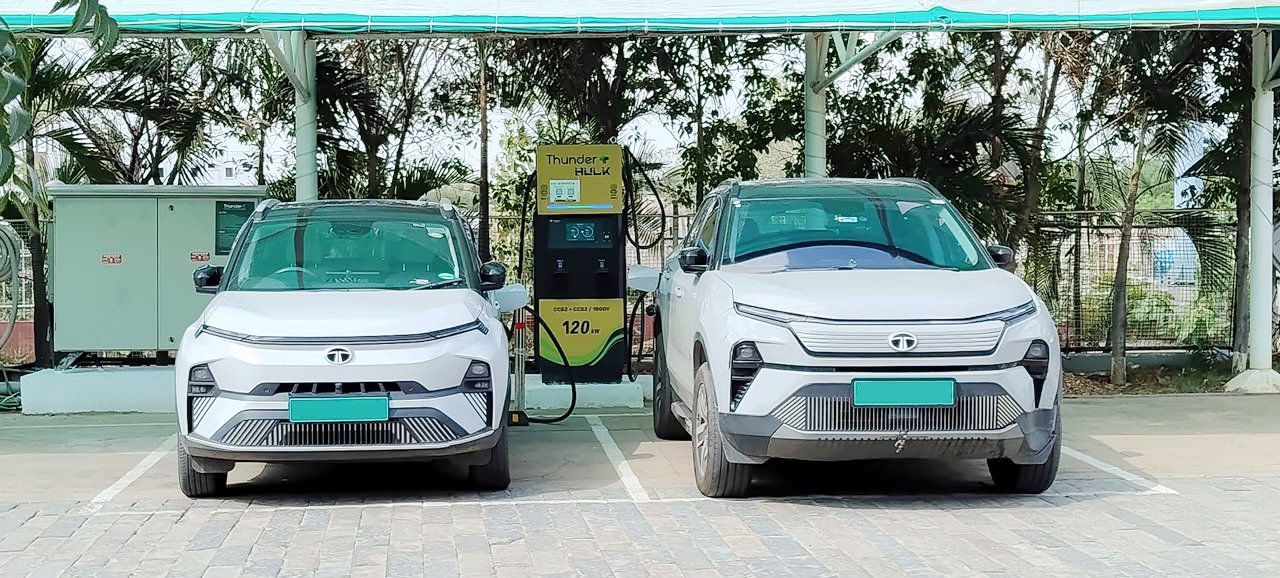
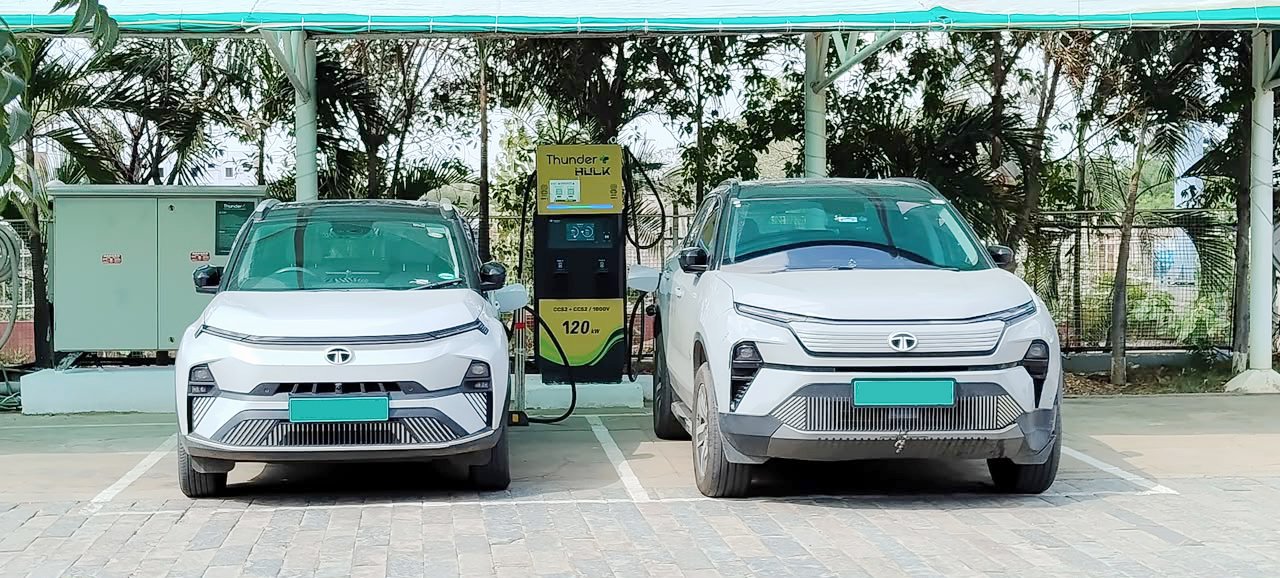
    ThunderPlus, an electric vehicle charging infrastructure company, has expanded its highway charging network with the deployment of a 120 kW DC fast-charging station at Amazon Kitchens on Kurnool Road, Andhra Pradesh.

    Strategically located in Kurnool, the station sits at a key intersection of major road networks connecting Andhra Pradesh, Telangana and Karnataka. Kurnool is positioned along NH-44, a major Hyderabad-Bengaluru highway corridor that facilitates significant long-distance traffic between the two cities. It also connects to NH-40, providing seamless access to Nandyal, Kadapa, Rayachoti, Chittoor and Ranipet, and further extending connectivity across the Rayalaseema region towards Tamil Nadu.

    The location also connects with regional routes such as NH-340C, which links Kurnool with Nandikotkur, Atmakur and the Dornala region, further extending the station’s relevance for intercity and regional EV travel.

    The 120 kW charger will cater primarily to compatible electric four-wheelers undertaking intercity journeys, while also supporting other compatible EVs. The station’s highway-accessible location allows travellers to charge their vehicles during a planned meal or rest break instead of making a separate charging stop.

    Commenting on the deployment, Raj Kumar Medimi, Director, ThunderPlus, said, “As EV adoption moves beyond city limits, charging infrastructure must evolve around how people actually travel. Our objective is not simply to add more charging points, but to identify strategic locations where fast charging can fit naturally into a journey. By combining 120 kW fast charging with access to food and traveller amenities, the Kurnool station is designed to make intercity EV travel more convenient and practical.”

    The deployment addresses a key requirement for India’s growing EV ecosystem: reliable fast-charging infrastructure along highways and major travel corridors. For families and private EV owners undertaking longer journeys, strategically located stations with supporting amenities can help reduce charging-related inconvenience and improve the overall travel experience.

    The Kurnool station forms part of ThunderPlus’ broader strategy to build a charging network focused on high-capacity infrastructure, reliable operations, strategic locations and customer convenience. The company currently operates a network of more than 250 charging hubs and over 1,000 charge points across urban centres and highway locations.

    With Kurnool positioned at the intersection of major routes including the Hyderabad-Bengaluru corridor and the Kurnool-Ranipet route, the new station adds fast-charging capacity to a strategically important part of South India’s road network. Through continued expansion along key travel corridors, ThunderPlus aims to support more convenient intercity EV journeys and contribute to the development of a reliable highway charging ecosystem in India.
  • ThunderPlus Deploys 120 kW Fast Charger in Kurnool

    ThunderPlus Deploys 120 kW Fast Charger in Kurnool

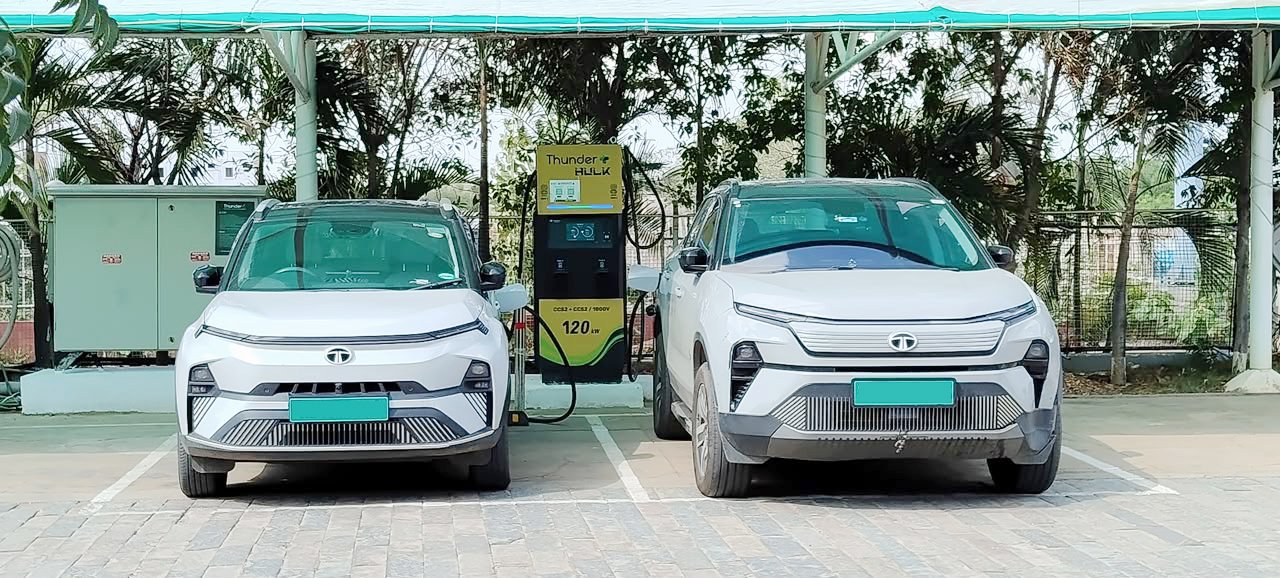
    ThunderPlus, an electric vehicle charging infrastructure company, has expanded its highway charging network with the deployment of a 120 kW DC fast-charging station at Amazon Kitchens on Kurnool Road, Andhra Pradesh.

    Strategically located in Kurnool, the station sits at a key intersection of major road networks connecting Andhra Pradesh, Telangana and Karnataka. Kurnool is positioned along NH-44, a major Hyderabad-Bengaluru highway corridor that facilitates significant long-distance traffic between the two cities. It also connects to NH-40, providing seamless access to Nandyal, Kadapa, Rayachoti, Chittoor and Ranipet, and further extending connectivity across the Rayalaseema region towards Tamil Nadu.

    The location also connects with regional routes such as NH-340C, which links Kurnool with Nandikotkur, Atmakur and the Dornala region, further extending the station’s relevance for intercity and regional EV travel.

    The 120 kW charger will cater primarily to compatible electric four-wheelers undertaking intercity journeys, while also supporting other compatible EVs. The station’s highway-accessible location allows travellers to charge their vehicles during a planned meal or rest break instead of making a separate charging stop.

    Commenting on the deployment, Raj Kumar Medimi, Director, ThunderPlus, said, “As EV adoption moves beyond city limits, charging infrastructure must evolve around how people actually travel. Our objective is not simply to add more charging points, but to identify strategic locations where fast charging can fit naturally into a journey. By combining 120 kW fast charging with access to food and traveller amenities, the Kurnool station is designed to make intercity EV travel more convenient and practical.”

    The deployment addresses a key requirement for India’s growing EV ecosystem: reliable fast-charging infrastructure along highways and major travel corridors. For families and private EV owners undertaking longer journeys, strategically located stations with supporting amenities can help reduce charging-related inconvenience and improve the overall travel experience.

    The Kurnool station forms part of ThunderPlus’ broader strategy to build a charging network focused on high-capacity infrastructure, reliable operations, strategic locations and customer convenience. The company currently operates a network of more than 250 charging hubs and over 1,000 charge points across urban centres and highway locations.

    With Kurnool positioned at the intersection of major routes including the Hyderabad-Bengaluru corridor and the Kurnool-Ranipet route, the new station adds fast-charging capacity to a strategically important part of South India’s road network. Through continued expansion along key travel corridors, ThunderPlus aims to support more convenient intercity EV journeys and contribute to the development of a reliable highway charging ecosystem in India.
  • ThunderPlus Deploys 120 kW Fast Charger in Kurnool

    ThunderPlus Deploys 120 kW Fast Charger in Kurnool

    ThunderPlus, an electric vehicle charging infrastructure company, has expanded its highway charging network with the deployment of a 120 kW DC fast-charging station at Amazon Kitchens on Kurnool Road, Andhra Pradesh.

    Strategically located in Kurnool, the station sits at a key intersection of major road networks connecting Andhra Pradesh, Telangana and Karnataka. Kurnool is positioned along NH-44, a major Hyderabad-Bengaluru highway corridor that facilitates significant long-distance traffic between the two cities. It also connects to NH-40, providing seamless access to Nandyal, Kadapa, Rayachoti, Chittoor and Ranipet, and further extending connectivity across the Rayalaseema region towards Tamil Nadu.

    The location also connects with regional routes such as NH-340C, which links Kurnool with Nandikotkur, Atmakur and the Dornala region, further extending the station’s relevance for intercity and regional EV travel.

    The 120 kW charger will cater primarily to compatible electric four-wheelers undertaking intercity journeys, while also supporting other compatible EVs. The station’s highway-accessible location allows travellers to charge their vehicles during a planned meal or rest break instead of making a separate charging stop.

    Commenting on the deployment, Raj Kumar Medimi, Director, ThunderPlus, said, “As EV adoption moves beyond city limits, charging infrastructure must evolve around how people actually travel. Our objective is not simply to add more charging points, but to identify strategic locations where fast charging can fit naturally into a journey. By combining 120 kW fast charging with access to food and traveller amenities, the Kurnool station is designed to make intercity EV travel more convenient and practical.”

    The deployment addresses a key requirement for India’s growing EV ecosystem: reliable fast-charging infrastructure along highways and major travel corridors. For families and private EV owners undertaking longer journeys, strategically located stations with supporting amenities can help reduce charging-related inconvenience and improve the overall travel experience.

    The Kurnool station forms part of ThunderPlus’ broader strategy to build a charging network focused on high-capacity infrastructure, reliable operations, strategic locations and customer convenience. The company currently operates a network of more than 250 charging hubs and over 1,000 charge points across urban centres and highway locations.

    With Kurnool positioned at the intersection of major routes including the Hyderabad-Bengaluru corridor and the Kurnool-Ranipet route, the new station adds fast-charging capacity to a strategically important part of South India’s road network. Through continued expansion along key travel corridors, ThunderPlus aims to support more convenient intercity EV journeys and contribute to the development of a reliable highway charging ecosystem in India.
  • ThunderPlus Deploys 120 kW Fast Charger in Kurnool

    ThunderPlus, an electric vehicle charging infrastructure company, has expanded its highway charging network with the deployment of a 120 kW DC fast-charging station at Amazon Kitchens on Kurnool Road, Andhra Pradesh.

    Strategically located in Kurnool, the station sits at a key intersection of major road networks connecting Andhra Pradesh, Telangana and Karnataka. Kurnool is positioned along NH-44, a major Hyderabad-Bengaluru highway corridor that facilitates significant long-distance traffic between the two cities. It also connects to NH-40, providing seamless access to Nandyal, Kadapa, Rayachoti, Chittoor and Ranipet, and further extending connectivity across the Rayalaseema region towards Tamil Nadu.

    The location also connects with regional routes such as NH-340C, which links Kurnool with Nandikotkur, Atmakur and the Dornala region, further extending the station’s relevance for intercity and regional EV travel.

    The 120 kW charger will cater primarily to compatible electric four-wheelers undertaking intercity journeys, while also supporting other compatible EVs. The station’s highway-accessible location allows travellers to charge their vehicles during a planned meal or rest break instead of making a separate charging stop.

    Commenting on the deployment, Raj Kumar Medimi, Director, ThunderPlus, said, “As EV adoption moves beyond city limits, charging infrastructure must evolve around how people actually travel. Our objective is not simply to add more charging points, but to identify strategic locations where fast charging can fit naturally into a journey. By combining 120 kW fast charging with access to food and traveller amenities, the Kurnool station is designed to make intercity EV travel more convenient and practical.”

    The deployment addresses a key requirement for India’s growing EV ecosystem: reliable fast-charging infrastructure along highways and major travel corridors. For families and private EV owners undertaking longer journeys, strategically located stations with supporting amenities can help reduce charging-related inconvenience and improve the overall travel experience.

    The Kurnool station forms part of ThunderPlus’ broader strategy to build a charging network focused on high-capacity infrastructure, reliable operations, strategic locations and customer convenience. The company currently operates a network of more than 250 charging hubs and over 1,000 charge points across urban centres and highway locations.

    With Kurnool positioned at the intersection of major routes including the Hyderabad-Bengaluru corridor and the Kurnool-Ranipet route, the new station adds fast-charging capacity to a strategically important part of South India’s road network. Through continued expansion along key travel corridors, ThunderPlus aims to support more convenient intercity EV journeys and contribute to the development of a reliable highway charging ecosystem in India.
  • Delta Electronics Outlines India Roadmap for Energy Transition, AI and Smart Manufacturing

    Delta Electronics Outlines India Roadmap for Energy Transition, AI and Smart Manufacturing

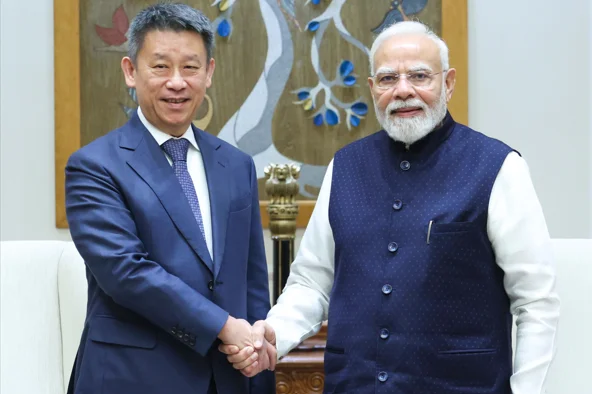
    Delta Electronics Chairman & CEO Mr. Ping Cheng and Delta Electronics India President Mr. Benjamin Lin met with Prime Minister Narendra Modi to discuss Delta’s plans and roadmap for India across energy transition, AI infrastructure, and smart manufacturing.

    During the meeting, Mr. Ping Cheng, Chairman and CEO, Delta Electronics, Inc., underscored, “India is a key pillar of Delta’s global growth strategy, with our company scaling up local manufacturing capacity to ultimately support both domestic growth and export demand — building on more than two decades of local presence, including our LEED Gold-certified HQ and R&D Center in Bengaluru, which anchors Delta’s engineering future in the country and reflects our long-term commitment to India’s rise.”

    Delta Electronics presented its roadmap for next-generation clean energy solutions, including hydrogen energy technologies and its Solid Oxide Fuel Cell (SOFC) and Solid Oxide Electrolyzer Cell (SOEC) solutions, aimed at supporting India’s energy transition—a natural extension of Delta’s founding mission, “To provide innovative, clean and energy-efficient solutions for a better tomorrow.”

    The company highlighted its continued focus on expanding its presence and capabilities in India across AI data centers, energy infrastructure, and smart manufacturing, positioned as key engines to power the country’s evolving digital and industrial future.

    The Prime Minister shared his thoughts on the strategic sectors, and the government reaffirmed its support for Delta’s ongoing investment and expansion in India.

  • Delta Electronics Outlines India Roadmap for Energy Transition, AI and Smart Manufacturing

    Delta Electronics Outlines India Roadmap for Energy Transition, AI and Smart Manufacturing

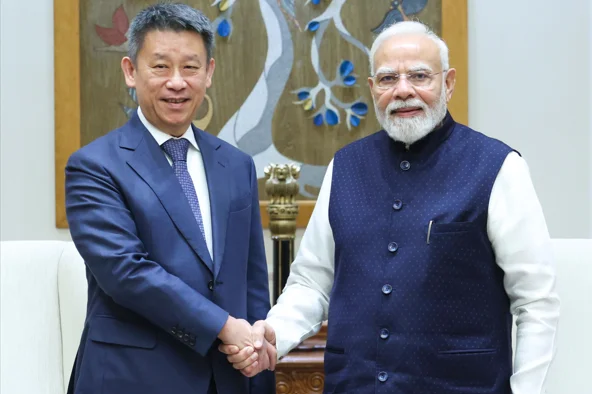
    Delta Electronics Chairman & CEO Mr. Ping Cheng and Delta Electronics India President Mr. Benjamin Lin met with Prime Minister Narendra Modi to discuss Delta’s plans and roadmap for India across energy transition, AI infrastructure, and smart manufacturing.

    During the meeting, Mr. Ping Cheng, Chairman and CEO, Delta Electronics, Inc., underscored, “India is a key pillar of Delta’s global growth strategy, with our company scaling up local manufacturing capacity to ultimately support both domestic growth and export demand — building on more than two decades of local presence, including our LEED Gold-certified HQ and R&D Center in Bengaluru, which anchors Delta’s engineering future in the country and reflects our long-term commitment to India’s rise.”

    Delta Electronics presented its roadmap for next-generation clean energy solutions, including hydrogen energy technologies and its Solid Oxide Fuel Cell (SOFC) and Solid Oxide Electrolyzer Cell (SOEC) solutions, aimed at supporting India’s energy transition—a natural extension of Delta’s founding mission, “To provide innovative, clean and energy-efficient solutions for a better tomorrow.”

    The company highlighted its continued focus on expanding its presence and capabilities in India across AI data centers, energy infrastructure, and smart manufacturing, positioned as key engines to power the country’s evolving digital and industrial future.

    The Prime Minister shared his thoughts on the strategic sectors, and the government reaffirmed its support for Delta’s ongoing investment and expansion in India.

  • Delta Electronics Outlines India Roadmap for Energy Transition, AI and Smart Manufacturing

    Delta Electronics Outlines India Roadmap for Energy Transition, AI and Smart Manufacturing

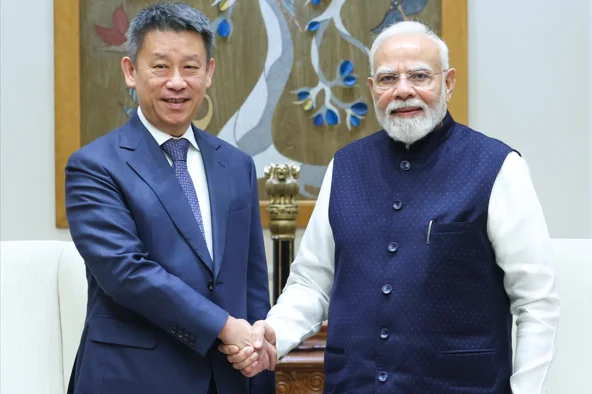
    Delta Electronics Chairman & CEO Mr. Ping Cheng and Delta Electronics India President Mr. Benjamin Lin met with Prime Minister Narendra Modi to discuss Delta’s plans and roadmap for India across energy transition, AI infrastructure, and smart manufacturing.

    During the meeting, Mr. Ping Cheng, Chairman and CEO, Delta Electronics, Inc., underscored, “India is a key pillar of Delta’s global growth strategy, with our company scaling up local manufacturing capacity to ultimately support both domestic growth and export demand — building on more than two decades of local presence, including our LEED Gold-certified HQ and R&D Center in Bengaluru, which anchors Delta’s engineering future in the country and reflects our long-term commitment to India’s rise.”

    Delta Electronics presented its roadmap for next-generation clean energy solutions, including hydrogen energy technologies and its Solid Oxide Fuel Cell (SOFC) and Solid Oxide Electrolyzer Cell (SOEC) solutions, aimed at supporting India’s energy transition—a natural extension of Delta’s founding mission, “To provide innovative, clean and energy-efficient solutions for a better tomorrow.”

    The company highlighted its continued focus on expanding its presence and capabilities in India across AI data centers, energy infrastructure, and smart manufacturing, positioned as key engines to power the country’s evolving digital and industrial future.

    The Prime Minister shared his thoughts on the strategic sectors, and the government reaffirmed its support for Delta’s ongoing investment and expansion in India.

  • Delta Electronics Outlines India Roadmap for Energy Transition, AI and Smart Manufacturing

    Delta Electronics Chairman & CEO Mr. Ping Cheng and Delta Electronics India President Mr. Benjamin Lin met with Prime Minister Narendra Modi to discuss Delta’s plans and roadmap for India across energy transition, AI infrastructure, and smart manufacturing.

    During the meeting, Mr. Ping Cheng, Chairman and CEO, Delta Electronics, Inc., underscored, “India is a key pillar of Delta’s global growth strategy, with our company scaling up local manufacturing capacity to ultimately support both domestic growth and export demand — building on more than two decades of local presence, including our LEED Gold-certified HQ and R&D Center in Bengaluru, which anchors Delta’s engineering future in the country and reflects our long-term commitment to India’s rise.”

    Delta Electronics presented its roadmap for next-generation clean energy solutions, including hydrogen energy technologies and its Solid Oxide Fuel Cell (SOFC) and Solid Oxide Electrolyzer Cell (SOEC) solutions, aimed at supporting India’s energy transition—a natural extension of Delta’s founding mission, “To provide innovative, clean and energy-efficient solutions for a better tomorrow.”

    The company highlighted its continued focus on expanding its presence and capabilities in India across AI data centers, energy infrastructure, and smart manufacturing, positioned as key engines to power the country’s evolving digital and industrial future.

    The Prime Minister shared his thoughts on the strategic sectors, and the government reaffirmed its support for Delta’s ongoing investment and expansion in India.

  • Oriana Power Secures 900 MW/1,800 MWh BESS Awards from MSEDCL

    Oriana Power Secures 900 MW/1,800 MWh BESS Awards from MSEDCL

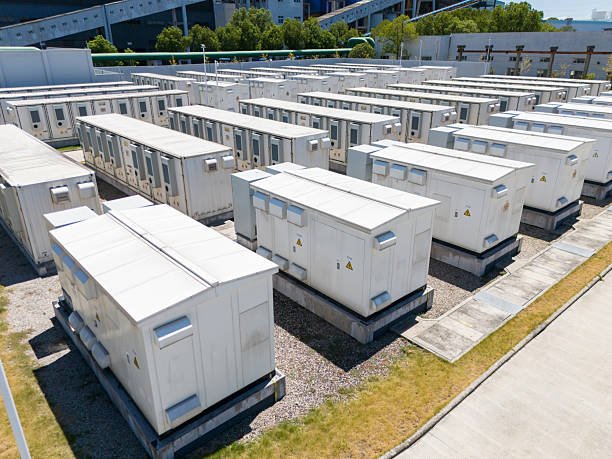
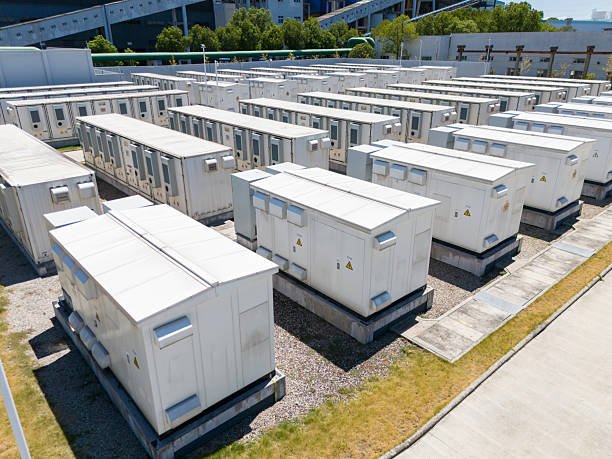
    Oriana Power Limited has received two Letters of Award (LOAs) from Maharashtra State Electricity Distribution Co. Ltd. (MSEDCL) for setting up an aggregate 900 MW/1,800 MWh Battery Energy Storage System (BESS) capacity in Maharashtra.

    The two awards, dated September 18, 2026, comprise 500 MW/1,000 MWh and 400 MW/800 MWh BESS projects. The 500 MW/1,000 MWh project will be developed at MSETCL substations, while the 400 MW/800 MWh project will be established at MSEDCL substations.

    Under the first award, Oriana Power will receive a tariff of Rs. 2,38,000 per MW per month, excluding GST, for the 500 MW/1,000 MWh capacity. The second award, covering 400 MW/800 MWh, carries a tariff of Rs. 2,40,000 per MW per month, excluding GST.

    The company has secured the combined 900 MW/1,800 MWh capacity from the total tendered capacity of 2,000 MW/4,000 MWh floated by MSEDCL.

    The aggregate consideration from the two projects is estimated at approximately Rs. 3,870 crore over the 15-year term of the respective Battery Energy Storage Purchase Agreements (BESPAs), excluding GST. The estimated Viability Gap Funding (VGF) is Rs. 324 crore, based on the current estimated project cost.

    The 500 MW/1,000 MWh award represents an estimated value of Rs. 2,142 crore, or approximately Rs. 142.80 crore annually, while the 400 MW/800 MWh award is valued at approximately Rs. 1,728 crore, or Rs. 115.20 crore annually, over their respective 15-year terms.

    The BESS projects are being awarded under tariff-based global competitive bidding with VGF support under the Power System Development Fund (PSDF) scheme. Each BESS agreement will remain in force for 15 years from the respective Commercial Operation Date.

  • Oriana Power Secures 900 MW/1,800 MWh BESS Awards from MSEDCL

    Oriana Power Secures 900 MW/1,800 MWh BESS Awards from MSEDCL

    Oriana Power Limited has received two Letters of Award (LOAs) from Maharashtra State Electricity Distribution Co. Ltd. (MSEDCL) for setting up an aggregate 900 MW/1,800 MWh Battery Energy Storage System (BESS) capacity in Maharashtra.

    The two awards, dated September 18, 2026, comprise 500 MW/1,000 MWh and 400 MW/800 MWh BESS projects. The 500 MW/1,000 MWh project will be developed at MSETCL substations, while the 400 MW/800 MWh project will be established at MSEDCL substations.

    Under the first award, Oriana Power will receive a tariff of Rs. 2,38,000 per MW per month, excluding GST, for the 500 MW/1,000 MWh capacity. The second award, covering 400 MW/800 MWh, carries a tariff of Rs. 2,40,000 per MW per month, excluding GST.

    The company has secured the combined 900 MW/1,800 MWh capacity from the total tendered capacity of 2,000 MW/4,000 MWh floated by MSEDCL.

    The aggregate consideration from the two projects is estimated at approximately Rs. 3,870 crore over the 15-year term of the respective Battery Energy Storage Purchase Agreements (BESPAs), excluding GST. The estimated Viability Gap Funding (VGF) is Rs. 324 crore, based on the current estimated project cost.

    The 500 MW/1,000 MWh award represents an estimated value of Rs. 2,142 crore, or approximately Rs. 142.80 crore annually, while the 400 MW/800 MWh award is valued at approximately Rs. 1,728 crore, or Rs. 115.20 crore annually, over their respective 15-year terms.

    The BESS projects are being awarded under tariff-based global competitive bidding with VGF support under the Power System Development Fund (PSDF) scheme. Each BESS agreement will remain in force for 15 years from the respective Commercial Operation Date.