Author: abhishek2019cs034abesit@gmail.com

  • The Future of Business Is Solar-Powered: Why Renewable Energy Is Becoming a Competitive Advantage

    The Future of Business Is Solar-Powered: Why Renewable Energy Is Becoming a Competitive Advantage

    Solar has always made sense for the environment. Today, it makes just as much sense on the balance sheet too. In states like Maharashtra and Tamil Nadu, industrial grid tariffs now sit at Rs. 8 to 14 per unit, while solar can deliver the same power at under Rs. 2.80. When the numbers line up this clearly, solar is no longer just a sustainability decision. It is simply the smarter way to run a business.

    The payback math has also moved. A commercial rooftop project in India now typically pays for itself in 3 to 4 years on electricity savings alone. Add accelerated depreciation, which lets companies write off up to 40% of the asset value in the very first year, plus GST input credit, and that payback period compresses further, in some cases to under 3 years. For a manufacturer paying double-digit grid tariffs, that is a better return than most capital projects on the table.

    What makes this moment different is that the pressure is not coming from one direction. It is coming from several at the same time.

    Exporters are feeling it first. Since January 2026, the European Union’s Carbon Border Adjustment Mechanism has been charging Indian steel, aluminium, and cement exporters for the carbon embedded in what they ship to Europe. A producer running on renewable power has a lower bill under this mechanism. Nobody in that finance department is calling this a sustainability initiative anymore. It has become a market access question, decided in the finance department, not the CSR office.

    The grid itself is changing the terms, too. Karnataka now sources over 57% of its installed capacity from renewables. In June 2026, its electricity regulator proposed new rules requiring any distributed solar system above 10 kilowatts to include battery storage covering at least a fifth of its output. Other states are expected to follow a similar direction as their own renewable share grows. Solar is moving from something you switch on during the day to something that has to behave like firm, dispatchable power. Companies that treat their solar investment as a one-time purchase, rather than a system that needs to evolve with these rules, will find themselves retrofitting sooner than they expect.

    The old excuse, that a business does not have the balance sheet appetite for a large upfront solar investment has also weakened. Group captive structures now let a consortium of companies jointly hold a stake in a shared solar plant and split both the output and the savings. The barrier that used to keep mid-sized companies on the sidelines has narrowed considerably.

    None of this means every company needs to become an energy expert overnight. It means the cost gap, the carbon costs on exports, the tightening grid rules, and the easier ways to buy clean power now all point toward the same conclusion, from different directions and for different reasons. That kind of alignment rarely happens by accident. The companies moving first are not doing it for the sustainability report anymore. They are doing it because, once you add it all up, solar has simply become the smarter way to run a business.

    – Mayank Garg, CEO, Aroma Solar

  • The Future of Business Is Solar-Powered: Why Renewable Energy Is Becoming a Competitive Advantage

    The Future of Business Is Solar-Powered: Why Renewable Energy Is Becoming a Competitive Advantage

    Solar has always made sense for the environment. Today, it makes just as much sense on the balance sheet too. In states like Maharashtra and Tamil Nadu, industrial grid tariffs now sit at Rs. 8 to 14 per unit, while solar can deliver the same power at under Rs. 2.80. When the numbers line up this clearly, solar is no longer just a sustainability decision. It is simply the smarter way to run a business.

    The payback math has also moved. A commercial rooftop project in India now typically pays for itself in 3 to 4 years on electricity savings alone. Add accelerated depreciation, which lets companies write off up to 40% of the asset value in the very first year, plus GST input credit, and that payback period compresses further, in some cases to under 3 years. For a manufacturer paying double-digit grid tariffs, that is a better return than most capital projects on the table.

    What makes this moment different is that the pressure is not coming from one direction. It is coming from several at the same time.

    Exporters are feeling it first. Since January 2026, the European Union’s Carbon Border Adjustment Mechanism has been charging Indian steel, aluminium, and cement exporters for the carbon embedded in what they ship to Europe. A producer running on renewable power has a lower bill under this mechanism. Nobody in that finance department is calling this a sustainability initiative anymore. It has become a market access question, decided in the finance department, not the CSR office.

    The grid itself is changing the terms, too. Karnataka now sources over 57% of its installed capacity from renewables. In June 2026, its electricity regulator proposed new rules requiring any distributed solar system above 10 kilowatts to include battery storage covering at least a fifth of its output. Other states are expected to follow a similar direction as their own renewable share grows. Solar is moving from something you switch on during the day to something that has to behave like firm, dispatchable power. Companies that treat their solar investment as a one-time purchase, rather than a system that needs to evolve with these rules, will find themselves retrofitting sooner than they expect.

    The old excuse, that a business does not have the balance sheet appetite for a large upfront solar investment has also weakened. Group captive structures now let a consortium of companies jointly hold a stake in a shared solar plant and split both the output and the savings. The barrier that used to keep mid-sized companies on the sidelines has narrowed considerably.

    None of this means every company needs to become an energy expert overnight. It means the cost gap, the carbon costs on exports, the tightening grid rules, and the easier ways to buy clean power now all point toward the same conclusion, from different directions and for different reasons. That kind of alignment rarely happens by accident. The companies moving first are not doing it for the sustainability report anymore. They are doing it because, once you add it all up, solar has simply become the smarter way to run a business.

    – Mayank Garg, CEO, Aroma Solar

  • The Future of Business Is Solar-Powered: Why Renewable Energy Is Becoming a Competitive Advantage

    The Future of Business Is Solar-Powered: Why Renewable Energy Is Becoming a Competitive Advantage

    Solar has always made sense for the environment. Today, it makes just as much sense on the balance sheet too. In states like Maharashtra and Tamil Nadu, industrial grid tariffs now sit at Rs. 8 to 14 per unit, while solar can deliver the same power at under Rs. 2.80. When the numbers line up this clearly, solar is no longer just a sustainability decision. It is simply the smarter way to run a business.

    The payback math has also moved. A commercial rooftop project in India now typically pays for itself in 3 to 4 years on electricity savings alone. Add accelerated depreciation, which lets companies write off up to 40% of the asset value in the very first year, plus GST input credit, and that payback period compresses further, in some cases to under 3 years. For a manufacturer paying double-digit grid tariffs, that is a better return than most capital projects on the table.

    What makes this moment different is that the pressure is not coming from one direction. It is coming from several at the same time.

    Exporters are feeling it first. Since January 2026, the European Union’s Carbon Border Adjustment Mechanism has been charging Indian steel, aluminium, and cement exporters for the carbon embedded in what they ship to Europe. A producer running on renewable power has a lower bill under this mechanism. Nobody in that finance department is calling this a sustainability initiative anymore. It has become a market access question, decided in the finance department, not the CSR office.

    The grid itself is changing the terms, too. Karnataka now sources over 57% of its installed capacity from renewables. In June 2026, its electricity regulator proposed new rules requiring any distributed solar system above 10 kilowatts to include battery storage covering at least a fifth of its output. Other states are expected to follow a similar direction as their own renewable share grows. Solar is moving from something you switch on during the day to something that has to behave like firm, dispatchable power. Companies that treat their solar investment as a one-time purchase, rather than a system that needs to evolve with these rules, will find themselves retrofitting sooner than they expect.

    The old excuse, that a business does not have the balance sheet appetite for a large upfront solar investment has also weakened. Group captive structures now let a consortium of companies jointly hold a stake in a shared solar plant and split both the output and the savings. The barrier that used to keep mid-sized companies on the sidelines has narrowed considerably.

    None of this means every company needs to become an energy expert overnight. It means the cost gap, the carbon costs on exports, the tightening grid rules, and the easier ways to buy clean power now all point toward the same conclusion, from different directions and for different reasons. That kind of alignment rarely happens by accident. The companies moving first are not doing it for the sustainability report anymore. They are doing it because, once you add it all up, solar has simply become the smarter way to run a business.

    – Mayank Gar, CEO, Aroma Solar

  • The Future of Business Is Solar-Powered: Why Renewable Energy Is Becoming a Competitive Advantage

    Solar has always made sense for the environment. Today, it makes just as much sense on the balance sheet too. In states like Maharashtra and Tamil Nadu, industrial grid tariffs now sit at Rs. 8 to 14 per unit, while solar can deliver the same power at under Rs. 2.80. When the numbers line up this clearly, solar is no longer just a sustainability decision. It is simply the smarter way to run a business.

    The payback math has also moved. A commercial rooftop project in India now typically pays for itself in 3 to 4 years on electricity savings alone. Add accelerated depreciation, which lets companies write off up to 40% of the asset value in the very first year, plus GST input credit, and that payback period compresses further, in some cases to under 3 years. For a manufacturer paying double-digit grid tariffs, that is a better return than most capital projects on the table.

    What makes this moment different is that the pressure is not coming from one direction. It is coming from several at the same time.

    Exporters are feeling it first. Since January 2026, the European Union’s Carbon Border Adjustment Mechanism has been charging Indian steel, aluminium, and cement exporters for the carbon embedded in what they ship to Europe. A producer running on renewable power has a lower bill under this mechanism. Nobody in that finance department is calling this a sustainability initiative anymore. It has become a market access question, decided in the finance department, not the CSR office.

    The grid itself is changing the terms, too. Karnataka now sources over 57% of its installed capacity from renewables. In June 2026, its electricity regulator proposed new rules requiring any distributed solar system above 10 kilowatts to include battery storage covering at least a fifth of its output. Other states are expected to follow a similar direction as their own renewable share grows. Solar is moving from something you switch on during the day to something that has to behave like firm, dispatchable power. Companies that treat their solar investment as a one-time purchase, rather than a system that needs to evolve with these rules, will find themselves retrofitting sooner than they expect.

    The old excuse, that a business does not have the balance sheet appetite for a large upfront solar investment has also weakened. Group captive structures now let a consortium of companies jointly hold a stake in a shared solar plant and split both the output and the savings. The barrier that used to keep mid-sized companies on the sidelines has narrowed considerably.

    None of this means every company needs to become an energy expert overnight. It means the cost gap, the carbon costs on exports, the tightening grid rules, and the easier ways to buy clean power now all point toward the same conclusion, from different directions and for different reasons. That kind of alignment rarely happens by accident. The companies moving first are not doing it for the sustainability report anymore. They are doing it because, once you add it all up, solar has simply become the smarter way to run a business.

    – Mayank Gar, CEO, Aroma Solar

  • Sunsure Energy Signs 20 MW Hybrid PPA with Kajaria Ceramics for Supplying Round-The-Clock Green Power in Rajasthan

    Sunsure Energy Signs 20 MW Hybrid PPA with Kajaria Ceramics for Supplying Round-The-Clock Green Power in Rajasthan

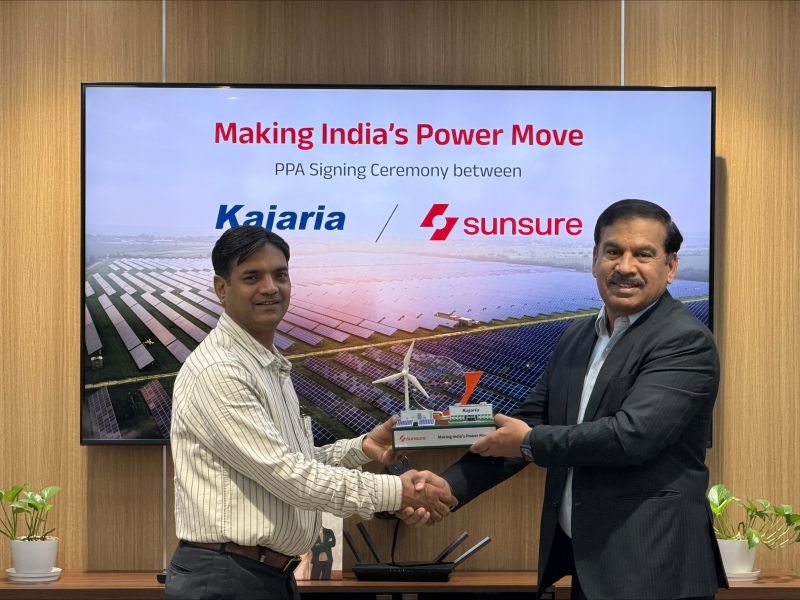
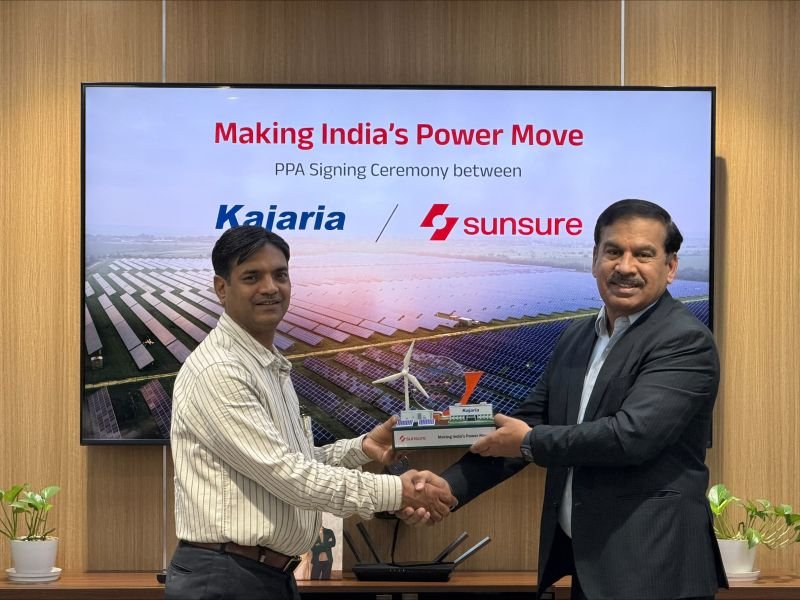
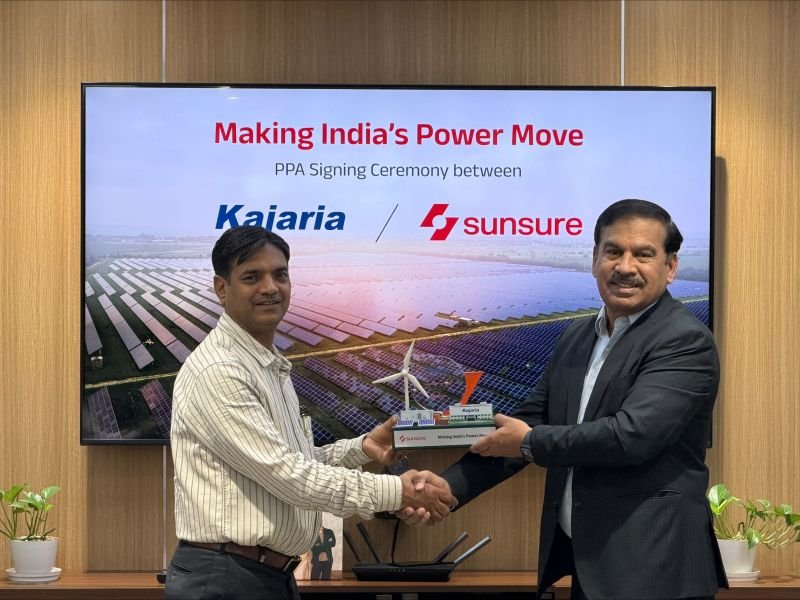
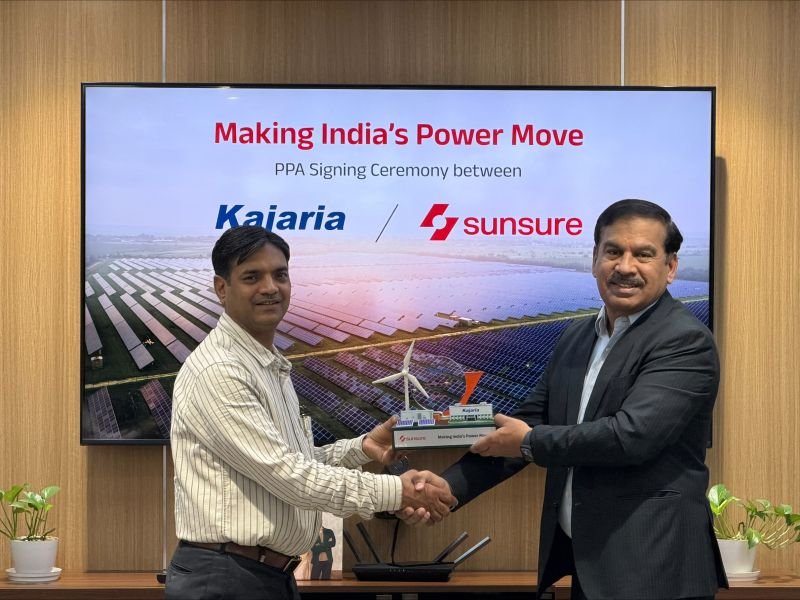
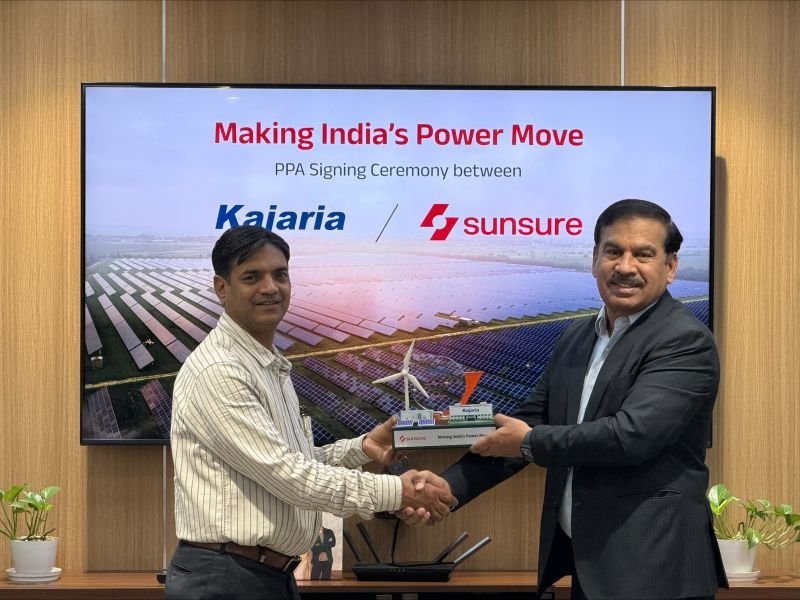
    Sunsure Energy, India’s preferred Round-the-Clock renewable energy solutions provider for business and utilities, has signed a long-term green power purchase agreement (PPA) with Kajaria Ceramics, India’s largest manufacturer of ceramic and vitrified tiles. Through the agreement, Sunsure Energy will develop dedicated 10 MW (15 MWp) solar and 10 MW wind capacities for Kajaria Ceramics at its upcoming project in the Barmer District, Rajasthan, to supply Round-The-Clock (RTC) renewable energy to Kajaria’s production facilities in Gailpur and Alwar, Rajasthan.

    This is the second power purchase agreement between the two companies, following a 7 MW long-term solar agreement signed in 2023. The repeat partnership highlights Sunsure’s commitment to customer-centricity and its ability to support India’s manufacturing ecosystem with reliable and cost-effective renewable energy solutions.

    The annual supply to Kajaria’s facilities is expected to be 52.5 million units (MUs), leading to an estimated annual offset of 42,000 metric tonnes of CO2e greenhouse gas (GHG) emissions. With this agreement, the total signed capacity between Sunsure Energy and Kajaria Ceramics has grown to 27 MW, further strengthening the partnership between the two companies.

    Commenting on the partnership, Mr. Parveen Gupta, V.P. (Finance) – Kajaria Ceramics said, “Our continued partnership with Sunsure Energy reflects our commitment to progressively increasing the share of renewable energy in our operations. With this agreement, we are taking another step towards securing reliable and sustainable power for our manufacturing facilities in Rajasthan. We value Sunsure Energy’s expertise in delivering renewable energy solutions and look forward to deepening this partnership as we advance in our decarbonization journey.”

    Commenting on the signing, Mr. Vinod Sharma, S.V.P. – Sunsure Energy said “At Sunsure we take great pride in our customer centric approach and the ability to understand the needs of our customer. This ability has helped us sign multiple partnerships with our clients in a very short span of time. We are delighted that Kajaria Ceramics chose to work with us for their facilities in Rajasthan and this agreement is a testament to the trust in our ability to deliver reliable, high-quality renewable energy solutions. We look forward to supporting Kajaria’s decarbonization journey as its operations continue to grow.”

    Sunsure Energy sees Rajasthan emerging as a key hub for India’s clean energy transition and plans to commission close to 2 GW of solar, wind and battery storage capacity in the state by 2028. Sunsure’s upcoming projects in Barmer and Bikaner add to this momentum, with solar, wind and battery storage capacity being developed to deliver firm renewable power to commercial and industrial customers in the state.

  • Sunsure Energy Signs 20 MW Hybrid PPA with Kajaria Ceramics for Supplying Round-The-Clock Green Power in Rajasthan

    Sunsure Energy Signs 20 MW Hybrid PPA with Kajaria Ceramics for Supplying Round-The-Clock Green Power in Rajasthan

    Sunsure Energy, India’s preferred Round-the-Clock renewable energy solutions provider for business and utilities, has signed a long-term green power purchase agreement (PPA) with Kajaria Ceramics, India’s largest manufacturer of ceramic and vitrified tiles. Through the agreement, Sunsure Energy will develop dedicated 10 MW (15 MWp) solar and 10 MW wind capacities for Kajaria Ceramics at its upcoming project in the Barmer District, Rajasthan, to supply Round-The-Clock (RTC) renewable energy to Kajaria’s production facilities in Gailpur and Alwar, Rajasthan.

    This is the second power purchase agreement between the two companies, following a 7 MW long-term solar agreement signed in 2023. The repeat partnership highlights Sunsure’s commitment to customer-centricity and its ability to support India’s manufacturing ecosystem with reliable and cost-effective renewable energy solutions.

    The annual supply to Kajaria’s facilities is expected to be 52.5 million units (MUs), leading to an estimated annual offset of 42,000 metric tonnes of CO2e greenhouse gas (GHG) emissions. With this agreement, the total signed capacity between Sunsure Energy and Kajaria Ceramics has grown to 27 MW, further strengthening the partnership between the two companies.

    Commenting on the partnership, Mr. Parveen Gupta, V.P. (Finance) – Kajaria Ceramics said, “Our continued partnership with Sunsure Energy reflects our commitment to progressively increasing the share of renewable energy in our operations. With this agreement, we are taking another step towards securing reliable and sustainable power for our manufacturing facilities in Rajasthan. We value Sunsure Energy’s expertise in delivering renewable energy solutions and look forward to deepening this partnership as we advance in our decarbonization journey.”

    Commenting on the signing, Mr. Vinod Sharma, S.V.P. – Sunsure Energy said “At Sunsure we take great pride in our customer centric approach and the ability to understand the needs of our customer. This ability has helped us sign multiple partnerships with our clients in a very short span of time. We are delighted that Kajaria Ceramics chose to work with us for their facilities in Rajasthan and this agreement is a testament to the trust in our ability to deliver reliable, high-quality renewable energy solutions. We look forward to supporting Kajaria’s decarbonization journey as its operations continue to grow.”

    Sunsure Energy sees Rajasthan emerging as a key hub for India’s clean energy transition and plans to commission close to 2 GW of solar, wind and battery storage capacity in the state by 2028. Sunsure’s upcoming projects in Barmer and Bikaner add to this momentum, with solar, wind and battery storage capacity being developed to deliver firm renewable power to commercial and industrial customers in the state.

  • Sunsure Energy Signs 20 MW Hybrid PPA with Kajaria Ceramics for Supplying Round-The-Clock Green Power in Rajasthan

    Sunsure Energy Signs 20 MW Hybrid PPA with Kajaria Ceramics for Supplying Round-The-Clock Green Power in Rajasthan

    Sunsure Energy, India’s preferred Round-the-Clock renewable energy solutions provider for business and utilities, has signed a long-term green power purchase agreement (PPA) with Kajaria Ceramics, India’s largest manufacturer of ceramic and vitrified tiles. Through the agreement, Sunsure Energy will develop dedicated 10 MW (15 MWp) solar and 10 MW wind capacities for Kajaria Ceramics at its upcoming project in the Barmer District, Rajasthan, to supply Round-The-Clock (RTC) renewable energy to Kajaria’s production facilities in Gailpur and Alwar, Rajasthan.

    This is the second power purchase agreement between the two companies, following a 7 MW long-term solar agreement signed in 2023. The repeat partnership highlights Sunsure’s commitment to customer-centricity and its ability to support India’s manufacturing ecosystem with reliable and cost-effective renewable energy solutions.

    The annual supply to Kajaria’s facilities is expected to be 52.5 million units (MUs), leading to an estimated annual offset of 42,000 metric tonnes of CO2e greenhouse gas (GHG) emissions. With this agreement, the total signed capacity between Sunsure Energy and Kajaria Ceramics has grown to 27 MW, further strengthening the partnership between the two companies.

    Commenting on the partnership, Mr. Parveen Gupta, V.P. (Finance) – Kajaria Ceramics said, “Our continued partnership with Sunsure Energy reflects our commitment to progressively increasing the share of renewable energy in our operations. With this agreement, we are taking another step towards securing reliable and sustainable power for our manufacturing facilities in Rajasthan. We value Sunsure Energy’s expertise in delivering renewable energy solutions and look forward to deepening this partnership as we advance in our decarbonization journey.”

    Commenting on the signing, Mr. Vinod Sharma, S.V.P. – Sunsure Energy said “At Sunsure we take great pride in our customer centric approach and the ability to understand the needs of our customer. This ability has helped us sign multiple partnerships with our clients in a very short span of time. We are delighted that Kajaria Ceramics chose to work with us for their facilities in Rajasthan and this agreement is a testament to the trust in our ability to deliver reliable, high-quality renewable energy solutions. We look forward to supporting Kajaria’s decarbonization journey as its operations continue to grow.”

    Sunsure Energy sees Rajasthan emerging as a key hub for India’s clean energy transition and plans to commission close to 2 GW of solar, wind and battery storage capacity in the state by 2028. Sunsure’s upcoming projects in Barmer and Bikaner add to this momentum, with solar, wind and battery storage capacity being developed to deliver firm renewable power to commercial and industrial customers in the state.

  • Sunsure Energy Signs 20 MW Hybrid PPA with Kajaria Ceramics for Supplying Round-The-Clock Green Power in Rajasthan

    Sunsure Energy Signs 20 MW Hybrid PPA with Kajaria Ceramics for Supplying Round-The-Clock Green Power in Rajasthan

    Sunsure Energy, India’s preferred Round-the-Clock renewable energy solutions provider for business and utilities, has signed a long-term green power purchase agreement (PPA) with Kajaria Ceramics, India’s largest manufacturer of ceramic and vitrified tiles. Through the agreement, Sunsure Energy will develop dedicated 10 MW (15 MWp) solar and 10 MW wind capacities for Kajaria Ceramics at its upcoming project in the Barmer District, Rajasthan, to supply Round-The-Clock (RTC) renewable energy to Kajaria’s production facilities in Gailpur and Alwar, Rajasthan.

    This is the second power purchase agreement between the two companies, following a 7 MW long-term solar agreement signed in 2023. The repeat partnership highlights Sunsure’s commitment to customer-centricity and its ability to support India’s manufacturing ecosystem with reliable and cost-effective renewable energy solutions.

    The annual supply to Kajaria’s facilities is expected to be 52.5 million units (MUs), leading to an estimated annual offset of 42,000 metric tonnes of CO2e greenhouse gas (GHG) emissions. With this agreement, the total signed capacity between Sunsure Energy and Kajaria Ceramics has grown to 27 MW, further strengthening the partnership between the two companies.

    Commenting on the partnership, Mr. Parveen Gupta, V.P. (Finance) – Kajaria Ceramics said, “Our continued partnership with Sunsure Energy reflects our commitment to progressively increasing the share of renewable energy in our operations. With this agreement, we are taking another step towards securing reliable and sustainable power for our manufacturing facilities in Rajasthan. We value Sunsure Energy’s expertise in delivering renewable energy solutions and look forward to deepening this partnership as we advance in our decarbonization journey.”

    Commenting on the signing, Mr. Vinod Sharma, S.V.P. – Sunsure Energy said “At Sunsure we take great pride in our customer centric approach and the ability to understand the needs of our customer. This ability has helped us sign multiple partnerships with our clients in a very short span of time. We are delighted that Kajaria Ceramics chose to work with us for their facilities in Rajasthan and this agreement is a testament to the trust in our ability to deliver reliable, high-quality renewable energy solutions. We look forward to supporting Kajaria’s decarbonization journey as its operations continue to grow.”

    Sunsure Energy sees Rajasthan emerging as a key hub for India’s clean energy transition and plans to commission close to 2 GW of solar, wind and battery storage capacity in the state by 2028. Sunsure’s upcoming projects in Barmer and Bikaner add to this momentum, with solar, wind and battery storage capacity being developed to deliver firm renewable power to commercial and industrial customers in the state.

  • Sunsure Energy Signs 20 MW Hybrid PPA with Kajaria Ceramics for Supplying Round-The-Clock Green Power in Rajasthan

    Sunsure Energy Signs 20 MW Hybrid PPA with Kajaria Ceramics for Supplying Round-The-Clock Green Power in Rajasthan

    Sunsure Energy, India’s preferred Round-the-Clock renewable energy solutions provider for business and utilities, has signed a long-term green power purchase agreement (PPA) with Kajaria Ceramics, India’s largest manufacturer of ceramic and vitrified tiles. Through the agreement, Sunsure Energy will develop dedicated 10 MW (15 MWp) solar and 10 MW wind capacities for Kajaria Ceramics at its upcoming project in the Barmer District, Rajasthan, to supply Round-The-Clock (RTC) renewable energy to Kajaria’s production facilities in Gailpur and Alwar, Rajasthan.

    This is the second power purchase agreement between the two companies, following a 7 MW long-term solar agreement signed in 2023. The repeat partnership highlights Sunsure’s commitment to customer-centricity and its ability to support India’s manufacturing ecosystem with reliable and cost-effective renewable energy solutions.

    The annual supply to Kajaria’s facilities is expected to be 52.5 million units (MUs), leading to an estimated annual offset of 42,000 metric tonnes of CO2e greenhouse gas (GHG) emissions. With this agreement, the total signed capacity between Sunsure Energy and Kajaria Ceramics has grown to 27 MW, further strengthening the partnership between the two companies.

    Commenting on the partnership, Mr. Parveen Gupta, V.P. (Finance) – Kajaria Ceramics said, “Our continued partnership with Sunsure Energy reflects our commitment to progressively increasing the share of renewable energy in our operations. With this agreement, we are taking another step towards securing reliable and sustainable power for our manufacturing facilities in Rajasthan. We value Sunsure Energy’s expertise in delivering renewable energy solutions and look forward to deepening this partnership as we advance in our decarbonization journey.”

    Commenting on the signing, Mr. Vinod Sharma, S.V.P. – Sunsure Energy said “At Sunsure we take great pride in our customer centric approach and the ability to understand the needs of our customer. This ability has helped us sign multiple partnerships with our clients in a very short span of time. We are delighted that Kajaria Ceramics chose to work with us for their facilities in Rajasthan and this agreement is a testament to the trust in our ability to deliver reliable, high-quality renewable energy solutions. We look forward to supporting Kajaria’s decarbonization journey as its operations continue to grow.”

    Sunsure Energy sees Rajasthan emerging as a key hub for India’s clean energy transition and plans to commission close to 2 GW of solar, wind and battery storage capacity in the state by 2028. Sunsure’s upcoming projects in Barmer and Bikaner add to this momentum, with solar, wind and battery storage capacity being developed to deliver firm renewable power to commercial and industrial customers in the state.

  • Sunsure Energy Signs 20 MW Hybrid PPA with Kajaria Ceramics for Supplying Round-The-Clock Green Power in Rajasthan

    Sunsure Energy, India’s preferred Round-the-Clock renewable energy solutions provider for business and utilities, has signed a long-term green power purchase agreement (PPA) with Kajaria Ceramics, India’s largest manufacturer of ceramic and vitrified tiles. Through the agreement, Sunsure Energy will develop dedicated 10 MW (15 MWp) solar and 10 MW wind capacities for Kajaria Ceramics at its upcoming project in the Barmer District, Rajasthan, to supply Round-The-Clock (RTC) renewable energy to Kajaria’s production facilities in Gailpur and Alwar, Rajasthan.

    This is the second power purchase agreement between the two companies, following a 7 MW long-term solar agreement signed in 2023. The repeat partnership highlights Sunsure’s commitment to customer-centricity and its ability to support India’s manufacturing ecosystem with reliable and cost-effective renewable energy solutions.

    The annual supply to Kajaria’s facilities is expected to be 52.5 million units (MUs), leading to an estimated annual offset of 42,000 metric tonnes of CO2e greenhouse gas (GHG) emissions. With this agreement, the total signed capacity between Sunsure Energy and Kajaria Ceramics has grown to 27 MW, further strengthening the partnership between the two companies.

    Commenting on the partnership, Mr. Parveen Gupta, V.P. (Finance) – Kajaria Ceramics said, “Our continued partnership with Sunsure Energy reflects our commitment to progressively increasing the share of renewable energy in our operations. With this agreement, we are taking another step towards securing reliable and sustainable power for our manufacturing facilities in Rajasthan. We value Sunsure Energy’s expertise in delivering renewable energy solutions and look forward to deepening this partnership as we advance in our decarbonization journey.”

    Commenting on the signing, Mr. Vinod Sharma, S.V.P. – Sunsure Energy said “At Sunsure we take great pride in our customer centric approach and the ability to understand the needs of our customer. This ability has helped us sign multiple partnerships with our clients in a very short span of time. We are delighted that Kajaria Ceramics chose to work with us for their facilities in Rajasthan and this agreement is a testament to the trust in our ability to deliver reliable, high-quality renewable energy solutions. We look forward to supporting Kajaria’s decarbonization journey as its operations continue to grow.”

    Sunsure Energy sees Rajasthan emerging as a key hub for India’s clean energy transition and plans to commission close to 2 GW of solar, wind and battery storage capacity in the state by 2028. Sunsure’s upcoming projects in Barmer and Bikaner add to this momentum, with solar, wind and battery storage capacity being developed to deliver firm renewable power to commercial and industrial customers in the state.