Author: abhishek2019cs034abesit@gmail.com

  • India Crosses 290 GW Renewable Capacity, Focus Shifts to Green Skills and Climate Action

    India Crosses 290 GW Renewable Capacity, Focus Shifts to Green Skills and Climate Action

    India’s renewable energy capacity has crossed 290 GW, while the country achieved 50 percent of its installed electricity capacity from non-fossil sources in 2025, five years ahead of its 2030 target. However, experts at the 8th International Conference on Sustainability Education (ICSE) 2026 emphasised that translating these gains into sustained climate action will require stronger implementation, green skills and a workforce equipped for the emerging clean-energy economy.

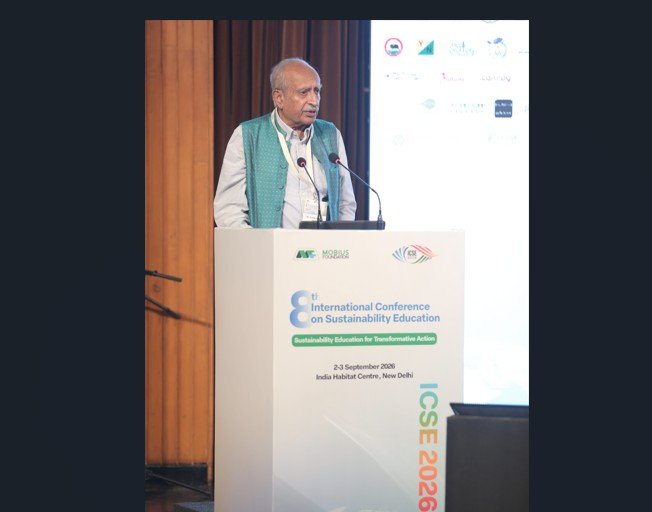
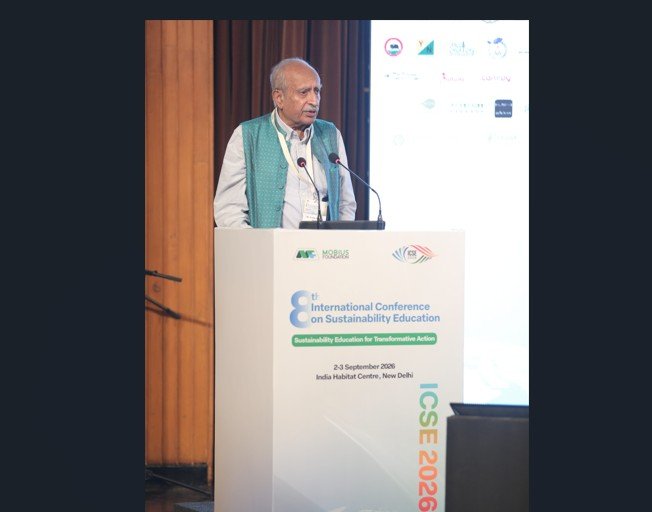
    Speaking at the inaugural session of ICSE 2026, Mr. Pradip Burman, Chairman, Mobius Foundation, highlighted India’s progress on its clean-energy commitments while underscoring the need to bridge the gap between ambition and implementation.

    “In 2025, India achieved 50 percent of its installed electricity capacity from non-fossil sources, five years ahead of the 2030 target. Our renewable energy capacity has now crossed 290 gigawatts. This is significant progress, but the journey is far from over,” said Mr. Burman.

    The discussions at ICSE 2026 highlighted that India’s energy transition will require capabilities extending beyond renewable energy deployment. Green jobs, critical minerals, e-waste and battery recycling, sustainable technologies and innovation emerged as important areas for building the skills and systems needed to support a low-carbon economy.

    Ms. Priyanka Sharma, President and CEO, Mobius Foundation, said sustainability has evolved from being primarily an environmental conversation to one that encompasses economic growth, livelihoods, work and well-being. Sustainability is no longer simply an environmental conversation. It is a conversation about how we live, how we learn, how we work, how we create prosperity and ultimately how we create well-being and wellness for people and the planet.”

    The need to prepare young people for the emerging green economy was also emphasised during the conference. As India expands its clean-energy ecosystem, sustainability education and practical green skills will play an increasingly important role in preparing the workforce for opportunities across renewable energy, resource efficiency, circular economy and clean technologies.

    Dr. Vibha Dhawan, Director General, The Energy and Resources Institute (TERI), highlighted the need to rethink existing systems and infrastructure through a sustainability lens. She pointed to school transportation as one example where infrastructure and policy choices can influence emissions and contribute to more sustainable mobility systems.

    The conference also examined the role and limitations of technology in addressing the climate crisis. Prof. Bhaskar Vira, Pro-Vice-Chancellor for Education and Environmental Sustainability, University of Cambridge, cautioned against relying on technology alone to solve environmental challenges and emphasised the importance of enabling citizens to actively participate in the transformations required for a sustainable future.

    The discussions come at a time when India’s energy transition is creating new requirements across the clean-energy value chain, from renewable energy and sustainable mobility to critical minerals, battery recycling and green jobs. ICSE 2026 is bringing together policymakers, educators, scientists, industry leaders and young people to examine how education can support this transition and convert sustainability commitments into meaningful action.

    The two-day conference features sessions on climate action, green skills, technology and innovation, biodiversity and sustainable livelihoods, alongside dedicated youth programming bringing students and young climate leaders into the sustainability conversation.
  • India Crosses 290 GW Renewable Capacity, Focus Shifts to Green Skills and Climate Action

    India Crosses 290 GW Renewable Capacity, Focus Shifts to Green Skills and Climate Action

    India’s renewable energy capacity has crossed 290 GW, while the country achieved 50 percent of its installed electricity capacity from non-fossil sources in 2025, five years ahead of its 2030 target. However, experts at the 8th International Conference on Sustainability Education (ICSE) 2026 emphasised that translating these gains into sustained climate action will require stronger implementation, green skills and a workforce equipped for the emerging clean-energy economy.

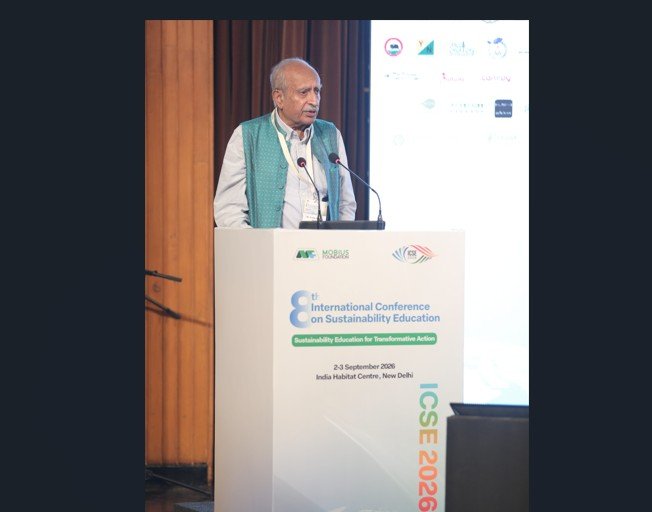
    Speaking at the inaugural session of ICSE 2026, Mr. Pradip Burman, Chairman, Mobius Foundation, highlighted India’s progress on its clean-energy commitments while underscoring the need to bridge the gap between ambition and implementation.

    “In 2025, India achieved 50 percent of its installed electricity capacity from non-fossil sources, five years ahead of the 2030 target. Our renewable energy capacity has now crossed 290 gigawatts. This is significant progress, but the journey is far from over,” said Mr. Burman.

    The discussions at ICSE 2026 highlighted that India’s energy transition will require capabilities extending beyond renewable energy deployment. Green jobs, critical minerals, e-waste and battery recycling, sustainable technologies and innovation emerged as important areas for building the skills and systems needed to support a low-carbon economy.

    Ms. Priyanka Sharma, President and CEO, Mobius Foundation, said sustainability has evolved from being primarily an environmental conversation to one that encompasses economic growth, livelihoods, work and well-being. Sustainability is no longer simply an environmental conversation. It is a conversation about how we live, how we learn, how we work, how we create prosperity and ultimately how we create well-being and wellness for people and the planet.”

    The need to prepare young people for the emerging green economy was also emphasised during the conference. As India expands its clean-energy ecosystem, sustainability education and practical green skills will play an increasingly important role in preparing the workforce for opportunities across renewable energy, resource efficiency, circular economy and clean technologies.

    Dr. Vibha Dhawan, Director General, The Energy and Resources Institute (TERI), highlighted the need to rethink existing systems and infrastructure through a sustainability lens. She pointed to school transportation as one example where infrastructure and policy choices can influence emissions and contribute to more sustainable mobility systems.

    The conference also examined the role and limitations of technology in addressing the climate crisis. Prof. Bhaskar Vira, Pro-Vice-Chancellor for Education and Environmental Sustainability, University of Cambridge, cautioned against relying on technology alone to solve environmental challenges and emphasised the importance of enabling citizens to actively participate in the transformations required for a sustainable future.

    The discussions come at a time when India’s energy transition is creating new requirements across the clean-energy value chain, from renewable energy and sustainable mobility to critical minerals, battery recycling and green jobs. ICSE 2026 is bringing together policymakers, educators, scientists, industry leaders and young people to examine how education can support this transition and convert sustainability commitments into meaningful action.

    The two-day conference features sessions on climate action, green skills, technology and innovation, biodiversity and sustainable livelihoods, alongside dedicated youth programming bringing students and young climate leaders into the sustainability conversation.
  • India Crosses 290 GW Renewable Capacity, Focus Shifts to Green Skills and Climate Action

    India Crosses 290 GW Renewable Capacity, Focus Shifts to Green Skills and Climate Action

    India’s renewable energy capacity has crossed 290 GW, while the country achieved 50 percent of its installed electricity capacity from non-fossil sources in 2025, five years ahead of its 2030 target. However, experts at the 8th International Conference on Sustainability Education (ICSE) 2026 emphasised that translating these gains into sustained climate action will require stronger implementation, green skills and a workforce equipped for the emerging clean-energy economy.

    Speaking at the inaugural session of ICSE 2026, Mr. Pradip Burman, Chairman, Mobius Foundation, highlighted India’s progress on its clean-energy commitments while underscoring the need to bridge the gap between ambition and implementation.

    “In 2025, India achieved 50 percent of its installed electricity capacity from non-fossil sources, five years ahead of the 2030 target. Our renewable energy capacity has now crossed 290 gigawatts. This is significant progress, but the journey is far from over,” said Mr. Burman.

    The discussions at ICSE 2026 highlighted that India’s energy transition will require capabilities extending beyond renewable energy deployment. Green jobs, critical minerals, e-waste and battery recycling, sustainable technologies and innovation emerged as important areas for building the skills and systems needed to support a low-carbon economy.

    Ms. Priyanka Sharma, President and CEO, Mobius Foundation, said sustainability has evolved from being primarily an environmental conversation to one that encompasses economic growth, livelihoods, work and well-being. Sustainability is no longer simply an environmental conversation. It is a conversation about how we live, how we learn, how we work, how we create prosperity and ultimately how we create well-being and wellness for people and the planet.”

    The need to prepare young people for the emerging green economy was also emphasised during the conference. As India expands its clean-energy ecosystem, sustainability education and practical green skills will play an increasingly important role in preparing the workforce for opportunities across renewable energy, resource efficiency, circular economy and clean technologies.

    Dr. Vibha Dhawan, Director General, The Energy and Resources Institute (TERI), highlighted the need to rethink existing systems and infrastructure through a sustainability lens. She pointed to school transportation as one example where infrastructure and policy choices can influence emissions and contribute to more sustainable mobility systems.

    The conference also examined the role and limitations of technology in addressing the climate crisis. Prof. Bhaskar Vira, Pro-Vice-Chancellor for Education and Environmental Sustainability, University of Cambridge, cautioned against relying on technology alone to solve environmental challenges and emphasised the importance of enabling citizens to actively participate in the transformations required for a sustainable future.

    The discussions come at a time when India’s energy transition is creating new requirements across the clean-energy value chain, from renewable energy and sustainable mobility to critical minerals, battery recycling and green jobs. ICSE 2026 is bringing together policymakers, educators, scientists, industry leaders and young people to examine how education can support this transition and convert sustainability commitments into meaningful action.

    The two-day conference features sessions on climate action, green skills, technology and innovation, biodiversity and sustainable livelihoods, alongside dedicated youth programming bringing students and young climate leaders into the sustainability conversation.
  • India Crosses 290 GW Renewable Capacity, Focus Shifts to Green Skills and Climate Action

    India’s renewable energy capacity has crossed 290 GW, while the country achieved 50 percent of its installed electricity capacity from non-fossil sources in 2025, five years ahead of its 2030 target. However, experts at the 8th International Conference on Sustainability Education (ICSE) 2026 emphasised that translating these gains into sustained climate action will require stronger implementation, green skills and a workforce equipped for the emerging clean-energy economy.

    Speaking at the inaugural session of ICSE 2026, Mr. Pradip Burman, Chairman, Mobius Foundation, highlighted India’s progress on its clean-energy commitments while underscoring the need to bridge the gap between ambition and implementation.

    “In 2025, India achieved 50 percent of its installed electricity capacity from non-fossil sources, five years ahead of the 2030 target. Our renewable energy capacity has now crossed 290 gigawatts. This is significant progress, but the journey is far from over,” said Mr. Burman.

    The discussions at ICSE 2026 highlighted that India’s energy transition will require capabilities extending beyond renewable energy deployment. Green jobs, critical minerals, e-waste and battery recycling, sustainable technologies and innovation emerged as important areas for building the skills and systems needed to support a low-carbon economy.

    Ms. Priyanka Sharma, President and CEO, Mobius Foundation, said sustainability has evolved from being primarily an environmental conversation to one that encompasses economic growth, livelihoods, work and well-being. Sustainability is no longer simply an environmental conversation. It is a conversation about how we live, how we learn, how we work, how we create prosperity and ultimately how we create well-being and wellness for people and the planet.”

    The need to prepare young people for the emerging green economy was also emphasised during the conference. As India expands its clean-energy ecosystem, sustainability education and practical green skills will play an increasingly important role in preparing the workforce for opportunities across renewable energy, resource efficiency, circular economy and clean technologies.

    Dr. Vibha Dhawan, Director General, The Energy and Resources Institute (TERI), highlighted the need to rethink existing systems and infrastructure through a sustainability lens. She pointed to school transportation as one example where infrastructure and policy choices can influence emissions and contribute to more sustainable mobility systems.

    The conference also examined the role and limitations of technology in addressing the climate crisis. Prof. Bhaskar Vira, Pro-Vice-Chancellor for Education and Environmental Sustainability, University of Cambridge, cautioned against relying on technology alone to solve environmental challenges and emphasised the importance of enabling citizens to actively participate in the transformations required for a sustainable future.

    The discussions come at a time when India’s energy transition is creating new requirements across the clean-energy value chain, from renewable energy and sustainable mobility to critical minerals, battery recycling and green jobs. ICSE 2026 is bringing together policymakers, educators, scientists, industry leaders and young people to examine how education can support this transition and convert sustainability commitments into meaningful action.

    The two-day conference features sessions on climate action, green skills, technology and innovation, biodiversity and sustainable livelihoods, alongside dedicated youth programming bringing students and young climate leaders into the sustainability conversation.
  • Windergy India 2026: India’s Wind Sector Charts Path to 100 GW as Manufacturing, Offshore and Repowering Converge

    Windergy India 2026: India’s Wind Sector Charts Path to 100 GW as Manufacturing, Offshore and Repowering Converge

    India’s wind energy sector now as much an industrial and export story as a clean-power.one will take centre stage at Windergy India 2026, the 8th edition of the country’s flagship wind platform, organised by IWTMA and PDA Ventures Pvt Ltd, supported by the Ministry of Power and MNRE from 7–9 October 2026 at the Chennai Trade Centre.

    The show lands on record momentum. India added 6.05 GW of wind capacity in FY2025-26, its best year on record, taking cumulative installed capacity to 58.14 GW as of 31 July 2026. The industry is now targeting 100 GW by 2030, requiring sustained annual additions of around 10 GW. A scale IWTMA research frames against a live pipeline of roughly 43 GW under construction and assessed wind potential of up to 1,164 GW at 150-metre hub heights.

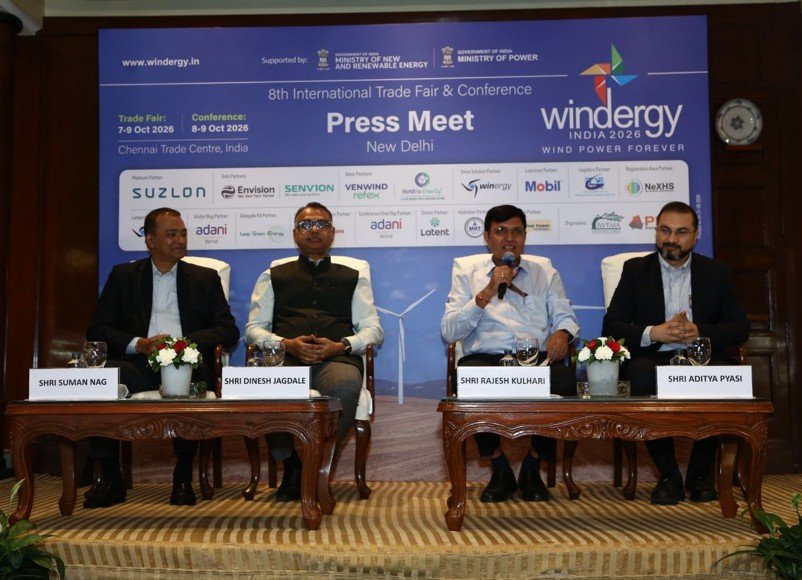
    “India’s wind sector has already proven it can scale from a nascent industry to over 58 GW of installed capacity, with a manufacturing base now exporting turbines worldwide. The path ahead is clear: 100 GW by 2030, 155 GW by 2035. Getting there needs collaboration between manufacturers, developers, policymakers, and innovators working together- Mr. Dinesh Jagdale, Hon. Secretary, Indian Wind Turbine Manufacturers Association (IWTMA) and President – Corporate Affairs & Retail Business at Suzlon Energy Ltd

    Manufacturing underpins the story: domestic turbine-making capacity has grown to 24 GW annually, up from 10 GW in 2014, with 70–80% domestic value addition. Wind equipment exports crossed ₹12,000 crore in FY2025-26, up nearly 50%, and MNRE has launched WT-MARUT, India’s first wind supply-chain portal, built with IWTMA positioning India as both a rapid-deployment market and a global export hub.

    This reflects a sector coming of age. As we export-oriented companies continue to scale manufacturing and expand exports from India, we remain committed to strengthening the country’s position as a global wind export hub and to contributing meaningfully to India’s broader export ambition.”  Mr. Suman Nag, Executive Committee Member, IWTMA Global Business Development, Envision Energy India Pvt Ltd, and

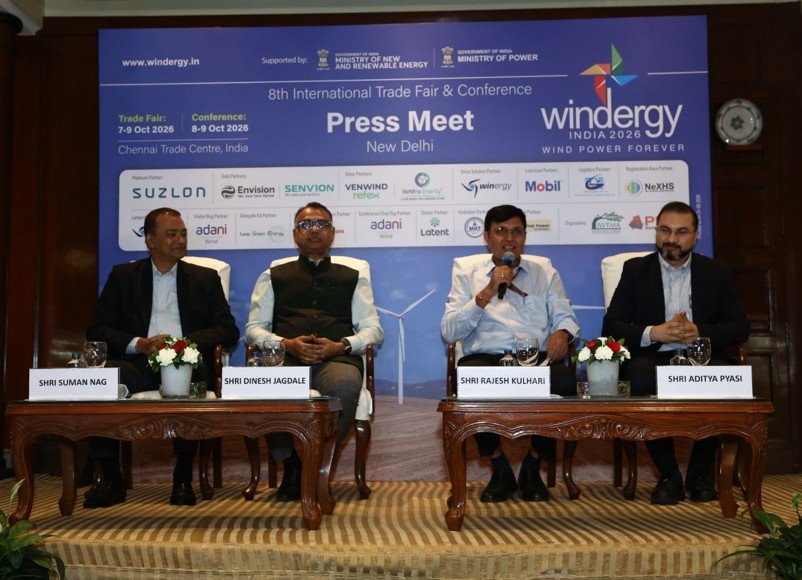
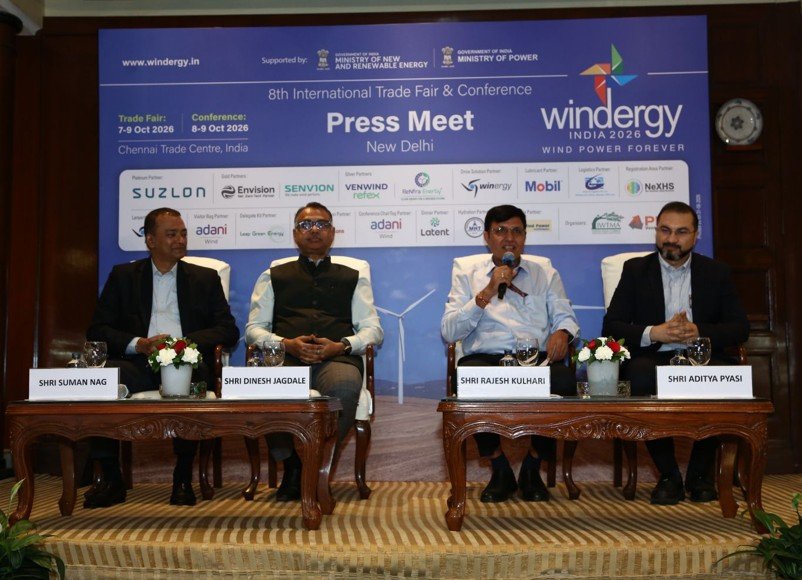
    Speaking at the curtain-raiser of Windergy India 2026 at Delhi, Shri Rajesh Kulhari, Joint Secretary, MNRE, said, “As India scales up its wind ambitions, the focus is increasingly shifting towards building a resilient and globally competitive wind ecosystem that can support deployment at scale. This includes strengthening domestic manufacturing and supply chains, creating skilled employment, enabling exports, and ensuring that wind power contributes effectively to India’s broader goals of energy security and a more resilient energy system.”

    Tariffs and bankability feature prominently on the agenda, with industry voices arguing that project viability now hinges less on chasing the lowest discovered tariff and more on bankability, timely PPAs, transmission readiness and bidding structures that recognise the added system value of wind, hybrids and firm renewable power as India shifts from standalone wind toward wind-solar hybrid, storage-backed and Firm & Dispatch able Renewable Energy (FDRE) procurement.

    Offshore wind is a major new frontier: a ₹7,453 crore Viability Gap Funding scheme is backing India’s first 1 GW of offshore capacity 500 MW each off Gujarat and Tamil Nadu against assessed offshore potential of nearly 71 GW across both coasts, with MNRE engaging the World Bank and KPMG on further support to close the tariff gap.

    Repowering presents a substantial opportunity of 25.4 GW from India’s ageing fleet of 19,000+ sub-MW WTGs in high wind zones, nearly doubling the performance of legacy turbines from 14-15% CUF to ~30% CUF through modern turbines.

    “Windergy India, international trade fair and conference, has grown into a platform that brings the entire wind ecosystem together. As India works towards its capacity targets, we will keep doing our part to give this industry the platform it needs to connect and grow.” — Pradeep Devaiah, Chairman & CEO, PDA Ventures Pvt. Ltd.

  • Windergy India 2026: India’s Wind Sector Charts Path to 100 GW as Manufacturing, Offshore and Repowering Converge

    Windergy India 2026: India’s Wind Sector Charts Path to 100 GW as Manufacturing, Offshore and Repowering Converge

    India’s wind energy sector now as much an industrial and export story as a clean-power.one will take centre stage at Windergy India 2026, the 8th edition of the country’s flagship wind platform, organised by IWTMA and PDA Ventures Pvt Ltd, supported by the Ministry of Power and MNRE from 7–9 October 2026 at the Chennai Trade Centre.

    The show lands on record momentum. India added 6.05 GW of wind capacity in FY2025-26, its best year on record, taking cumulative installed capacity to 58.14 GW as of 31 July 2026. The industry is now targeting 100 GW by 2030, requiring sustained annual additions of around 10 GW. A scale IWTMA research frames against a live pipeline of roughly 43 GW under construction and assessed wind potential of up to 1,164 GW at 150-metre hub heights.

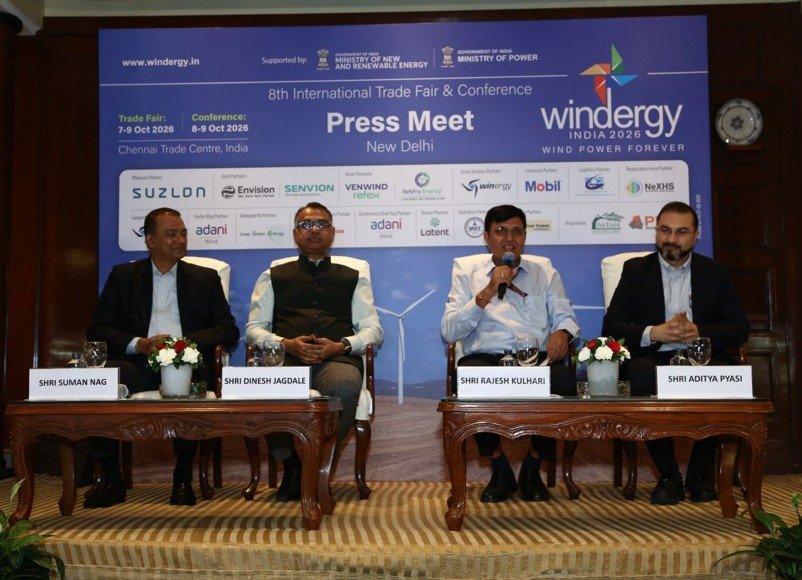
    “India’s wind sector has already proven it can scale from a nascent industry to over 58 GW of installed capacity, with a manufacturing base now exporting turbines worldwide. The path ahead is clear: 100 GW by 2030, 155 GW by 2035. Getting there needs collaboration between manufacturers, developers, policymakers, and innovators working together- Mr. Dinesh Jagdale, Hon. Secretary, Indian Wind Turbine Manufacturers Association (IWTMA) and President – Corporate Affairs & Retail Business at Suzlon Energy Ltd

    Manufacturing underpins the story: domestic turbine-making capacity has grown to 24 GW annually, up from 10 GW in 2014, with 70–80% domestic value addition. Wind equipment exports crossed ₹12,000 crore in FY2025-26, up nearly 50%, and MNRE has launched WT-MARUT, India’s first wind supply-chain portal, built with IWTMA positioning India as both a rapid-deployment market and a global export hub.

    This reflects a sector coming of age. As we export-oriented companies continue to scale manufacturing and expand exports from India, we remain committed to strengthening the country’s position as a global wind export hub and to contributing meaningfully to India’s broader export ambition.”  Mr. Suman Nag, Executive Committee Member, IWTMA Global Business Development, Envision Energy India Pvt Ltd, and

    Speaking at the curtain-raiser of Windergy India 2026 at Delhi, Shri Rajesh Kulhari, Joint Secretary, MNRE, said, “As India scales up its wind ambitions, the focus is increasingly shifting towards building a resilient and globally competitive wind ecosystem that can support deployment at scale. This includes strengthening domestic manufacturing and supply chains, creating skilled employment, enabling exports, and ensuring that wind power contributes effectively to India’s broader goals of energy security and a more resilient energy system.”

    Tariffs and bankability feature prominently on the agenda, with industry voices arguing that project viability now hinges less on chasing the lowest discovered tariff and more on bankability, timely PPAs, transmission readiness and bidding structures that recognise the added system value of wind, hybrids and firm renewable power as India shifts from standalone wind toward wind-solar hybrid, storage-backed and Firm & Dispatch able Renewable Energy (FDRE) procurement.

    Offshore wind is a major new frontier: a ₹7,453 crore Viability Gap Funding scheme is backing India’s first 1 GW of offshore capacity 500 MW each off Gujarat and Tamil Nadu against assessed offshore potential of nearly 71 GW across both coasts, with MNRE engaging the World Bank and KPMG on further support to close the tariff gap.

    Repowering presents a substantial opportunity of 25.4 GW from India’s ageing fleet of 19,000+ sub-MW WTGs in high wind zones, nearly doubling the performance of legacy turbines from 14-15% CUF to ~30% CUF through modern turbines.

    “Windergy India, international trade fair and conference, has grown into a platform that brings the entire wind ecosystem together. As India works towards its capacity targets, we will keep doing our part to give this industry the platform it needs to connect and grow.” — Pradeep Devaiah, Chairman & CEO, PDA Ventures Pvt. Ltd.

  • Windergy India 2026: India’s Wind Sector Charts Path to 100 GW as Manufacturing, Offshore and Repowering Converge

    Windergy India 2026: India’s Wind Sector Charts Path to 100 GW as Manufacturing, Offshore and Repowering Converge

    India’s wind energy sector now as much an industrial and export story as a clean-power.one will take centre stage at Windergy India 2026, the 8th edition of the country’s flagship wind platform, organised by IWTMA and PDA Ventures Pvt Ltd, supported by the Ministry of Power and MNRE from 7–9 October 2026 at the Chennai Trade Centre.

    The show lands on record momentum. India added 6.05 GW of wind capacity in FY2025-26, its best year on record, taking cumulative installed capacity to 58.14 GW as of 31 July 2026. The industry is now targeting 100 GW by 2030, requiring sustained annual additions of around 10 GW. A scale IWTMA research frames against a live pipeline of roughly 43 GW under construction and assessed wind potential of up to 1,164 GW at 150-metre hub heights.

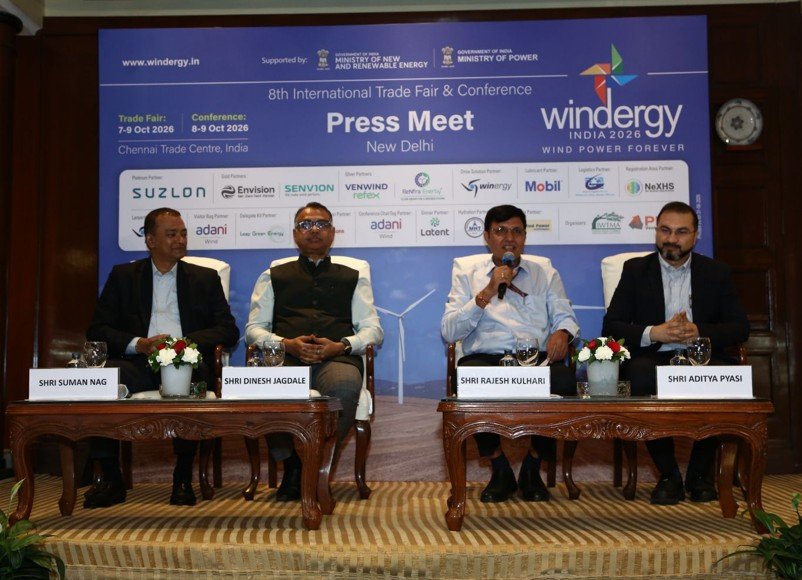
    “India’s wind sector has already proven it can scale from a nascent industry to over 58 GW of installed capacity, with a manufacturing base now exporting turbines worldwide. The path ahead is clear: 100 GW by 2030, 155 GW by 2035. Getting there needs collaboration between manufacturers, developers, policymakers, and innovators working together- Mr. Dinesh Jagdale, Hon. Secretary, Indian Wind Turbine Manufacturers Association (IWTMA) and President – Corporate Affairs & Retail Business at Suzlon Energy Ltd

    Manufacturing underpins the story: domestic turbine-making capacity has grown to 24 GW annually, up from 10 GW in 2014, with 70–80% domestic value addition. Wind equipment exports crossed ₹12,000 crore in FY2025-26, up nearly 50%, and MNRE has launched WT-MARUT, India’s first wind supply-chain portal, built with IWTMA positioning India as both a rapid-deployment market and a global export hub.

    This reflects a sector coming of age. As we export-oriented companies continue to scale manufacturing and expand exports from India, we remain committed to strengthening the country’s position as a global wind export hub and to contributing meaningfully to India’s broader export ambition.”  Mr. Suman Nag, Executive Committee Member, IWTMA Global Business Development, Envision Energy India Pvt Ltd, and

    Speaking at the curtain-raiser of Windergy India 2026 at Delhi, Shri Rajesh Kulhari, Joint Secretary, MNRE, said, “As India scales up its wind ambitions, the focus is increasingly shifting towards building a resilient and globally competitive wind ecosystem that can support deployment at scale. This includes strengthening domestic manufacturing and supply chains, creating skilled employment, enabling exports, and ensuring that wind power contributes effectively to India’s broader goals of energy security and a more resilient energy system.”

    Tariffs and bankability feature prominently on the agenda, with industry voices arguing that project viability now hinges less on chasing the lowest discovered tariff and more on bankability, timely PPAs, transmission readiness and bidding structures that recognise the added system value of wind, hybrids and firm renewable power as India shifts from standalone wind toward wind-solar hybrid, storage-backed and Firm & Dispatch able Renewable Energy (FDRE) procurement.

    Offshore wind is a major new frontier: a ₹7,453 crore Viability Gap Funding scheme is backing India’s first 1 GW of offshore capacity 500 MW each off Gujarat and Tamil Nadu against assessed offshore potential of nearly 71 GW across both coasts, with MNRE engaging the World Bank and KPMG on further support to close the tariff gap.

    Repowering presents a substantial opportunity of 25.4 GW from India’s ageing fleet of 19,000+ sub-MW WTGs in high wind zones, nearly doubling the performance of legacy turbines from 14-15% CUF to ~30% CUF through modern turbines.

    “Windergy India, international trade fair and conference, has grown into a platform that brings the entire wind ecosystem together. As India works towards its capacity targets, we will keep doing our part to give this industry the platform it needs to connect and grow.” — Pradeep Devaiah, Chairman & CEO, PDA Ventures Pvt. Ltd.

  • Windergy India 2026: India’s Wind Sector Charts Path to 100 GW as Manufacturing, Offshore and Repowering Converge

    Windergy India 2026: India’s Wind Sector Charts Path to 100 GW as Manufacturing, Offshore and Repowering Converge

    India’s wind energy sector now as much an industrial and export story as a clean-power.one will take centre stage at Windergy India 2026, the 8th edition of the country’s flagship wind platform, organised by IWTMA and PDA Ventures Pvt Ltd, supported by the Ministry of Power and MNRE from 7–9 October 2026 at the Chennai Trade Centre.

    The show lands on record momentum. India added 6.05 GW of wind capacity in FY2025-26, its best year on record, taking cumulative installed capacity to 58.14 GW as of 31 July 2026. The industry is now targeting 100 GW by 2030, requiring sustained annual additions of around 10 GW. A scale IWTMA research frames against a live pipeline of roughly 43 GW under construction and assessed wind potential of up to 1,164 GW at 150-metre hub heights.

    “India’s wind sector has already proven it can scale from a nascent industry to over 58 GW of installed capacity, with a manufacturing base now exporting turbines worldwide. The path ahead is clear: 100 GW by 2030, 155 GW by 2035. Getting there needs collaboration between manufacturers, developers, policymakers, and innovators working together- Mr. Dinesh Jagdale, Hon. Secretary, Indian Wind Turbine Manufacturers Association (IWTMA) and President – Corporate Affairs & Retail Business at Suzlon Energy Ltd

    Manufacturing underpins the story: domestic turbine-making capacity has grown to 24 GW annually, up from 10 GW in 2014, with 70–80% domestic value addition. Wind equipment exports crossed ₹12,000 crore in FY2025-26, up nearly 50%, and MNRE has launched WT-MARUT, India’s first wind supply-chain portal, built with IWTMA positioning India as both a rapid-deployment market and a global export hub.

    This reflects a sector coming of age. As we export-oriented companies continue to scale manufacturing and expand exports from India, we remain committed to strengthening the country’s position as a global wind export hub and to contributing meaningfully to India’s broader export ambition.”  Mr. Suman Nag, Executive Committee Member, IWTMA Global Business Development, Envision Energy India Pvt Ltd, and

    Speaking at the curtain-raiser of Windergy India 2026 at Delhi, Shri Rajesh Kulhari, Joint Secretary, MNRE, said, “As India scales up its wind ambitions, the focus is increasingly shifting towards building a resilient and globally competitive wind ecosystem that can support deployment at scale. This includes strengthening domestic manufacturing and supply chains, creating skilled employment, enabling exports, and ensuring that wind power contributes effectively to India’s broader goals of energy security and a more resilient energy system.”

    Tariffs and bankability feature prominently on the agenda, with industry voices arguing that project viability now hinges less on chasing the lowest discovered tariff and more on bankability, timely PPAs, transmission readiness and bidding structures that recognise the added system value of wind, hybrids and firm renewable power as India shifts from standalone wind toward wind-solar hybrid, storage-backed and Firm & Dispatch able Renewable Energy (FDRE) procurement.

    Offshore wind is a major new frontier: a ₹7,453 crore Viability Gap Funding scheme is backing India’s first 1 GW of offshore capacity 500 MW each off Gujarat and Tamil Nadu against assessed offshore potential of nearly 71 GW across both coasts, with MNRE engaging the World Bank and KPMG on further support to close the tariff gap.

    Repowering presents a substantial opportunity of 25.4 GW from India’s ageing fleet of 19,000+ sub-MW WTGs in high wind zones, nearly doubling the performance of legacy turbines from 14-15% CUF to ~30% CUF through modern turbines.

    “Windergy India, international trade fair and conference, has grown into a platform that brings the entire wind ecosystem together. As India works towards its capacity targets, we will keep doing our part to give this industry the platform it needs to connect and grow.” — Pradeep Devaiah, Chairman & CEO, PDA Ventures Pvt. Ltd.

  • Windergy India 2026: India’s Wind Sector Charts Path to 100 GW as Manufacturing, Offshore and Repowering Converge

    Windergy India 2026: India’s Wind Sector Charts Path to 100 GW as Manufacturing, Offshore and Repowering Converge

    India’s wind energy sector now as much an industrial and export story as a clean-power.one will take centre stage at Windergy India 2026, the 8th edition of the country’s flagship wind platform, organised by IWTMA and PDA Ventures Pvt Ltd, supported by the Ministry of Power and MNRE from 7–9 October 2026 at the Chennai Trade Centre.

    The show lands on record momentum. India added 6.05 GW of wind capacity in FY2025-26, its best year on record, taking cumulative installed capacity to 58.14 GW as of 31 July 2026. The industry is now targeting 100 GW by 2030, requiring sustained annual additions of around 10 GW. A scale IWTMA research frames against a live pipeline of roughly 43 GW under construction and assessed wind potential of up to 1,164 GW at 150-metre hub heights.

    “India’s wind sector has already proven it can scale from a nascent industry to over 58 GW of installed capacity, with a manufacturing base now exporting turbines worldwide. The path ahead is clear: 100 GW by 2030, 155 GW by 2035. Getting there needs collaboration between manufacturers, developers, policymakers, and innovators working together- Mr. Dinesh Jagdale, Hon. Secretary, Indian Wind Turbine Manufacturers Association (IWTMA) and President – Corporate Affairs & Retail Business at Suzlon Energy Ltd

    Manufacturing underpins the story: domestic turbine-making capacity has grown to 24 GW annually, up from 10 GW in 2014, with 70–80% domestic value addition. Wind equipment exports crossed ₹12,000 crore in FY2025-26, up nearly 50%, and MNRE has launched WT-MARUT, India’s first wind supply-chain portal, built with IWTMA positioning India as both a rapid-deployment market and a global export hub.

    This reflects a sector coming of age. As we export-oriented companies continue to scale manufacturing and expand exports from India, we remain committed to strengthening the country’s position as a global wind export hub and to contributing meaningfully to India’s broader export ambition.”  Mr. Suman Nag, Executive Committee Member, IWTMA Global Business Development, Envision Energy India Pvt Ltd, and

    Speaking at the curtain-raiser of Windergy India 2026 at Delhi, Shri Rajesh Kulhari, Joint Secretary, MNRE, said, “As India scales up its wind ambitions, the focus is increasingly shifting towards building a resilient and globally competitive wind ecosystem that can support deployment at scale. This includes strengthening domestic manufacturing and supply chains, creating skilled employment, enabling exports, and ensuring that wind power contributes effectively to India’s broader goals of energy security and a more resilient energy system.”

    Tariffs and bankability feature prominently on the agenda, with industry voices arguing that project viability now hinges less on chasing the lowest discovered tariff and more on bankability, timely PPAs, transmission readiness and bidding structures that recognise the added system value of wind, hybrids and firm renewable power as India shifts from standalone wind toward wind-solar hybrid, storage-backed and Firm & Dispatch able Renewable Energy (FDRE) procurement.

    Offshore wind is a major new frontier: a ₹7,453 crore Viability Gap Funding scheme is backing India’s first 1 GW of offshore capacity 500 MW each off Gujarat and Tamil Nadu against assessed offshore potential of nearly 71 GW across both coasts, with MNRE engaging the World Bank and KPMG on further support to close the tariff gap.

    Repowering presents a substantial opportunity of 25.4 GW from India’s ageing fleet of 19,000+ sub-MW WTGs in high wind zones, nearly doubling the performance of legacy turbines from 14-15% CUF to ~30% CUF through modern turbines.

    “Windergy India, international trade fair and conference, has grown into a platform that brings the entire wind ecosystem together. As India works towards its capacity targets, we will keep doing our part to give this industry the platform it needs to connect and grow.” — Pradeep Devaiah, Chairman & CEO, PDA Ventures Pvt. Ltd.

  • Windergy India 2026: India’s Wind Sector Charts Path to 100 GW as Manufacturing, Offshore and Repowering Converge

    India’s wind energy sector now as much an industrial and export story as a clean-power.one will take centre stage at Windergy India 2026, the 8th edition of the country’s flagship wind platform, organised by IWTMA and PDA Ventures Pvt Ltd, supported by the Ministry of Power and MNRE from 7–9 October 2026 at the Chennai Trade Centre.

    The show lands on record momentum. India added 6.05 GW of wind capacity in FY2025-26, its best year on record, taking cumulative installed capacity to 58.14 GW as of 31 July 2026. The industry is now targeting 100 GW by 2030, requiring sustained annual additions of around 10 GW. A scale IWTMA research frames against a live pipeline of roughly 43 GW under construction and assessed wind potential of up to 1,164 GW at 150-metre hub heights.

    “India’s wind sector has already proven it can scale from a nascent industry to over 58 GW of installed capacity, with a manufacturing base now exporting turbines worldwide. The path ahead is clear: 100 GW by 2030, 155 GW by 2035. Getting there needs collaboration between manufacturers, developers, policymakers, and innovators working together- Mr. Dinesh Jagdale, Hon. Secretary, Indian Wind Turbine Manufacturers Association (IWTMA) and President – Corporate Affairs & Retail Business at Suzlon Energy Ltd

    Manufacturing underpins the story: domestic turbine-making capacity has grown to 24 GW annually, up from 10 GW in 2014, with 70–80% domestic value addition. Wind equipment exports crossed ₹12,000 crore in FY2025-26, up nearly 50%, and MNRE has launched WT-MARUT, India’s first wind supply-chain portal, built with IWTMA positioning India as both a rapid-deployment market and a global export hub.

    This reflects a sector coming of age. As we export-oriented companies continue to scale manufacturing and expand exports from India, we remain committed to strengthening the country’s position as a global wind export hub and to contributing meaningfully to India’s broader export ambition.”  Mr. Suman Nag, Executive Committee Member, IWTMA Global Business Development, Envision Energy India Pvt Ltd, and

    Speaking at the curtain-raiser of Windergy India 2026 at Delhi, Shri Rajesh Kulhari, Joint Secretary, MNRE, said, “As India scales up its wind ambitions, the focus is increasingly shifting towards building a resilient and globally competitive wind ecosystem that can support deployment at scale. This includes strengthening domestic manufacturing and supply chains, creating skilled employment, enabling exports, and ensuring that wind power contributes effectively to India’s broader goals of energy security and a more resilient energy system.”

    Tariffs and bankability feature prominently on the agenda, with industry voices arguing that project viability now hinges less on chasing the lowest discovered tariff and more on bankability, timely PPAs, transmission readiness and bidding structures that recognise the added system value of wind, hybrids and firm renewable power as India shifts from standalone wind toward wind-solar hybrid, storage-backed and Firm & Dispatch able Renewable Energy (FDRE) procurement.

    Offshore wind is a major new frontier: a ₹7,453 crore Viability Gap Funding scheme is backing India’s first 1 GW of offshore capacity 500 MW each off Gujarat and Tamil Nadu against assessed offshore potential of nearly 71 GW across both coasts, with MNRE engaging the World Bank and KPMG on further support to close the tariff gap.

    Repowering presents a substantial opportunity of 25.4 GW from India’s ageing fleet of 19,000+ sub-MW WTGs in high wind zones, nearly doubling the performance of legacy turbines from 14-15% CUF to ~30% CUF through modern turbines.

    “Windergy India, international trade fair and conference, has grown into a platform that brings the entire wind ecosystem together. As India works towards its capacity targets, we will keep doing our part to give this industry the platform it needs to connect and grow.” — Pradeep Devaiah, Chairman & CEO, PDA Ventures Pvt. Ltd.