Blog

  • SLR Solar Secures 1,020 MW ALMM Approval for TOPCon Modules, Plans Cell and BESS Manufacturing Expansion

    SLR Solar Secures 1,020 MW ALMM Approval for TOPCon Modules, Plans Cell and BESS Manufacturing Expansion

    SLR Solar has secured approval under the Approved List of Models and Manufacturers (ALMM) List-I for 1,020 MW of bifacial N-Type TOPCon solar module manufacturing capacity, marking a significant milestone in the company’s expansion and vertical integration strategy.

    The approval covers SLR Solar’s SLR-HG132N series of glass-to-glass modules, manufactured at its facility in Bargaon, Kishangarh, on the Jaipur Highway (NH-8). The modules use 132 half-cut G12R cells and are available in power ratings ranging from 610 Wp to 650 Wp. The ALMM approval is valid from August 2026 to August 2030.

    According to Kamal Yadav, Director, SLR Solar, the company selected the G12R rectangular wafer format to support utility-scale solar deployment through higher power density, lower balance-of-system costs, and strong bifacial performance. The technology is increasingly being adopted as developers seek to reduce the levelised cost of electricity (LCOE) while optimising land utilisation.

    Following the ALMM approval, SLR Solar plans to expand its manufacturing capabilities by entering G12R solar cell manufacturing. The move forms part of the company’s backward integration strategy and is aimed at reducing dependence on imported cells while improving control over product quality, costs, and delivery timelines.

    The company sees domestic cell manufacturing as increasingly important as India’s domestic content requirements become more stringent and the solar industry moves towards greater local value addition.

    Alongside its plans for cell manufacturing, SLR Solar is also evaluating the establishment of a Battery Energy Storage System (BESS) manufacturing line.

    The proposed expansion is intended to address the rising demand for integrated solar-plus-storage solutions as utilities and renewable energy developers increasingly adopt hybrid projects. Energy storage is expected to play a growing role in making renewable power more dispatchable and improving grid flexibility.

    SLR Solar views the move towards modules, cells, and storage as part of a broader shift in India’s solar manufacturing industry towards end-to-end vertical integration.

    The company expects policy measures, including PLI schemes, ALMM requirements, and customs duty structures, to continue encouraging domestic manufacturing and value addition across the renewable energy supply chain.

    With its latest ALMM approval and plans for cell and BESS manufacturing, SLR Solar is positioning itself to expand beyond module assembly and build a more integrated clean energy manufacturing ecosystem in India.


  • SLR Solar Secures 1,020 MW ALMM Approval for TOPCon Modules, Plans Cell and BESS Manufacturing Expansion

    SLR Solar Secures 1,020 MW ALMM Approval for TOPCon Modules, Plans Cell and BESS Manufacturing Expansion

    SLR Solar has secured approval under the Approved List of Models and Manufacturers (ALMM) List-I for 1,020 MW of bifacial N-Type TOPCon solar module manufacturing capacity, marking a significant milestone in the company’s expansion and vertical integration strategy.

    The approval covers SLR Solar’s SLR-HG132N series of glass-to-glass modules, manufactured at its facility in Bargaon, Kishangarh, on the Jaipur Highway (NH-8). The modules use 132 half-cut G12R cells and are available in power ratings ranging from 610 Wp to 650 Wp. The ALMM approval is valid from August 2026 to August 2030.

    According to Kamal Yadav, Director, SLR Solar, the company selected the G12R rectangular wafer format to support utility-scale solar deployment through higher power density, lower balance-of-system costs, and strong bifacial performance. The technology is increasingly being adopted as developers seek to reduce the levelised cost of electricity (LCOE) while optimising land utilisation.

    Following the ALMM approval, SLR Solar plans to expand its manufacturing capabilities by entering G12R solar cell manufacturing. The move forms part of the company’s backward integration strategy and is aimed at reducing dependence on imported cells while improving control over product quality, costs, and delivery timelines.

    The company sees domestic cell manufacturing as increasingly important as India’s domestic content requirements become more stringent and the solar industry moves towards greater local value addition.

    Alongside its plans for cell manufacturing, SLR Solar is also evaluating the establishment of a Battery Energy Storage System (BESS) manufacturing line.

    The proposed expansion is intended to address the rising demand for integrated solar-plus-storage solutions as utilities and renewable energy developers increasingly adopt hybrid projects. Energy storage is expected to play a growing role in making renewable power more dispatchable and improving grid flexibility.

    SLR Solar views the move towards modules, cells, and storage as part of a broader shift in India’s solar manufacturing industry towards end-to-end vertical integration.

    The company expects policy measures, including PLI schemes, ALMM requirements, and customs duty structures, to continue encouraging domestic manufacturing and value addition across the renewable energy supply chain.

    With its latest ALMM approval and plans for cell and BESS manufacturing, SLR Solar is positioning itself to expand beyond module assembly and build a more integrated clean energy manufacturing ecosystem in India.

  • SLR Solar Secures 1,020 MW ALMM Approval for TOPCon Modules, Plans Cell and BESS Manufacturing Expansion

    SLR Solar Secures 1,020 MW ALMM Approval for TOPCon Modules, Plans Cell and BESS Manufacturing Expansion

    SLR Solar has secured approval under the Approved List of Models and Manufacturers (ALMM) List-I for 1,020 MW of bifacial N-Type TOPCon solar module manufacturing capacity, marking a significant milestone in the company’s expansion and vertical integration strategy.

    The approval covers SLR Solar’s SLR-HG132N series of glass-to-glass modules, manufactured at its facility in Bargaon, Kishangarh, on the Jaipur Highway (NH-8). The modules use 132 half-cut G12R cells and are available in power ratings ranging from 610 Wp to 650 Wp. The ALMM approval is valid from August 2026 to August 2030.

    According to Kamal Yadav, Director, SLR Solar, the company selected the G12R rectangular wafer format to support utility-scale solar deployment through higher power density, lower balance-of-system costs, and strong bifacial performance. The technology is increasingly being adopted as developers seek to reduce the levelised cost of electricity (LCOE) while optimising land utilisation.

    Following the ALMM approval, SLR Solar plans to expand its manufacturing capabilities by entering G12R solar cell manufacturing. The move forms part of the company’s backward integration strategy and is aimed at reducing dependence on imported cells while improving control over product quality, costs, and delivery timelines.

    The company sees domestic cell manufacturing as increasingly important as India’s domestic content requirements become more stringent and the solar industry moves towards greater local value addition.

    Alongside its plans for cell manufacturing, SLR Solar is also evaluating the establishment of a Battery Energy Storage System (BESS) manufacturing line.

    The proposed expansion is intended to address the rising demand for integrated solar-plus-storage solutions as utilities and renewable energy developers increasingly adopt hybrid projects. Energy storage is expected to play a growing role in making renewable power more dispatchable and improving grid flexibility.

    SLR Solar views the move towards modules, cells, and storage as part of a broader shift in India’s solar manufacturing industry towards end-to-end vertical integration.

    The company expects policy measures, including PLI schemes, ALMM requirements, and customs duty structures, to continue encouraging domestic manufacturing and value addition across the renewable energy supply chain.

    With its latest ALMM approval and plans for cell and BESS manufacturing, SLR Solar is positioning itself to expand beyond module assembly and build a more integrated clean energy manufacturing ecosystem in India.
  • SLR Solar Secures 1,020 MW ALMM Approval for TOPCon Modules, Plans Cell and BESS Manufacturing Expansion

    SLR Solar Secures 1,020 MW ALMM Approval for TOPCon Modules, Plans Cell and BESS Manufacturing Expansion

    SLR Solar has secured approval under the Approved List of Models and Manufacturers (ALMM) List-I for 1,020 MW of bifacial N-Type TOPCon solar module manufacturing capacity, marking a significant milestone in the company’s expansion and vertical integration strategy.

    The approval covers SLR Solar’s SLR-HG132N series of glass-to-glass modules, manufactured at its facility in Bargaon, Kishangarh, on the Jaipur Highway (NH-8). The modules use 132 half-cut G12R cells and are available in power ratings ranging from 610 Wp to 650 Wp. The ALMM approval is valid from August 2026 to August 2030.

    According to Kamal Yadav, Director, SLR Solar, the company selected the G12R rectangular wafer format to support utility-scale solar deployment through higher power density, lower balance-of-system costs, and strong bifacial performance. The technology is increasingly being adopted as developers seek to reduce the levelised cost of electricity (LCOE) while optimising land utilisation.

    Following the ALMM approval, SLR Solar plans to expand its manufacturing capabilities by entering G12R solar cell manufacturing. The move forms part of the company’s backward integration strategy and is aimed at reducing dependence on imported cells while improving control over product quality, costs, and delivery timelines.

    The company sees domestic cell manufacturing as increasingly important as India’s domestic content requirements become more stringent and the solar industry moves towards greater local value addition.

    Alongside its plans for cell manufacturing, SLR Solar is also evaluating the establishment of a Battery Energy Storage System (BESS) manufacturing line.

    The proposed expansion is intended to address the rising demand for integrated solar-plus-storage solutions as utilities and renewable energy developers increasingly adopt hybrid projects. Energy storage is expected to play a growing role in making renewable power more dispatchable and improving grid flexibility.

    SLR Solar views the move towards modules, cells, and storage as part of a broader shift in India’s solar manufacturing industry towards end-to-end vertical integration.

    The company expects policy measures, including PLI schemes, ALMM requirements, and customs duty structures, to continue encouraging domestic manufacturing and value addition across the renewable energy supply chain.

    With its latest ALMM approval and plans for cell and BESS manufacturing, SLR Solar is positioning itself to expand beyond module assembly and build a more integrated clean energy manufacturing ecosystem in India.
  • SLR Solar Secures 1,020 MW ALMM Approval for TOPCon Modules, Plans Cell and BESS Manufacturing Expansion

    SLR Solar has secured approval under the Approved List of Models and Manufacturers (ALMM) List-I for 1,020 MW of bifacial N-Type TOPCon solar module manufacturing capacity, marking a significant milestone in the company’s expansion and vertical integration strategy.

    The approval covers SLR Solar’s SLR-HG132N series of glass-to-glass modules, manufactured at its facility in Bargaon, Kishangarh, on the Jaipur Highway (NH-8). The modules use 132 half-cut G12R cells and are available in power ratings ranging from 610 Wp to 650 Wp. The ALMM approval is valid from August 2026 to August 2030.

    According to Kamal Yadav, Director, SLR Solar, the company selected the G12R rectangular wafer format to support utility-scale solar deployment through higher power density, lower balance-of-system costs, and strong bifacial performance. The technology is increasingly being adopted as developers seek to reduce the levelised cost of electricity (LCOE) while optimising land utilisation.

    Following the ALMM approval, SLR Solar plans to expand its manufacturing capabilities by entering G12R solar cell manufacturing. The move forms part of the company’s backward integration strategy and is aimed at reducing dependence on imported cells while improving control over product quality, costs, and delivery timelines.

    The company sees domestic cell manufacturing as increasingly important as India’s domestic content requirements become more stringent and the solar industry moves towards greater local value addition.

    Alongside its plans for cell manufacturing, SLR Solar is also evaluating the establishment of a Battery Energy Storage System (BESS) manufacturing line.

    The proposed expansion is intended to address the rising demand for integrated solar-plus-storage solutions as utilities and renewable energy developers increasingly adopt hybrid projects. Energy storage is expected to play a growing role in making renewable power more dispatchable and improving grid flexibility.

    SLR Solar views the move towards modules, cells, and storage as part of a broader shift in India’s solar manufacturing industry towards end-to-end vertical integration.

    The company expects policy measures, including PLI schemes, ALMM requirements, and customs duty structures, to continue encouraging domestic manufacturing and value addition across the renewable energy supply chain.

    With its latest ALMM approval and plans for cell and BESS manufacturing, SLR Solar is positioning itself to expand beyond module assembly and build a more integrated clean energy manufacturing ecosystem in India.
  • NueGo Expands Electric Intercity Bus Network with New Routes Across India

    NueGo Expands Electric Intercity Bus Network with New Routes Across India

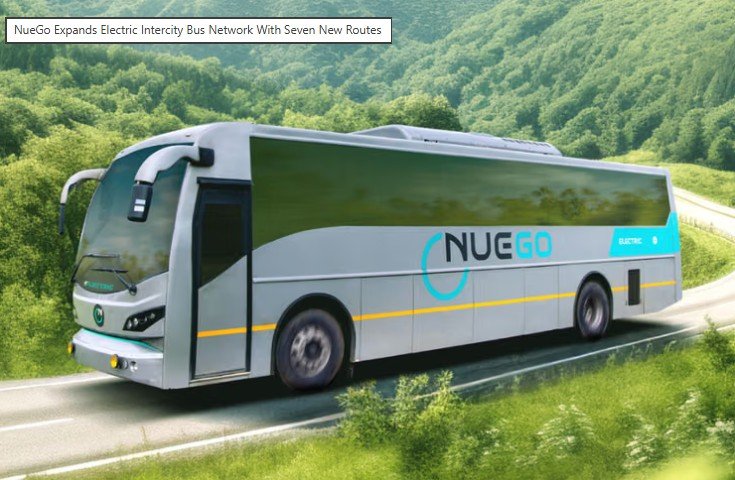
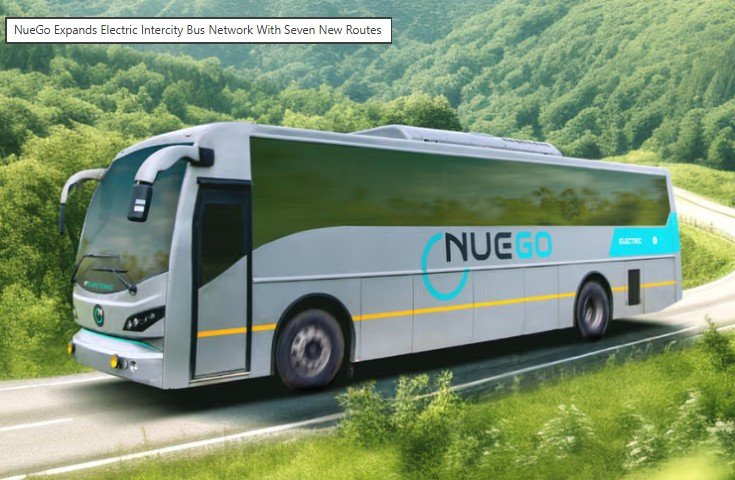
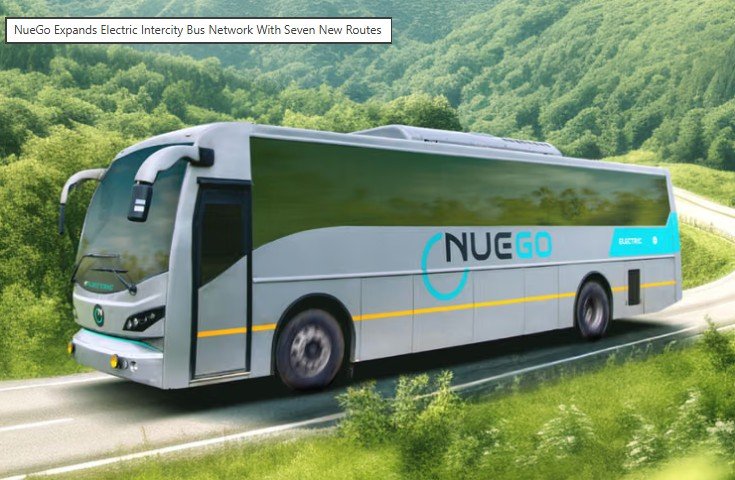
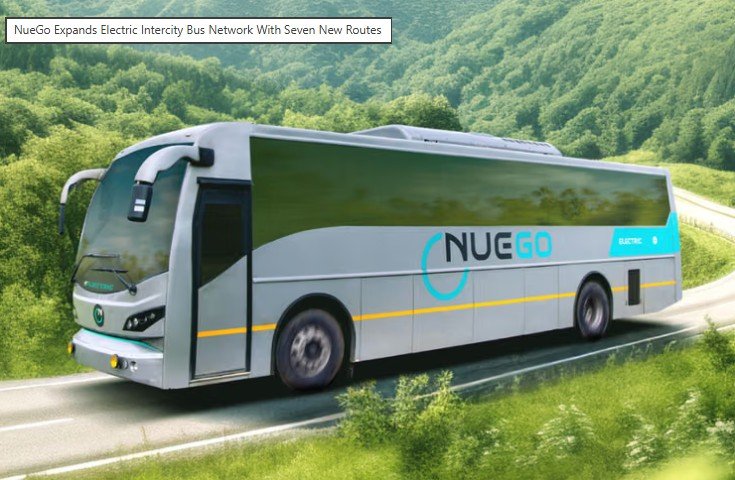
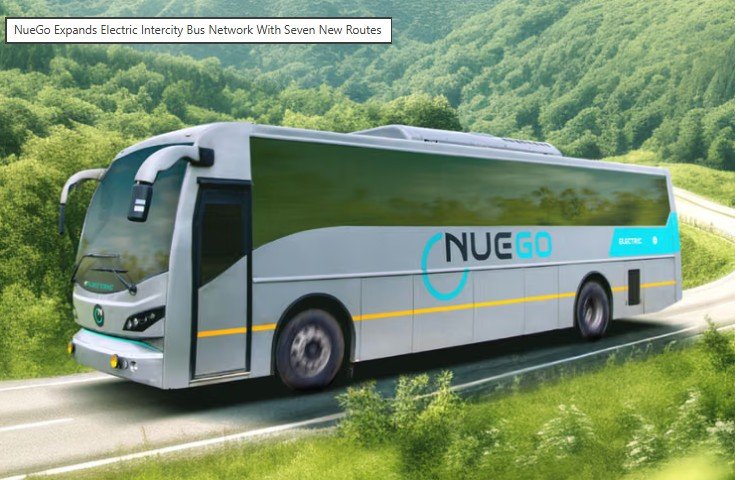
    NueGo, an electric intercity bus brand by GreenCell Mobility, backed by Eversource Capital announced the expansion of its network with the launch of new service routes in India. The latest expansion enhances connectivity while advancing the adoption of sustainable mobility solutions. With a rapidly growing network spanning 150 plus cities, NueGo continues to provide travellers with greater access to safe, reliable and eco-friendly intercity transportation.

    The newly launched services include key routes such as Chennai-Tirupati, Hyderabad-Guntur, Mussoorie-Delhi, Mussoorie-Gurugram, Gurugram-Haldwani, Coimbatore-Madurai and Tirupati-Puducherry. These routes have been strategically introduced to strengthen connectivity across high-demand business, tourism and pilgrimage travel corridors, while improving access between important regional economic centres and popular leisure destinations. The expansion further reinforces NueGo’s commitment to making sustainable mobility more accessible and convenient for travellers across India.

    Speaking on the milestone, Devendra Chawla, MD and CEO, GreenCell Mobility, said, “We are delighted to strengthen NueGo’s national network with the addition of several new intercity routes. This expansion aligns with our mission of transforming bus travel in India through sustainable, technology-enabled and guest-centric mobility solutions. With our continued route development, enhanced safety features and upgraded in-bus amenities, we are committed to offering guests an elevated travel experience while contributing to a greener, emission-free future.”

    Safety continues to be a defining pillar for NueGo. Every bus undergoes 25 comprehensive safety checks before each departure, while the entire fleet is equipped with Advanced Driver Assistance Systems (ADAS), CCTV surveillance, GPS live tracking, Driver Monitoring Systems (DMS), driver’s breath analyser tests and a speed-lock mechanism capped at 80 km/hr. Reinforcing its commitment to secure and inclusive travel, NueGo also offers women-centric initiatives such as Pink Seat booking and a dedicated 24×7 women’s helpline. Combined with clean and hygienic coaches, well-maintained mid-points, and a guest-first service philosophy.

  • NueGo Expands Electric Intercity Bus Network with New Routes Across India

    NueGo Expands Electric Intercity Bus Network with New Routes Across India

    NueGo, an electric intercity bus brand by GreenCell Mobility, backed by Eversource Capital announced the expansion of its network with the launch of new service routes in India. The latest expansion enhances connectivity while advancing the adoption of sustainable mobility solutions. With a rapidly growing network spanning 150 plus cities, NueGo continues to provide travellers with greater access to safe, reliable and eco-friendly intercity transportation.

    The newly launched services include key routes such as Chennai-Tirupati, Hyderabad-Guntur, Mussoorie-Delhi, Mussoorie-Gurugram, Gurugram-Haldwani, Coimbatore-Madurai and Tirupati-Puducherry. These routes have been strategically introduced to strengthen connectivity across high-demand business, tourism and pilgrimage travel corridors, while improving access between important regional economic centres and popular leisure destinations. The expansion further reinforces NueGo’s commitment to making sustainable mobility more accessible and convenient for travellers across India.

    Speaking on the milestone, Devendra Chawla, MD and CEO, GreenCell Mobility, said, “We are delighted to strengthen NueGo’s national network with the addition of several new intercity routes. This expansion aligns with our mission of transforming bus travel in India through sustainable, technology-enabled and guest-centric mobility solutions. With our continued route development, enhanced safety features and upgraded in-bus amenities, we are committed to offering guests an elevated travel experience while contributing to a greener, emission-free future.”

    Safety continues to be a defining pillar for NueGo. Every bus undergoes 25 comprehensive safety checks before each departure, while the entire fleet is equipped with Advanced Driver Assistance Systems (ADAS), CCTV surveillance, GPS live tracking, Driver Monitoring Systems (DMS), driver’s breath analyser tests and a speed-lock mechanism capped at 80 km/hr. Reinforcing its commitment to secure and inclusive travel, NueGo also offers women-centric initiatives such as Pink Seat booking and a dedicated 24×7 women’s helpline. Combined with clean and hygienic coaches, well-maintained mid-points, and a guest-first service philosophy.

  • NueGo Expands Electric Intercity Bus Network with New Routes Across India

    NueGo Expands Electric Intercity Bus Network with New Routes Across India

    NueGo, an electric intercity bus brand by GreenCell Mobility, backed by Eversource Capital announced the expansion of its network with the launch of new service routes in India. The latest expansion enhances connectivity while advancing the adoption of sustainable mobility solutions. With a rapidly growing network spanning 150 plus cities, NueGo continues to provide travellers with greater access to safe, reliable and eco-friendly intercity transportation.

    The newly launched services include key routes such as Chennai-Tirupati, Hyderabad-Guntur, Mussoorie-Delhi, Mussoorie-Gurugram, Gurugram-Haldwani, Coimbatore-Madurai and Tirupati-Puducherry. These routes have been strategically introduced to strengthen connectivity across high-demand business, tourism and pilgrimage travel corridors, while improving access between important regional economic centres and popular leisure destinations. The expansion further reinforces NueGo’s commitment to making sustainable mobility more accessible and convenient for travellers across India.

    Speaking on the milestone, Devendra Chawla, MD and CEO, GreenCell Mobility, said, “We are delighted to strengthen NueGo’s national network with the addition of several new intercity routes. This expansion aligns with our mission of transforming bus travel in India through sustainable, technology-enabled and guest-centric mobility solutions. With our continued route development, enhanced safety features and upgraded in-bus amenities, we are committed to offering guests an elevated travel experience while contributing to a greener, emission-free future.”

    Safety continues to be a defining pillar for NueGo. Every bus undergoes 25 comprehensive safety checks before each departure, while the entire fleet is equipped with Advanced Driver Assistance Systems (ADAS), CCTV surveillance, GPS live tracking, Driver Monitoring Systems (DMS), driver’s breath analyser tests and a speed-lock mechanism capped at 80 km/hr. Reinforcing its commitment to secure and inclusive travel, NueGo also offers women-centric initiatives such as Pink Seat booking and a dedicated 24×7 women’s helpline. Combined with clean and hygienic coaches, well-maintained mid-points, and a guest-first service philosophy.

  • NueGo Expands Electric Intercity Bus Network with New Routes Across India

    NueGo Expands Electric Intercity Bus Network with New Routes Across India

    NueGo, an electric intercity bus brand by GreenCell Mobility, backed by Eversource Capital announced the expansion of its network with the launch of new service routes in India. The latest expansion enhances connectivity while advancing the adoption of sustainable mobility solutions. With a rapidly growing network spanning 150 plus cities, NueGo continues to provide travellers with greater access to safe, reliable and eco-friendly intercity transportation.

    The newly launched services include key routes such as Chennai-Tirupati, Hyderabad-Guntur, Mussoorie-Delhi, Mussoorie-Gurugram, Gurugram-Haldwani, Coimbatore-Madurai and Tirupati-Puducherry. These routes have been strategically introduced to strengthen connectivity across high-demand business, tourism and pilgrimage travel corridors, while improving access between important regional economic centres and popular leisure destinations. The expansion further reinforces NueGo’s commitment to making sustainable mobility more accessible and convenient for travellers across India.

    Speaking on the milestone, Devendra Chawla, MD and CEO, GreenCell Mobility, said, “We are delighted to strengthen NueGo’s national network with the addition of several new intercity routes. This expansion aligns with our mission of transforming bus travel in India through sustainable, technology-enabled and guest-centric mobility solutions. With our continued route development, enhanced safety features and upgraded in-bus amenities, we are committed to offering guests an elevated travel experience while contributing to a greener, emission-free future.”

    Safety continues to be a defining pillar for NueGo. Every bus undergoes 25 comprehensive safety checks before each departure, while the entire fleet is equipped with Advanced Driver Assistance Systems (ADAS), CCTV surveillance, GPS live tracking, Driver Monitoring Systems (DMS), driver’s breath analyser tests and a speed-lock mechanism capped at 80 km/hr. Reinforcing its commitment to secure and inclusive travel, NueGo also offers women-centric initiatives such as Pink Seat booking and a dedicated 24×7 women’s helpline. Combined with clean and hygienic coaches, well-maintained mid-points, and a guest-first service philosophy.

  • NueGo Expands Electric Intercity Bus Network with New Routes Across India

    NueGo Expands Electric Intercity Bus Network with New Routes Across India

    NueGo, an electric intercity bus brand by GreenCell Mobility, backed by Eversource Capital announced the expansion of its network with the launch of new service routes in India. The latest expansion enhances connectivity while advancing the adoption of sustainable mobility solutions. With a rapidly growing network spanning 150 plus cities, NueGo continues to provide travellers with greater access to safe, reliable and eco-friendly intercity transportation.

    The newly launched services include key routes such as Chennai-Tirupati, Hyderabad-Guntur, Mussoorie-Delhi, Mussoorie-Gurugram, Gurugram-Haldwani, Coimbatore-Madurai and Tirupati-Puducherry. These routes have been strategically introduced to strengthen connectivity across high-demand business, tourism and pilgrimage travel corridors, while improving access between important regional economic centres and popular leisure destinations. The expansion further reinforces NueGo’s commitment to making sustainable mobility more accessible and convenient for travellers across India.

    Speaking on the milestone, Devendra Chawla, MD and CEO, GreenCell Mobility, said, “We are delighted to strengthen NueGo’s national network with the addition of several new intercity routes. This expansion aligns with our mission of transforming bus travel in India through sustainable, technology-enabled and guest-centric mobility solutions. With our continued route development, enhanced safety features and upgraded in-bus amenities, we are committed to offering guests an elevated travel experience while contributing to a greener, emission-free future.”

    Safety continues to be a defining pillar for NueGo. Every bus undergoes 25 comprehensive safety checks before each departure, while the entire fleet is equipped with Advanced Driver Assistance Systems (ADAS), CCTV surveillance, GPS live tracking, Driver Monitoring Systems (DMS), driver’s breath analyser tests and a speed-lock mechanism capped at 80 km/hr. Reinforcing its commitment to secure and inclusive travel, NueGo also offers women-centric initiatives such as Pink Seat booking and a dedicated 24×7 women’s helpline. Combined with clean and hygienic coaches, well-maintained mid-points, and a guest-first service philosophy.