NueGo, an electric intercity bus brand by GreenCell Mobility, backed by Eversource Capital announced the expansion of its network with the launch of new service routes in India. The latest expansion enhances connectivity while advancing the adoption of sustainable mobility solutions. With a rapidly growing network spanning 150 plus cities, NueGo continues to provide travellers with greater access to safe, reliable and eco-friendly intercity transportation.
The newly launched services include key routes such as Chennai-Tirupati, Hyderabad-Guntur, Mussoorie-Delhi, Mussoorie-Gurugram, Gurugram-Haldwani, Coimbatore-Madurai and Tirupati-Puducherry. These routes have been strategically introduced to strengthen connectivity across high-demand business, tourism and pilgrimage travel corridors, while improving access between important regional economic centres and popular leisure destinations. The expansion further reinforces NueGo’s commitment to making sustainable mobility more accessible and convenient for travellers across India.
Speaking on the milestone, Devendra Chawla, MD and CEO, GreenCell Mobility, said, “We are delighted to strengthen NueGo’s national network with the addition of several new intercity routes. This expansion aligns with our mission of transforming bus travel in India through sustainable, technology-enabled and guest-centric mobility solutions. With our continued route development, enhanced safety features and upgraded in-bus amenities, we are committed to offering guests an elevated travel experience while contributing to a greener, emission-free future.”
Safety continues to be a defining pillar for NueGo. Every bus undergoes 25 comprehensive safety checks before each departure, while the entire fleet is equipped with Advanced Driver Assistance Systems (ADAS), CCTV surveillance, GPS live tracking, Driver Monitoring Systems (DMS), driver’s breath analyser tests and a speed-lock mechanism capped at 80 km/hr. Reinforcing its commitment to secure and inclusive travel, NueGo also offers women-centric initiatives such as Pink Seat booking and a dedicated 24×7 women’s helpline. Combined with clean and hygienic coaches, well-maintained mid-points, and a guest-first service philosophy.
Blog
-
NueGo Expands Electric Intercity Bus Network with New Routes Across India
-
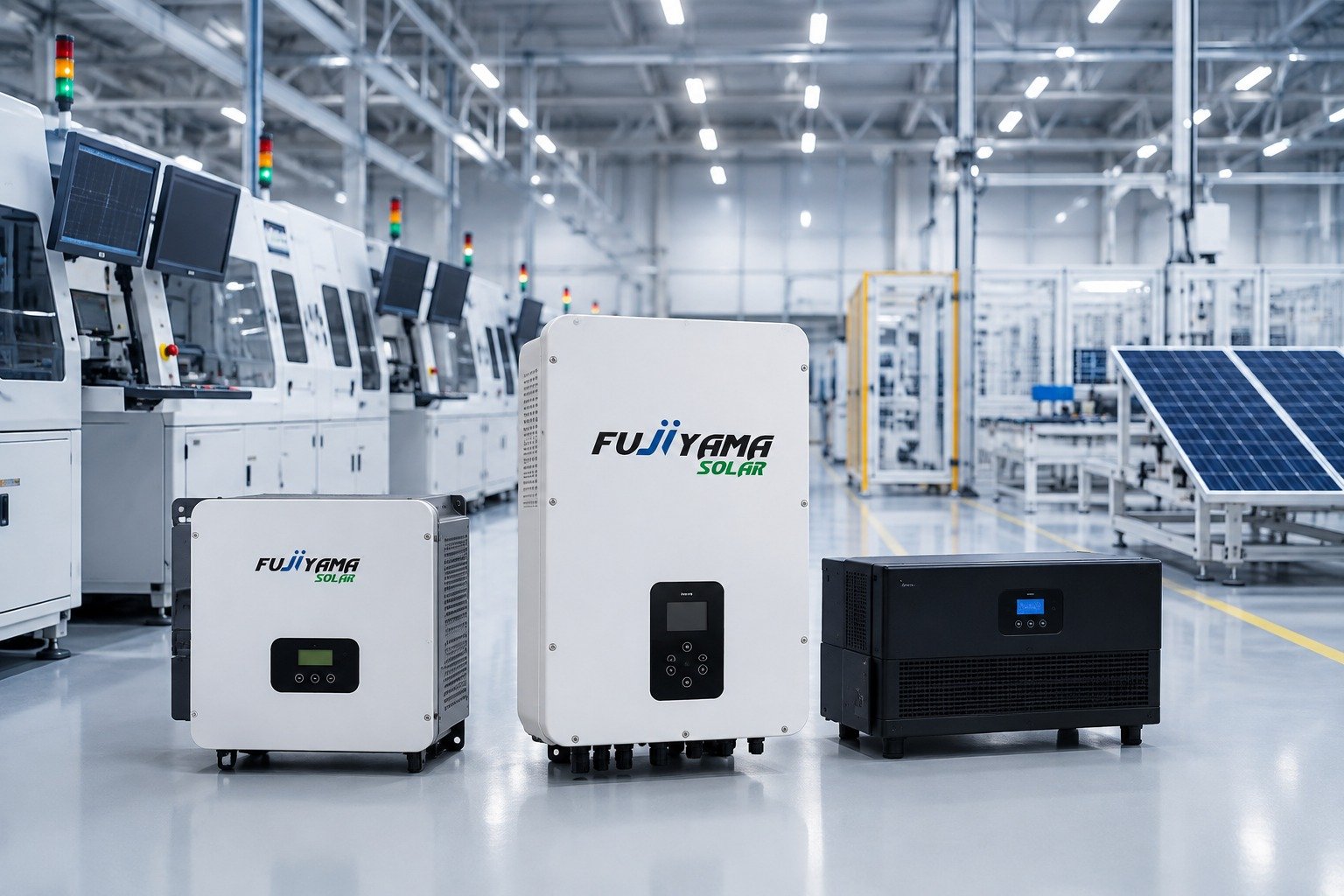
Fujiyama commissions 2 GW power electronics manufacturing facility at Ratlam
Fujiyama Power Systems Limited has commissioned a 2 GW power electronics manufacturing facility at Ratlam, Madhya Pradesh
The Ratlam facility is a key part of Fujiyama’s large-scale greenfield manufacturing expansion project aimed at strengthening the Company’s integrated manufacturing capabilities across the rooftop solar value chain. Following the commissioning of the 2 GW solar panel manufacturing facility in May, the successful commissioning of the power electronics manufacturing line marks another important milestone in the development of the integrated manufacturing complex at Ratlam.
The newly commissioned facility has an installed manufacturing capacity of 2 GW and will manufacture a wide range of power electronics products, including solar inverters, UPS systems and other related solutions. With the commissioning of the Ratlam power electronics manufacturing facility, Fujiyama’s total power electronics manufacturing capacity has increased to 4.2 GW, further strengthening its ability to capture the rapidly growing rooftop solar market.
Commenting on the commissioning, Chairman and Joint Managing Director Pawan Kumar Garg said, “The commissioning of our power electronics manufacturing facility at Ratlam represents another important milestone in Fujiyama’s growth journey. As demand for rooftop solar solutions continues to grow across India, strengthening our manufacturing capabilities in power electronics enables us to deliver reliable, high quality products while improving operational efficiencies and supply chain integration. With the battery manufacturing facility also progressing as planned, the Ratlam complex will further strengthen our integrated manufacturing platform and support our long term growth strategy.”
-
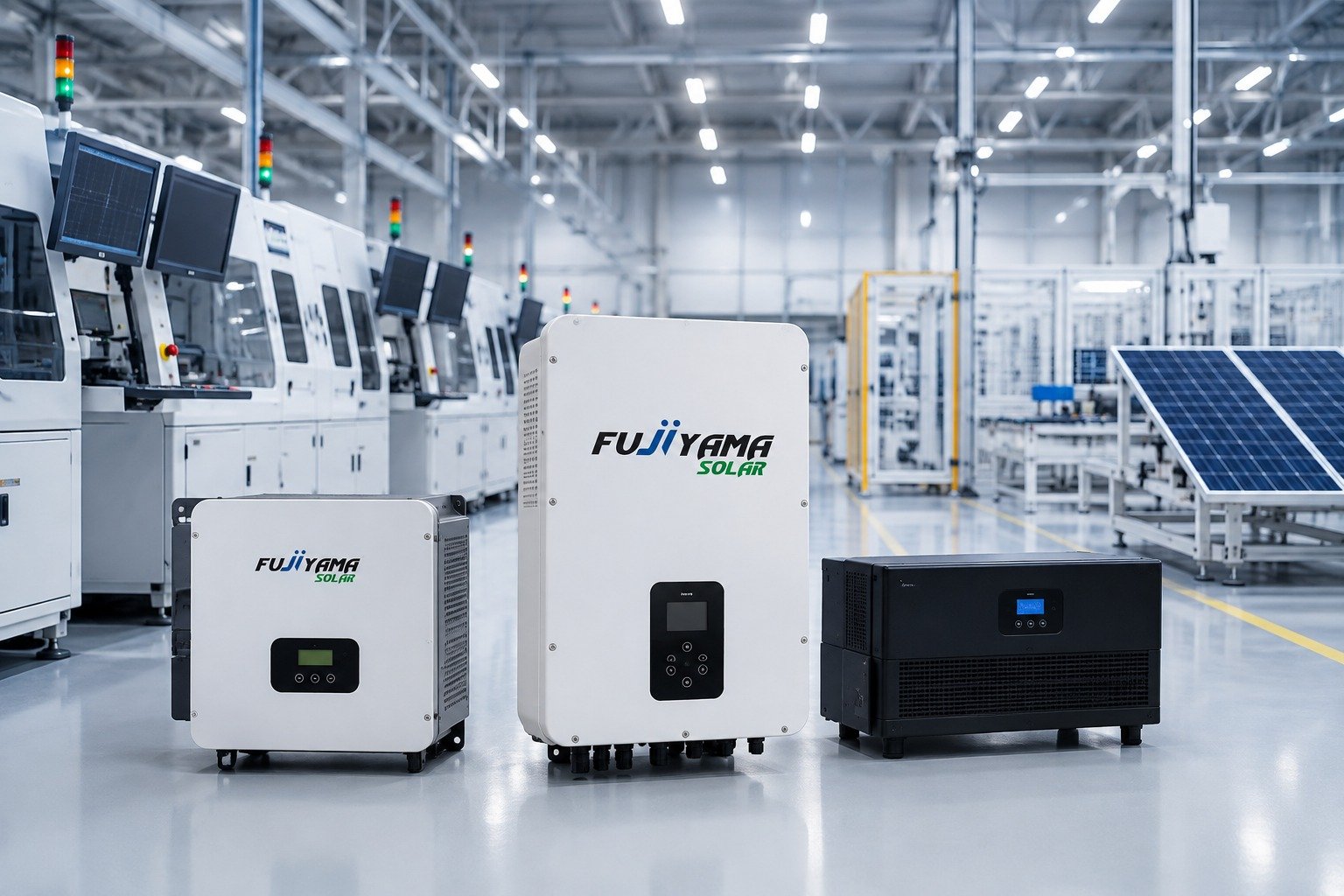
Fujiyama commissions 2 GW power electronics manufacturing facility at Ratlam
Fujiyama Power Systems Limited has commissioned a 2 GW power electronics manufacturing facility at Ratlam, Madhya Pradesh
The Ratlam facility is a key part of Fujiyama’s large-scale greenfield manufacturing expansion project aimed at strengthening the Company’s integrated manufacturing capabilities across the rooftop solar value chain. Following the commissioning of the 2 GW solar panel manufacturing facility in May, the successful commissioning of the power electronics manufacturing line marks another important milestone in the development of the integrated manufacturing complex at Ratlam.
The newly commissioned facility has an installed manufacturing capacity of 2 GW and will manufacture a wide range of power electronics products, including solar inverters, UPS systems and other related solutions. With the commissioning of the Ratlam power electronics manufacturing facility, Fujiyama’s total power electronics manufacturing capacity has increased to 4.2 GW, further strengthening its ability to capture the rapidly growing rooftop solar market.
Commenting on the commissioning, Chairman and Joint Managing Director Pawan Kumar Garg said, “The commissioning of our power electronics manufacturing facility at Ratlam represents another important milestone in Fujiyama’s growth journey. As demand for rooftop solar solutions continues to grow across India, strengthening our manufacturing capabilities in power electronics enables us to deliver reliable, high quality products while improving operational efficiencies and supply chain integration. With the battery manufacturing facility also progressing as planned, the Ratlam complex will further strengthen our integrated manufacturing platform and support our long term growth strategy.”
-
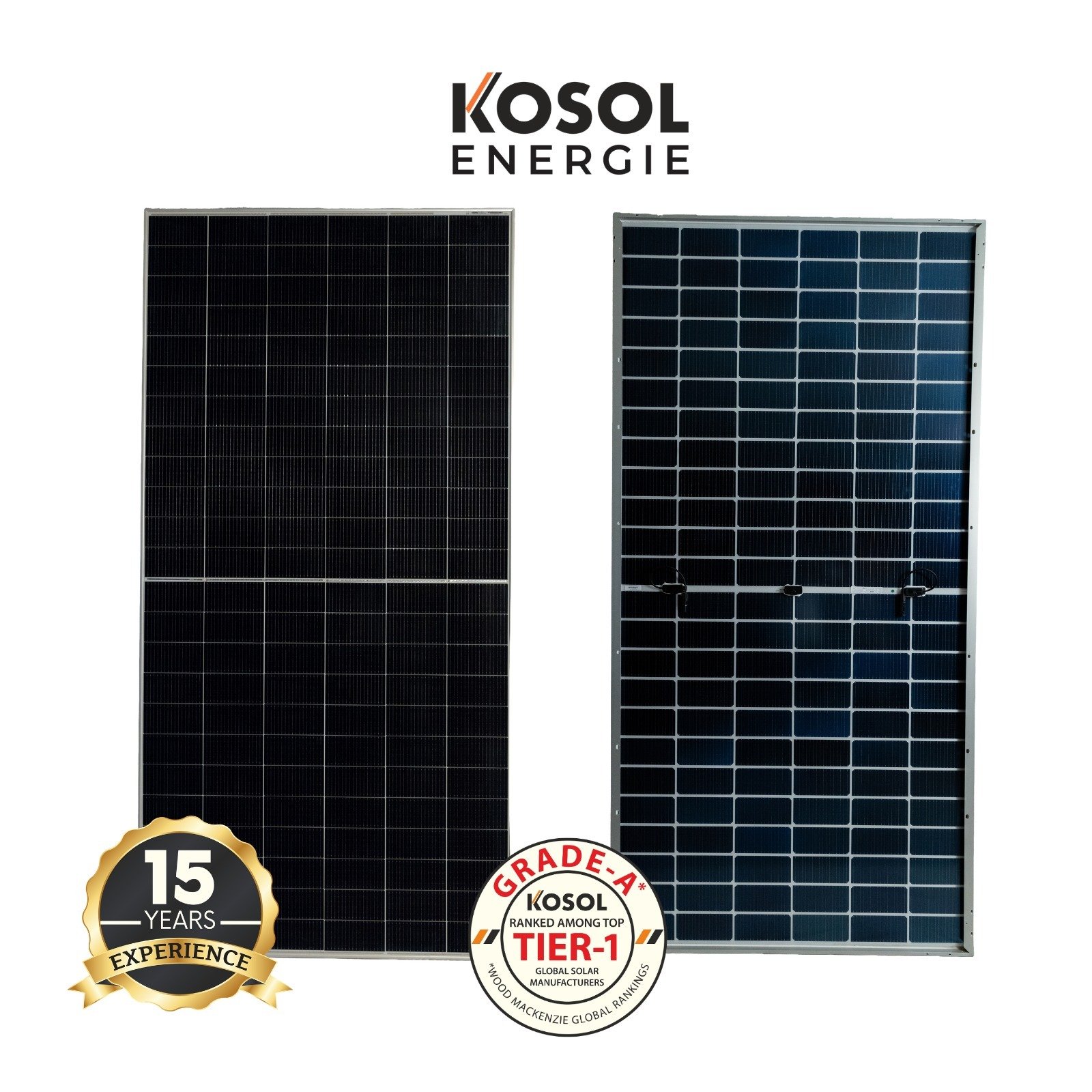
Kosol Energie Introduces Enhanced Hail-Resistant N-Type Glass-to-Glass Solar Modules for Extreme Weather Conditions
Kosol Energie Pvt. Ltd., India’s Leading Solar Energy Company and a Grade-A Top Tier-1 Global Solar Module Manufacturer, has introduced its enhanced N-Type Glass-to-Glass (G2G) Solar PV Modules, engineered to deliver exceptional durability, long-term reliability, and superior performance under extreme weather conditions. Designed to withstand harsh monsoons and severe hailstorms in global markets, the new modules reinforce Kosol’s commitment to manufacturing technologically advanced and climate-resilient solar solutions.
As climate conditions become increasingly unpredictable, solar modules are expected to perform reliably under heavy rainfall, high humidity, strong winds, and hailstorms. Addressing these evolving challenges, Kosol’s latest N-Type Glass-to-Glass modules are qualified for 35 mm hail impact testing, significantly exceeding the conventional IEC qualification requirement of 25 mm hail diameter under IEC 61215:2021 standards. The modules have successfully undergone testing at a NABL-approved IEC laboratory, demonstrating enhanced resistance against glass damage and microcracks caused by hail impact.
The modules are manufactured using thermally tempered high-strength solar glass, providing improved mechanical strength and impact resistance. Their premium Glass-to-Glass (G2G) architecture offers enhanced protection against moisture ingress, environmental stress, and long-term degradation while improving overall module reliability.
To further strengthen durability, the modules utilize higher GSM POE (Polyolefin Elastomer) encapsulation, offering superior cushioning to solar cells during transportation, vibration, thermal cycling, and hail impact. The advanced encapsulation technology helps minimize mechanical stress, ensuring sustained module performance throughout its operational life.
Additionally, the modules feature high-transmission Anti-Reflective Coated (ARC) glass, enabling greater light absorption and improved energy generation while maintaining high conversion efficiency under diverse climatic conditions.
Kosol’s enhanced N-Type G2G modules have also successfully completed 3× IEC qualification testing, validating their ability to perform consistently under demanding environmental conditions and reinforcing the company’s focus on quality, reliability, and long-term energy generation.
Commenting on the launch, Mr. Kalpesh Kalthia, Chairman and Managing Director, Kosol Energie Pvt. Ltd., said, “The future of solar energy depends not only on higher efficiency but also on long-term reliability under increasingly challenging weather conditions. Our enhanced N-Type Glass-to-Glass modules are engineered to deliver exceptional durability, helping customers maximize energy generation while reducing long-term operational risks. At Kosol, we continue to invest in advanced manufacturing technologies that deliver global quality standards while addressing the evolving needs of the Indian and international solar markets.”
The newly introduced modules are available in 600 Wp, 620 Wp, and 630 Wp variants and are fully compliant with IEC 61215:2021 standards. They are also available in BIS-certified DCR configurations, including G12R and G12 models, supporting the growing demand for domestically manufactured high-performance solar modules in India.
With continuous investments in advanced manufacturing, rigorous quality assurance, and product innovation, Kosol Energie remains focused on delivering next-generation solar technologies that offer higher efficiency, greater reliability, and long-term value for utility-scale, commercial & industrial, and residential solar projects across India and global markets.
Key Product Highlights
- Qualified for 35 mm hail impact testing, exceeding the standard IEC requirement of 25 mm.
- Successfully tested as per IEC 61215:2021 at a NABL-approved IEC laboratory.
- Thermally tempered high-strength solar glass for enhanced mechanical durability.
- Premium Glass-to-Glass (G2G) construction for superior moisture and environmental protection.
- Higher GSM POE encapsulation for improved resistance against vibration, thermal cycling, transportation, and hail impact.
- High-transmission Anti-Reflective Coated (ARC) glass for improved energy generation.
- Successfully qualified through 3× IEC reliability testing.
- Available in 600 Wp, 620 Wp, and 630 Wp variants.
- Also available in BIS-certified DCR configurations (G12R & G12) for the Indian market.
-
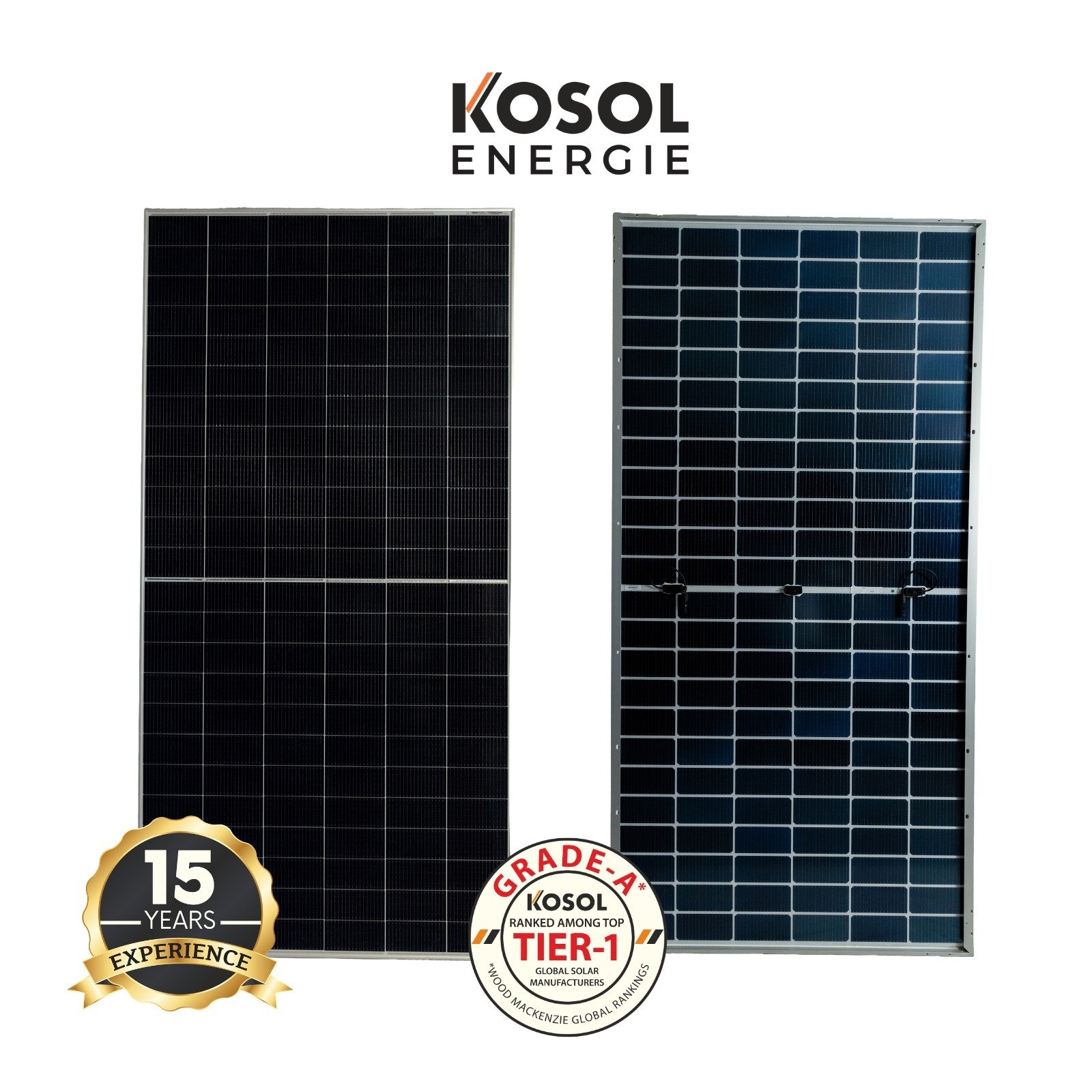
Kosol Energie Introduces Enhanced Hail-Resistant N-Type Glass-to-Glass Solar Modules for Extreme Weather Conditions
Kosol Energie Pvt. Ltd., India’s Leading Solar Energy Company and a Grade-A Top Tier-1 Global Solar Module Manufacturer, has introduced its enhanced N-Type Glass-to-Glass (G2G) Solar PV Modules, engineered to deliver exceptional durability, long-term reliability, and superior performance under extreme weather conditions. Designed to withstand harsh monsoons and severe hailstorms in global markets, the new modules reinforce Kosol’s commitment to manufacturing technologically advanced and climate-resilient solar solutions.
As climate conditions become increasingly unpredictable, solar modules are expected to perform reliably under heavy rainfall, high humidity, strong winds, and hailstorms. Addressing these evolving challenges, Kosol’s latest N-Type Glass-to-Glass modules are qualified for 35 mm hail impact testing, significantly exceeding the conventional IEC qualification requirement of 25 mm hail diameter under IEC 61215:2021 standards. The modules have successfully undergone testing at a NABL-approved IEC laboratory, demonstrating enhanced resistance against glass damage and microcracks caused by hail impact.
The modules are manufactured using thermally tempered high-strength solar glass, providing improved mechanical strength and impact resistance. Their premium Glass-to-Glass (G2G) architecture offers enhanced protection against moisture ingress, environmental stress, and long-term degradation while improving overall module reliability.
To further strengthen durability, the modules utilize higher GSM POE (Polyolefin Elastomer) encapsulation, offering superior cushioning to solar cells during transportation, vibration, thermal cycling, and hail impact. The advanced encapsulation technology helps minimize mechanical stress, ensuring sustained module performance throughout its operational life.
Additionally, the modules feature high-transmission Anti-Reflective Coated (ARC) glass, enabling greater light absorption and improved energy generation while maintaining high conversion efficiency under diverse climatic conditions.
Kosol’s enhanced N-Type G2G modules have also successfully completed 3× IEC qualification testing, validating their ability to perform consistently under demanding environmental conditions and reinforcing the company’s focus on quality, reliability, and long-term energy generation.
Commenting on the launch, Mr. Kalpesh Kalthia, Chairman and Managing Director, Kosol Energie Pvt. Ltd., said, “The future of solar energy depends not only on higher efficiency but also on long-term reliability under increasingly challenging weather conditions. Our enhanced N-Type Glass-to-Glass modules are engineered to deliver exceptional durability, helping customers maximize energy generation while reducing long-term operational risks. At Kosol, we continue to invest in advanced manufacturing technologies that deliver global quality standards while addressing the evolving needs of the Indian and international solar markets.”
The newly introduced modules are available in 600 Wp, 620 Wp, and 630 Wp variants and are fully compliant with IEC 61215:2021 standards. They are also available in BIS-certified DCR configurations, including G12R and G12 models, supporting the growing demand for domestically manufactured high-performance solar modules in India.
With continuous investments in advanced manufacturing, rigorous quality assurance, and product innovation, Kosol Energie remains focused on delivering next-generation solar technologies that offer higher efficiency, greater reliability, and long-term value for utility-scale, commercial & industrial, and residential solar projects across India and global markets.
Key Product Highlights
- Qualified for 35 mm hail impact testing, exceeding the standard IEC requirement of 25 mm.
- Successfully tested as per IEC 61215:2021 at a NABL-approved IEC laboratory.
- Thermally tempered high-strength solar glass for enhanced mechanical durability.
- Premium Glass-to-Glass (G2G) construction for superior moisture and environmental protection.
- Higher GSM POE encapsulation for improved resistance against vibration, thermal cycling, transportation, and hail impact.
- High-transmission Anti-Reflective Coated (ARC) glass for improved energy generation.
- Successfully qualified through 3× IEC reliability testing.
- Available in 600 Wp, 620 Wp, and 630 Wp variants.
- Also available in BIS-certified DCR configurations (G12R & G12) for the Indian market.
-
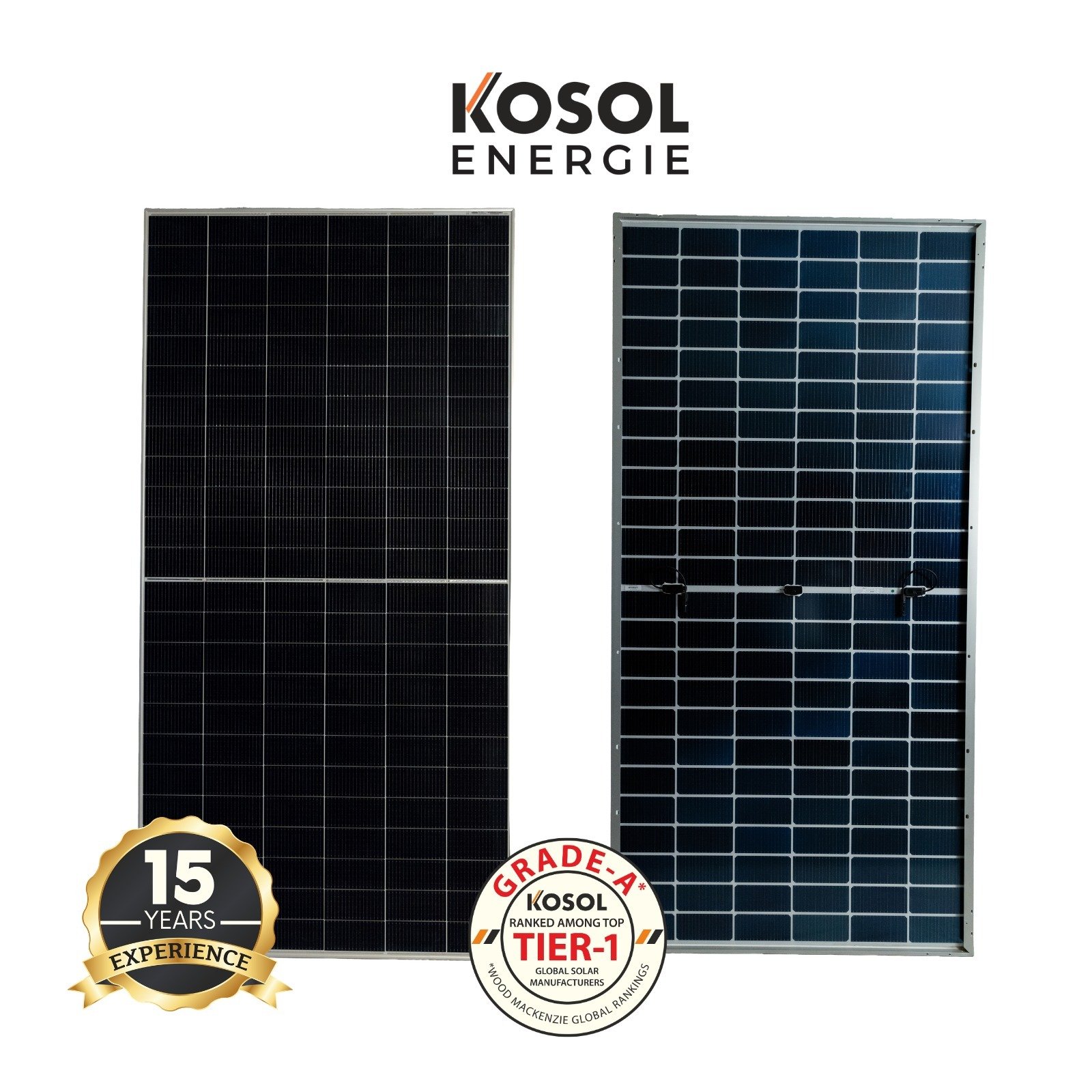
Kosol Energie Introduces Enhanced Hail-Resistant N-Type Glass-to-Glass Solar Modules for Extreme Weather Conditions
Kosol Energie Pvt. Ltd., India’s Leading Solar Energy Company and a Grade-A Top Tier-1 Global Solar Module Manufacturer, has introduced its enhanced N-Type Glass-to-Glass (G2G) Solar PV Modules, engineered to deliver exceptional durability, long-term reliability, and superior performance under extreme weather conditions. Designed to withstand harsh monsoons and severe hailstorms in global markets, the new modules reinforce Kosol’s commitment to manufacturing technologically advanced and climate-resilient solar solutions.
As climate conditions become increasingly unpredictable, solar modules are expected to perform reliably under heavy rainfall, high humidity, strong winds, and hailstorms. Addressing these evolving challenges, Kosol’s latest N-Type Glass-to-Glass modules are qualified for 35 mm hail impact testing, significantly exceeding the conventional IEC qualification requirement of 25 mm hail diameter under IEC 61215:2021 standards. The modules have successfully undergone testing at a NABL-approved IEC laboratory, demonstrating enhanced resistance against glass damage and microcracks caused by hail impact.
The modules are manufactured using thermally tempered high-strength solar glass, providing improved mechanical strength and impact resistance. Their premium Glass-to-Glass (G2G) architecture offers enhanced protection against moisture ingress, environmental stress, and long-term degradation while improving overall module reliability.
To further strengthen durability, the modules utilize higher GSM POE (Polyolefin Elastomer) encapsulation, offering superior cushioning to solar cells during transportation, vibration, thermal cycling, and hail impact. The advanced encapsulation technology helps minimize mechanical stress, ensuring sustained module performance throughout its operational life.
Additionally, the modules feature high-transmission Anti-Reflective Coated (ARC) glass, enabling greater light absorption and improved energy generation while maintaining high conversion efficiency under diverse climatic conditions.
Kosol’s enhanced N-Type G2G modules have also successfully completed 3× IEC qualification testing, validating their ability to perform consistently under demanding environmental conditions and reinforcing the company’s focus on quality, reliability, and long-term energy generation.
Commenting on the launch, Mr. Kalpesh Kalthia, Chairman and Managing Director, Kosol Energie Pvt. Ltd., said, “The future of solar energy depends not only on higher efficiency but also on long-term reliability under increasingly challenging weather conditions. Our enhanced N-Type Glass-to-Glass modules are engineered to deliver exceptional durability, helping customers maximize energy generation while reducing long-term operational risks. At Kosol, we continue to invest in advanced manufacturing technologies that deliver global quality standards while addressing the evolving needs of the Indian and international solar markets.”
The newly introduced modules are available in 600 Wp, 620 Wp, and 630 Wp variants and are fully compliant with IEC 61215:2021 standards. They are also available in BIS-certified DCR configurations, including G12R and G12 models, supporting the growing demand for domestically manufactured high-performance solar modules in India.
With continuous investments in advanced manufacturing, rigorous quality assurance, and product innovation, Kosol Energie remains focused on delivering next-generation solar technologies that offer higher efficiency, greater reliability, and long-term value for utility-scale, commercial & industrial, and residential solar projects across India and global markets.
Key Product Highlights
- Qualified for 35 mm hail impact testing, exceeding the standard IEC requirement of 25 mm.
- Successfully tested as per IEC 61215:2021 at a NABL-approved IEC laboratory.
- Thermally tempered high-strength solar glass for enhanced mechanical durability.
- Premium Glass-to-Glass (G2G) construction for superior moisture and environmental protection.
- Higher GSM POE encapsulation for improved resistance against vibration, thermal cycling, transportation, and hail impact.
- High-transmission Anti-Reflective Coated (ARC) glass for improved energy generation.
- Successfully qualified through 3× IEC reliability testing.
- Available in 600 Wp, 620 Wp, and 630 Wp variants.
- Also available in BIS-certified DCR configurations (G12R & G12) for the Indian market.
-
Kosol Energie Introduces Enhanced Hail-Resistant N-Type Glass-to-Glass Solar Modules for Extreme Weather Conditions
Kosol Energie Pvt. Ltd., India’s Leading Solar Energy Company and a Grade-A Top Tier-1 Global Solar Module Manufacturer, has introduced its enhanced N-Type Glass-to-Glass (G2G) Solar PV Modules, engineered to deliver exceptional durability, long-term reliability, and superior performance under extreme weather conditions. Designed to withstand harsh monsoons and severe hailstorms in global markets, the new modules reinforce Kosol’s commitment to manufacturing technologically advanced and climate-resilient solar solutions.
As climate conditions become increasingly unpredictable, solar modules are expected to perform reliably under heavy rainfall, high humidity, strong winds, and hailstorms. Addressing these evolving challenges, Kosol’s latest N-Type Glass-to-Glass modules are qualified for 35 mm hail impact testing, significantly exceeding the conventional IEC qualification requirement of 25 mm hail diameter under IEC 61215:2021 standards. The modules have successfully undergone testing at a NABL-approved IEC laboratory, demonstrating enhanced resistance against glass damage and microcracks caused by hail impact.
The modules are manufactured using thermally tempered high-strength solar glass, providing improved mechanical strength and impact resistance. Their premium Glass-to-Glass (G2G) architecture offers enhanced protection against moisture ingress, environmental stress, and long-term degradation while improving overall module reliability.
To further strengthen durability, the modules utilize higher GSM POE (Polyolefin Elastomer) encapsulation, offering superior cushioning to solar cells during transportation, vibration, thermal cycling, and hail impact. The advanced encapsulation technology helps minimize mechanical stress, ensuring sustained module performance throughout its operational life.
Additionally, the modules feature high-transmission Anti-Reflective Coated (ARC) glass, enabling greater light absorption and improved energy generation while maintaining high conversion efficiency under diverse climatic conditions.
Kosol’s enhanced N-Type G2G modules have also successfully completed 3× IEC qualification testing, validating their ability to perform consistently under demanding environmental conditions and reinforcing the company’s focus on quality, reliability, and long-term energy generation.
Commenting on the launch, Mr. Kalpesh Kalthia, Chairman and Managing Director, Kosol Energie Pvt. Ltd., said, “The future of solar energy depends not only on higher efficiency but also on long-term reliability under increasingly challenging weather conditions. Our enhanced N-Type Glass-to-Glass modules are engineered to deliver exceptional durability, helping customers maximize energy generation while reducing long-term operational risks. At Kosol, we continue to invest in advanced manufacturing technologies that deliver global quality standards while addressing the evolving needs of the Indian and international solar markets.”
The newly introduced modules are available in 600 Wp, 620 Wp, and 630 Wp variants and are fully compliant with IEC 61215:2021 standards. They are also available in BIS-certified DCR configurations, including G12R and G12 models, supporting the growing demand for domestically manufactured high-performance solar modules in India.
With continuous investments in advanced manufacturing, rigorous quality assurance, and product innovation, Kosol Energie remains focused on delivering next-generation solar technologies that offer higher efficiency, greater reliability, and long-term value for utility-scale, commercial & industrial, and residential solar projects across India and global markets.
Key Product Highlights
- Qualified for 35 mm hail impact testing, exceeding the standard IEC requirement of 25 mm.
- Successfully tested as per IEC 61215:2021 at a NABL-approved IEC laboratory.
- Thermally tempered high-strength solar glass for enhanced mechanical durability.
- Premium Glass-to-Glass (G2G) construction for superior moisture and environmental protection.
- Higher GSM POE encapsulation for improved resistance against vibration, thermal cycling, transportation, and hail impact.
- High-transmission Anti-Reflective Coated (ARC) glass for improved energy generation.
- Successfully qualified through 3× IEC reliability testing.
- Available in 600 Wp, 620 Wp, and 630 Wp variants.
- Also available in BIS-certified DCR configurations (G12R & G12) for the Indian market.
-

India, Bhutan Deepen Dialogue on Shared Rivers and Hydropower Cooperation
India and Bhutan have reviewed the progress of cooperation on trans-boundary rivers, hydropower development and water-resource management, underscoring the strategic importance of their shared river systems to both countries’ energy and economic interests. The discussions come as Bhutan continues to expand its hydropower capacity and India seeks to strengthen access to reliable, low-carbon electricity.
The two sides examined issues linked to the development and operation of hydropower projects as well as the management of rivers that flow across the India-Bhutan border. The engagement is significant for ensuring that infrastructure development, downstream water requirements and environmental considerations are addressed through greater coordination between the neighbouring countries.
Hydropower has traditionally been at the centre of India’s economic partnership with Bhutan. Bhutan’s mountainous terrain gives it substantial hydropower potential, while its domestic electricity demand remains comparatively limited. This has created a mutually beneficial model in which Indian participation and investment support project development, with surplus electricity subsequently exported to India.
Several major projects have already established the foundation of this relationship. The 1,020 MW Punatsangchhu-II Hydroelectric Project is operational, while work on the 1,200 MW Punatsangchhu-I Hydroelectric Project has been progressing. India and Bhutan are also pursuing additional projects as part of their long-term plans to expand bilateral hydropower cooperation.
The river-management component is becoming increasingly important as the scale of infrastructure along shared water systems grows. Hydrological data sharing, early warning mechanisms and coordinated planning can help both countries better manage risks associated with floods, changing river flows and extreme weather events. Such cooperation is particularly relevant for downstream communities and infrastructure located along river corridors.
For India, Bhutanese hydropower can provide a useful complement to intermittent solar and wind generation as the country’s electricity system absorbs larger volumes of variable renewable power. Cross-border hydropower imports can contribute to grid balancing while supporting the broader decarbonisation of electricity supply.
For Bhutan, deeper integration with India’s power market offers a pathway to monetise its renewable-energy resources and generate long-term revenues from electricity exports. The partnership also creates opportunities for investment in transmission infrastructure and more efficient cross-border power trading.
The latest review consequently places the India-Bhutan relationship within a broader framework of energy security, climate resilience and integrated river-basin management. As both countries prepare for a larger hydropower build-out, closer institutional coordination will be critical to ensuring that new projects deliver economic benefits without compromising downstream water security or environmental resilience.
-
India, Bhutan Deepen Dialogue on Shared Rivers and Hydropower Cooperation
India and Bhutan have reviewed the progress of cooperation on trans-boundary rivers, hydropower development and water-resource management, underscoring the strategic importance of their shared river systems to both countries’ energy and economic interests. The discussions come as Bhutan continues to expand its hydropower capacity and India seeks to strengthen access to reliable, low-carbon electricity.
The two sides examined issues linked to the development and operation of hydropower projects as well as the management of rivers that flow across the India-Bhutan border. The engagement is significant for ensuring that infrastructure development, downstream water requirements and environmental considerations are addressed through greater coordination between the neighbouring countries.
Hydropower has traditionally been at the centre of India’s economic partnership with Bhutan. Bhutan’s mountainous terrain gives it substantial hydropower potential, while its domestic electricity demand remains comparatively limited. This has created a mutually beneficial model in which Indian participation and investment support project development, with surplus electricity subsequently exported to India.
Several major projects have already established the foundation of this relationship. The 1,020 MW Punatsangchhu-II Hydroelectric Project is operational, while work on the 1,200 MW Punatsangchhu-I Hydroelectric Project has been progressing. India and Bhutan are also pursuing additional projects as part of their long-term plans to expand bilateral hydropower cooperation.
The river-management component is becoming increasingly important as the scale of infrastructure along shared water systems grows. Hydrological data sharing, early warning mechanisms and coordinated planning can help both countries better manage risks associated with floods, changing river flows and extreme weather events. Such cooperation is particularly relevant for downstream communities and infrastructure located along river corridors.
For India, Bhutanese hydropower can provide a useful complement to intermittent solar and wind generation as the country’s electricity system absorbs larger volumes of variable renewable power. Cross-border hydropower imports can contribute to grid balancing while supporting the broader decarbonisation of electricity supply.
For Bhutan, deeper integration with India’s power market offers a pathway to monetise its renewable-energy resources and generate long-term revenues from electricity exports. The partnership also creates opportunities for investment in transmission infrastructure and more efficient cross-border power trading.
The latest review consequently places the India-Bhutan relationship within a broader framework of energy security, climate resilience and integrated river-basin management. As both countries prepare for a larger hydropower build-out, closer institutional coordination will be critical to ensuring that new projects deliver economic benefits without compromising downstream water security or environmental resilience.
-
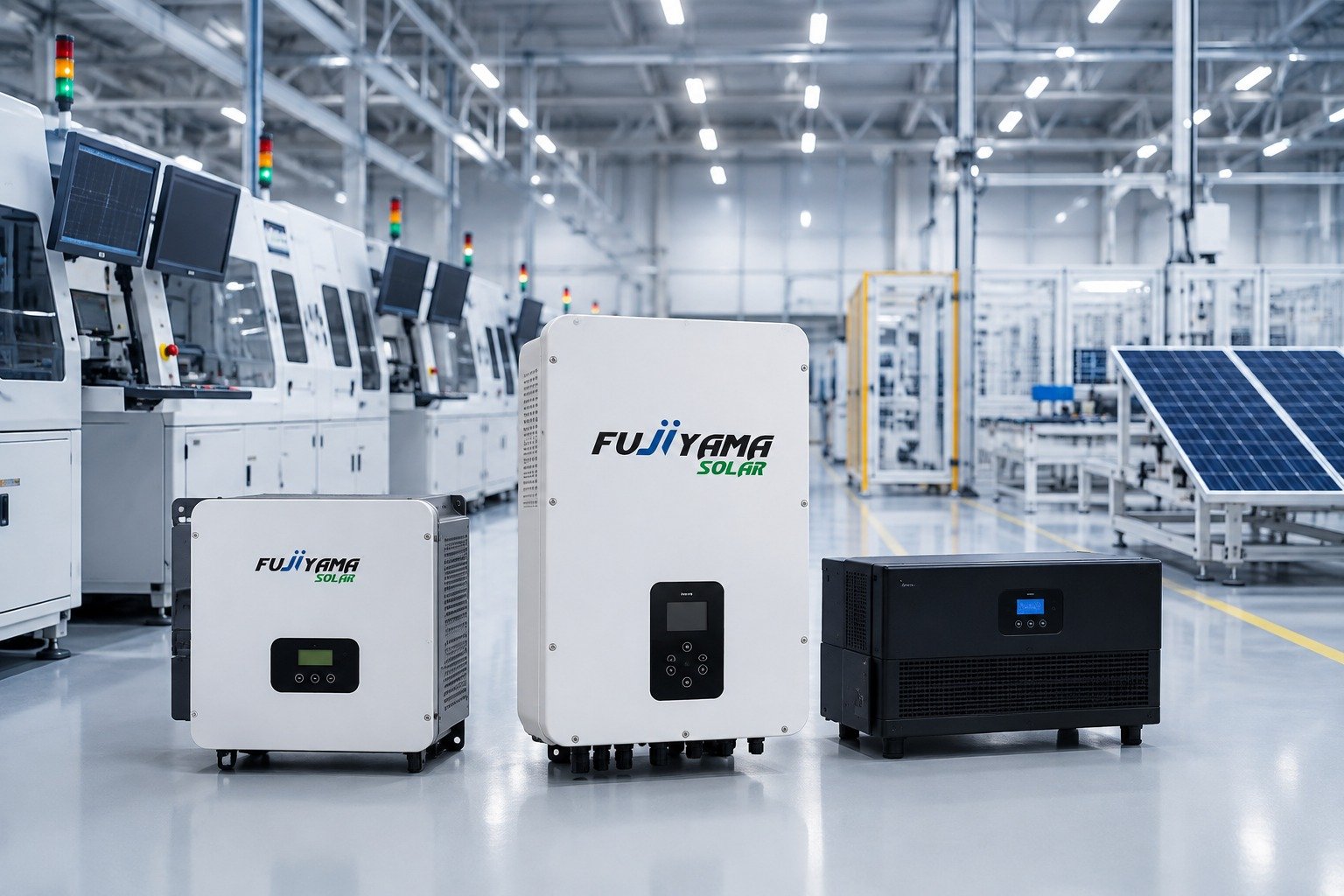
Fujiyama commissions 2 GW power electronics manufacturing facility at Ratlam
Limited Fujiyama Power Systems Limited has commissioned a 2 GW power electronics manufacturing facility at Ratlam, Madhya Pradesh
The Ratlam facility is a key part of Fujiyama’s large-scale greenfield manufacturing expansion project aimed at strengthening the Company’s integrated manufacturing capabilities across the rooftop solar value chain. Following the commissioning of the 2 GW solar panel manufacturing facility in May, the successful commissioning of the power electronics manufacturing line marks another important milestone in the development of the integrated manufacturing complex at Ratlam.
The newly commissioned facility has an installed manufacturing capacity of 2 GW and will manufacture a wide range of power electronics products, including solar inverters, UPS systems and other related solutions. With the commissioning of the Ratlam power electronics manufacturing facility, Fujiyama’s total power electronics manufacturing capacity has increased to 4.2 GW, further strengthening its ability to capture the rapidly growing rooftop solar market.
Commenting on the commissioning, Chairman and Joint Managing Director Pawan Kumar Garg said, “The commissioning of our power electronics manufacturing facility at Ratlam represents another important milestone in Fujiyama’s growth journey. As demand for rooftop solar solutions continues to grow across India, strengthening our manufacturing capabilities in power electronics enables us to deliver reliable, high quality products while improving operational efficiencies and supply chain integration. With the battery manufacturing facility also progressing as planned, the Ratlam complex will further strengthen our integrated manufacturing platform and support our long term growth strategy.”