Blog

  • Brookfield-Backed Avaada Electro Begins Roadshows for ₹7,600 Crore IPO

    Brookfield-Backed Avaada Electro Begins Roadshows for ₹7,600 Crore IPO

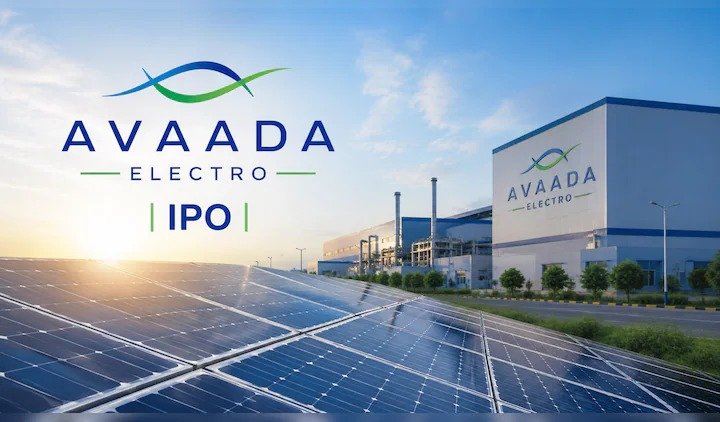
    Avaada Electro, the solar manufacturing arm of Avaada Group, has started investor roadshows for its proposed ₹7,600 crore initial public offering (IPO), with the company targeting a stock market listing in India before the end of the year, according to people familiar with the matter.

    The proposed IPO comprises a fresh issue of shares worth ₹1,600 crore and an offer for sale (OFS) of up to ₹6,000 crore by promoter Avaada Ventures. The final issue size, structure and timing remain subject to change as discussions continue.

    Of the proceeds from the fresh issue, ₹1,200 crore is proposed to be used for repayment or prepayment of certain borrowings and obligations under letters of credit. The remaining amount will be used for general corporate purposes.

    Avaada Electro had initially filed its draft IPO papers through the confidential filing route in October 2025 and received regulatory approval in April 2026. It subsequently filed updated public draft offer documents with the Securities and Exchange Board of India (SEBI) in August.

    The company operates solar module manufacturing facilities with an operational capacity of 8.5 GW as of July 31, 2026. Its operational solar cell manufacturing capacity stood at 3 GW. Avaada Electro plans to expand its module manufacturing capacity to 13.6 GW and solar cell capacity to 12 GW by FY28, alongside plans to establish 3 GW of ingot and wafer capacity.

    The proposed expansion is aimed at creating an integrated solar manufacturing chain covering ingots, wafers, cells and modules. The company also plans to introduce energy storage solutions under the Avaada Halo brand and enter the third-party engineering, procurement and construction (EPC) and operations and maintenance (O&M) segments.

    Avaada Electro operates manufacturing facilities at Dadri in Uttar Pradesh and Nagpur in Maharashtra. Its module manufacturing capacity increased from 1.5 GW to 8.5 GW within a year, while its order book expanded to 19,106 MW from 2,555 MW.

    The company reported revenue from operations of ₹5,303.52 crore in FY26, compared with ₹911.62 crore in FY25. Profit after tax increased to ₹888.74 crore from ₹173 crore during the same period.

    The IPO comes as renewable energy companies increasingly tap India’s equity markets to fund expansion. Avaada Electro joins a pipeline of renewable energy businesses preparing to access the public markets as domestic solar manufacturing capacity expands.

    Brookfield does not directly hold a stake in Avaada Electro. It had backed parent Avaada Ventures through a financing commitment of up to $1 billion in optionally convertible debentures. The final structure of the IPO and the timing of the listing remain subject to regulatory and market processes.

  • Brookfield-Backed Avaada Electro Begins Roadshows for ₹7,600 Crore IPO

    Avaada Electro, the solar manufacturing arm of Avaada Group, has started investor roadshows for its proposed ₹7,600 crore initial public offering (IPO), with the company targeting a stock market listing in India before the end of the year, according to people familiar with the matter.

    The proposed IPO comprises a fresh issue of shares worth ₹1,600 crore and an offer for sale (OFS) of up to ₹6,000 crore by promoter Avaada Ventures. The final issue size, structure and timing remain subject to change as discussions continue.

    Of the proceeds from the fresh issue, ₹1,200 crore is proposed to be used for repayment or prepayment of certain borrowings and obligations under letters of credit. The remaining amount will be used for general corporate purposes.

    Avaada Electro had initially filed its draft IPO papers through the confidential filing route in October 2025 and received regulatory approval in April 2026. It subsequently filed updated public draft offer documents with the Securities and Exchange Board of India (SEBI) in August.

    The company operates solar module manufacturing facilities with an operational capacity of 8.5 GW as of July 31, 2026. Its operational solar cell manufacturing capacity stood at 3 GW. Avaada Electro plans to expand its module manufacturing capacity to 13.6 GW and solar cell capacity to 12 GW by FY28, alongside plans to establish 3 GW of ingot and wafer capacity.

    The proposed expansion is aimed at creating an integrated solar manufacturing chain covering ingots, wafers, cells and modules. The company also plans to introduce energy storage solutions under the Avaada Halo brand and enter the third-party engineering, procurement and construction (EPC) and operations and maintenance (O&M) segments.

    Avaada Electro operates manufacturing facilities at Dadri in Uttar Pradesh and Nagpur in Maharashtra. Its module manufacturing capacity increased from 1.5 GW to 8.5 GW within a year, while its order book expanded to 19,106 MW from 2,555 MW.

    The company reported revenue from operations of ₹5,303.52 crore in FY26, compared with ₹911.62 crore in FY25. Profit after tax increased to ₹888.74 crore from ₹173 crore during the same period.

    The IPO comes as renewable energy companies increasingly tap India’s equity markets to fund expansion. Avaada Electro joins a pipeline of renewable energy businesses preparing to access the public markets as domestic solar manufacturing capacity expands.

    Brookfield does not directly hold a stake in Avaada Electro. It had backed parent Avaada Ventures through a financing commitment of up to $1 billion in optionally convertible debentures. The final structure of the IPO and the timing of the listing remain subject to regulatory and market processes.

  • Maxvolt Energy Takes Next Growth Step with Bhoomi Pujan of INR 700 Crore Aligarh Battery Plant

    Maxvolt Energy Takes Next Growth Step with Bhoomi Pujan of INR 700 Crore Aligarh Battery Plant

    Maxvolt Energy Industries Limited has taken a significant step in its manufacturing expansion strategy with the Bhoomi Pujan of its upcoming ₹700-crore advanced battery manufacturing facility in Aligarh, Uttar Pradesh. It is designed to expand Maxvolt Energy’s manufacturing capabilities across electric mobility, energy storage and OEM applications while supporting the company’s move into four-wheeler EV batteries.

    Spread across approximately 23,576 square metres, nearly six acres, the facility will be developed in two phases of 5 GWh each, taking the planned annual manufacturing capacity to 10 GWh. At full development, planned combined capacity across the two sites reaches 12.5 GWh a year. The project is positioned as the largest upcoming battery manufacturing project in Uttar Pradesh and among the significant upcoming battery manufacturing projects in India.

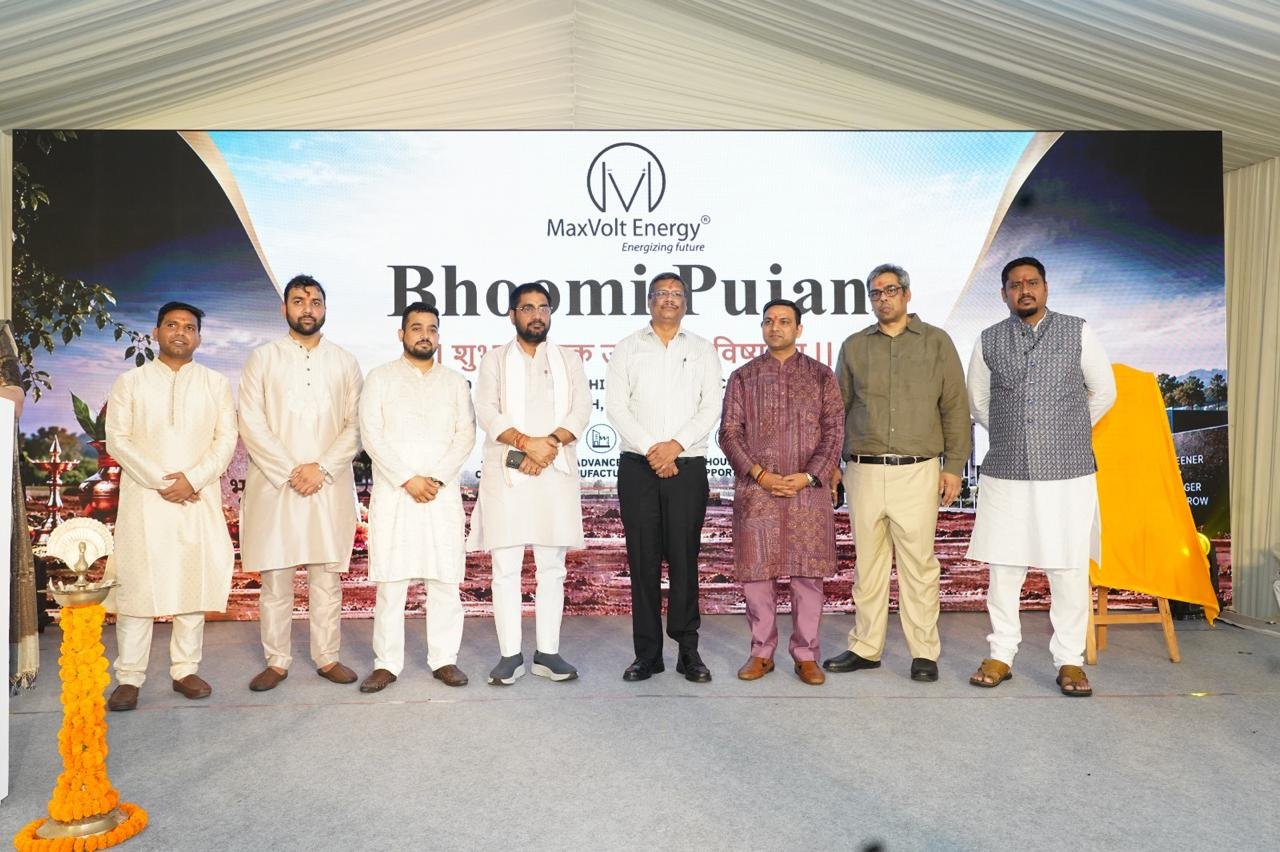
    The Bhoomi Pujan ceremony was attended by Shri Alok Kumar, IAS, Additional Chief Secretary, MSME; Shri Pravin Singh, Director, UPICON; and Shri Satish Kumar Gautam, Member of Parliament, Aligarh, along with Maxvolt Energy’s leadership and other stakeholders.

    Satendra Shukla, Co-Founder & CEO, Maxvolt Energy, said, “India’s battery demand is not arriving through one door. E-rickshaw fleets, solar installers, telecom operators, hospitals and households are all moving to lithium at the same time, and every one of them wants a different pack. Aligarh is built for that reality. We are not adding capacity for a single segment, we are scaling a platform that already serves several, and four-wheeler EV batteries are the next application we take on rather than the reason we are building. Dedicated OEM lines let us build to a customer’s specification at volume, which is the difference between being a supplier and being a manufacturing partner.”

    Mukesh Gupta, Co-Founder & CMO, Maxvolt Energy, said, “The Aligarh facility is an important milestone in Maxvolt Energy’s journey from expanding capacity to building a broader manufacturing ecosystem. The focus is not only on producing more batteries, but on creating the capabilities to serve different applications, from electric mobility and energy storage to telecom, power backup and OEM requirements. With dedicated production lines and the planned expansion into four-wheeler EV batteries, we are building greater flexibility into our manufacturing platform while creating opportunities for customers and partners across the value chain.”

    The facility will manufacture battery solutions ranging from 1 kW to 5 MW, with BMS capabilities for slow charging as well as L3 and L5 fast-charging applications. Dedicated OEM production lines will enable the company to manufacture batteries according to individual customer specifications. The facility will also expand Maxvolt Energy’s portfolio into four-wheeler EV batteries, alongside its existing two-wheeler and three-wheeler offerings.

    Shri Alok Kumar, IAS, Additional Chief Secretary, MSME, Government of Uttar Pradesh, said: “Uttar Pradesh set out to build a battery and EV manufacturing base, and projects of this scale are how that base takes shape. The state’s Electric Vehicle Manufacturing and Mobility Policy was framed to attract exactly this kind of investment. What follows a plant of this size, from component suppliers to skilled employment, is what turns a single factory into an industrial cluster.”

    The project represents an investment of approximately ₹700 crore and has a full-capacity annual turnover potential of more than ₹6,800 crore. The facility is expected to create 1,500–2,000 direct jobs and 7,500–10,000 indirect employment opportunities across manufacturing, engineering, quality control, logistics and the wider supply chain.

    Bhuvneshwar Pal Singh, Co-Founder, MD & CFO, Maxvolt Energy, said, “The Aligarh project represents a substantial investment in our next phase of manufacturing scale. Our expansion has been supported by a combination of IPO proceeds, debt and internal accruals, while project-specific funding details will be communicated through the company’s regular disclosures. The phased approach will allow us to build capacity in line with market requirements.”

    The expansion comes as India’s battery demand is expected to increase significantly across electric mobility and energy storage. Maxvolt Energy’s briefing estimates Indian battery demand could rise from 3 GWh in 2022 to 54 GWh by 2027 and 127 GWh by 2030. The Aligarh facility is being developed to address multiple applications rather than a single mobility segment, including EVs, energy storage and OEM-specific requirements.

    Vishal Gupta, Co-Founder, CTO & Whole Time Director, Maxvolt Energy, said, “Scaling battery manufacturing requires equal attention to engineering, testing and safety. Our work with IIT Roorkee on BMS enhancement, along with our wider research engagement with IIT Delhi and ARCI, supports the development of these capabilities. The Aligarh facility will bring these strengths together across a broader range of EV and energy-storage applications.”

    Maxvolt Energy’s battery packs are manufactured and tested in accordance with AIS 156 requirements, while the company operates under an ISO 9001:2015-certified quality system. Its R&D ecosystem also includes auto-ancillary partners working on battery safety enhancement.

    Sachin Gupta, Co-Founder and Chief Operating Officer, MaxVolt Energy, said: “Two phases of 5 GWh is an operating decision before it is a financial one. Commissioning a plant of this size in a single step means validating every line, every supplier and every test protocol at once. Phasing lets us prove the first 5 GWh in live production, carry those learnings into the second, and keep the supply chain ramping at a pace it can actually hold. That is how you close the gap between announced capacity and shipped product, which is where most manufacturing expansions come unstuck.”

    The company’s broader expansion strategy includes strengthening its manufacturing footprint, diversifying its product portfolio and building capabilities for domestic and international markets. Its recycling arm, ReEarth, is targeting recovery of 500,000 batteries annually through more than 100 collection centres by 2030.

    Shri Pravin Singh, Director, UPICON, said, “The project by Maxvolt Energy is a part of the state’s push to build a battery and EV manufacturing base and diversify its industrial economy beyond traditional sectors. Aligarh’s connectivity, industrial infrastructure and workforce make it a strong fit for this project.”

    The Aligarh expansion is being led by Maxvolt Energy’s leadership team comprising Satendra Shukla, Bhuvneshwar Pal Singh, Vishal Gupta, Sachin Gupta and Mukesh Gupta, supported by its OEM, technology, research and auto-ancillary ecosystem. The company serves over 950+ dealers across 22 states and more than 1,300+ Pincodes, and works with over 30+ OEM partners.

    With the Bhoomi Pujan, Maxvolt Energy has moved its Aligarh project into the next stage of development, adding significant planned capacity while expanding into new EV and energy-storage applications and strengthening its position within India’s growing battery manufacturing ecosystem.
  • Maxvolt Energy Takes Next Growth Step with Bhoomi Pujan of INR 700 Crore Aligarh Battery Plant

    Maxvolt Energy Takes Next Growth Step with Bhoomi Pujan of INR 700 Crore Aligarh Battery Plant

    Maxvolt Energy Industries Limited has taken a significant step in its manufacturing expansion strategy with the Bhoomi Pujan of its upcoming ₹700-crore advanced battery manufacturing facility in Aligarh, Uttar Pradesh. It is designed to expand Maxvolt Energy’s manufacturing capabilities across electric mobility, energy storage and OEM applications while supporting the company’s move into four-wheeler EV batteries.

    Spread across approximately 23,576 square metres, nearly six acres, the facility will be developed in two phases of 5 GWh each, taking the planned annual manufacturing capacity to 10 GWh. At full development, planned combined capacity across the two sites reaches 12.5 GWh a year. The project is positioned as the largest upcoming battery manufacturing project in Uttar Pradesh and among the significant upcoming battery manufacturing projects in India.

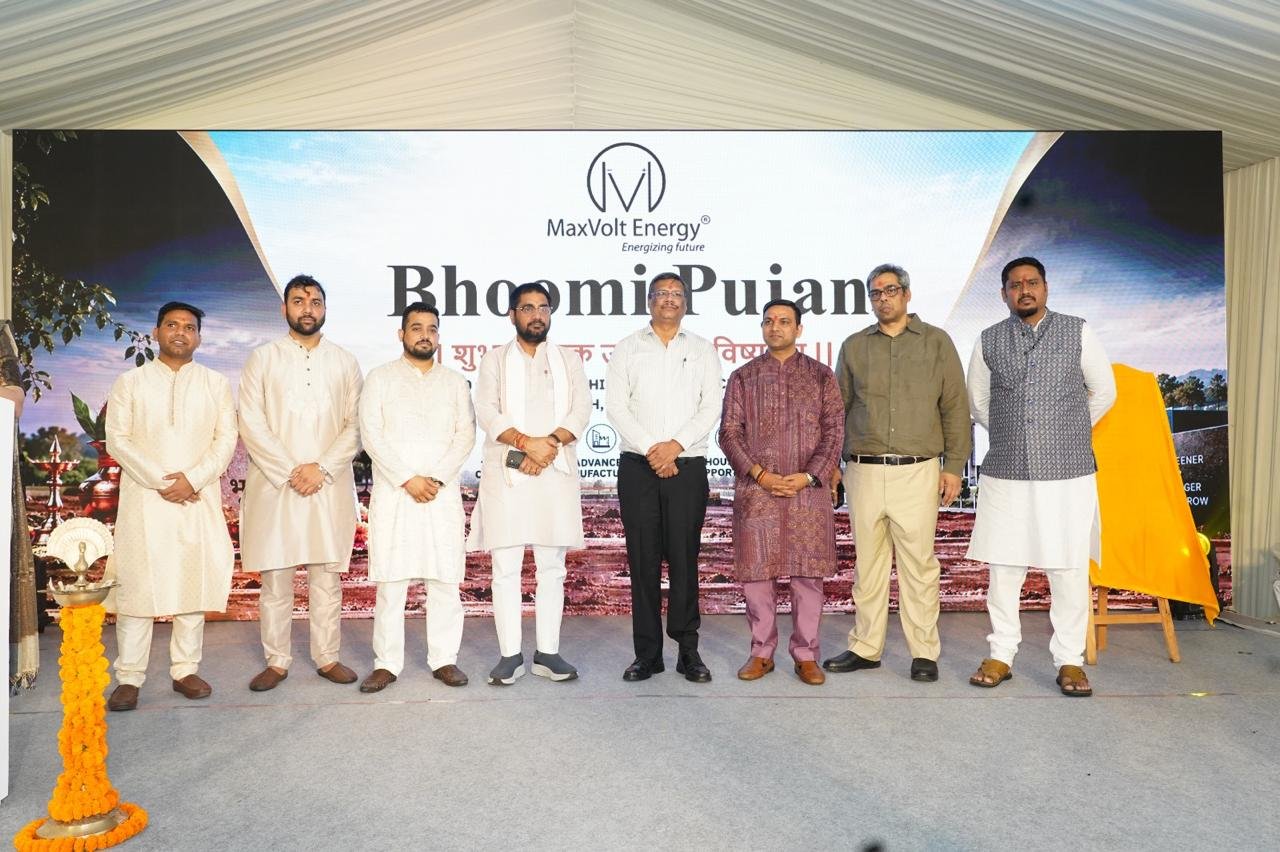
    The Bhoomi Pujan ceremony was attended by Shri Alok Kumar, IAS, Additional Chief Secretary, MSME; Shri Pravin Singh, Director, UPICON; and Shri Satish Kumar Gautam, Member of Parliament, Aligarh, along with Maxvolt Energy’s leadership and other stakeholders.

    Satendra Shukla, Co-Founder & CEO, Maxvolt Energy, said, “India’s battery demand is not arriving through one door. E-rickshaw fleets, solar installers, telecom operators, hospitals and households are all moving to lithium at the same time, and every one of them wants a different pack. Aligarh is built for that reality. We are not adding capacity for a single segment, we are scaling a platform that already serves several, and four-wheeler EV batteries are the next application we take on rather than the reason we are building. Dedicated OEM lines let us build to a customer’s specification at volume, which is the difference between being a supplier and being a manufacturing partner.”

    Mukesh Gupta, Co-Founder & CMO, Maxvolt Energy, said, “The Aligarh facility is an important milestone in Maxvolt Energy’s journey from expanding capacity to building a broader manufacturing ecosystem. The focus is not only on producing more batteries, but on creating the capabilities to serve different applications, from electric mobility and energy storage to telecom, power backup and OEM requirements. With dedicated production lines and the planned expansion into four-wheeler EV batteries, we are building greater flexibility into our manufacturing platform while creating opportunities for customers and partners across the value chain.”

    The facility will manufacture battery solutions ranging from 1 kW to 5 MW, with BMS capabilities for slow charging as well as L3 and L5 fast-charging applications. Dedicated OEM production lines will enable the company to manufacture batteries according to individual customer specifications. The facility will also expand Maxvolt Energy’s portfolio into four-wheeler EV batteries, alongside its existing two-wheeler and three-wheeler offerings.

    Shri Alok Kumar, IAS, Additional Chief Secretary, MSME, Government of Uttar Pradesh, said: “Uttar Pradesh set out to build a battery and EV manufacturing base, and projects of this scale are how that base takes shape. The state’s Electric Vehicle Manufacturing and Mobility Policy was framed to attract exactly this kind of investment. What follows a plant of this size, from component suppliers to skilled employment, is what turns a single factory into an industrial cluster.”

    The project represents an investment of approximately ₹700 crore and has a full-capacity annual turnover potential of more than ₹6,800 crore. The facility is expected to create 1,500–2,000 direct jobs and 7,500–10,000 indirect employment opportunities across manufacturing, engineering, quality control, logistics and the wider supply chain.

    Bhuvneshwar Pal Singh, Co-Founder, MD & CFO, Maxvolt Energy, said, “The Aligarh project represents a substantial investment in our next phase of manufacturing scale. Our expansion has been supported by a combination of IPO proceeds, debt and internal accruals, while project-specific funding details will be communicated through the company’s regular disclosures. The phased approach will allow us to build capacity in line with market requirements.”

    The expansion comes as India’s battery demand is expected to increase significantly across electric mobility and energy storage. Maxvolt Energy’s briefing estimates Indian battery demand could rise from 3 GWh in 2022 to 54 GWh by 2027 and 127 GWh by 2030. The Aligarh facility is being developed to address multiple applications rather than a single mobility segment, including EVs, energy storage and OEM-specific requirements.

    Vishal Gupta, Co-Founder, CTO & Whole Time Director, Maxvolt Energy, said, “Scaling battery manufacturing requires equal attention to engineering, testing and safety. Our work with IIT Roorkee on BMS enhancement, along with our wider research engagement with IIT Delhi and ARCI, supports the development of these capabilities. The Aligarh facility will bring these strengths together across a broader range of EV and energy-storage applications.”

    Maxvolt Energy’s battery packs are manufactured and tested in accordance with AIS 156 requirements, while the company operates under an ISO 9001:2015-certified quality system. Its R&D ecosystem also includes auto-ancillary partners working on battery safety enhancement.

    Sachin Gupta, Co-Founder and Chief Operating Officer, MaxVolt Energy, said: “Two phases of 5 GWh is an operating decision before it is a financial one. Commissioning a plant of this size in a single step means validating every line, every supplier and every test protocol at once. Phasing lets us prove the first 5 GWh in live production, carry those learnings into the second, and keep the supply chain ramping at a pace it can actually hold. That is how you close the gap between announced capacity and shipped product, which is where most manufacturing expansions come unstuck.”

    The company’s broader expansion strategy includes strengthening its manufacturing footprint, diversifying its product portfolio and building capabilities for domestic and international markets. Its recycling arm, ReEarth, is targeting recovery of 500,000 batteries annually through more than 100 collection centres by 2030.

    Shri Pravin Singh, Director, UPICON, said, “The project by Maxvolt Energy is a part of the state’s push to build a battery and EV manufacturing base and diversify its industrial economy beyond traditional sectors. Aligarh’s connectivity, industrial infrastructure and workforce make it a strong fit for this project.”

    The Aligarh expansion is being led by Maxvolt Energy’s leadership team comprising Satendra Shukla, Bhuvneshwar Pal Singh, Vishal Gupta, Sachin Gupta and Mukesh Gupta, supported by its OEM, technology, research and auto-ancillary ecosystem. The company serves over 950+ dealers across 22 states and more than 1,300+ Pincodes, and works with over 30+ OEM partners.

    With the Bhoomi Pujan, Maxvolt Energy has moved its Aligarh project into the next stage of development, adding significant planned capacity while expanding into new EV and energy-storage applications and strengthening its position within India’s growing battery manufacturing ecosystem.
  • Maxvolt Energy Takes Next Growth Step with Bhoomi Pujan of INR 700 Crore Aligarh Battery Plant

    Maxvolt Energy Takes Next Growth Step with Bhoomi Pujan of INR 700 Crore Aligarh Battery Plant

    Maxvolt Energy Industries Limited has taken a significant step in its manufacturing expansion strategy with the Bhoomi Pujan of its upcoming ₹700-crore advanced battery manufacturing facility in Aligarh, Uttar Pradesh. It is designed to expand Maxvolt Energy’s manufacturing capabilities across electric mobility, energy storage and OEM applications while supporting the company’s move into four-wheeler EV batteries.

    Spread across approximately 23,576 square metres, nearly six acres, the facility will be developed in two phases of 5 GWh each, taking the planned annual manufacturing capacity to 10 GWh. At full development, planned combined capacity across the two sites reaches 12.5 GWh a year. The project is positioned as the largest upcoming battery manufacturing project in Uttar Pradesh and among the significant upcoming battery manufacturing projects in India.

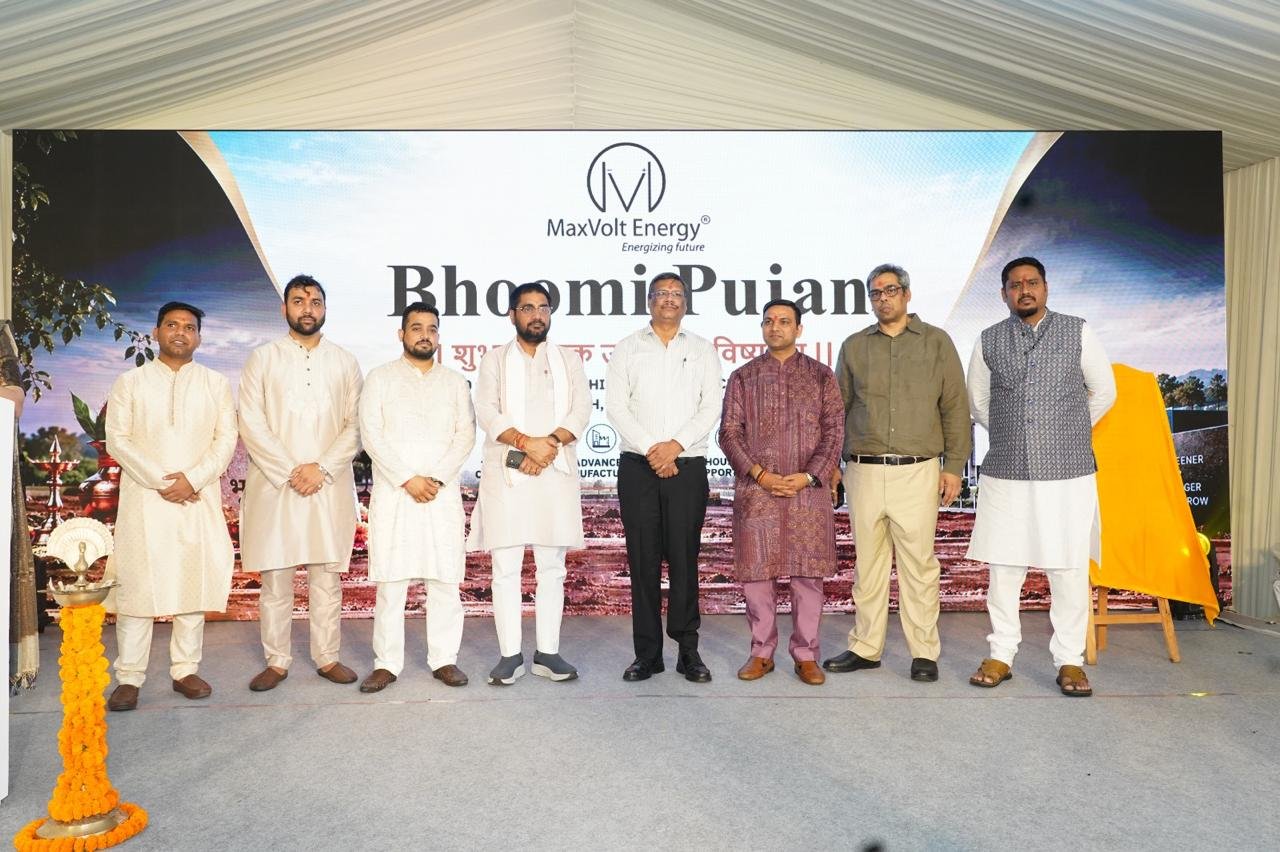
    The Bhoomi Pujan ceremony was attended by Shri Alok Kumar, IAS, Additional Chief Secretary, MSME; Shri Pravin Singh, Director, UPICON; and Shri Satish Kumar Gautam, Member of Parliament, Aligarh, along with Maxvolt Energy’s leadership and other stakeholders.

    Satendra Shukla, Co-Founder & CEO, Maxvolt Energy, said, “India’s battery demand is not arriving through one door. E-rickshaw fleets, solar installers, telecom operators, hospitals and households are all moving to lithium at the same time, and every one of them wants a different pack. Aligarh is built for that reality. We are not adding capacity for a single segment, we are scaling a platform that already serves several, and four-wheeler EV batteries are the next application we take on rather than the reason we are building. Dedicated OEM lines let us build to a customer’s specification at volume, which is the difference between being a supplier and being a manufacturing partner.”

    Mukesh Gupta, Co-Founder & CMO, Maxvolt Energy, said, “The Aligarh facility is an important milestone in Maxvolt Energy’s journey from expanding capacity to building a broader manufacturing ecosystem. The focus is not only on producing more batteries, but on creating the capabilities to serve different applications, from electric mobility and energy storage to telecom, power backup and OEM requirements. With dedicated production lines and the planned expansion into four-wheeler EV batteries, we are building greater flexibility into our manufacturing platform while creating opportunities for customers and partners across the value chain.”

    The facility will manufacture battery solutions ranging from 1 kW to 5 MW, with BMS capabilities for slow charging as well as L3 and L5 fast-charging applications. Dedicated OEM production lines will enable the company to manufacture batteries according to individual customer specifications. The facility will also expand Maxvolt Energy’s portfolio into four-wheeler EV batteries, alongside its existing two-wheeler and three-wheeler offerings.

    Shri Alok Kumar, IAS, Additional Chief Secretary, MSME, Government of Uttar Pradesh, said: “Uttar Pradesh set out to build a battery and EV manufacturing base, and projects of this scale are how that base takes shape. The state’s Electric Vehicle Manufacturing and Mobility Policy was framed to attract exactly this kind of investment. What follows a plant of this size, from component suppliers to skilled employment, is what turns a single factory into an industrial cluster.”

    The project represents an investment of approximately ₹700 crore and has a full-capacity annual turnover potential of more than ₹6,800 crore. The facility is expected to create 1,500–2,000 direct jobs and 7,500–10,000 indirect employment opportunities across manufacturing, engineering, quality control, logistics and the wider supply chain.

    Bhuvneshwar Pal Singh, Co-Founder, MD & CFO, Maxvolt Energy, said, “The Aligarh project represents a substantial investment in our next phase of manufacturing scale. Our expansion has been supported by a combination of IPO proceeds, debt and internal accruals, while project-specific funding details will be communicated through the company’s regular disclosures. The phased approach will allow us to build capacity in line with market requirements.”

    The expansion comes as India’s battery demand is expected to increase significantly across electric mobility and energy storage. Maxvolt Energy’s briefing estimates Indian battery demand could rise from 3 GWh in 2022 to 54 GWh by 2027 and 127 GWh by 2030. The Aligarh facility is being developed to address multiple applications rather than a single mobility segment, including EVs, energy storage and OEM-specific requirements.

    Vishal Gupta, Co-Founder, CTO & Whole Time Director, Maxvolt Energy, said, “Scaling battery manufacturing requires equal attention to engineering, testing and safety. Our work with IIT Roorkee on BMS enhancement, along with our wider research engagement with IIT Delhi and ARCI, supports the development of these capabilities. The Aligarh facility will bring these strengths together across a broader range of EV and energy-storage applications.”

    Maxvolt Energy’s battery packs are manufactured and tested in accordance with AIS 156 requirements, while the company operates under an ISO 9001:2015-certified quality system. Its R&D ecosystem also includes auto-ancillary partners working on battery safety enhancement.

    Sachin Gupta, Co-Founder and Chief Operating Officer, MaxVolt Energy, said: “Two phases of 5 GWh is an operating decision before it is a financial one. Commissioning a plant of this size in a single step means validating every line, every supplier and every test protocol at once. Phasing lets us prove the first 5 GWh in live production, carry those learnings into the second, and keep the supply chain ramping at a pace it can actually hold. That is how you close the gap between announced capacity and shipped product, which is where most manufacturing expansions come unstuck.”

    The company’s broader expansion strategy includes strengthening its manufacturing footprint, diversifying its product portfolio and building capabilities for domestic and international markets. Its recycling arm, ReEarth, is targeting recovery of 500,000 batteries annually through more than 100 collection centres by 2030.

    Shri Pravin Singh, Director, UPICON, said, “The project by Maxvolt Energy is a part of the state’s push to build a battery and EV manufacturing base and diversify its industrial economy beyond traditional sectors. Aligarh’s connectivity, industrial infrastructure and workforce make it a strong fit for this project.”

    The Aligarh expansion is being led by Maxvolt Energy’s leadership team comprising Satendra Shukla, Bhuvneshwar Pal Singh, Vishal Gupta, Sachin Gupta and Mukesh Gupta, supported by its OEM, technology, research and auto-ancillary ecosystem. The company serves over 950+ dealers across 22 states and more than 1,300+ Pincodes, and works with over 30+ OEM partners.

    With the Bhoomi Pujan, Maxvolt Energy has moved its Aligarh project into the next stage of development, adding significant planned capacity while expanding into new EV and energy-storage applications and strengthening its position within India’s growing battery manufacturing ecosystem.
  • Maxvolt Energy Takes Next Growth Step with Bhoomi Pujan of INR 700 Crore Aligarh Battery Plant

    Maxvolt Energy Industries Limited has taken a significant step in its manufacturing expansion strategy with the Bhoomi Pujan of its upcoming ₹700-crore advanced battery manufacturing facility in Aligarh, Uttar Pradesh. It is designed to expand Maxvolt Energy’s manufacturing capabilities across electric mobility, energy storage and OEM applications while supporting the company’s move into four-wheeler EV batteries.

    Spread across approximately 23,576 square metres, nearly six acres, the facility will be developed in two phases of 5 GWh each, taking the planned annual manufacturing capacity to 10 GWh. At full development, planned combined capacity across the two sites reaches 12.5 GWh a year. The project is positioned as the largest upcoming battery manufacturing project in Uttar Pradesh and among the significant upcoming battery manufacturing projects in India.

    The Bhoomi Pujan ceremony was attended by Shri Alok Kumar, IAS, Additional Chief Secretary, MSME; Shri Pravin Singh, Director, UPICON; and Shri Satish Kumar Gautam, Member of Parliament, Aligarh, along with Maxvolt Energy’s leadership and other stakeholders.

    Satendra Shukla, Co-Founder & CEO, Maxvolt Energy, said, “India’s battery demand is not arriving through one door. E-rickshaw fleets, solar installers, telecom operators, hospitals and households are all moving to lithium at the same time, and every one of them wants a different pack. Aligarh is built for that reality. We are not adding capacity for a single segment, we are scaling a platform that already serves several, and four-wheeler EV batteries are the next application we take on rather than the reason we are building. Dedicated OEM lines let us build to a customer’s specification at volume, which is the difference between being a supplier and being a manufacturing partner.”

    Mukesh Gupta, Co-Founder & CMO, Maxvolt Energy, said, “The Aligarh facility is an important milestone in Maxvolt Energy’s journey from expanding capacity to building a broader manufacturing ecosystem. The focus is not only on producing more batteries, but on creating the capabilities to serve different applications, from electric mobility and energy storage to telecom, power backup and OEM requirements. With dedicated production lines and the planned expansion into four-wheeler EV batteries, we are building greater flexibility into our manufacturing platform while creating opportunities for customers and partners across the value chain.”

    The facility will manufacture battery solutions ranging from 1 kW to 5 MW, with BMS capabilities for slow charging as well as L3 and L5 fast-charging applications. Dedicated OEM production lines will enable the company to manufacture batteries according to individual customer specifications. The facility will also expand Maxvolt Energy’s portfolio into four-wheeler EV batteries, alongside its existing two-wheeler and three-wheeler offerings.

    Shri Alok Kumar, IAS, Additional Chief Secretary, MSME, Government of Uttar Pradesh, said: “Uttar Pradesh set out to build a battery and EV manufacturing base, and projects of this scale are how that base takes shape. The state’s Electric Vehicle Manufacturing and Mobility Policy was framed to attract exactly this kind of investment. What follows a plant of this size, from component suppliers to skilled employment, is what turns a single factory into an industrial cluster.”

    The project represents an investment of approximately ₹700 crore and has a full-capacity annual turnover potential of more than ₹6,800 crore. The facility is expected to create 1,500–2,000 direct jobs and 7,500–10,000 indirect employment opportunities across manufacturing, engineering, quality control, logistics and the wider supply chain.

    Bhuvneshwar Pal Singh, Co-Founder, MD & CFO, Maxvolt Energy, said, “The Aligarh project represents a substantial investment in our next phase of manufacturing scale. Our expansion has been supported by a combination of IPO proceeds, debt and internal accruals, while project-specific funding details will be communicated through the company’s regular disclosures. The phased approach will allow us to build capacity in line with market requirements.”

    The expansion comes as India’s battery demand is expected to increase significantly across electric mobility and energy storage. Maxvolt Energy’s briefing estimates Indian battery demand could rise from 3 GWh in 2022 to 54 GWh by 2027 and 127 GWh by 2030. The Aligarh facility is being developed to address multiple applications rather than a single mobility segment, including EVs, energy storage and OEM-specific requirements.

    Vishal Gupta, Co-Founder, CTO & Whole Time Director, Maxvolt Energy, said, “Scaling battery manufacturing requires equal attention to engineering, testing and safety. Our work with IIT Roorkee on BMS enhancement, along with our wider research engagement with IIT Delhi and ARCI, supports the development of these capabilities. The Aligarh facility will bring these strengths together across a broader range of EV and energy-storage applications.”

    Maxvolt Energy’s battery packs are manufactured and tested in accordance with AIS 156 requirements, while the company operates under an ISO 9001:2015-certified quality system. Its R&D ecosystem also includes auto-ancillary partners working on battery safety enhancement.

    Sachin Gupta, Co-Founder and Chief Operating Officer, MaxVolt Energy, said: “Two phases of 5 GWh is an operating decision before it is a financial one. Commissioning a plant of this size in a single step means validating every line, every supplier and every test protocol at once. Phasing lets us prove the first 5 GWh in live production, carry those learnings into the second, and keep the supply chain ramping at a pace it can actually hold. That is how you close the gap between announced capacity and shipped product, which is where most manufacturing expansions come unstuck.”

    The company’s broader expansion strategy includes strengthening its manufacturing footprint, diversifying its product portfolio and building capabilities for domestic and international markets. Its recycling arm, ReEarth, is targeting recovery of 500,000 batteries annually through more than 100 collection centres by 2030.

    Shri Pravin Singh, Director, UPICON, said, “The project by Maxvolt Energy is a part of the state’s push to build a battery and EV manufacturing base and diversify its industrial economy beyond traditional sectors. Aligarh’s connectivity, industrial infrastructure and workforce make it a strong fit for this project.”

    The Aligarh expansion is being led by Maxvolt Energy’s leadership team comprising Satendra Shukla, Bhuvneshwar Pal Singh, Vishal Gupta, Sachin Gupta and Mukesh Gupta, supported by its OEM, technology, research and auto-ancillary ecosystem. The company serves over 950+ dealers across 22 states and more than 1,300+ Pincodes, and works with over 30+ OEM partners.

    With the Bhoomi Pujan, Maxvolt Energy has moved its Aligarh project into the next stage of development, adding significant planned capacity while expanding into new EV and energy-storage applications and strengthening its position within India’s growing battery manufacturing ecosystem.

  • NTPC Green Energy Invites Bids For 3,300 MWh BESS Project At Khavda Solar Plant In Gujarat

    NTPC Green Energy Invites Bids For 3,300 MWh BESS Project At Khavda Solar Plant In Gujarat

    NTPC Green Energy Limited (NGEL), a subsidiary of NTPC Limited, has invited bids for the Engineering, Procurement and Construction (EPC) package for a 3,300 MWh Battery Energy Storage System (BESS) at the NTPC Renewable Energy Limited (REL) Khavda Solar Plant in Gujarat. The invitation for bids was issued on September 23, 2026, with bidding documents scheduled to be available from October 1, 2026.

    The project will be developed at Pooling Substation-1 (PSS-1) in Khavda and will be divided into four BESS blocks. Block-1, Block-2 and Block-3 will each have a capacity of 300 MW/900 MWh, while Block-4 will have a capacity of 200 MW/600 MWh. Together, the four blocks will provide 1,100 MW of power capacity and 3,300 MWh of energy storage capacity.

    Each BESS block will be connected at the 33 kV level of its designated solar plant. The EPC contractor will have turnkey responsibility for the project, covering design, engineering, manufacturing and supply, transportation, storage, installation, testing and commissioning of the grid-connected BESS. The scope will also include bus extension work required to connect the storage system with the existing 33 kV pooling switchgear.

    NGEL has specified a design life of 25 years for the BESS and battery systems, based on daily single-cycle operation. The contractor will be responsible for managing battery and system degradation during the operating period. The minimum dispatchable capacity at the Point of Interconnection (POI) is required to remain at 100% at Commercial Operation Date (COD), reducing to 80% by the tenth year and 70% by the fifteenth year.

    The tender specifies a minimum monthly round-trip efficiency of 80%, including auxiliary consumption, along with an annual system availability requirement of 98%. The selected contractor will also provide comprehensive operation and maintenance services for 15 years, including applicable warranties and service level agreements.

    The EPC contractor will be responsible for meeting grid and power quality requirements, configuring the Energy Management System (EMS), maintaining site safety and complying with applicable operational requirements. The contractor will also bear Deviation Settlement Mechanism (DSM) charges attributable during the contract period as specified in the tender.

    For logistics and material management, NGEL will provide an earmarked Private Bonded Warehouse at the project site under Section 58 of the Customs Act, 1962, through the MOOWR Scheme. Bidders will be responsible for customs compliance and are required to consider the associated financial benefits while submitting their price bids.

    The bidding process will follow a single-stage, two-envelope system comprising Techno-Commercial and Price Bids, followed by a reverse auction. Details regarding the Earnest Money Deposit, Performance Bank Guarantee, qualification requirements and detailed technical specifications will be provided in the complete tender documents. Interested bidders can access the documents through NTPC’s tender platform and NGEL’s website from October 1, 2026.

  • NTPC Green Energy Invites Bids For 3,300 MWh BESS Project At Khavda Solar Plant In Gujarat

    NTPC Green Energy Invites Bids For 3,300 MWh BESS Project At Khavda Solar Plant In Gujarat

    NTPC Green Energy Limited (NGEL), a subsidiary of NTPC Limited, has invited bids for the Engineering, Procurement and Construction (EPC) package for a 3,300 MWh Battery Energy Storage System (BESS) at the NTPC Renewable Energy Limited (REL) Khavda Solar Plant in Gujarat. The invitation for bids was issued on September 23, 2026, with bidding documents scheduled to be available from October 1, 2026.

    The project will be developed at Pooling Substation-1 (PSS-1) in Khavda and will be divided into four BESS blocks. Block-1, Block-2 and Block-3 will each have a capacity of 300 MW/900 MWh, while Block-4 will have a capacity of 200 MW/600 MWh. Together, the four blocks will provide 1,100 MW of power capacity and 3,300 MWh of energy storage capacity.

    Each BESS block will be connected at the 33 kV level of its designated solar plant. The EPC contractor will have turnkey responsibility for the project, covering design, engineering, manufacturing and supply, transportation, storage, installation, testing and commissioning of the grid-connected BESS. The scope will also include bus extension work required to connect the storage system with the existing 33 kV pooling switchgear.

    NGEL has specified a design life of 25 years for the BESS and battery systems, based on daily single-cycle operation. The contractor will be responsible for managing battery and system degradation during the operating period. The minimum dispatchable capacity at the Point of Interconnection (POI) is required to remain at 100% at Commercial Operation Date (COD), reducing to 80% by the tenth year and 70% by the fifteenth year.

    The tender specifies a minimum monthly round-trip efficiency of 80%, including auxiliary consumption, along with an annual system availability requirement of 98%. The selected contractor will also provide comprehensive operation and maintenance services for 15 years, including applicable warranties and service level agreements.

    The EPC contractor will be responsible for meeting grid and power quality requirements, configuring the Energy Management System (EMS), maintaining site safety and complying with applicable operational requirements. The contractor will also bear Deviation Settlement Mechanism (DSM) charges attributable during the contract period as specified in the tender.

    For logistics and material management, NGEL will provide an earmarked Private Bonded Warehouse at the project site under Section 58 of the Customs Act, 1962, through the MOOWR Scheme. Bidders will be responsible for customs compliance and are required to consider the associated financial benefits while submitting their price bids.

    The bidding process will follow a single-stage, two-envelope system comprising Techno-Commercial and Price Bids, followed by a reverse auction. Details regarding the Earnest Money Deposit, Performance Bank Guarantee, qualification requirements and detailed technical specifications will be provided in the complete tender documents. Interested bidders can access the documents through NTPC’s tender platform and NGEL’s website from October 1, 2026.

  • NTPC Green Energy Invites Bids For 3,300 MWh BESS Project At Khavda Solar Plant In Gujarat

    NTPC Green Energy Invites Bids For 3,300 MWh BESS Project At Khavda Solar Plant In Gujarat

    NTPC Green Energy Limited (NGEL), a subsidiary of NTPC Limited, has invited bids for the Engineering, Procurement and Construction (EPC) package for a 3,300 MWh Battery Energy Storage System (BESS) at the NTPC Renewable Energy Limited (REL) Khavda Solar Plant in Gujarat. The invitation for bids was issued on September 23, 2026, with bidding documents scheduled to be available from October 1, 2026.

    The project will be developed at Pooling Substation-1 (PSS-1) in Khavda and will be divided into four BESS blocks. Block-1, Block-2 and Block-3 will each have a capacity of 300 MW/900 MWh, while Block-4 will have a capacity of 200 MW/600 MWh. Together, the four blocks will provide 1,100 MW of power capacity and 3,300 MWh of energy storage capacity.

    Each BESS block will be connected at the 33 kV level of its designated solar plant. The EPC contractor will have turnkey responsibility for the project, covering design, engineering, manufacturing and supply, transportation, storage, installation, testing and commissioning of the grid-connected BESS. The scope will also include bus extension work required to connect the storage system with the existing 33 kV pooling switchgear.

    NGEL has specified a design life of 25 years for the BESS and battery systems, based on daily single-cycle operation. The contractor will be responsible for managing battery and system degradation during the operating period. The minimum dispatchable capacity at the Point of Interconnection (POI) is required to remain at 100% at Commercial Operation Date (COD), reducing to 80% by the tenth year and 70% by the fifteenth year.

    The tender specifies a minimum monthly round-trip efficiency of 80%, including auxiliary consumption, along with an annual system availability requirement of 98%. The selected contractor will also provide comprehensive operation and maintenance services for 15 years, including applicable warranties and service level agreements.

    The EPC contractor will be responsible for meeting grid and power quality requirements, configuring the Energy Management System (EMS), maintaining site safety and complying with applicable operational requirements. The contractor will also bear Deviation Settlement Mechanism (DSM) charges attributable during the contract period as specified in the tender.

    For logistics and material management, NGEL will provide an earmarked Private Bonded Warehouse at the project site under Section 58 of the Customs Act, 1962, through the MOOWR Scheme. Bidders will be responsible for customs compliance and are required to consider the associated financial benefits while submitting their price bids.

    The bidding process will follow a single-stage, two-envelope system comprising Techno-Commercial and Price Bids, followed by a reverse auction. Details regarding the Earnest Money Deposit, Performance Bank Guarantee, qualification requirements and detailed technical specifications will be provided in the complete tender documents. Interested bidders can access the documents through NTPC’s tender platform and NGEL’s website from October 1, 2026.

  • NTPC Green Energy Invites Bids For 3,300 MWh BESS Project At Khavda Solar Plant In Gujarat

    NTPC Green Energy Limited (NGEL), a subsidiary of NTPC Limited, has invited bids for the Engineering, Procurement and Construction (EPC) package for a 3,300 MWh Battery Energy Storage System (BESS) at the NTPC Renewable Energy Limited (REL) Khavda Solar Plant in Gujarat. The invitation for bids was issued on September 23, 2026, with bidding documents scheduled to be available from October 1, 2026.

    The project will be developed at Pooling Substation-1 (PSS-1) in Khavda and will be divided into four BESS blocks. Block-1, Block-2 and Block-3 will each have a capacity of 300 MW/900 MWh, while Block-4 will have a capacity of 200 MW/600 MWh. Together, the four blocks will provide 1,100 MW of power capacity and 3,300 MWh of energy storage capacity.

    Each BESS block will be connected at the 33 kV level of its designated solar plant. The EPC contractor will have turnkey responsibility for the project, covering design, engineering, manufacturing and supply, transportation, storage, installation, testing and commissioning of the grid-connected BESS. The scope will also include bus extension work required to connect the storage system with the existing 33 kV pooling switchgear.

    NGEL has specified a design life of 25 years for the BESS and battery systems, based on daily single-cycle operation. The contractor will be responsible for managing battery and system degradation during the operating period. The minimum dispatchable capacity at the Point of Interconnection (POI) is required to remain at 100% at Commercial Operation Date (COD), reducing to 80% by the tenth year and 70% by the fifteenth year.

    The tender specifies a minimum monthly round-trip efficiency of 80%, including auxiliary consumption, along with an annual system availability requirement of 98%. The selected contractor will also provide comprehensive operation and maintenance services for 15 years, including applicable warranties and service level agreements.

    The EPC contractor will be responsible for meeting grid and power quality requirements, configuring the Energy Management System (EMS), maintaining site safety and complying with applicable operational requirements. The contractor will also bear Deviation Settlement Mechanism (DSM) charges attributable during the contract period as specified in the tender.

    For logistics and material management, NGEL will provide an earmarked Private Bonded Warehouse at the project site under Section 58 of the Customs Act, 1962, through the MOOWR Scheme. Bidders will be responsible for customs compliance and are required to consider the associated financial benefits while submitting their price bids.

    The bidding process will follow a single-stage, two-envelope system comprising Techno-Commercial and Price Bids, followed by a reverse auction. Details regarding the Earnest Money Deposit, Performance Bank Guarantee, qualification requirements and detailed technical specifications will be provided in the complete tender documents. Interested bidders can access the documents through NTPC’s tender platform and NGEL’s website from October 1, 2026.