Blog

  • Solis Opens Intersolar Europe 2026 with New Energy Storage Portfolio and Strategic Partnership Signing

    Solis opened its booth at Intersolar Europe 2026 in Munich yesterday, welcoming installers, distributors, EPCs, project developers and energy partners for a first look at its latest residential and commercial energy storage solutions.

    Located in Hall B3, Booth B3.430, the Solis stand was busy throughout the opening day, with visitors keen to explore how the company is expanding beyond inverter technology into more complete solar and storage solutions for homes, businesses and larger energy projects.

    A key focus on the opening day was Solis’ full energy storage portfolio, highlighting the company’s continued evolution from a leading PV inverter manufacturer into a complete energy storage solution provider. The portfolio brings together solar generation, battery storage, intelligent energy management and digital monitoring within one connected ecosystem.

    The opening day also saw Solis take part in a strategic partnership signing ceremony with JA, marking an important step in strengthening collaboration across the solar and energy storage value chain. The agreement reflects both companies’ shared commitment to supporting the global energy transition and accelerating the deployment of reliable, flexible energy storage solutions for international markets.

    Among the most discussed innovations at the booth was FlexAIO, Solis’ latest all-in-one stackable high-voltage residential energy storage system. Visitors showed strong interest in its modular design, capacity range from 6–54kWh, expandability up to 324kWh, and intelligent control capabilities powered by Solis AI. Installers were impressed by its simplified installation and scalability as key advantages for residential projects.

    Solis also attracted significant attention with its wider residential and C&I storage portfolio, including FlexHome, IntelliHome and the FlexCore series. These solutions are designed to meet a broad range of customer needs, from residential backup power and smart home energy management to larger commercial and industrial projects requiring greater flexibility, resilience and system control.

    For commercial and industrial users, EverCore, Solis’ integrated 261kWh energy storage system, emerged as another major focal point. Designed to simplify deployment and support long-term operational stability, EverCore combines battery storage, power conversion and energy management within a single system architecture, helping businesses optimise energy use and improve energy independence.

    Alongside its storage solutions, Solis’ hybrid and grid-tied inverter portfolio also drew steady interest, reinforcing the company’s ability to support the full energy lifecycle — from solar generation to storage, control and optimisation.

    On-site engagement was supported by Solis’ European team, who provided technical discussions, project consultations and localised support to visitors throughout the day. Many partners highlighted the importance of strong in-country service and technical expertise when selecting long-term energy storage solutions.

    Speaking on the opening day, Sandy Woodward, European Country Manager at Solis, said:, “Intersolar Europe is one of the most important platforms for the global energy industry, and it has been fantastic to see such strong interest in our full energy storage ecosystem on the first day. What we are demonstrating here is not just a series of individual products, but a complete approach to energy generation, storage and intelligent management. Across Europe and global markets, customers are looking for smarter, more flexible and more scalable solutions, and Solis is committed to supporting that transition with technologies that are simpler to deploy, easier to manage and adaptable to different application scenarios.”

    The company also highlighted growing customer interest in digital energy management, with SolisCloud and Solis AI positioned as key components in helping users make smarter energy decisions, improve system performance and optimise energy use through predictive control.

    During the exhibition, Solis also held an authorisation ceremony with GP Stellar Group for West and Central Africa. Held on the second day of the show, the ceremony marked an important step in strengthening Solis’ regional partner network and reflected the company’s commitment to working with local partners to accelerate storage deployment, improve in-market service capability and provide customers with more responsive regional support.

    Solis will continue welcoming partners and visitors throughout Intersolar Europe 2026, hosting product demonstrations, technical discussions and networking sessions at its booth in Hall B3, Stand B3.430.

  • Vikran Engineering Cancels ₹354.21 Crore Solar EPC Order for Maharashtra Project

    Vikran Engineering Limited has announced the cancellation of its approximately ₹354.21 crore Engineering, Procurement and Construction (EPC) contract for a 100 MW AC solar power project in Maharashtra, which was awarded by Ellume Energy MH Solar One Private Limited (SPV).

    The company stated that the decision follows a detailed internal evaluation and was taken due to prolonged delays in achieving critical project readiness milestones at the client’s end. According to the company, the client was unable to provide the required Power Purchase Agreement (PPA), work commencement approvals, design clearances, scope finalisation, and mobilisation permissions within the expected timelines, resulting in uncertainty over the project’s execution.

    Vikran Engineering noted that the cancellation was made through mutual understanding between both parties and that continuing with the project had become commercially unviable under the prevailing circumstances. The company further clarified that the termination is not expected to have any material adverse impact on its overall business operations, financial performance, or long-term growth outlook.

    The original Letter of Award (LoA) for the turnkey EPC contract was accepted on 24 October 2025 for the development of the 100 MW AC solar power project in Maharashtra. Vikran Engineering reaffirmed that it remains focused on pursuing strategically aligned, execution-ready projects that create long-term value for its shareholders.

  • SAEL Breaks Ground on 5 GW Solar Cell and 5 GW Module Manufacturing Facility in Uttar Pradesh

    SAEL Industries Ltd. has held a groundbreaking ceremony for its integrated solar manufacturing facility in Jewar, Uttar Pradesh, through its wholly owned subsidiary, SAEL Solar P6 Pvt. Ltd. The company said the facility will comprise 5 GW of solar cell manufacturing capacity and 5 GW of solar module manufacturing capacity.

    The project will create a 10 GW integrated solar manufacturing ecosystem. Spread across 200 acres in the Yamuna Expressway Industrial Development Authority (YEIDA) region, the facility is backed by an initial investment of ₹8,200 crore. It is expected to generate 5,000 direct and 15,000 indirect jobs. The plant will manufacture high-efficiency solar cells and TOPCon modules, strengthening India’s domestic solar manufacturing capabilities while supporting Uttar Pradesh’s emergence as a leading clean energy manufacturing hub. Going by the usual timelines, the module manufacturing setup can be expected to come up faster, probably sometime in H1 2027, while the firm will probably be hoping the cell-making operations are in place by the year-end in 2027.

    Chief Minister of Uttar Pradesh, Yogi Adityanath, laid the foundation stone in the presence of Finance Minister Suresh Kumar Khanna, Industrial Development Minister Nand Gopal Gupta “Nandi”; Jewar MLA Dhirendra Singh; Members of Parliament and the Legislative Assembly, senior officials from YEIDA and Noida International Airport Limited (NIAL); industry leaders; and members of the SAEL leadership team.

    Speaking on the occasion, Sukhbir Singh, Co-founder and Director, SAEL Industries Limited, said, “This is not merely an investment in infrastructure; it is India’s investment in its own energy self-reliance. Today, Uttar Pradesh is one of India’s fastest-growing states, marching confidently towards its USD 1 trillion economy goal, and we are proud to be part of that journey. We are deeply grateful to the Government of Uttar Pradesh, YEIDA, and all stakeholders for making this vision a reality.”

    Laxit Awla, CEO and Executive Director, SAEL Industries Ltd., said, “The Jewar project reflects SAEL’s confidence in India’s renewable energy future and in Uttar Pradesh’s emergence as a premier manufacturing destination. As demand for domestically manufactured solar products continues to grow, this facility will strengthen the resilience of India’s solar supply chain while creating significant economic value for the region. By integrating large-scale solar cell and module manufacturing at a single location, we are building capabilities that will serve as a solid example of vertical integration in the solar sector.”

  • Greaves Electric’s Ampere Crosses 4 Lakh Milestone, Strengthens Leadership in Mass EV Segment

    Ampere, the electric two-wheeler brand of Greaves Electric Mobility, has announced it has crossed the significant milestone of 4 lakh scooters manufactured and sold in India. This achievement underscores Ampere’s growing presence in India’s mass electric mobility segment and reflects its steady evolution from an early EV pioneer to a trusted, high-growth brand, driving smart, accessible and affordable electric mobility solutions across India.

    This momentum is anchored in Ampere’s approach focused on delivering smart, durable and safe EVs engineered for Indian roads, weather and varied terrains with a strong emphasis on lower total cost of ownership than ICE vehicles.

    Ampere also recorded a 51 percent year-on-year growth in FY26, with its market share increasing from 3.6 percent in FY25 to 4.4 percent in FY26, reinforcing its position among the leading players in India’s electric two-wheeler market.

    Ampere’s growing adoption is driven by products engineered to address key barriers to EV adoption. This milestone reflects growing confidence and trust in Ampere Electric Scooters be it first-time EV buyers, everyday riders, family commuters or business owners seeking practical solutions with lower costs. Based on a 100 percent LFP battery platform, it offers superior safety, thermal stability and a long lifecycle of up to ~200,000 kms.

    Commenting on the milestone, Vikas Singh, MD, Greaves Electric Mobility, said, “Crossing the 4-lakh milestone reflects growing customer trust in Ampere and validates our focus on delivering dependable, value-driven electric mobility in the sub-INR 1 lakh segment. As fuel costs rise, customers are increasingly seeking practical alternatives for everyday mobility. Our focus is to make this transition simple and dependable. We believe the next phase of EV growth in India will be driven by practical, mass-market solutions and Ampere is well positioned to lead this transition. Our ‘Built for Bharat’ approach delivers solutions which not only meet these expectations but are also designed for demanding conditions with a strong focus on safety, durability and cost of ownership. As EV adoption accelerates, we remain committed to making electric mobility more accessible and relevant for the mass market.”

    The Ampere Nexus, awarded with ‘Electric scooter of the year 2025’, stands as the outperformer known for its endurance and engineering credentials, validated by the recent achievements including the Kolli Hill 70 hairpin bend climb and ride to the Shipki La Pass at 13,200 ft.

    The other award-winning products are: Magnus Grand recently won the title of ‘Electric Scooter of the Year 2026’, while the Magnus G-Max bagged the ‘Family Scooter of the Year 2026’ title, reinforcing Ampere’s industry credibility and trust. These achievements are making GEML’s products the preferred choice among first-time EV buyers, families and daily commuters, thereby accelerating the shift from ICE to electric mobility at scale.

    The milestone includes slow speed vehicles which do not get captured in VAHAN data. Supporting this momentum, Ampere expanded its dealer, retail and service network. In FY26, Ampere strengthened its dealer network by 12 percent compared to FY25, besides revamping existing showrooms, network initiatives improved dealer productivity and customer experience. With this, currently the company has a strong retail presence across metros and emerging EV markets.

    Looking ahead, the company will continue to strengthen its offerings with differentiated technology and its 100 percent LFP portfolio strengthening safety, thermal stability and lifecycle performance and low TCO for customers. With this design philosophy, Ampere is well positioned to drive mainstream EV adoption across ‘Bharat’.

  • PFC and REC Boards Approve Merger to Create ₹11 Lakh Crore Power Financing Giant

    The Board of Directors of Power Finance Corporation Limited (PFC) and REC Limited (REC) approved the Scheme of Merger (Scheme) for merger of REC (Transferor Company) into PFC (Transferee Company) and their respective shareholders and creditors, under Sections 230 to 232 and other applicable provisions of the Companies Act, 2013.

    The merger of REC into PFC shall create a financing entity with an aggregate loan book of over INR 11 lakh crore.

    The Scheme is conditional upon and subject to, inter-alia receipt of all requisite approvals and consents required under applicable law including, approvals from the respective shareholders and creditors of both the companies, and all relevant regulatory and governmental authorities; and the Merged Entity continuing to qualify as a ‘Government Company’ under the Companies Act, 2013 and the Government of India continuing to retain majority voting rights and control in the merged entity (directly or indirectly).

    Pursuant to the Scheme and valuation report, the Share Exchange Ratio for the Proposed Merger of REC into PFC shall be 88 equity shares of PFC of INR 10/- each fully paid up for every 100 equity shares of REC of INR 10/- each fully paid up to be issued to the shareholders of REC as existing on a record date to be determined by the Boards of PFC and REC (as may be applicable) at a future date.

  • Statcon Energiaa Awarded Order for MW-Class Rectifiers for L&T’s IOCL Refinery Green Hydrogen Project

    Statcon Energiaa Pvt. Ltd. (SEPL), one of India’s leading manufacturers of mission-critical power electronics, has been awarded an order by L&T Electrolysers Limited to supply high-power rectifiers for India’s largest green hydrogen plant – the 10 kTPA Green Hydrogen Project being set up at the Indian Oil Corporation Limited (IOCL) Panipat Refinery & Petrochemical Complex, Haryana.

    India’s largest green hydrogen plant – a 10 kTPA facility at IOCL’s Panipat Refinery & Petrochemical Complex – is being built by L&T Energy GreenTech, targeted for commissioning by December 2027. It is the first concrete step in IOCL’s ambition to generate 350 kTPA of green hydrogen by 2030 – a landmark for India’s energy transition and for Make in India in clean energy.

    The national importance of this initiative was recognised at the highest level when Hon’ble Prime Minister Shri Narendra Modi visited L&T’s Hazira facility, reaffirming India’s commitment to building a self-reliant green hydrogen ecosystem and advancing the National Green Hydrogen Mission.

    What distinguishes this project is an end-to-end Make in India supply chain at its core.

    L&T Electrolysers Limited is manufacturing high-pressure alkaline electrolysers in 4 MW modular blocks at its advanced facility in Hazira, Gujarat – making this India’s first large-scale green hydrogen project powered by indigenously manufactured electrolysers, a meaningful step towards Aatmanirbhar Bharat and a reflection of L&T’s commitment to strengthening India’s self-reliant green hydrogen ecosystem.

    Statcon Energiaa is supplying the 4 MW rectifier blocks that power those electrolysers – also manufactured entirely in India.

    The rectifiers will use the powerful IGBT Chopper-based technology, backed by AEG Power Solutions, Germany. Build for high efficiency, round-the-clock performance, these are developed under Statcon Energiaa’s exclusive licensing and supply agreement with AEG Power Solutions GmbH, Germany – a global leader in industrial power conversion with over a century of engineering heritage. Under this agreement, Statcon Energiaa designs, assembles, commissions, and services these rectifiers on Indian soil, using AEG PS’s proven core components – IGBT modules, thyristors, and more – while engineering them specifically for India’s operating conditions.

    Key technical highlights of the rectifiers:

    • Topology: Thyristor-based 12-Pulse bridge with IGBT chopper
    • Cooling: Liquid-cooled for sustained 24×7 operation
    • Input: Engineered for high power quality from variable renewable (solar) energy sources – addressing one of the most demanding challenges in renewable-powered electrolysis
    • Output: Low-ripple DC output, critical for efficient and stable alkaline electrolysis
    • Block size: 4 MW per unit – mirroring L&T’s 4 MW electrolyser block in a truly modular, indigenous architecture

    The pairing is deliberate: L&T manufactures the 4 MW electrolyser block, and Statcon Energiaa the 4 MW rectifier block that powers it – both made in India, for one of the country’s most significant clean energy projects.

    Powering the electrolysers at the heart of a project of this national importance carries a profound responsibility. These rectifiers must operate continuously, drawing from intermittent solar or other renewable energy to feed electrolyser stacks that demand uncompromising power quality. Living up to that responsibility meant engineering to the most exacting technical requirements:

    • Input line power quality: Handling variability from renewable source without disrupting electrolyser performance
    • Output stability and low DC ripple: Essential for efficient, consistent hydrogen generation
    • Efficiency: Sustained thermal and electrical performance under continuous load
    • Harmonic distortion control: Protecting electrolyser stacks and maximising operational longevity
    • Proven reliability: Track record in mission-critical deployments

    Statcon Energiaa’s rectifiers deliver on every one of these requirements – ensuring the electrolysers powering IOCL’s landmark green hydrogen project run reliably, around the clock.

    Statcon Energiaa’s selection for this project is the result of over 37 years of manufacturing excellence in power electronics, a deeply held philosophy of indigenous engineering, and a growing track record in green hydrogen specifically.

    The company previously supplied rectifiers for the NTPC Green Hydrogen Mobility Project in Leh – one of India’s first hydrogen fuel cell bus deployments, operating at 3,600 metres above sea level in temperatures ranging from -14°C to +20°C. Statcon Energiaa engineered its rectifiers to perform in ambient conditions as extreme as -25°C to +45°C – a demonstration of what genuine Made-in-India engineering looks like. Apart from this, the company has supplied for 4 other Green Hydrogen Projects in India which are currently in operation.

    Statcon Energiaa’s commitment to Make in India is a founding principle. From building India’s first MW-class rectifier for the Indian Navy, to manufacturing defence-grade power systems serving Naval Dockyards in Visakhapatnam and Mumbai for over 13 years, to developing India’s first 100% domestically designed on-grid solar inverter – the company has consistently chosen to engineer from the ground up, rather than import and rebadge. With over 30,000 installations across more than 25 countries, Statcon Energiaa carries this philosophy into every sector it serves.

    L&T’s IOCL Panipat order award is entirely in line with that vision: leveraging world-class technology – AEG Power Solutions’ proven rectifier platform – but manufacturing it in India, for India, and standing behind it with full end-to-end lifecycle support.

    Anil Dhar, Marketing Director, Statcon Energiaa Pvt. Ltd., said, “This order represents exactly what Statcon Energiaa has always stood for – delivering world-class technology, made in India, for India’s most critical infrastructure. L&T Electrolysers’ qualification process is among the most demanding we have encountered. Meeting every parameter – power quality, efficiency, harmonic performance, output stability, and reliability – reflects the maturity our technology and manufacturing have reached against rigorous global standards. What makes this especially meaningful is the symmetry of the project: L&T is building the 4 MW electrolyser block; we are building the 4 MW rectifier block that powers it. Both are Indian-made. For a company that has believed in Make in India since before it was a policy, this is a proud moment. India is not just consuming green hydrogen infrastructure – it is building it. For Statcon Energiaa, the opportunity to power a project of such national significance is both a privilege and a responsibility it is proud to carry.”

  • Heaven Green Energy Launches ‘Heaven Solar Sarathi’ App to Simplify Rooftop Solar Adoption

    Heaven Green Energy Ltd., one of India’s leading solar EPC companies and among the top-ranked registered vendors on the Government of India’s PM Surya Ghar portal, has launched ‘Heaven Solar Sarathi’, a customer-centric mobile application aimed at simplifying the rooftop solar adoption journey for residential consumers.

    Now available on both the Google Play Store and the Apple App Store, the application was officially unveiled at a special event in Surat in the presence of Pujya Gauranga Das Swami (ISKCON) as the chief guest.

    Inspired by the role of Lord Krishna as Arjuna’s Sarathi (guide) in the Mahabharata, the app has been developed to serve as a trusted digital companion for homeowners looking to transition to clean, affordable, and sustainable solar energy.

    The Heaven Solar Sarathi app offers a range of digital services designed to make the solar installation process more transparent and convenient. Its key features include free site visits, complimentary quotations, free 3D rooftop solar designs, instant savings estimation, real-time project tracking, and a referral-and-rewards programme.

    Commenting on the launch, Keyur Rakholiya, Director, Heaven Green Energy Ltd., said, “The Heaven Solar Sarathi app has been developed to simplify the customer’s solar journey while building trust before the purchase decision. By providing transparent information, real-time project tracking, and personalized guidance, we aim to make rooftop solar more accessible for every household. Just as Lord Krishna guided Arjuna, our Solar Sarathi will guide thousands of people on their journey towards clean energy.”

    The company currently serves customers across Surat, Vadodara, Ahmedabad, Junagadh, and several other locations in Gujarat, while also expanding its presence in Indore and Chhatrapati Sambhajinagar.

    The launch of the mobile application reflects Heaven Green Energy’s continued focus on leveraging digital technologies to enhance customer experience and support the growing adoption of rooftop solar under India’s clean energy initiatives.

    Founded in 2017 and headquartered in Surat, Gujarat, Heaven Green Energy Ltd. is an end-to-end solar Engineering, Procurement and Construction (EPC) company specializing in residential, commercial, industrial, and utility-scale solar projects. The company has completed more than 10,000 solar installations with over 200 MW of projects delivered and operates through a network of over 50 solar experts and 100+ channel partners. Heaven Green Energy is an authorized distributor of Adani Solar products, manufactures Qbits inverters, and is empanelled with various government agencies, including DISCOMs and GUVNL, supporting India’s transition towards clean and sustainable energy.

  • ACPET and Tata Power-DDL Sign Five-Year MoU to Advance Energy Transition Research in India

    The Ashoka Centre for a People-centric Energy Transition (ACPET) and Tata Power Delhi Distribution Limited (Tata Power-DDL) have signed a five-year Memorandum of Understanding (MoU) to advance research, innovation, and capacity building in the domain of the energy and power sector, and to create innovative solutions to support India’s overall energy transition.

    The partnership brings together ACPET’s expertise in research, data analysis, energy policy, and sustainable transitions with Tata Power-DDL’s operational experience as one of India’s leading power distribution entities. Through this collaboration, the two organisations will jointly undertake research, technology demonstrations, policy engagement, and knowledge-sharing initiatives to build a more sustainable, secure, and equitable energy future.

    The collaboration comes at a critical time for India’s power sector, which is witnessing rapid technological and regulatory transformation. The expansion of renewable energy, rising electricity demand, rising consumer expectations, and the need for resilient, low-carbon infrastructure require closer collaboration between academia and industry. Emerging areas such as smart grids, electric vehicles, distributed energy resources, energy storage, demand-side management, and consumer engagement require new knowledge, practical insights, and opportunities for testing and demonstrating innovative approaches. This MoU creates a structured platform through which ACPET and Tata Power-DDL can jointly explore these opportunities and contribute to advancing industry knowledge and best practices.

    As part of the collaboration, ACPET and Tata Power-DDL will jointly pursue research, innovation, customer engagement and capacity-building initiatives aimed at advancing India’s energy transition.  The partnership will focus on undertaking research projects, developing policy briefs and technical reports, and generating evidence-based insights to inform industry practices and policymaking. 

    The collaboration will focus on joint research and learning in emerging areas such as smart grids, electric vehicles, distributed energy resources, energy storage, demand-side management, and design innovative regulatory and business models. The partners will also undertake technology demonstrations, organise expert dialogues and training programmes, facilitate knowledge exchange, and explore the establishment of a Centre of Excellence to drive innovation and strengthen institutional capabilities in the power sector. 

    Commenting on the partnership, Dr. Praveer Sinha, CEO & Managing Director, Tata Power, said, “India’s energy transition presents a unique opportunity to bring together research, policy, innovation and real-world implementation. As the sector evolves over the coming years, meaningful progress will depend on stronger collaboration between academia, industry, policymakers, startups and innovators. This partnership between Tata Power’s distribution arm in Delhi and ACPET creates a unique platform that combines academic rigour, policy expertise and industry experience to address emerging energy challenges and develop practical, scalable solutions for the power sector.”

    Vaibhav Chowdhary, Director, ACPET, said, “Technology alone will not deliver India’s energy transition – the human capacity to deploy, operate, and innovate around that technology is equally decisive. This partnership between Tata Power-DDL and ACPET brings together operational depth and research rigour to address both. Our shared goal is to co-create an energy system that is empirically grounded, practically tested, and designed to be sustainable, secure, and equitable for India and for the Global South.”

    Rakesh Kacker, Senior Advisor, ACPET, said, “India’s electricity sector is undergoing a profound transformation. We want renewable energy to scale rapidly, but we also recognise that transitions of this magnitude are shaped by historical realities, market dynamics, and technological constraints. This is where a collaboration between ACPET and Tata Power can be especially powerful. ACPET brings academic rigour and robust analytical tools, while Tata Power contributes invaluable insights from implementation on the ground. Together, we can bridge evidence and practice to shape more effective pathways for India’s energy transition.”

    Dwijadas Basak, CEO, Tata Power Delhi Distribution Limited (Tata Power-DDL), said, “The power sector is undergoing a fundamental transformation driven by rapid technological advancements, growing renewable energy integration, distributed energy resources, and evolving consumer expectations. In this dynamic environment, research-led insights and evidence-based policy support are critical to shaping the future of the sector. Our partnership with ACPET will bring together industry experience and academic excellence to develop innovative solutions, strengthen policy and regulatory frameworks, and contribute meaningfully to India’s energy transition journey.”

  • Shakti Pumps Expands Northeast India Push With Clean Energy Product Showcase in Guwahati

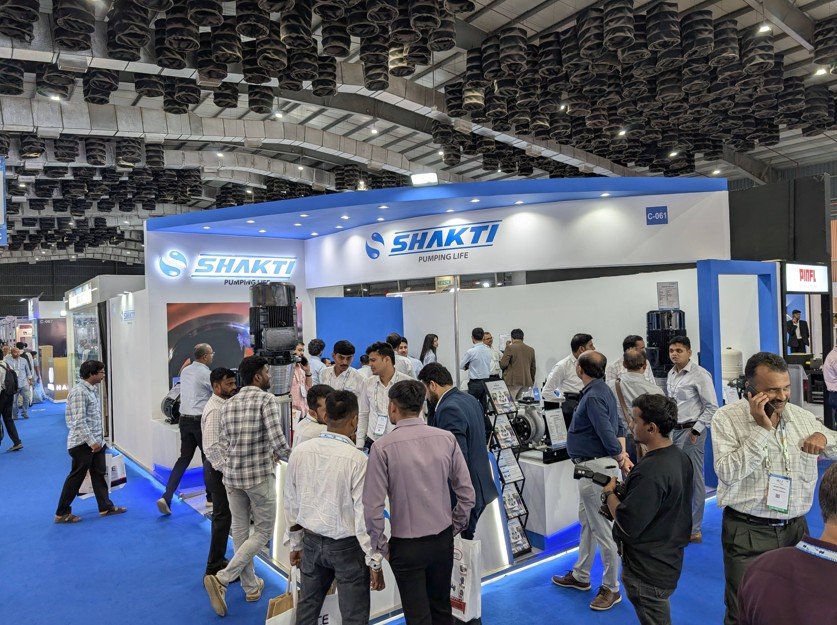
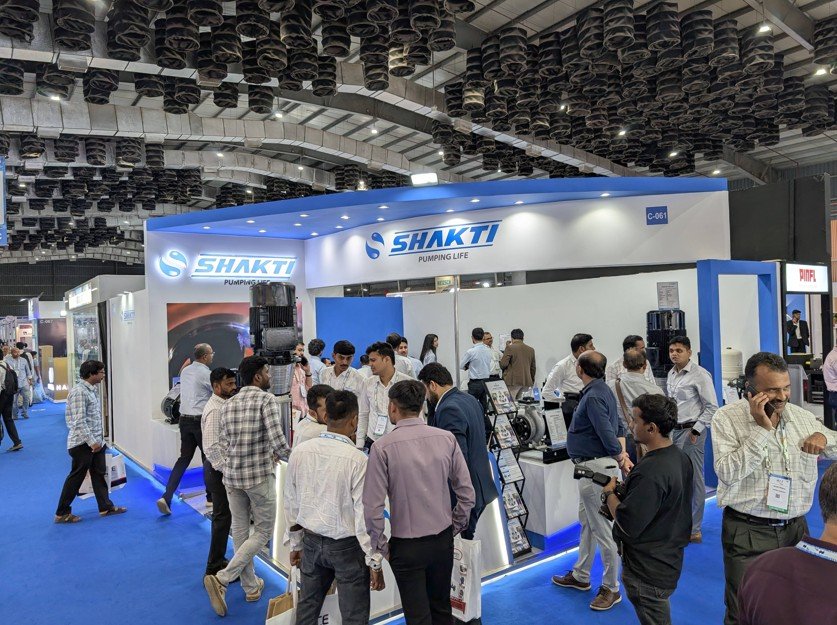
    Shakti Pumps has showcased its latest portfolio of energy-efficient pumping technologies and solar water solutions at a product launch event in Guwahati.

    The event, held in collaboration with its authorised channel partner Tirupati Pump House, brought together dealers, distributors, government officials and industry stakeholders from across the Northeast region to discuss opportunities in sustainable water management and clean energy.

    The programme was attended by Assam Small Industries Development Corporation (ASIDC) Chairman Kishore Upadhyay as the chief guest. Other dignitaries included officials from the Assam government’s Irrigation and Public Health Engineering departments, as well as representatives of industry bodies and banking institutions.

    Shakti Pumps showcased its range of solar pumping systems, stainless steel pumps and intelligent water management solutions, which the company said are designed to improve agricultural productivity and support efficient water use.

    “Northeast India is emerging as an important market for sustainable water and energy solutions. Our focus is on delivering innovative technologies through strong channel partnerships and customer-centric solutions that enhance agricultural productivity and support long-term sustainable growth, Managing Director Ramesh Patidar said.

    Director and Chief Marketing Officer Ankit Patidar said the region offered significant opportunities for expansion, adding that the company would continue investing in product development and its partner network to meet the evolving needs of farmers, businesses and communities.

    Deputy General Manager Rajesh Hingorani presented the company’s product portfolio and outlined growth opportunities in the region during the event.

    Shakti Pumps also acknowledged the contribution of its authorised channel partner Tirupati Pump House, led by Ballov Regmi, for organising the programme.

    The company has more than four decades of engineering experience, exports to over 125 countries and has installed more than 250,000 solar pumps across India, strengthening its position in the country’s sustainable water and energy management sector.

  • Tamil Nadu Creates Five New Renewable Energy Zones to Accelerate Green Energy Projects

    Tamil Nadu Creates Five New Renewable Energy Zones to Accelerate Green Energy Projects

    Chennai: The Tamil Nadu government has approved the establishment of five new Renewable Energy Zones (REZs) as part of a major administrative reform aimed at accelerating the development of wind and solar energy projects across the state. The initiative is expected to improve project implementation, simplify approvals, and strengthen Tamil Nadu’s position as a leader in India’s clean energy transition.

    The newly created Renewable Energy Zones replace the state’s previous circular office structure with a more streamlined and investor-friendly framework designed to enhance efficiency and facilitate faster project execution.

    Administrative Reform to Boost Renewable Energy

    According to the state government, the reorganization is intended to simplify project approvals while improving coordination between government departments and renewable energy developers.

    The reform also supports Tamil Nadu’s long-term renewable energy strategy by creating a more efficient administrative system capable of handling the rapid expansion of solar and wind energy projects.

    Focus on Battery Energy Storage

    Tamil Nadu’s Minister for Energy Resources and Law, Nirmal Kumar, said the new Renewable Energy Zones will not only enhance renewable power generation but also support emerging technologies such as Battery Energy Storage Systems (BESS).

    The initiative is expected to strengthen the state’s renewable energy ecosystem while improving services for investors seeking to develop clean energy infrastructure.

    Faster Approvals for Renewable Energy Projects

    Under the revised administrative structure, Deputy Executive Engineers will oversee project management, implementation, and monitoring within each Renewable Energy Zone.

    The Tamil Nadu Electricity Board headquarters in Chennai will also receive additional responsibilities to strengthen project oversight and coordination.

    The new framework is expected to:

    • Reduce project approval timelines.
    • Improve technical evaluation processes.
    • Strengthen grid infrastructure coordination.
    • Enhance investor support through a single-window clearance system.
    • Improve overall project execution efficiency.

    Supporting Tamil Nadu’s 2030 Clean Energy Vision

    Tamil Nadu has consistently ranked among India’s leading renewable energy states, particularly in wind power generation. The creation of dedicated Renewable Energy Zones reflects the state’s continued efforts to expand renewable capacity while attracting greater domestic and international investment.

    By simplifying administrative procedures and strengthening institutional support, the government aims to accelerate renewable energy deployment and move closer to its ambitious 2030 clean energy targets.

    Outlook

    The establishment of five Renewable Energy Zones marks an important policy initiative for Tamil Nadu’s renewable energy sector. The reforms are expected to improve ease of doing business, reduce implementation delays, encourage investments in wind, solar and battery storage projects, and reinforce the state’s leadership in India’s transition toward a cleaner and more sustainable energy future.