Category: All News

  • Indofast Energy Partners with GLIDA to Build Integrated EV Energy Destinations

    Indofast Energy Partners with GLIDA to Build Integrated EV Energy Destinations

    Indofast Energy, India’s leading battery-swapping solutions provider, announced a partnership with GLIDA (formerly Fortum Charge & Drive India), one of India’s foremost public EV charging infrastructure providers, to co-locate battery swapping stations at GLIDA’s established charging sites across the country.

    The collaboration begins with 10 Quick Interchange Stations (QIS) across GLIDA sites in Chennai, Bengaluru, and Hyderabad, with plans of scaling up to 50 sites and 100+ QIS over the next 12 months. By bringing charging and swapping infrastructure under one roof, the partnership creates integrated EV energy destinations where users across vehicle categories can access comprehensive energy solutions at a single, high-visibility location.

    The partnership model leverages complementary strengths: GLIDA’s strategically located sites with reliable power infrastructure and Indofast Energy’s advanced battery swapping network and technology platform. For delivery riders and fleet operators, this collaboration offers quick-turnaround battery swapping at well-established, easily accessible locations, maximizing their daily on-road uptime. GLIDA’s pan-India footprint provides Indofast Energy with ready-to-deploy locations that accelerate its Battery-as-a-Service (BaaS) network expansion into high-footfall markets, creating a comprehensive energy hub that seamlessly serves diverse EV segments.

    Speaking on this partnership, Subhash Bhat, Interim CEO, Indofast Energy, said, “Our partnership with GLIDA enables us to rapidly expand our Battery-as-a-Service network by leveraging well-connected, power-ready sites that can be quickly activated for battery swapping operations. This collaboration is about bringing our quick, reliable swapping experience to more riders where they need it most – at accessible, high-utilization locations across key markets. As we aim to scale to 100+ Quick Interchange Stations across 50 sites within the next year, we are strengthening the energy infrastructure that India’s growing electric mobility ecosystem demands. Every new deployment brings us closer to our mission of making battery swapping the most accessible, productive, and sustainable energy choice for EV users across the country.”

    Deepak Paliwal, Managing Director & CEO, GLIDA, said, “At GLIDA, our mission has always been to deliver advanced, highly reliable, and seamless charging solutions that cater to the evolving needs of the EV ecosystem. Over the last decade, we have learned that the hard part is not the technology; it is the site: land in the right location, dependable grid connectivity, and operations that run reliably every day. Our charging station locations, especially hubs, have room for doing more for the benefit of the ecosystem. This partnership with Indofast Energy allows us to display future-ready mobility infrastructure where high-power charging and rapid battery swapping coexist to serve different vehicle categories from a single location.  This is how we could electrify more vehicles per square foot of urban India, and how we build a more efficient, inclusive and decarbonised transit system.

    Indofast Energy continues to strengthen its position as a key enabler of sustainable urban mobility through ecosystem partnerships with OEMs, fleet operators, and infrastructure providers.  This new partnership adds to the company’s extensive network of 1,900+ swap stations across 24 cities, enabling 2 billion+ kilometers of clean mobility.

  • Indofast Energy Partners with GLIDA to Build Integrated EV Energy Destinations

    Indofast Energy Partners with GLIDA to Build Integrated EV Energy Destinations

    Indofast Energy, India’s leading battery-swapping solutions provider, announced a partnership with GLIDA (formerly Fortum Charge & Drive India), one of India’s foremost public EV charging infrastructure providers, to co-locate battery swapping stations at GLIDA’s established charging sites across the country.

    The collaboration begins with 10 Quick Interchange Stations (QIS) across GLIDA sites in Chennai, Bengaluru, and Hyderabad, with plans of scaling up to 50 sites and 100+ QIS over the next 12 months. By bringing charging and swapping infrastructure under one roof, the partnership creates integrated EV energy destinations where users across vehicle categories can access comprehensive energy solutions at a single, high-visibility location.

    The partnership model leverages complementary strengths: GLIDA’s strategically located sites with reliable power infrastructure and Indofast Energy’s advanced battery swapping network and technology platform. For delivery riders and fleet operators, this collaboration offers quick-turnaround battery swapping at well-established, easily accessible locations, maximizing their daily on-road uptime. GLIDA’s pan-India footprint provides Indofast Energy with ready-to-deploy locations that accelerate its Battery-as-a-Service (BaaS) network expansion into high-footfall markets, creating a comprehensive energy hub that seamlessly serves diverse EV segments.

    Speaking on this partnership, Subhash Bhat, Interim CEO, Indofast Energy, said, “Our partnership with GLIDA enables us to rapidly expand our Battery-as-a-Service network by leveraging well-connected, power-ready sites that can be quickly activated for battery swapping operations. This collaboration is about bringing our quick, reliable swapping experience to more riders where they need it most – at accessible, high-utilization locations across key markets. As we aim to scale to 100+ Quick Interchange Stations across 50 sites within the next year, we are strengthening the energy infrastructure that India’s growing electric mobility ecosystem demands. Every new deployment brings us closer to our mission of making battery swapping the most accessible, productive, and sustainable energy choice for EV users across the country.”

    Deepak Paliwal, Managing Director & CEO, GLIDA, said, “At GLIDA, our mission has always been to deliver advanced, highly reliable, and seamless charging solutions that cater to the evolving needs of the EV ecosystem. Over the last decade we have learned that the hard part is not the technology, it is the site: land in the right location, dependable grid connectivity, and operations that run reliably every day. Our charging station locations especially hubs have room for doing more for the benefit of ecosystem. This partnership with Indofast Energy allows us to display future-ready mobility infrastructure where high-power charging and rapid battery swapping coexist to serve different vehicle categories from a single location.  This is  how we could electrify more vehicles per square foot of urban India, and how we build a more efficient, inclusive and decarbonised transit system.

    Indofast Energy continues to strengthen its position as a key enabler of sustainable urban mobility through ecosystem partnerships with OEMs, fleet operators, and infrastructure providers.  This new partnership adds to the company’s extensive network of 1,900+ swap stations across 24 cities, enabling 2 billion+ kilometers of clean mobility.

  • Indofast Energy Partners with GLIDA to Build Integrated EV Energy Destinations

    Indofast Energy, India’s leading battery-swapping solutions provider, announced a partnership with GLIDA (formerly Fortum Charge & Drive India), one of India’s foremost public EV charging infrastructure providers, to co-locate battery swapping stations at GLIDA’s established charging sites across the country.

    The collaboration begins with 10 Quick Interchange Stations (QIS) across GLIDA sites in Chennai, Bengaluru, and Hyderabad, with plans of scaling up to 50 sites and 100+ QIS over the next 12 months. By bringing charging and swapping infrastructure under one roof, the partnership creates integrated EV energy destinations where users across vehicle categories can access comprehensive energy solutions at a single, high-visibility location.

    The partnership model leverages complementary strengths: GLIDA’s strategically located sites with reliable power infrastructure and Indofast Energy’s advanced battery swapping network and technology platform. For delivery riders and fleet operators, this collaboration offers quick-turnaround battery swapping at well-established, easily accessible locations, maximizing their daily on-road uptime. GLIDA’s pan-India footprint provides Indofast Energy with ready-to-deploy locations that accelerate its Battery-as-a-Service (BaaS) network expansion into high-footfall markets, creating a comprehensive energy hub that seamlessly serves diverse EV segments.

    Speaking on this partnership, Subhash Bhat, Interim CEO, Indofast Energy, said, “Our partnership with GLIDA enables us to rapidly expand our Battery-as-a-Service network by leveraging well-connected, power-ready sites that can be quickly activated for battery swapping operations. This collaboration is about bringing our quick, reliable swapping experience to more riders where they need it most – at accessible, high-utilization locations across key markets. As we aim to scale to 100+ Quick Interchange Stations across 50 sites within the next year, we are strengthening the energy infrastructure that India’s growing electric mobility ecosystem demands. Every new deployment brings us closer to our mission of making battery swapping the most accessible, productive, and sustainable energy choice for EV users across the country.”

    Deepak Paliwal, Managing Director & CEO, GLIDA, said, “At GLIDA, our mission has always been to deliver advanced, highly reliable, and seamless charging solutions that cater to the evolving needs of the EV ecosystem. Over the last decade we have learned that the hard part is not the technology, it is the site: land in the right location, dependable grid connectivity, and operations that run reliably every day. Our charging station locations especially hubs have room for doing more for the benefit of ecosystem. This partnership with Indofast Energy allows us to display future-ready mobility infrastructure where high-power charging and rapid battery swapping coexist to serve different vehicle categories from a single location.  This is  how we could electrify more vehicles per square foot of urban India, and how we build a more efficient, inclusive and decarbonised transit system.

    Indofast Energy continues to strengthen its position as a key enabler of sustainable urban mobility through ecosystem partnerships with OEMs, fleet operators, and infrastructure providers.  This new partnership adds to the company’s extensive network of 1,900+ swap stations across 24 cities, enabling 2 billion+ kilometers of clean mobility.

  • Seven Greens Expands Rooftop Solar Footprint Across South Central Railway’s Secunderabad Division

    Seven Greens Expands Rooftop Solar Footprint Across South Central Railway’s Secunderabad Division

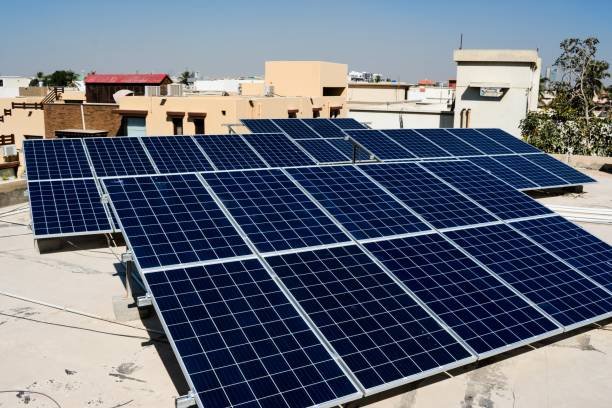
    Seven Greens Solar Systems Private Limited, a renewable energy solutions provider, has expanded its rooftop solar deployment across the Secunderabad Division of South Central Railway (SCR), supporting the railway network’s transition towards cleaner energy. Executed under the CAPEX model through a competitive bidding process, the project has grown from its initial value of ₹12.5 crore to ₹15 crore following performance-backed capacity expansions.

    The first phase of the project was inaugurated by the Divisional Railway Manager (DRM), Secunderabad Division. The initial scope covered 2 MW of rooftop solar capacity across 35 locations, including 400 kW of Building Integrated Photovoltaic (BIPV) systems. Following the successful implementation, Seven Greens was awarded an additional 400 kW extension. The company has also secured a new 1 MW project across 13 additional railway locations, taking the total solar capacity being developed across the division to more than 3.5 MW across over 48 sites.

    A notable installation under the project is the rooftop solar system at Hi-Tech City Railway Station, one of India’s 75 flagship Amrit Bharat Railway Stations. The installation was also featured on the official social media handle of Prime Minister Narendra Modi, highlighting the growing adoption of renewable energy across India’s railway infrastructure.

    The project incorporates several specialised engineering solutions suited to railway infrastructure. One of the key features is Seven Greens’ non-penetrative sheet-fixing technology, which enables solar panels to be installed without drilling into metal roof sheets. This approach helps protect the structural integrity of railway sheds and Cover Over Platforms (COPs) while enabling efficient utilisation of available rooftop space.

    The deployment also includes multiple Building Integrated Photovoltaic (BIPV) installations. Among these is a 100 kWp BIPV system at Kazipet Railway Station, demonstrating the integration of solar generation into existing railway infrastructure.

    Several high-capacity installations have been developed across critical railway facilities. These include a 1,000 kWp installation at Cherlapalli Shed, a 200 kWp system at Ramagundam Shed, and 100 kWp installations at Mancherial Car Park Canopy, Khammam and Bidar. Additional systems have been deployed at Bellampalli with 65 kWp capacity, Lingampalli with 55 kWp and Parli with 55 kWp. The wider deployment also covers railway stations and facilities at Lingampet Jagtial, Armoor, Zahirabad, Morthad and Mettapalli, further extending the division’s renewable energy footprint.

    The expansion reflects the potential for rooftop solar to support the decarbonisation of large railway infrastructure while reducing dependence on conventional electricity sources. By combining rooftop solar, BIPV and infrastructure-specific installation techniques, the project demonstrates how renewable energy can be integrated into operational railway facilities without compromising existing structures.

    With more than 3.5 MW of solar capacity across 48+ locations, Seven Greens’ expanded deployment is expected to contribute to South Central Railway’s broader sustainability and clean-energy objectives while demonstrating the scalability of distributed renewable energy across India’s railway network.

  • Seven Greens Expands Rooftop Solar Footprint Across South Central Railway’s Secunderabad Division

    Seven Greens Expands Rooftop Solar Footprint Across South Central Railway’s Secunderabad Division

    Seven Greens Solar Systems Private Limited, a renewable energy solutions provider, has expanded its rooftop solar deployment across the Secunderabad Division of South Central Railway (SCR), supporting the railway network’s transition towards cleaner energy. Executed under the CAPEX model through a competitive bidding process, the project has grown from its initial value of ₹12.5 crore to ₹15 crore following performance-backed capacity expansions.

    The first phase of the project was inaugurated by the Divisional Railway Manager (DRM), Secunderabad Division. The initial scope covered 2 MW of rooftop solar capacity across 35 locations, including 400 kW of Building Integrated Photovoltaic (BIPV) systems. Following the successful implementation, Seven Greens was awarded an additional 400 kW extension. The company has also secured a new 1 MW project across 13 additional railway locations, taking the total solar capacity being developed across the division to more than 3.5 MW across over 48 sites.

    A notable installation under the project is the rooftop solar system at Hi-Tech City Railway Station, one of India’s 75 flagship Amrit Bharat Railway Stations. The installation was also featured on the official social media handle of Prime Minister Narendra Modi, highlighting the growing adoption of renewable energy across India’s railway infrastructure.

    The project incorporates several specialised engineering solutions suited to railway infrastructure. One of the key features is Seven Greens’ non-penetrative sheet-fixing technology, which enables solar panels to be installed without drilling into metal roof sheets. This approach helps protect the structural integrity of railway sheds and Cover Over Platforms (COPs) while enabling efficient utilisation of available rooftop space.

    The deployment also includes multiple Building Integrated Photovoltaic (BIPV) installations. Among these is a 100 kWp BIPV system at Kazipet Railway Station, demonstrating the integration of solar generation into existing railway infrastructure.

    Several high-capacity installations have been developed across critical railway facilities. These include a 1,000 kWp installation at Cherlapalli Shed, a 200 kWp system at Ramagundam Shed, and 100 kWp installations at Mancherial Car Park Canopy, Khammam and Bidar. Additional systems have been deployed at Bellampalli with 65 kWp capacity, Lingampalli with 55 kWp and Parli with 55 kWp. The wider deployment also covers railway stations and facilities at Lingampet Jagtial, Armoor, Zahirabad, Morthad and Mettapalli, further extending the division’s renewable energy footprint.

    The expansion reflects the potential for rooftop solar to support the decarbonisation of large railway infrastructure while reducing dependence on conventional electricity sources. By combining rooftop solar, BIPV and infrastructure-specific installation techniques, the project demonstrates how renewable energy can be integrated into operational railway facilities without compromising existing structures.

    With more than 3.5 MW of solar capacity across 48+ locations, Seven Greens’ expanded deployment is expected to contribute to South Central Railway’s broader sustainability and clean-energy objectives while demonstrating the scalability of distributed renewable energy across India’s railway network.

  • Seven Greens Expands Rooftop Solar Footprint Across South Central Railway’s Secunderabad Division

    Seven Greens Expands Rooftop Solar Footprint Across South Central Railway’s Secunderabad Division

    Seven Greens Solar Systems Private Limited, a renewable energy solutions provider, has expanded its rooftop solar deployment across the Secunderabad Division of South Central Railway (SCR), supporting the railway network’s transition towards cleaner energy. Executed under the CAPEX model through a competitive bidding process, the project has grown from its initial value of ₹12.5 crore to ₹15 crore following performance-backed capacity expansions.

    The first phase of the project was inaugurated by the Divisional Railway Manager (DRM), Secunderabad Division. The initial scope covered 2 MW of rooftop solar capacity across 35 locations, including 400 kW of Building Integrated Photovoltaic (BIPV) systems. Following the successful implementation, Seven Greens was awarded an additional 400 kW extension. The company has also secured a new 1 MW project across 13 additional railway locations, taking the total solar capacity being developed across the division to more than 3.5 MW across over 48 sites.

    A notable installation under the project is the rooftop solar system at Hi-Tech City Railway Station, one of India’s 75 flagship Amrit Bharat Railway Stations. The installation was also featured on the official social media handle of Prime Minister Narendra Modi, highlighting the growing adoption of renewable energy across India’s railway infrastructure.

    The project incorporates several specialised engineering solutions suited to railway infrastructure. One of the key features is Seven Greens’ non-penetrative sheet-fixing technology, which enables solar panels to be installed without drilling into metal roof sheets. This approach helps protect the structural integrity of railway sheds and Cover Over Platforms (COPs) while enabling efficient utilisation of available rooftop space.

    The deployment also includes multiple Building Integrated Photovoltaic (BIPV) installations. Among these is a 100 kWp BIPV system at Kazipet Railway Station, demonstrating the integration of solar generation into existing railway infrastructure.

    Several high-capacity installations have been developed across critical railway facilities. These include a 1,000 kWp installation at Cherlapalli Shed, a 200 kWp system at Ramagundam Shed, and 100 kWp installations at Mancherial Car Park Canopy, Khammam and Bidar. Additional systems have been deployed at Bellampalli with 65 kWp capacity, Lingampalli with 55 kWp and Parli with 55 kWp. The wider deployment also covers railway stations and facilities at Lingampet Jagtial, Armoor, Zahirabad, Morthad and Mettapalli, further extending the division’s renewable energy footprint.

    The expansion reflects the potential for rooftop solar to support the decarbonisation of large railway infrastructure while reducing dependence on conventional electricity sources. By combining rooftop solar, BIPV and infrastructure-specific installation techniques, the project demonstrates how renewable energy can be integrated into operational railway facilities without compromising existing structures.

    With more than 3.5 MW of solar capacity across 48+ locations, Seven Greens’ expanded deployment is expected to contribute to South Central Railway’s broader sustainability and clean-energy objectives while demonstrating the scalability of distributed renewable energy across India’s railway network.

  • Seven Greens Expands Rooftop Solar Footprint Across South Central Railway’s Secunderabad Division

    Seven Greens Expands Rooftop Solar Footprint Across South Central Railway’s Secunderabad Division

    Seven Greens Solar Systems Private Limited, a renewable energy solutions provider, has expanded its rooftop solar deployment across the Secunderabad Division of South Central Railway (SCR), supporting the railway network’s transition towards cleaner energy. Executed under the CAPEX model through a competitive bidding process, the project has grown from its initial value of ₹12.5 crore to ₹15 crore following performance-backed capacity expansions.

    The first phase of the project was inaugurated by the Divisional Railway Manager (DRM), Secunderabad Division. The initial scope covered 2 MW of rooftop solar capacity across 35 locations, including 400 kW of Building Integrated Photovoltaic (BIPV) systems. Following the successful implementation, Seven Greens was awarded an additional 400 kW extension. The company has also secured a new 1 MW project across 13 additional railway locations, taking the total solar capacity being developed across the division to more than 3.5 MW across over 48 sites.

    A notable installation under the project is the rooftop solar system at Hi-Tech City Railway Station, one of India’s 75 flagship Amrit Bharat Railway Stations. The installation was also featured on the official social media handle of Prime Minister Narendra Modi, highlighting the growing adoption of renewable energy across India’s railway infrastructure.

    The project incorporates several specialised engineering solutions suited to railway infrastructure. One of the key features is Seven Greens’ non-penetrative sheet-fixing technology, which enables solar panels to be installed without drilling into metal roof sheets. This approach helps protect the structural integrity of railway sheds and Cover Over Platforms (COPs) while enabling efficient utilisation of available rooftop space.

    The deployment also includes multiple Building Integrated Photovoltaic (BIPV) installations. Among these is a 100 kWp BIPV system at Kazipet Railway Station, demonstrating the integration of solar generation into existing railway infrastructure.

    Several high-capacity installations have been developed across critical railway facilities. These include a 1,000 kWp installation at Cherlapalli Shed, a 200 kWp system at Ramagundam Shed, and 100 kWp installations at Mancherial Car Park Canopy, Khammam and Bidar. Additional systems have been deployed at Bellampalli with 65 kWp capacity, Lingampalli with 55 kWp and Parli with 55 kWp. The wider deployment also covers railway stations and facilities at Lingampet Jagtial, Armoor, Zahirabad, Morthad and Mettapalli, further extending the division’s renewable energy footprint.

    The expansion reflects the potential for rooftop solar to support the decarbonisation of large railway infrastructure while reducing dependence on conventional electricity sources. By combining rooftop solar, BIPV and infrastructure-specific installation techniques, the project demonstrates how renewable energy can be integrated into operational railway facilities without compromising existing structures.

    With more than 3.5 MW of solar capacity across 48+ locations, Seven Greens’ expanded deployment is expected to contribute to South Central Railway’s broader sustainability and clean-energy objectives while demonstrating the scalability of distributed renewable energy across India’s railway network.

  • Seven Greens Expands Rooftop Solar Footprint Across South Central Railway’s Secunderabad Division

    Seven Greens Expands Rooftop Solar Footprint Across South Central Railway’s Secunderabad Division

    Seven Greens Solar Systems Private Limited, a renewable energy solutions provider, has expanded its rooftop solar deployment across the Secunderabad Division of South Central Railway (SCR), supporting the railway network’s transition towards cleaner energy. Executed under the CAPEX model through a competitive bidding process, the project has grown from its initial value of ₹12.5 crore to ₹15 crore following performance-backed capacity expansions.

    The first phase of the project was inaugurated by the Divisional Railway Manager (DRM), Secunderabad Division. The initial scope covered 2 MW of rooftop solar capacity across 35 locations, including 400 kW of Building Integrated Photovoltaic (BIPV) systems. Following the successful implementation, Seven Greens was awarded an additional 400 kW extension. The company has also secured a new 1 MW project across 13 additional railway locations, taking the total solar capacity being developed across the division to more than 3.5 MW across over 48 sites.

    A notable installation under the project is the rooftop solar system at Hi-Tech City Railway Station, one of India’s 75 flagship Amrit Bharat Railway Stations. The installation was also featured on the official social media handle of Prime Minister Narendra Modi, highlighting the growing adoption of renewable energy across India’s railway infrastructure.

    The project incorporates several specialised engineering solutions suited to railway infrastructure. One of the key features is Seven Greens’ non-penetrative sheet-fixing technology, which enables solar panels to be installed without drilling into metal roof sheets. This approach helps protect the structural integrity of railway sheds and Cover Over Platforms (COPs) while enabling efficient utilisation of available rooftop space.

    The deployment also includes multiple Building Integrated Photovoltaic (BIPV) installations. Among these is a 100 kWp BIPV system at Kazipet Railway Station, demonstrating the integration of solar generation into existing railway infrastructure.

    Several high-capacity installations have been developed across critical railway facilities. These include a 1,000 kWp installation at Cherlapalli Shed, a 200 kWp system at Ramagundam Shed, and 100 kWp installations at Mancherial Car Park Canopy, Khammam and Bidar. Additional systems have been deployed at Bellampalli with 65 kWp capacity, Lingampalli with 55 kWp and Parli with 55 kWp. The wider deployment also covers railway stations and facilities at Lingampet Jagtial, Armoor, Zahirabad, Morthad and Mettapalli, further extending the division’s renewable energy footprint.

    The expansion reflects the potential for rooftop solar to support the decarbonisation of large railway infrastructure while reducing dependence on conventional electricity sources. By combining rooftop solar, BIPV and infrastructure-specific installation techniques, the project demonstrates how renewable energy can be integrated into operational railway facilities without compromising existing structures.

    With more than 3.5 MW of solar capacity across 48+ locations, Seven Greens’ expanded deployment is expected to contribute to South Central Railway’s broader sustainability and clean-energy objectives while demonstrating the scalability of distributed renewable energy across India’s railway network.

  • Seven Greens Expands Rooftop Solar Footprint Across South Central Railway’s Secunderabad Division

    Seven Greens Expands Rooftop Solar Footprint Across South Central Railway’s Secunderabad Division

    Seven Greens Solar Systems Private Limited, a renewable energy solutions provider, has expanded its rooftop solar deployment across the Secunderabad Division of South Central Railway (SCR), supporting the railway network’s transition towards cleaner energy. Executed under the CAPEX model through a competitive bidding process, the project has grown from its initial value of ₹12.5 crore to ₹15 crore following performance-backed capacity expansions.

    The first phase of the project was inaugurated by the Divisional Railway Manager (DRM), Secunderabad Division. The initial scope covered 2 MW of rooftop solar capacity across 35 locations, including 400 kW of Building Integrated Photovoltaic (BIPV) systems. Following the successful implementation, Seven Greens was awarded an additional 400 kW extension. The company has also secured a new 1 MW project across 13 additional railway locations, taking the total solar capacity being developed across the division to more than 3.5 MW across over 48 sites.

    A notable installation under the project is the rooftop solar system at Hi-Tech City Railway Station, one of India’s 75 flagship Amrit Bharat Railway Stations. The installation was also featured on the official social media handle of Prime Minister Narendra Modi, highlighting the growing adoption of renewable energy across India’s railway infrastructure.

    The project incorporates several specialised engineering solutions suited to railway infrastructure. One of the key features is Seven Greens’ non-penetrative sheet-fixing technology, which enables solar panels to be installed without drilling into metal roof sheets. This approach helps protect the structural integrity of railway sheds and Cover Over Platforms (COPs) while enabling efficient utilisation of available rooftop space.

    The deployment also includes multiple Building Integrated Photovoltaic (BIPV) installations. Among these is a 100 kWp BIPV system at Kazipet Railway Station, demonstrating the integration of solar generation into existing railway infrastructure.

    Several high-capacity installations have been developed across critical railway facilities. These include a 1,000 kWp installation at Cherlapalli Shed, a 200 kWp system at Ramagundam Shed, and 100 kWp installations at Mancherial Car Park Canopy, Khammam and Bidar. Additional systems have been deployed at Bellampalli with 65 kWp capacity, Lingampalli with 55 kWp and Parli with 55 kWp. The wider deployment also covers railway stations and facilities at Lingampet Jagtial, Armoor, Zahirabad, Morthad and Mettapalli, further extending the division’s renewable energy footprint.

    The expansion reflects the potential for rooftop solar to support the decarbonisation of large railway infrastructure while reducing dependence on conventional electricity sources. By combining rooftop solar, BIPV and infrastructure-specific installation techniques, the project demonstrates how renewable energy can be integrated into operational railway facilities without compromising existing structures.

    With more than 3.5 MW of solar capacity across 48+ locations, Seven Greens’ expanded deployment is expected to contribute to South Central Railway’s broader sustainability and clean-energy objectives while demonstrating the scalability of distributed renewable energy across India’s railway network.

  • Seven Greens Expands Rooftop Solar Footprint Across South Central Railway’s Secunderabad Division

    Seven Greens Expands Rooftop Solar Footprint Across South Central Railway’s Secunderabad Division

    Seven Greens Solar Systems Private Limited, a renewable energy solutions provider, has expanded its rooftop solar deployment across the Secunderabad Division of South Central Railway (SCR), supporting the railway network’s transition towards cleaner energy. Executed under the CAPEX model through a competitive bidding process, the project has grown from its initial value of ₹12.5 crore to ₹15 crore following performance-backed capacity expansions.

    The first phase of the project was inaugurated by the Divisional Railway Manager (DRM), Secunderabad Division. The initial scope covered 2 MW of rooftop solar capacity across 35 locations, including 400 kW of Building Integrated Photovoltaic (BIPV) systems. Following the successful implementation, Seven Greens was awarded an additional 400 kW extension. The company has also secured a new 1 MW project across 13 additional railway locations, taking the total solar capacity being developed across the division to more than 3.5 MW across over 48 sites.

    A notable installation under the project is the rooftop solar system at Hi-Tech City Railway Station, one of India’s 75 flagship Amrit Bharat Railway Stations. The installation was also featured on the official social media handle of Prime Minister Narendra Modi, highlighting the growing adoption of renewable energy across India’s railway infrastructure.

    The project incorporates several specialised engineering solutions suited to railway infrastructure. One of the key features is Seven Greens’ non-penetrative sheet-fixing technology, which enables solar panels to be installed without drilling into metal roof sheets. This approach helps protect the structural integrity of railway sheds and Cover Over Platforms (COPs) while enabling efficient utilisation of available rooftop space.

    The deployment also includes multiple Building Integrated Photovoltaic (BIPV) installations. Among these is a 100 kWp BIPV system at Kazipet Railway Station, demonstrating the integration of solar generation into existing railway infrastructure.

    Several high-capacity installations have been developed across critical railway facilities. These include a 1,000 kWp installation at Cherlapalli Shed, a 200 kWp system at Ramagundam Shed, and 100 kWp installations at Mancherial Car Park Canopy, Khammam and Bidar. Additional systems have been deployed at Bellampalli with 65 kWp capacity, Lingampalli with 55 kWp and Parli with 55 kWp. The wider deployment also covers railway stations and facilities at Lingampet Jagtial, Armoor, Zahirabad, Morthad and Mettapalli, further extending the division’s renewable energy footprint.

    The expansion reflects the potential for rooftop solar to support the decarbonisation of large railway infrastructure while reducing dependence on conventional electricity sources. By combining rooftop solar, BIPV and infrastructure-specific installation techniques, the project demonstrates how renewable energy can be integrated into operational railway facilities without compromising existing structures.

    With more than 3.5 MW of solar capacity across 48+ locations, Seven Greens’ expanded deployment is expected to contribute to South Central Railway’s broader sustainability and clean-energy objectives while demonstrating the scalability of distributed renewable energy across India’s railway network.