Category: All News

  • Jindal Stainless Deploys 10 Electric Trucks for Goods Transport

    Jindal Stainless Deploys 10 Electric Trucks for Goods Transport

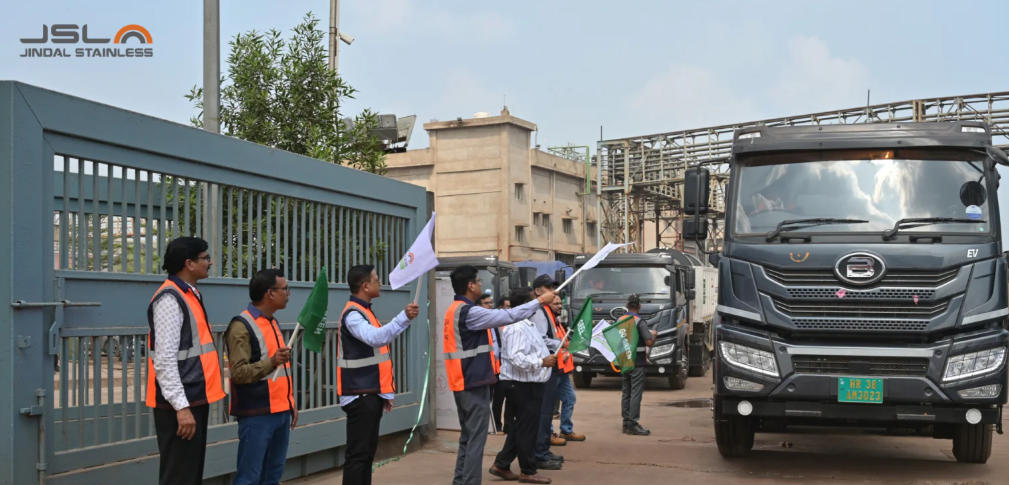
    Jindal Stainless, India’s leading stainless steel manufacturer, has deployed 10 dedicated electric trucks for finished goods transportation for the first time, marking a significant step in its green mobility initiatives and broader decarbonisation efforts. The electric trucks will operate on routes connecting the company’s Jajpur plant with Kharagpur and Kolkata, as part of its phased transition towards electric and alternative-fuel mobility solutions across logistics operations.

    The deployment builds on the company’s ongoing adoption of alternative-fuel vehicles across key transportation corridors. Jindal Stainless currently operates 80 LNG trucks for finished goods transportation from its Jajpur and Hisar facilities to western India, alongside beginning of deployment of CNG trucks to transport import cargo from Dhamra to Jajpur. The company has also deployed 60 CNG buses for employee transportation at its Hisar and Jajpur facilities.

    Commenting on the initiative, Managing Director, Jindal Stainless, Mr Abhyuday Jindal, said, “We believe that responsible manufacturing must extend beyond our plants to the entire value chain, including the way we transport our products. The deployment of electric trucks marks an important milestone in our efforts to decarbonise logistics and integrate lower-emission transportation solutions into our operations. Our approach is focused on adopting practical, scalable solutions that reduce our environmental footprint while maintaining operational efficiency. We will continue to advance such initiatives as part of our commitment to ESG goals.”

    Together, these green mobility initiatives are expected to facilitate the movement of approximately 8,000-10,000 tonnes of cargo per month using electric and alternative fuel vehicles. The company plans to progressively expand the deployment of these solutions across suitable logistics routes, taking into account the operational requirements of different transportation corridors.

    Based on a modelled monthly green dispatch volume of 8,000-9,000 tonnes and an equivalent truck travel distance of approximately 240,000 kms, the combined transportation mix of electric, CNG and LNG vehicles is expected to reduce emissions by approximately 71 tonnes CO₂ per month. This represents a reduction of around 26% compared with diesel-based transportation under regular operating conditions. The green mobility programme complements Jindal Stainless’ broader environmental initiatives, which include enhancing energy efficiency, increasing the use of renewable energy and strengthening resource circularity across its operations. 
  • Jindal Stainless Deploys 10 Electric Trucks for Goods Transport

    Jindal Stainless Deploys 10 Electric Trucks for Goods Transport

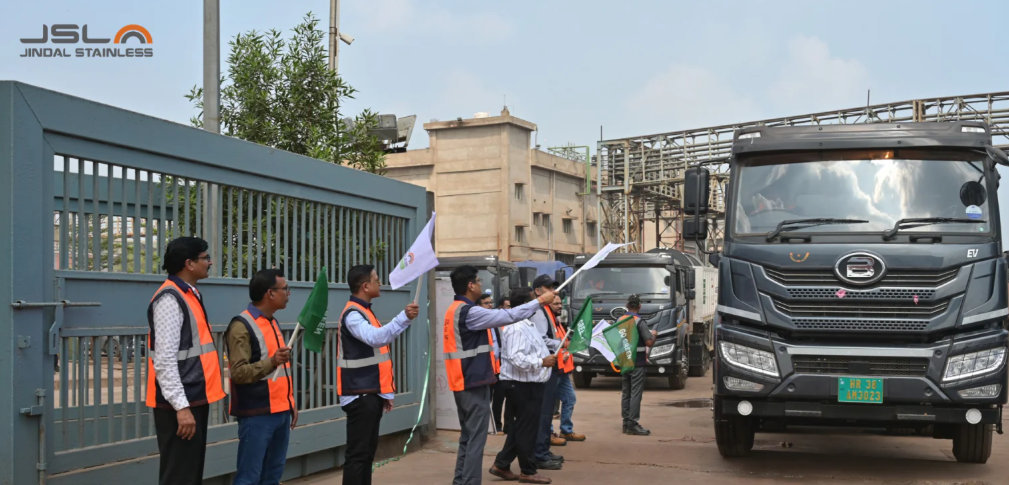
    Jindal Stainless, India’s leading stainless steel manufacturer, has deployed 10 dedicated electric trucks for finished goods transportation for the first time, marking a significant step in its green mobility initiatives and broader decarbonisation efforts. The electric trucks will operate on routes connecting the company’s Jajpur plant with Kharagpur and Kolkata, as part of its phased transition towards electric and alternative-fuel mobility solutions across logistics operations.

    The deployment builds on the company’s ongoing adoption of alternative-fuel vehicles across key transportation corridors. Jindal Stainless currently operates 80 LNG trucks for finished goods transportation from its Jajpur and Hisar facilities to western India, alongside beginning of deployment of CNG trucks to transport import cargo from Dhamra to Jajpur. The company has also deployed 60 CNG buses for employee transportation at its Hisar and Jajpur facilities.

    Commenting on the initiative, Managing Director, Jindal Stainless, Mr Abhyuday Jindal, said, “We believe that responsible manufacturing must extend beyond our plants to the entire value chain, including the way we transport our products. The deployment of electric trucks marks an important milestone in our efforts to decarbonise logistics and integrate lower-emission transportation solutions into our operations. Our approach is focused on adopting practical, scalable solutions that reduce our environmental footprint while maintaining operational efficiency. We will continue to advance such initiatives as part of our commitment to ESG goals.”

    Together, these green mobility initiatives are expected to facilitate the movement of approximately 8,000-10,000 tonnes of cargo per month using electric and alternative fuel vehicles. The company plans to progressively expand the deployment of these solutions across suitable logistics routes, taking into account the operational requirements of different transportation corridors.

    Based on a modelled monthly green dispatch volume of 8,000-9,000 tonnes and an equivalent truck travel distance of approximately 240,000 kms, the combined transportation mix of electric, CNG and LNG vehicles is expected to reduce emissions by approximately 71 tonnes CO₂ per month. This represents a reduction of around 26% compared with diesel-based transportation under regular operating conditions. The green mobility programme complements Jindal Stainless’ broader environmental initiatives, which include enhancing energy efficiency, increasing the use of renewable energy and strengthening resource circularity across its operations. 
  • Jindal Stainless Deploys 10 Electric Trucks for Goods Transport

    Jindal Stainless Deploys 10 Electric Trucks for Goods Transport

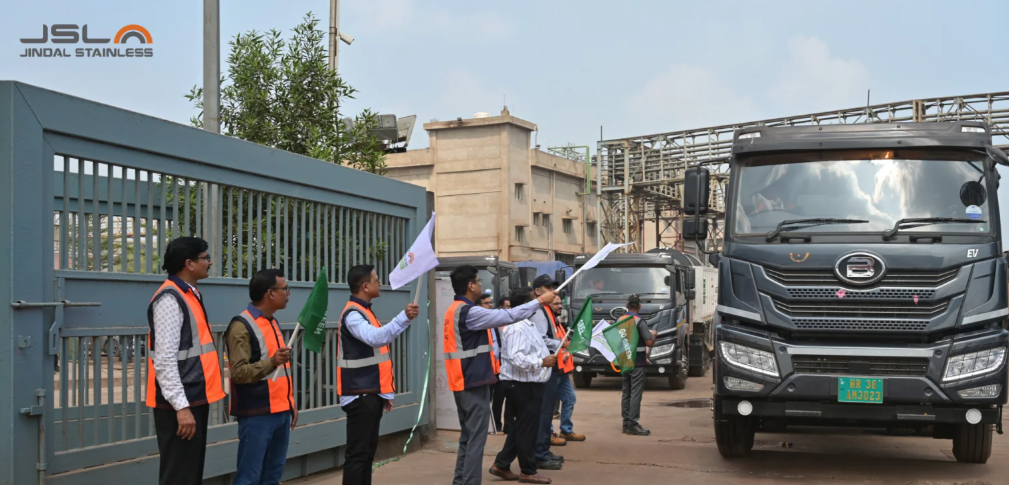
    Jindal Stainless, India’s leading stainless steel manufacturer, has deployed 10 dedicated electric trucks for finished goods transportation for the first time, marking a significant step in its green mobility initiatives and broader decarbonisation efforts. The electric trucks will operate on routes connecting the company’s Jajpur plant with Kharagpur and Kolkata, as part of its phased transition towards electric and alternative-fuel mobility solutions across logistics operations.

    The deployment builds on the company’s ongoing adoption of alternative-fuel vehicles across key transportation corridors. Jindal Stainless currently operates 80 LNG trucks for finished goods transportation from its Jajpur and Hisar facilities to western India, alongside beginning of deployment of CNG trucks to transport import cargo from Dhamra to Jajpur. The company has also deployed 60 CNG buses for employee transportation at its Hisar and Jajpur facilities.

    Commenting on the initiative, Managing Director, Jindal Stainless, Mr Abhyuday Jindal, said, “We believe that responsible manufacturing must extend beyond our plants to the entire value chain, including the way we transport our products. The deployment of electric trucks marks an important milestone in our efforts to decarbonise logistics and integrate lower-emission transportation solutions into our operations. Our approach is focused on adopting practical, scalable solutions that reduce our environmental footprint while maintaining operational efficiency. We will continue to advance such initiatives as part of our commitment to ESG goals.”

    Together, these green mobility initiatives are expected to facilitate the movement of approximately 8,000-10,000 tonnes of cargo per month using electric and alternative fuel vehicles. The company plans to progressively expand the deployment of these solutions across suitable logistics routes, taking into account the operational requirements of different transportation corridors.

    Based on a modelled monthly green dispatch volume of 8,000-9,000 tonnes and an equivalent truck travel distance of approximately 240,000 kms, the combined transportation mix of electric, CNG and LNG vehicles is expected to reduce emissions by approximately 71 tonnes CO₂ per month. This represents a reduction of around 26% compared with diesel-based transportation under regular operating conditions. The green mobility programme complements Jindal Stainless’ broader environmental initiatives, which include enhancing energy efficiency, increasing the use of renewable energy and strengthening resource circularity across its operations. 

  • Jindal Stainless Deploys 10 Electric Trucks for Goods Transport

    Jindal Stainless, India’s leading stainless steel manufacturer, has deployed 10 dedicated electric trucks for finished goods transportation for the first time, marking a significant step in its green mobility initiatives and broader decarbonisation efforts. The electric trucks will operate on routes connecting the company’s Jajpur plant with Kharagpur and Kolkata, as part of its phased transition towards electric and alternative-fuel mobility solutions across logistics operations.

    The deployment builds on the company’s ongoing adoption of alternative-fuel vehicles across key transportation corridors. Jindal Stainless currently operates 80 LNG trucks for finished goods transportation from its Jajpur and Hisar facilities to western India, alongside beginning of deployment of CNG trucks to transport import cargo from Dhamra to Jajpur. The company has also deployed 60 CNG buses for employee transportation at its Hisar and Jajpur facilities.

    Commenting on the initiative, Managing Director, Jindal Stainless, Mr Abhyuday Jindal, said, “We believe that responsible manufacturing must extend beyond our plants to the entire value chain, including the way we transport our products. The deployment of electric trucks marks an important milestone in our efforts to decarbonise logistics and integrate lower-emission transportation solutions into our operations. Our approach is focused on adopting practical, scalable solutions that reduce our environmental footprint while maintaining operational efficiency. We will continue to advance such initiatives as part of our commitment to ESG goals.”

    Together, these green mobility initiatives are expected to facilitate the movement of approximately 8,000-10,000 tonnes of cargo per month using electric and alternative fuel vehicles. The company plans to progressively expand the deployment of these solutions across suitable logistics routes, taking into account the operational requirements of different transportation corridors.

    Based on a modelled monthly green dispatch volume of 8,000-9,000 tonnes and an equivalent truck travel distance of approximately 240,000 kms, the combined transportation mix of electric, CNG and LNG vehicles is expected to reduce emissions by approximately 71 tonnes CO₂ per month. This represents a reduction of around 26% compared with diesel-based transportation under regular operating conditions. The green mobility programme complements Jindal Stainless’ broader environmental initiatives, which include enhancing energy efficiency, increasing the use of renewable energy and strengthening resource circularity across its operations. 

  • Tata Power Advances 2.8 GW+ Data Centre Opportunity Pipeline Across 18 Leading Blue Chip Data Centre Players

    Tata Power Advances 2.8 GW+ Data Centre Opportunity Pipeline Across 18 Leading Blue Chip Data Centre Players

    Tata Power, one of India’s largest integrated power companies, is emerging as a preferred partner for India’s fast-growing data centre ecosystem, with a diversified opportunity pipeline of over 2.8 GW spanning renewable energy, transmission and distribution opportunities.

    As demand from Al, cloud and digital platforms accelerates, the Company is expanding its role beyond power supply to provide a comprehensive suite of solutions, including powered land, transmission and grid connectivity, renewable energy, storage, cooling and utility infrastructure, enabling the development of hyperscalers and advanced data centre facilities.

    Tata Power has built a strong and diversified data centre opportunity pipeline, comprising approximately 430 MW of upcoming load under its distribution network, 1,236 MW of transmission-linked opportunities, and 1,150 MW of green energy capacity under active engagement. With 29 active workstreams across 18 leading global and domestic Data Centre Operators, Tata Power is playing a key role in powering some of India’s largest hyperscalers and AI-ready digital infrastructure projects.

    Tata Power’s integrated presence across the power value chain, spanning generation, transmission and distribution, positions it uniquely to participate in the rapidly evolving Al and data centre ecosystem. This enables Tata Power to offer a comprehensive suite of solutions, including powered land, transmission and grid connectivity, renewable energy, energy storage, cooling systems, and utility infrastructure, thereby supporting the development of hyperscalers and next-generation data centre facilities.

    To meet the rapidly growing power requirements of hyperscale data centres in the Mumbai Metropolitan Region (MMR), Tata Power is significantly enhancing its transmission infrastructure through the upgradation of its 110 kV and 220 kV network. The company is augmenting both transformation and transmission capacities while building robust network redundancy to ensure reliable and uninterrupted power supply for large-scale digital infrastructure projects. In parallel, Tata Power is developing new receiving stations and advancing a 400 kV transmission ring network, creating a resilient, secure and future-ready grid capable of supporting the next wave of data centre growth in the region. This infrastructure enhancement forms part of Tata Power’s ₹15,000 crore Mumbai Grid Upgradation and Expansion Plan.

    As India strengthens its position as a global Al and digital infrastructure hub, energy availability will be a critical enabler. The Ministry of Power, based on CEA estimates, projects that Al-led data centres could add approximately 26.3 GW of electricity demand by FY2031-32. With the IEA highlighting the growing role of emerging economies such as India in driving data centre and electricity demand, Tata Power is well positioned to deliver the integrated energy infrastructure required to support the country’s digital future.

  • Tata Power Advances 2.8 GW+ Data Centre Opportunity Pipeline Across 18 Leading Blue Chip Data Centre Players

    Tata Power, one of India’s largest integrated power companies, is emerging as a preferred partner for India’s fast-growing data centre ecosystem, with a diversified opportunity pipeline of over 2.8 GW spanning renewable energy, transmission and distribution opportunities.

    As demand from Al, cloud and digital platforms accelerates, the Company is expanding its role beyond power supply to provide a comprehensive suite of solutions, including powered land, transmission and grid connectivity, renewable energy, storage, cooling and utility infrastructure, enabling the development of hyperscalers and advanced data centre facilities.

    Tata Power has built a strong and diversified data centre opportunity pipeline, comprising approximately 430 MW of upcoming load under its distribution network, 1,236 MW of transmission-linked opportunities, and 1,150 MW of green energy capacity under active engagement. With 29 active workstreams across 18 leading global and domestic Data Centre Operators, Tata Power is playing a key role in powering some of India’s largest hyperscalers and AI-ready digital infrastructure projects.

    Tata Power’s integrated presence across the power value chain, spanning generation, transmission and distribution, positions it uniquely to participate in the rapidly evolving Al and data centre ecosystem. This enables Tata Power to offer a comprehensive suite of solutions, including powered land, transmission and grid connectivity, renewable energy, energy storage, cooling systems, and utility infrastructure, thereby supporting the development of hyperscalers and next-generation data centre facilities.

    To meet the rapidly growing power requirements of hyperscale data centres in the Mumbai Metropolitan Region (MMR), Tata Power is significantly enhancing its transmission infrastructure through the upgradation of its 110 kV and 220 kV network. The company is augmenting both transformation and transmission capacities while building robust network redundancy to ensure reliable and uninterrupted power supply for large-scale digital infrastructure projects. In parallel, Tata Power is developing new receiving stations and advancing a 400 kV transmission ring network, creating a resilient, secure and future-ready grid capable of supporting the next wave of data centre growth in the region. This infrastructure enhancement forms part of Tata Power’s ₹15,000 crore Mumbai Grid Upgradation and Expansion Plan.

    As India strengthens its position as a global Al and digital infrastructure hub, energy availability will be a critical enabler. The Ministry of Power, based on CEA estimates, projects that Al-led data centres could add approximately 26.3 GW of electricity demand by FY2031-32. With the IEA highlighting the growing role of emerging economies such as India in driving data centre and electricity demand, Tata Power is well positioned to deliver the integrated energy infrastructure required to support the country’s digital future.

  • Roofsol Energy Signs 3 MWp Solar PPA with RAK Ceramics in Andhra Pradesh

    Roofsol Energy Signs 3 MWp Solar PPA with RAK Ceramics in Andhra Pradesh

    Roofsol Energy has signed a Power Purchase Agreement (PPA) with RAK Ceramics to develop a 3 MWp solar power project in Kakinada, Andhra Pradesh, under the operating expenditure (OPEX) model.

    The project is aimed at supporting the commercial and industrial (C&I) sector’s transition towards renewable energy by providing a reliable and cost-effective solar power solution. Under the OPEX model, customers can procure solar electricity without bearing the full upfront investment required to develop a solar power project.

    The agreement adds to Roofsol Energy’s expanding portfolio of industrial solar projects across India. In September 2026, the company secured a repeat order for 4.48 MWp of solar projects from Metro Decorative (CROSSBOND), covering installations in Uttarakhand and Himachal Pradesh. The order followed an earlier 3.2 MWp project for the same customer.

    In August 2026, Roofsol signed a PPA for a 5 MWp solar project integrated with a 4 MWh battery energy storage system (BESS) for pharmaceutical packaging manufacturer Associated Capsules Group in Maharashtra. The project marked the company’s entry into the C&I energy storage segment.

    The company also signed PPAs for a 10.44 MWp rooftop solar project for Shyam Steel Industries’ facility in Durgapur, West Bengal, and a 17 MWp solar project for Foxconn’s facility in Bengaluru, Karnataka, in July 2026.

    For FY2026–27, Roofsol Energy has set a target to invest in 200 MWp of rooftop solar assets through PPAs. The company stated that agreements covering more than 50 MWp had already been signed and were under execution.

    In June 2026, Roofsol secured ₹260 crore in funding from Aseem Infrastructure Finance to develop solar independent power producer projects, including installations for JK Tyre and Industries and an additional 100 MWp of C&I solar capacity across India.

    The latest agreement with RAK Ceramics further strengthens Roofsol Energy’s presence in the industrial solar market as businesses increasingly explore renewable power procurement to manage energy costs and advance their sustainability goals.