Blog

  • Actis Launches Leo Energies with 3 GW India Renewable Energy Target

    Actis Launches Leo Energies with 3 GW India Renewable Energy Target

    Actis, a leading growth market investor in sustainable infrastructure, announced the launch of Leo Energies, its next-generation renewable energy business in India. The platform, which will target a portfolio of over 3GW of onshore wind, solar and battery storage assets, represents the fourth iteration of Actis’ demonstrated buy-and-build strategy in the Indian renewables market – a strategy that has previously delivered Ostro Energy, Sprng Energy and which continues to scale current platform BluPine Energy, which has already surpassed 3GW of capacity since its launch in 2022.

    The launch of Leo Energies builds on Actis’ long-standing track record in Indian renewables. The firm has deployed approximately US$1.5 billion of equity capital in India’s energy sector, building or operating nearly 10GW of installed generation capacity, making it one of the largest foreign private investors in the space.

    Leo Energies has signed agreements to acquire ~650MWp of solar capacity, all of which is set to be operational at acquisition. A total ~160MWp of generation and 50MWh of battery energy storage system (BESS) projects have now closed, including 110MWp of generation and 50MWh of BESS projects acquired from TrueRE Oriana Power, a fully integrated Indian clean energy platform with capabilities spanning the renewable energy value chain across solar, battery energy storage and green fuels. These ~650MWp of projects stretch across five states – Rajasthan, Tamil Nadu, Gujarat, Karnataka and Andhra Pradesh, and are contracted under long-term power purchase agreements (PPAs) with a mix of central offtakers, state discoms and commercial & industrial (C&I) customers.

    The acquisitions align well with Leo Energies’ ambition of building a scaled renewable generation platform by leveraging significant growth opportunities across both utility and C&I segments. The business has further acquisitions and greenfield PPA auctions in sight, as part of its near-term pipeline.

    India has one of the fastest growing renewable energy sectors globally. It has seen the third-largest growth in power generation capacity worldwide over the past five years, with 83% of power sector investment going to clean energy in 2024. The country ranked third globally in renewable energy installed capacity in 2025, with total installed capacity reaching 251GW – up from 176GW in 2023 – representing growth of over 40% in two years as it drives to achieve a target of 500GW of non-fossil fuel capacity by 2030.

    The IEA projects India will become the second-largest growth market for renewables globally through 2030, with capacity set to rise 2.5 times over five years. Against this backdrop, India’s C&I renewables market is expanding rapidly, driven by corporate demand for clean power and a growing ecosystem of bankable off-takers – creating a deep and liquid deal environment for platforms such as Leo Energies.

    Lucy Heintz, Head of Energy Infrastructure at Actis, commented: “India is one of the world’s most exciting energy markets in our view, and Leo Energies reflects our conviction that the opportunity here remains very strong. India sits at the intersection of two defining forces: surging energy demand and the imperative of energy security. We have spent more than a decade building and operating renewable platforms of scale across our markets, exiting to blue chip acquirers such as Shell, GIP and Engie along the way, and have assembled what we believe to be a market-leading team for this next chapter in India.”

    Abhishek Bansal, Managing Director, Energy Infrastructure at Actis, said: “Leo Energies continues a playbook we know exceptionally well – building right-sized, contracted Indian independent power producers with clear visibility and potential to generate compelling returns for our investors. The Indian market’s combination of auction-driven growth, a maturing C&I ecosystem, domestic financing depth and a well-established strategic buyer universe makes it well suited to this approach. With the quality of the assets we have already signed and the pipeline ahead, we’re excited about Leo Energies’ growth potential.”
  • Actis Launches Leo Energies with 3 GW India Renewable Energy Target

    Actis, a leading growth market investor in sustainable infrastructure, announced the launch of Leo Energies, its next-generation renewable energy business in India. The platform, which will target a portfolio of over 3GW of onshore wind, solar and battery storage assets, represents the fourth iteration of Actis’ demonstrated buy-and-build strategy in the Indian renewables market – a strategy that has previously delivered Ostro Energy, Sprng Energy and which continues to scale current platform BluPine Energy, which has already surpassed 3GW of capacity since its launch in 2022.

    The launch of Leo Energies builds on Actis’ long-standing track record in Indian renewables. The firm has deployed approximately US$1.5 billion of equity capital in India’s energy sector, building or operating nearly 10GW of installed generation capacity, making it one of the largest foreign private investors in the space.

    Leo Energies has signed agreements to acquire ~650MWp of solar capacity, all of which is set to be operational at acquisition. A total ~160MWp of generation and 50MWh of battery energy storage system (BESS) projects have now closed, including 110MWp of generation and 50MWh of BESS projects acquired from TrueRE Oriana Power, a fully integrated Indian clean energy platform with capabilities spanning the renewable energy value chain across solar, battery energy storage and green fuels. These ~650MWp of projects stretch across five states – Rajasthan, Tamil Nadu, Gujarat, Karnataka and Andhra Pradesh, and are contracted under long-term power purchase agreements (PPAs) with a mix of central offtakers, state discoms and commercial & industrial (C&I) customers.

    The acquisitions align well with Leo Energies’ ambition of building a scaled renewable generation platform by leveraging significant growth opportunities across both utility and C&I segments. The business has further acquisitions and greenfield PPA auctions in sight, as part of its near-term pipeline.

    India has one of the fastest growing renewable energy sectors globally. It has seen the third-largest growth in power generation capacity worldwide over the past five years, with 83% of power sector investment going to clean energy in 2024. The country ranked third globally in renewable energy installed capacity in 2025, with total installed capacity reaching 251GW – up from 176GW in 2023 – representing growth of over 40% in two years as it drives to achieve a target of 500GW of non-fossil fuel capacity by 2030.

    The IEA projects India will become the second-largest growth market for renewables globally through 2030, with capacity set to rise 2.5 times over five years. Against this backdrop, India’s C&I renewables market is expanding rapidly, driven by corporate demand for clean power and a growing ecosystem of bankable off-takers – creating a deep and liquid deal environment for platforms such as Leo Energies.

    Lucy Heintz, Head of Energy Infrastructure at Actis, commented: “India is one of the world’s most exciting energy markets in our view, and Leo Energies reflects our conviction that the opportunity here remains very strong. India sits at the intersection of two defining forces: surging energy demand and the imperative of energy security. We have spent more than a decade building and operating renewable platforms of scale across our markets, exiting to blue chip acquirers such as Shell, GIP and Engie along the way, and have assembled what we believe to be a market-leading team for this next chapter in India.”

    Abhishek Bansal, Managing Director, Energy Infrastructure at Actis, said: “Leo Energies continues a playbook we know exceptionally well – building right-sized, contracted Indian independent power producers with clear visibility and potential to generate compelling returns for our investors. The Indian market’s combination of auction-driven growth, a maturing C&I ecosystem, domestic financing depth and a well-established strategic buyer universe makes it well suited to this approach. With the quality of the assets we have already signed and the pipeline ahead, we’re excited about Leo Energies’ growth potential.”
  • IIT Kanpur to Develop India’s First Sun Simulator for Concentrated Photovoltaic Systems

    IIT Kanpur to Develop India’s First Sun Simulator for Concentrated Photovoltaic Systems

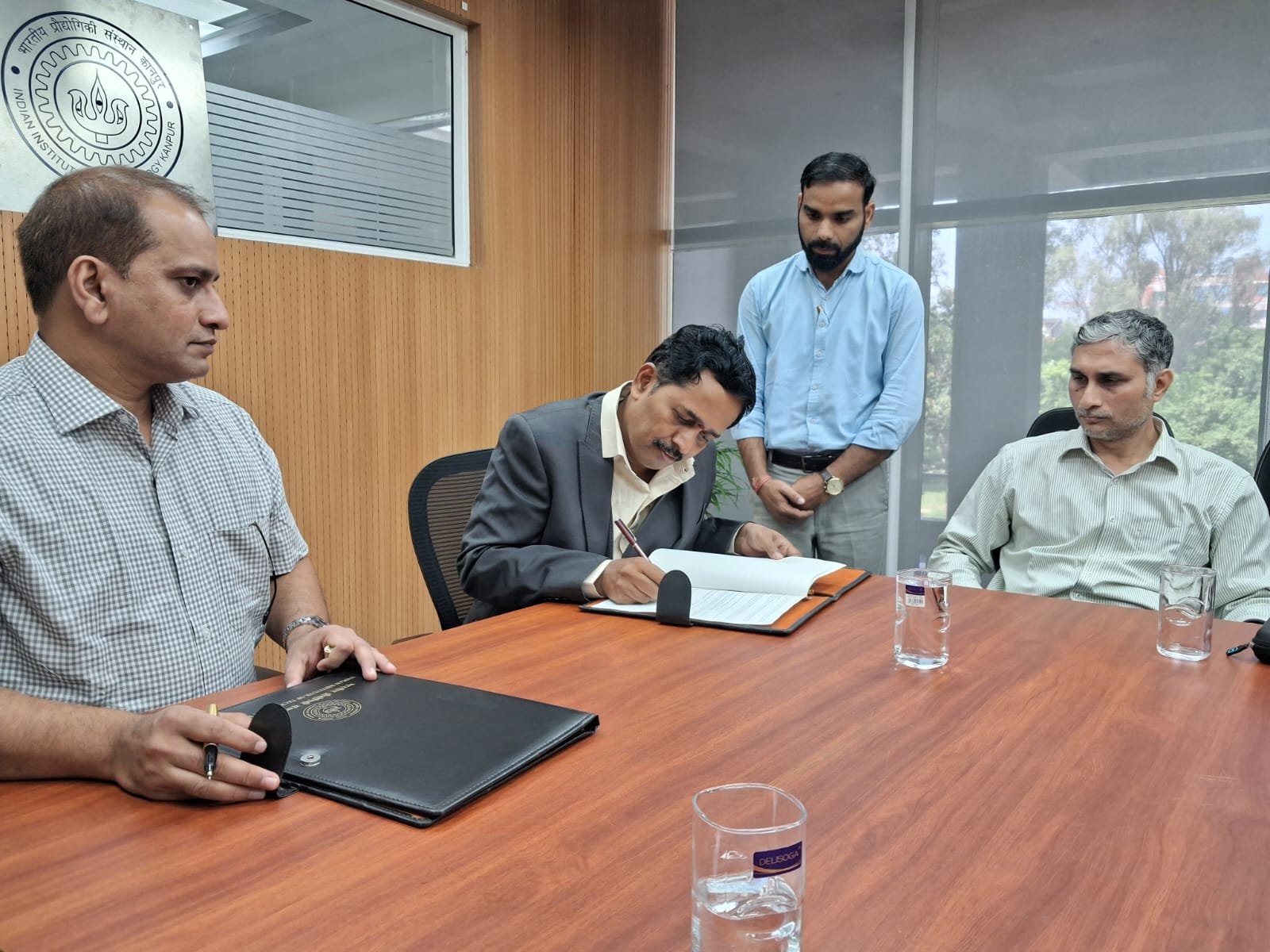
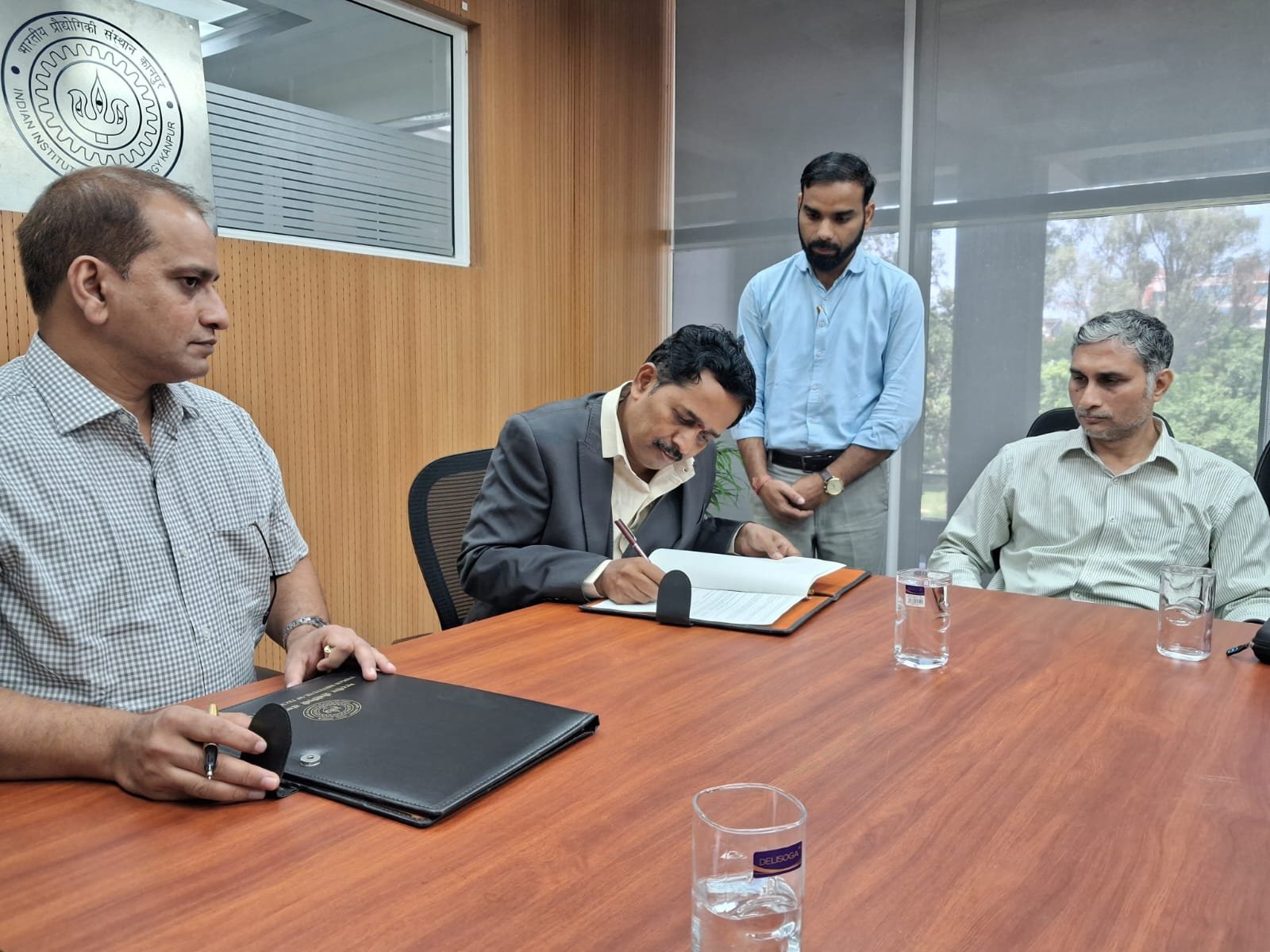
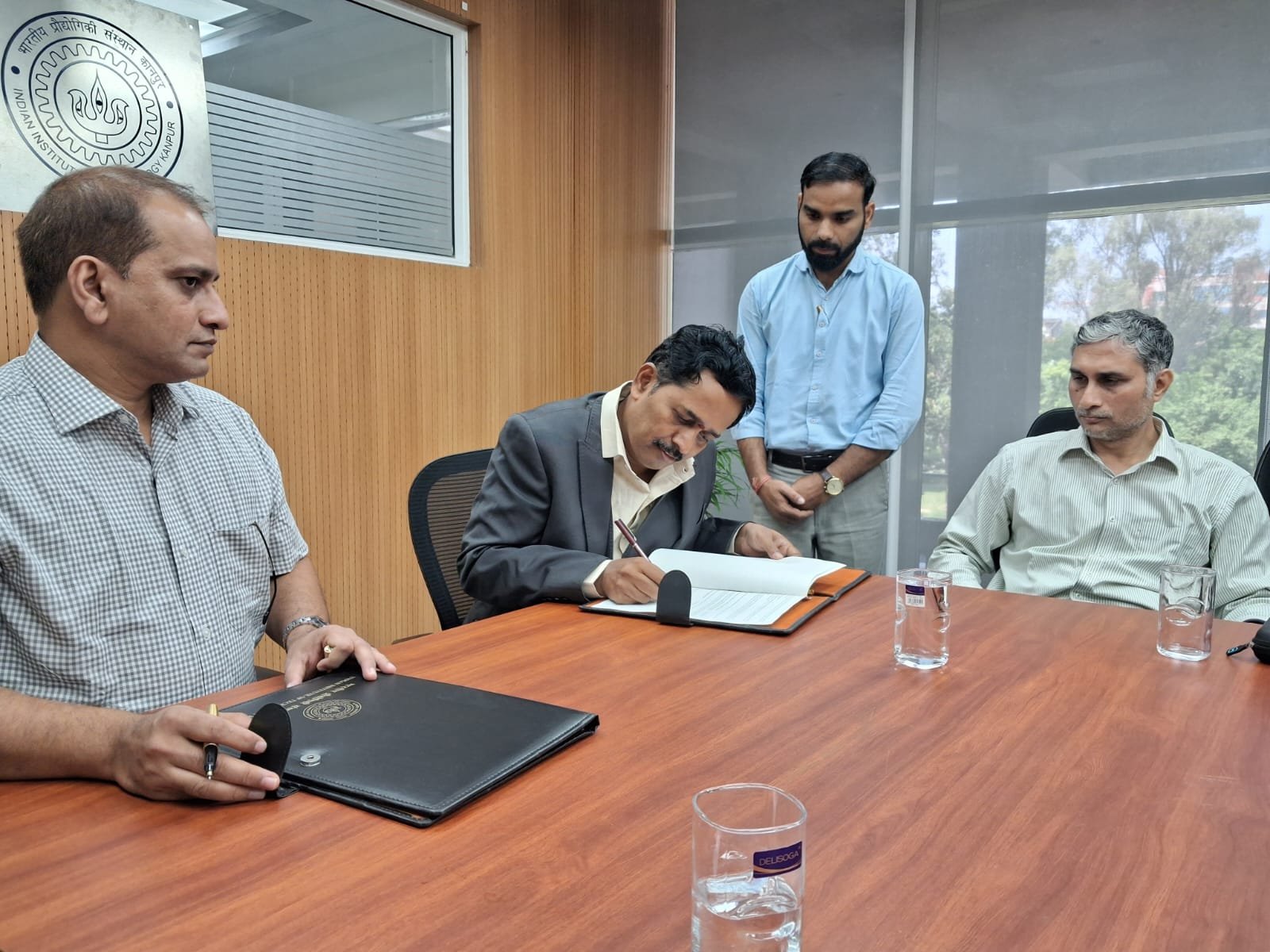
    IIT Kanpur has signed a Memorandum of Understanding with Bengaluru-based NexPV Energy Systems facilitated by Invariance Automation, a member company of IIT Kanpur’s Research and Technology Park Foundation (Technopark@iitk), to design and develop India’s first Sun Simulator for Concentrated Photovoltaic (CPV) systems. The facility will enable CPV modules to be tested and characterised at the end of production lines in India, a capability that does not currently exist in the country.

    The project is led by Professor Ashish Garg and team from IIT Kanpur’s Department of Sustainable Energy Engineering. It reflects the Institute’s research focus on clean energy technologies that can move from laboratory to large-scale manufacturing. It also advances Technopark@iitk’s mandate of building industry-academia partnerships around indigenous innovation.

    Prof. Ashish Garg, Department of Sustainable Energy Engineering, IIT Kanpur, said, “India’s net-zero commitment for 2070 will require solar deployment at a scale far beyond today’s, and that growth must rest on domestic capability across the value chain. Testing infrastructure is a strategic part of that chain: a technology cannot scale if it cannot be measured reliably. CPV modules behave fundamentally differently from flat panels, and building India’s first simulator designed for them is exactly the kind of translational research IIT Kanpur is committed to.”

    CPV systems use optical lenses to concentrate sunlight onto tiny, ultra-efficient multi-junction cells. These cells stack several semiconductor layers, each capturing a different part of the solar spectrum. The cells occupy only about 0.1% of the panel area, cutting cell requirement by more than 99% compared with conventional solar panels. NexPV, led by Mr Chidananda Murthy R, has developed indigenous CPV technology. Its proof-of-concept systems have operated in the field for around three years, and the company is moving to large-scale manufacturing.

    Chidananda Murthy R, Director, NexPV Energy Systems, said, “India has crossed 168 GW of installed solar capacity, but domestic cell manufacturing remains well behind module capacity, and with the cell mandate now in force, that gap directly affects deployment. CPV needs less than one per cent of the cell area of a conventional panel and, in our systems, about half the land. It can open a new pathway for solar in India’s high-DNI regions. A domestic CPV simulator gives us the quality assurance to manufacture at scale.”

    Existing sun simulators are designed for flat-plate panels. CPV modules work only with direct, parallel sunlight, accept light within a very narrow angle, and are sensitive to spectral balance. The IIT Kanpur team will engineer a simulator that reproduces these conditions precisely. In future Invariance Automation will serve as the preferred manufacturing partner to take the system from prototype to production.

  • IIT Kanpur to Develop India’s First Sun Simulator for Concentrated Photovoltaic Systems

    IIT Kanpur to Develop India’s First Sun Simulator for Concentrated Photovoltaic Systems

    IIT Kanpur has signed a Memorandum of Understanding with Bengaluru-based NexPV Energy Systems facilitated by Invariance Automation, a member company of IIT Kanpur’s Research and Technology Park Foundation (Technopark@iitk), to design and develop India’s first Sun Simulator for Concentrated Photovoltaic (CPV) systems. The facility will enable CPV modules to be tested and characterised at the end of production lines in India, a capability that does not currently exist in the country.

    The project is led by Professor Ashish Garg and team from IIT Kanpur’s Department of Sustainable Energy Engineering. It reflects the Institute’s research focus on clean energy technologies that can move from laboratory to large-scale manufacturing. It also advances Technopark@iitk’s mandate of building industry-academia partnerships around indigenous innovation.

    Prof. Ashish Garg, Department of Sustainable Energy Engineering, IIT Kanpur, said, “India’s net-zero commitment for 2070 will require solar deployment at a scale far beyond today’s, and that growth must rest on domestic capability across the value chain. Testing infrastructure is a strategic part of that chain: a technology cannot scale if it cannot be measured reliably. CPV modules behave fundamentally differently from flat panels, and building India’s first simulator designed for them is exactly the kind of translational research IIT Kanpur is committed to.”

    CPV systems use optical lenses to concentrate sunlight onto tiny, ultra-efficient multi-junction cells. These cells stack several semiconductor layers, each capturing a different part of the solar spectrum. The cells occupy only about 0.1% of the panel area, cutting cell requirement by more than 99% compared with conventional solar panels. NexPV, led by Mr Chidananda Murthy R, has developed indigenous CPV technology. Its proof-of-concept systems have operated in the field for around three years, and the company is moving to large-scale manufacturing.

    Chidananda Murthy R, Director, NexPV Energy Systems, said, “India has crossed 168 GW of installed solar capacity, but domestic cell manufacturing remains well behind module capacity, and with the cell mandate now in force, that gap directly affects deployment. CPV needs less than one per cent of the cell area of a conventional panel and, in our systems, about half the land. It can open a new pathway for solar in India’s high-DNI regions. A domestic CPV simulator gives us the quality assurance to manufacture at scale.”

    Existing sun simulators are designed for flat-plate panels. CPV modules work only with direct, parallel sunlight, accept light within a very narrow angle, and are sensitive to spectral balance. The IIT Kanpur team will engineer a simulator that reproduces these conditions precisely. In future Invariance Automation will serve as the preferred manufacturing partner to take the system from prototype to production.

  • IIT Kanpur to Develop India’s First Sun Simulator for Concentrated Photovoltaic Systems

    IIT Kanpur to Develop India’s First Sun Simulator for Concentrated Photovoltaic Systems

    IIT Kanpur has signed a Memorandum of Understanding with Bengaluru-based NexPV Energy Systems facilitated by Invariance Automation, a member company of IIT Kanpur’s Research and Technology Park Foundation (Technopark@iitk), to design and develop India’s first Sun Simulator for Concentrated Photovoltaic (CPV) systems. The facility will enable CPV modules to be tested and characterised at the end of production lines in India, a capability that does not currently exist in the country.

    The project is led by Professor Ashish Garg and team from IIT Kanpur’s Department of Sustainable Energy Engineering. It reflects the Institute’s research focus on clean energy technologies that can move from laboratory to large-scale manufacturing. It also advances Technopark@iitk’s mandate of building industry-academia partnerships around indigenous innovation.

    Prof. Ashish Garg, Department of Sustainable Energy Engineering, IIT Kanpur, said, “India’s net-zero commitment for 2070 will require solar deployment at a scale far beyond today’s, and that growth must rest on domestic capability across the value chain. Testing infrastructure is a strategic part of that chain: a technology cannot scale if it cannot be measured reliably. CPV modules behave fundamentally differently from flat panels, and building India’s first simulator designed for them is exactly the kind of translational research IIT Kanpur is committed to.”

    CPV systems use optical lenses to concentrate sunlight onto tiny, ultra-efficient multi-junction cells. These cells stack several semiconductor layers, each capturing a different part of the solar spectrum. The cells occupy only about 0.1% of the panel area, cutting cell requirement by more than 99% compared with conventional solar panels. NexPV, led by Mr Chidananda Murthy R, has developed indigenous CPV technology. Its proof-of-concept systems have operated in the field for around three years, and the company is moving to large-scale manufacturing.

    Chidananda Murthy R, Director, NexPV Energy Systems, said, “India has crossed 168 GW of installed solar capacity, but domestic cell manufacturing remains well behind module capacity, and with the cell mandate now in force, that gap directly affects deployment. CPV needs less than one per cent of the cell area of a conventional panel and, in our systems, about half the land. It can open a new pathway for solar in India’s high-DNI regions. A domestic CPV simulator gives us the quality assurance to manufacture at scale.”

    Existing sun simulators are designed for flat-plate panels. CPV modules work only with direct, parallel sunlight, accept light within a very narrow angle, and are sensitive to spectral balance. The IIT Kanpur team will engineer a simulator that reproduces these conditions precisely. In future Invariance Automation will serve as the preferred manufacturing partner to take the system from prototype to production.

  • IIT Kanpur to Develop India’s First Sun Simulator for Concentrated Photovoltaic Systems

    IIT Kanpur has signed a Memorandum of Understanding with Bengaluru-based NexPV Energy Systems facilitated by Invariance Automation, a member company of IIT Kanpur’s Research and Technology Park Foundation (Technopark@iitk), to design and develop India’s first Sun Simulator for Concentrated Photovoltaic (CPV) systems. The facility will enable CPV modules to be tested and characterised at the end of production lines in India, a capability that does not currently exist in the country.

    The project is led by Professor Ashish Garg and team from IIT Kanpur’s Department of Sustainable Energy Engineering. It reflects the Institute’s research focus on clean energy technologies that can move from laboratory to large-scale manufacturing. It also advances Technopark@iitk’s mandate of building industry-academia partnerships around indigenous innovation.

    Prof. Ashish Garg, Department of Sustainable Energy Engineering, IIT Kanpur, said, “India’s net-zero commitment for 2070 will require solar deployment at a scale far beyond today’s, and that growth must rest on domestic capability across the value chain. Testing infrastructure is a strategic part of that chain: a technology cannot scale if it cannot be measured reliably. CPV modules behave fundamentally differently from flat panels, and building India’s first simulator designed for them is exactly the kind of translational research IIT Kanpur is committed to.”

    CPV systems use optical lenses to concentrate sunlight onto tiny, ultra-efficient multi-junction cells. These cells stack several semiconductor layers, each capturing a different part of the solar spectrum. The cells occupy only about 0.1% of the panel area, cutting cell requirement by more than 99% compared with conventional solar panels. NexPV, led by Mr Chidananda Murthy R, has developed indigenous CPV technology. Its proof-of-concept systems have operated in the field for around three years, and the company is moving to large-scale manufacturing.

    Chidananda Murthy R, Director, NexPV Energy Systems, said, “India has crossed 168 GW of installed solar capacity, but domestic cell manufacturing remains well behind module capacity, and with the cell mandate now in force, that gap directly affects deployment. CPV needs less than one per cent of the cell area of a conventional panel and, in our systems, about half the land. It can open a new pathway for solar in India’s high-DNI regions. A domestic CPV simulator gives us the quality assurance to manufacture at scale.”

    Existing sun simulators are designed for flat-plate panels. CPV modules work only with direct, parallel sunlight, accept light within a very narrow angle, and are sensitive to spectral balance. The IIT Kanpur team will engineer a simulator that reproduces these conditions precisely. In future Invariance Automation will serve as the preferred manufacturing partner to take the system from prototype to production.

  • PFC Organises “Swachhata Ke Liye Shramdaan” Cleanliness Drive Under the Patronage of the Ministry of Power

    PFC Organises “Swachhata Ke Liye Shramdaan” Cleanliness Drive Under the Patronage of the Ministry of Power

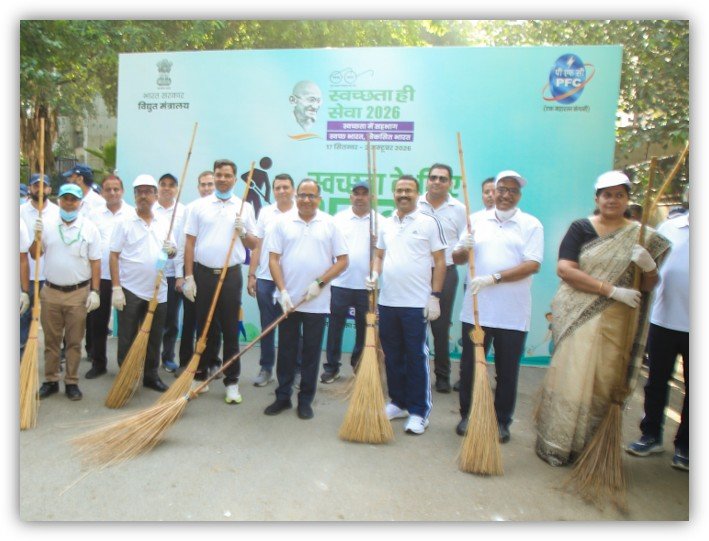
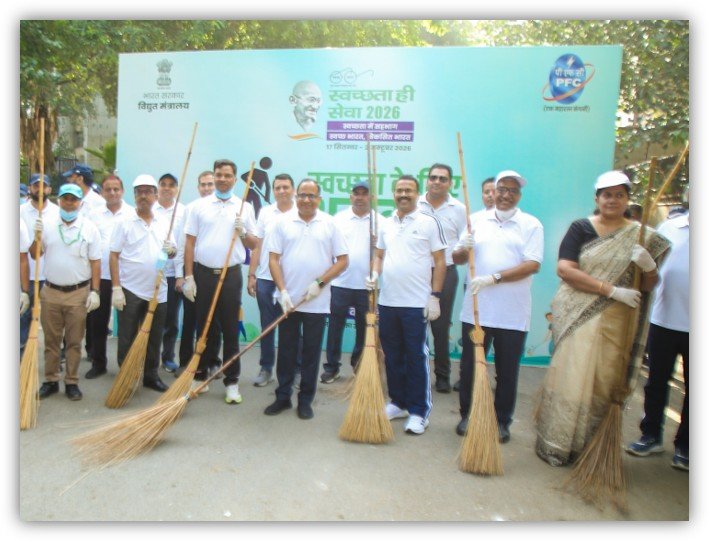
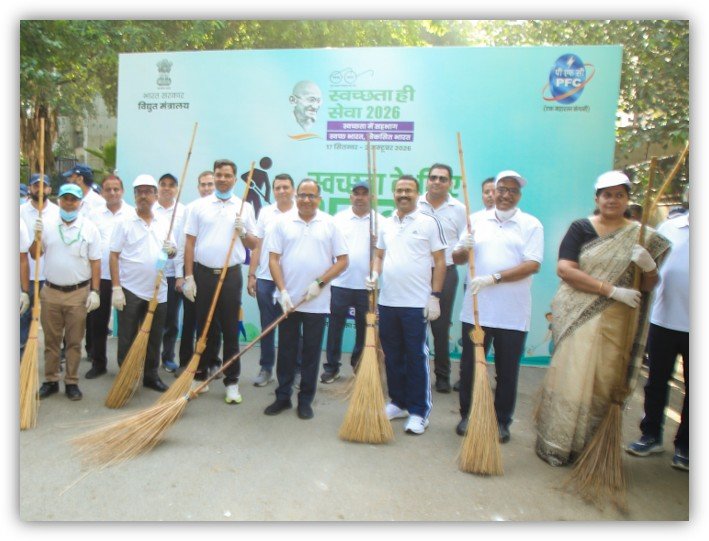
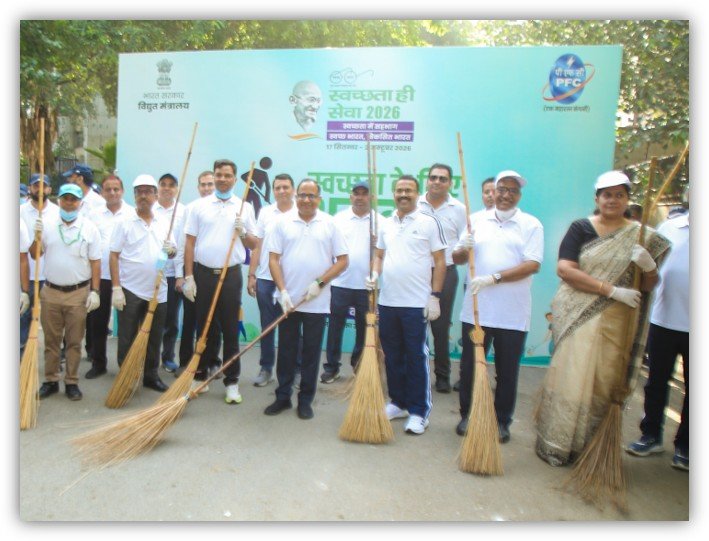
    Power Finance Corporation Limited (PFC), a Maharatna CPSE under the Ministry of Power, organised a cleanliness drive, “Swachhata Ke Liye Shramdaan,” at its office in New Delhi today, under the patronage of the Ministry of Power,

    Government of India. The initiative was undertaken as part of the Government of India’s “Ek Ghanta, Ek Din, Ek Saath” movement, which calls upon citizens, government organisations and institutions to dedicate one hour of voluntary labour towards cleanliness and contribute to the vision of Swachh Bharat.

    The cleanliness drive was led by Shri Ghanshyam Prasad, Chairperson, CEA, along with Shri Rajesh Kumar Agarwal, Director (Finance), PFC; Shri Piyush Singh, Additional Secretary, Ministry of Power; Shri Diwakar Nath Mishra, Additional Secretary, Ministry of Power; and Dr. D. Saibaba, Additional Secretary, Ministry of Power, along with senior officers from the Ministry of Power and PFC employees.

    The programme commenced with the Swachhata Pledge, administered to all participants. Officers and employees collectively pledged to contribute towards cleanliness, maintain clean homes, workplaces and public spaces, refrain from littering, and encourage others to adopt responsible cleanliness practices.

    The participants subsequently joined the Shramdaan activity, undertaking cleanliness and sanitation work in the office premises and surrounding areas. The initiative reflected the collective commitment of the Ministry of Power and its CPSEs towards promoting cleanliness, hygiene and responsible civic practices.

    Speaking on the occasion, Shri Ghanshayam Prasad, Chairperson, CEA, appreciated the enthusiastic participation of officers and employees and emphasised that cleanliness should become a sustained way of life rather than a one-time activity. He encouraged all participants to carry the spirit of Shramdaan beyond the workplace and extend it to their homes and communities.

    The “Ek Ghanta, Ek Din, Ek Saath” initiative reinforces the message that cleanliness is a shared responsibility and that collective participation can contribute meaningfully towards building a cleaner and healthier nation. The cleanliness drive organised by PFC under the patronage of the Ministry of Power is part of the Ministry’s broader efforts to promote the values of Swachhata, sustainability and collective responsibility across the power sector.

    The Ministry of Power and its CPSEs will continue to undertake cleanliness drives, awareness campaigns and other initiatives in support of the Swachh Bharat Mission and the Government of India’s vision of a clean and sustainable India.

  • PFC Organises “Swachhata Ke Liye Shramdaan” Cleanliness Drive Under the Patronage of the Ministry of Power

    PFC Organises “Swachhata Ke Liye Shramdaan” Cleanliness Drive Under the Patronage of the Ministry of Power

    Power Finance Corporation Limited (PFC), a Maharatna CPSE under the Ministry of Power, organised a cleanliness drive, “Swachhata Ke Liye Shramdaan,” at its office in New Delhi today, under the patronage of the Ministry of Power,

    Government of India. The initiative was undertaken as part of the Government of India’s “Ek Ghanta, Ek Din, Ek Saath” movement, which calls upon citizens, government organisations and institutions to dedicate one hour of voluntary labour towards cleanliness and contribute to the vision of Swachh Bharat.

    The cleanliness drive was led by Shri Ghanshyam Prasad, Chairperson, CEA, along with Shri Rajesh Kumar Agarwal, Director (Finance), PFC; Shri Piyush Singh, Additional Secretary, Ministry of Power; Shri Diwakar Nath Mishra, Additional Secretary, Ministry of Power; and Dr. D. Saibaba, Additional Secretary, Ministry of Power, along with senior officers from the Ministry of Power and PFC employees.

    The programme commenced with the Swachhata Pledge, administered to all participants. Officers and employees collectively pledged to contribute towards cleanliness, maintain clean homes, workplaces and public spaces, refrain from littering, and encourage others to adopt responsible cleanliness practices.

    The participants subsequently joined the Shramdaan activity, undertaking cleanliness and sanitation work in the office premises and surrounding areas. The initiative reflected the collective commitment of the Ministry of Power and its CPSEs towards promoting cleanliness, hygiene and responsible civic practices.

    Speaking on the occasion, Shri Ghanshayam Prasad, Chairperson, CEA, appreciated the enthusiastic participation of officers and employees and emphasised that cleanliness should become a sustained way of life rather than a one-time activity. He encouraged all participants to carry the spirit of Shramdaan beyond the workplace and extend it to their homes and communities.

    The “Ek Ghanta, Ek Din, Ek Saath” initiative reinforces the message that cleanliness is a shared responsibility and that collective participation can contribute meaningfully towards building a cleaner and healthier nation. The cleanliness drive organised by PFC under the patronage of the Ministry of Power is part of the Ministry’s broader efforts to promote the values of Swachhata, sustainability and collective responsibility across the power sector.

    The Ministry of Power and its CPSEs will continue to undertake cleanliness drives, awareness campaigns and other initiatives in support of the Swachh Bharat Mission and the Government of India’s vision of a clean and sustainable India.

  • PFC Organises “Swachhata Ke Liye Shramdaan” Cleanliness Drive Under the Patronage of the Ministry of Power

    PFC Organises “Swachhata Ke Liye Shramdaan” Cleanliness Drive Under the Patronage of the Ministry of Power

    Power Finance Corporation Limited (PFC), a Maharatna CPSE under the Ministry of Power, organised a cleanliness drive, “Swachhata Ke Liye Shramdaan,” at its office in New Delhi today, under the patronage of the Ministry of Power,

    Government of India. The initiative was undertaken as part of the Government of India’s “Ek Ghanta, Ek Din, Ek Saath” movement, which calls upon citizens, government organisations and institutions to dedicate one hour of voluntary labour towards cleanliness and contribute to the vision of Swachh Bharat.

    The cleanliness drive was led by Shri Ghanshyam Prasad, Chairperson, CEA, along with Shri Rajesh Kumar Agarwal, Director (Finance), PFC; Shri Piyush Singh, Additional Secretary, Ministry of Power; Shri Diwakar Nath Mishra, Additional Secretary, Ministry of Power; and Dr. D. Saibaba, Additional Secretary, Ministry of Power, along with senior officers from the Ministry of Power and PFC employees.

    The programme commenced with the Swachhata Pledge, administered to all participants. Officers and employees collectively pledged to contribute towards cleanliness, maintain clean homes, workplaces and public spaces, refrain from littering, and encourage others to adopt responsible cleanliness practices.

    The participants subsequently joined the Shramdaan activity, undertaking cleanliness and sanitation work in the office premises and surrounding areas. The initiative reflected the collective commitment of the Ministry of Power and its CPSEs towards promoting cleanliness, hygiene and responsible civic practices.

    Speaking on the occasion, Shri Ghanshayam Prasad, Chairperson, CEA, appreciated the enthusiastic participation of officers and employees and emphasised that cleanliness should become a sustained way of life rather than a one-time activity. He encouraged all participants to carry the spirit of Shramdaan beyond the workplace and extend it to their homes and communities.

    The “Ek Ghanta, Ek Din, Ek Saath” initiative reinforces the message that cleanliness is a shared responsibility and that collective participation can contribute meaningfully towards building a cleaner and healthier nation. The cleanliness drive organised by PFC under the patronage of the Ministry of Power is part of the Ministry’s broader efforts to promote the values of Swachhata, sustainability and collective responsibility across the power sector.

    The Ministry of Power and its CPSEs will continue to undertake cleanliness drives, awareness campaigns and other initiatives in support of the Swachh Bharat Mission and the Government of India’s vision of a clean and sustainable India.

  • PFC Organises “Swachhata Ke Liye Shramdaan” Cleanliness Drive Under the Patronage of the Ministry of Power

    PFC Organises “Swachhata Ke Liye Shramdaan” Cleanliness Drive Under the Patronage of the Ministry of Power

    Power Finance Corporation Limited (PFC), a Maharatna CPSE under the Ministry of Power, organised a cleanliness drive, “Swachhata Ke Liye Shramdaan,” at its office in New Delhi today, under the patronage of the Ministry of Power,

    Government of India. The initiative was undertaken as part of the Government of India’s “Ek Ghanta, Ek Din, Ek Saath” movement, which calls upon citizens, government organisations and institutions to dedicate one hour of voluntary labour towards cleanliness and contribute to the vision of Swachh Bharat.

    The cleanliness drive was led by Shri Ghanshyam Prasad, Chairperson, CEA, along with Shri Rajesh Kumar Agarwal, Director (Finance), PFC; Shri Piyush Singh, Additional Secretary, Ministry of Power; Shri Diwakar Nath Mishra, Additional Secretary, Ministry of Power; and Dr. D. Saibaba, Additional Secretary, Ministry of Power, along with senior officers from the Ministry of Power and PFC employees.

    The programme commenced with the Swachhata Pledge, administered to all participants. Officers and employees collectively pledged to contribute towards cleanliness, maintain clean homes, workplaces and public spaces, refrain from littering, and encourage others to adopt responsible cleanliness practices.

    The participants subsequently joined the Shramdaan activity, undertaking cleanliness and sanitation work in the office premises and surrounding areas. The initiative reflected the collective commitment of the Ministry of Power and its CPSEs towards promoting cleanliness, hygiene and responsible civic practices.

    Speaking on the occasion, Shri Ghanshayam Prasad, Chairperson, CEA, appreciated the enthusiastic participation of officers and employees and emphasised that cleanliness should become a sustained way of life rather than a one-time activity. He encouraged all participants to carry the spirit of Shramdaan beyond the workplace and extend it to their homes and communities.

    The “Ek Ghanta, Ek Din, Ek Saath” initiative reinforces the message that cleanliness is a shared responsibility and that collective participation can contribute meaningfully towards building a cleaner and healthier nation. The cleanliness drive organised by PFC under the patronage of the Ministry of Power is part of the Ministry’s broader efforts to promote the values of Swachhata, sustainability and collective responsibility across the power sector.

    The Ministry of Power and its CPSEs will continue to undertake cleanliness drives, awareness campaigns and other initiatives in support of the Swachh Bharat Mission and the Government of India’s vision of a clean and sustainable India.