Category: All News

  • Industry Leaders Discuss India’s Energy Future at the 20th India Energy Summit 2026 in New Delhi

    Industry Leaders Discuss India’s Energy Future at the 20th India Energy Summit 2026 in New Delhi

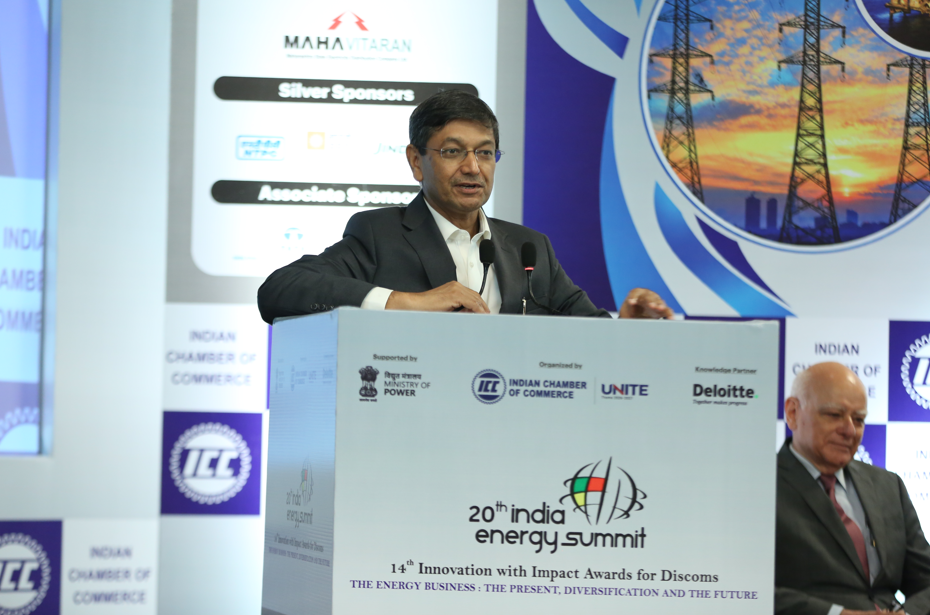
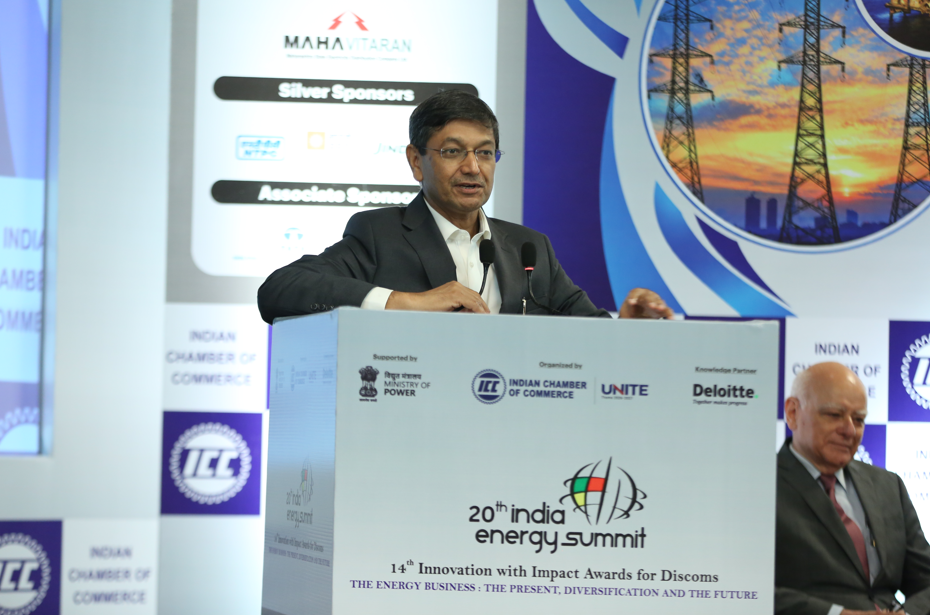
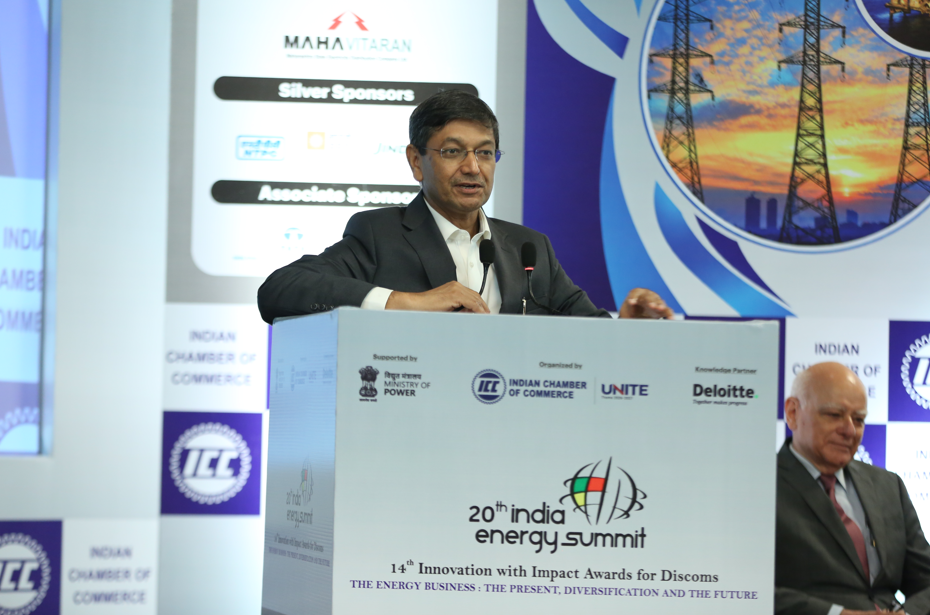
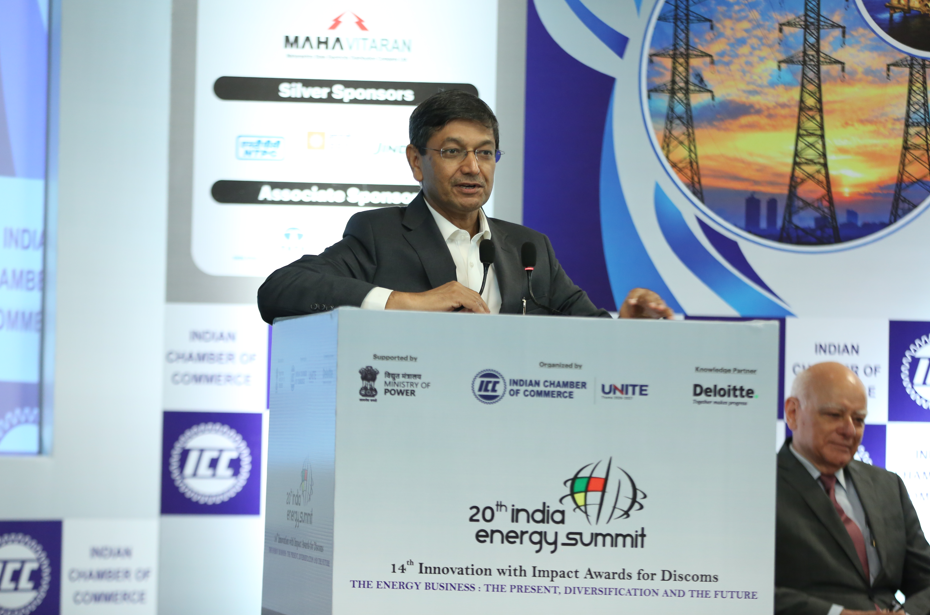
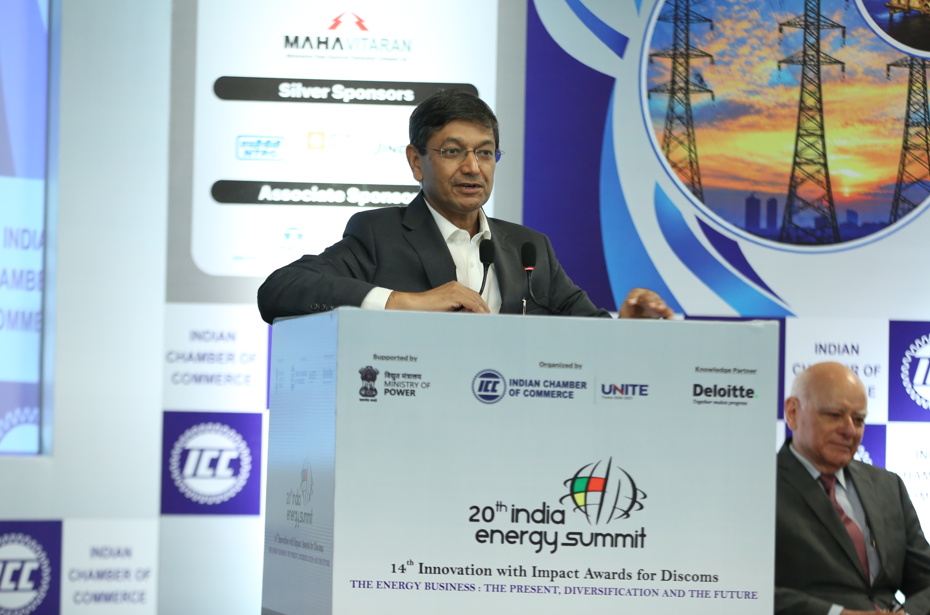
    The Indian Chamber of Commerce (ICC) hosted the first day of the 20th India Energy Summit 2026 on October 13 at New Delhi, bringing together policymakers, government representatives and industry leaders to discuss India’s evolving energy landscape. Held under the theme “The Energy Business: The Present, Diversification and The Future,” the summit is supported by the Ministry of Power, Government of India.

    Against the backdrop of rising power demand and a growing energy crisis, the summit focused on key issues shaping the sector, including energy diversification, reliable and affordable electricity, renewable energy integration, grid stability and energy storage. Discussions also covered the potential of biofuels, coal gasification, hydrogen and nuclear power, alongside developments in electricity markets, with an emphasis on industry collaboration and solutions to meet India’s future energy needs.

    Addressing the summit, Gurdeep Singh, Chairman and Managing Director, NTPC Limited, highlighted the impact of economic growth, El Niño conditions, AI, data centres and rising cooling requirements on electricity demand, calling for greater grid flexibility, investment in energy storage and technological self-reliance.

    “The real question is not whether thermal power or renewable energy should take precedence, but whether we can provide power on demand and at an affordable price. With coal continuing to play a significant role in meeting India’s electricity needs and renewable energy capacity expanding, grid flexibility and energy storage are becoming increasingly important. Technology self-reliance is equally critical to energy security, and we must develop domestic alternatives that reduce import dependence while advancing a diversified energy mix,” he said.

    Anil Razdan, former Power Secretary, Government of India, and Chairman of the ICC Expert Committee on Energy, highlighted how geopolitical tensions and disruptions in global energy transportation are reshaping energy markets. He observed that rising oil prices reflect not only concerns around fuel availability but also the growing cost and complexity of transporting energy to major consumption centres.

    “Recent global disruptions have brought energy security sharply into focus. The challenge is not simply the availability of fuel, but also its transportation and the cost of getting it to growing consumption centres. Renewable energy offers enormous potential, but its intermittent nature makes storage an essential part of the power system. Unless adequate storage infrastructure is developed, we will not be able to realise the full potential of renewable energy,” Razdan said.

    Razdan also stressed that sustained investment across the energy value chain depends on a supportive business environment, with clear regulations, access to raw materials and viable markets. Underscoring the importance of financial stability in power distribution, he said that distribution companies (discoms) must be strengthened to ensure timely revenue recovery and enable continued investment in the sector.

    Emphasising the need for proactive planning and targeted policy interventions to address rising electricity demand and emerging pressures on the power system, Ghanshyam Prasad, Chairperson, Central Electricity Authority (CEA), said, “With electricity demand rising significantly, we need to plan well in advance to manage the demand-supply gap. This calls for stronger demand forecasting and appropriate policies to address emerging requirements, including the growing energy needs of data centres. Building a more India-centric manufacturing ecosystem and strengthening domestic capabilities in power sector components will also be critical to reducing dependence on global supply chains and enhancing India’s energy security.”

    The summit’s inaugural session also featured a theme presentation by Mr Anujesh Dwivedi, Power Utilities & Renewables Leader, Deloitte, the summit’s knowledge partner and award evaluator. Special addresses were delivered by Mr Abhigyan Kotnala, CEO, Fortgloster Industries Limited; Mr Sudip Nag, Managing Director, Jindal Power Limited; and Mr Kush Singh, Managing Director, Enecovery.

    The first day’s technical sessions cover power capacity addition across renewable, thermal and hydro sources; the role of biofuels in integrating agricultural and energy economies; and grid access and stability for resilient renewable energy integration, including storage support and commercial optimisation. Another session examines opportunities to enhance coal gasification and develop coal derivatives, by-products and chemicals.

    Day 2 deliberations will cover hydrogen production and pricing, nuclear power, and BSR standardisation and execution. The summit will conclude with the recognition of consistently performing government and private distribution companies from across India. Among those to be recognised are Maharashtra State Electricity Distribution Company Limited, Kerala State Electricity Board, BSES Yamuna Power Limited, Northern Power Distribution Company of Telangana Limited, Tata Steel Utilities and Infrastructure Services Limited, and West Bengal State Electricity Distribution Company Limited.

    Through its focus on energy security, diversification, storage, power markets and technological innovation, the 20th India Energy Summit aims to facilitate dialogue between policymakers and industry stakeholders on building a resilient, affordable and future-ready energy ecosystem. The discussions seek to highlight the importance of coordinated planning, financial stability, domestic manufacturing and investment across energy sources in meeting India’s evolving power requirements.

  • Industry Leaders Discuss India’s Energy Future at the 20th India Energy Summit 2026 in New Delhi

    Industry Leaders Discuss India’s Energy Future at the 20th India Energy Summit 2026 in New Delhi

    The Indian Chamber of Commerce (ICC) hosted the first day of the 20th India Energy Summit 2026 on October 13 at New Delhi, bringing together policymakers, government representatives and industry leaders to discuss India’s evolving energy landscape. Held under the theme “The Energy Business: The Present, Diversification and The Future,” the summit is supported by the Ministry of Power, Government of India.

    Against the backdrop of rising power demand and growing energy crisis, the summit focused on key issues shaping the sector, including energy diversification, reliable and affordable electricity, renewable energy integration, grid stability and energy storage. Discussions also covered the potential of biofuels, coal gasification, hydrogen and nuclear power, alongside developments in electricity markets, with an emphasis on industry collaboration and solutions to meet India’s future energy needs.

    Addressing the summit, Gurdeep Singh, Chairman and Managing Director, NTPC Limited, highlighted the impact of economic growth, El Niño conditions, AI, data centres and rising cooling requirements on electricity demand, calling for greater grid flexibility, investment in energy storage and technological self-reliance.

    “The real question is not whether thermal power or renewable energy should take precedence, but whether we can provide power on demand and at an affordable price. With coal continuing to play a significant role in meeting India’s electricity needs and renewable energy capacity expanding, grid flexibility and energy storage are becoming increasingly important. Technology self-reliance is equally critical to energy security, and we must develop domestic alternatives that reduce import dependence while advancing a diversified energy mix,” he said.

    Anil Razdan, former Power Secretary, Government of India, and Chairman of the ICC Expert Committee on Energy, highlighted how geopolitical tensions and disruptions in global energy transportation are reshaping energy markets. He observed that rising oil prices reflect not only concerns around fuel availability but also the growing cost and complexity of transporting energy to major consumption centres.

    “Recent global disruptions have brought energy security sharply into focus. The challenge is not simply the availability of fuel, but also its transportation and the cost of getting it to growing consumption centres. Renewable energy offers enormous potential, but its intermittent nature makes storage an essential part of the power system. Unless adequate storage infrastructure is developed, we will not be able to realise the full potential of renewable energy,” Razdan said.

    Razdan also stressed that sustained investment across the energy value chain depends on a supportive business environment, with clear regulations, access to raw materials and viable markets. Underscoring the importance of financial stability in power distribution, he said that distribution companies (discoms) must be strengthened to ensure timely revenue recovery and enable continued investment in the sector.

    Emphasising the need for proactive planning and targeted policy interventions to address rising electricity demand and emerging pressures on the power system, Ghanshyam Prasad, Chairperson, Central Electricity Authority (CEA), said, “With electricity demand rising significantly, we need to plan well in advance to manage the demand-supply gap. This calls for stronger demand forecasting and appropriate policies to address emerging requirements, including the growing energy needs of data centres. Building a more India-centric manufacturing ecosystem and strengthening domestic capabilities in power sector components will also be critical to reducing dependence on global supply chains and enhancing India’s energy security.”

    The summit’s inaugural session also featured a theme presentation by Mr Anujesh Dwivedi, Power Utilities & Renewables Leader, Deloitte, the summit’s knowledge partner and award evaluator. Special addresses were delivered by Mr Abhigyan Kotnala, CEO, Fortgloster Industries Limited; Mr Sudip Nag, Managing Director, Jindal Power Limited; and Mr Kush Singh, Managing Director, Enecovery.

    The first day’s technical sessions cover power capacity addition across renewable, thermal and hydro sources; the role of biofuels in integrating agricultural and energy economies; and grid access and stability for resilient renewable energy integration, including storage support and commercial optimisation. Another session examines opportunities to enhance coal gasification and develop coal derivatives, by-products and chemicals.

    Day 2 deliberations will cover hydrogen production and pricing, nuclear power, and BSR standardisation and execution. The summit will conclude with the recognition of consistently performing government and private distribution companies from across India. Among those to be recognised are Maharashtra State Electricity Distribution Company Limited, Kerala State Electricity Board, BSES Yamuna Power Limited, Northern Power Distribution Company of Telangana Limited, Tata Steel Utilities and Infrastructure Services Limited, and West Bengal State Electricity Distribution Company Limited.

    Through its focus on energy security, diversification, storage, power markets and technological innovation, the 20th India Energy Summit aims to facilitate dialogue between policymakers and industry stakeholders on building a resilient, affordable and future-ready energy ecosystem. The discussions seek to highlight the importance of coordinated planning, financial stability, domestic manufacturing and investment across energy sources in meeting India’s evolving power requirements.

  • Industry Leaders Discuss India’s Energy Future at the 20th India Energy Summit 2026 in New Delhi

    The Indian Chamber of Commerce (ICC) hosted the first day of the 20th India Energy Summit 2026 on October 13 at New Delhi, bringing together policymakers, government representatives and industry leaders to discuss India’s evolving energy landscape. Held under the theme “The Energy Business: The Present, Diversification and The Future,” the summit is supported by the Ministry of Power, Government of India.

    Against the backdrop of rising power demand and growing energy crisis, the summit focused on key issues shaping the sector, including energy diversification, reliable and affordable electricity, renewable energy integration, grid stability and energy storage. Discussions also covered the potential of biofuels, coal gasification, hydrogen and nuclear power, alongside developments in electricity markets, with an emphasis on industry collaboration and solutions to meet India’s future energy needs.

    Addressing the summit, Gurdeep Singh, Chairman and Managing Director, NTPC Limited, highlighted the impact of economic growth, El Niño conditions, AI, data centres and rising cooling requirements on electricity demand, calling for greater grid flexibility, investment in energy storage and technological self-reliance.

    “The real question is not whether thermal power or renewable energy should take precedence, but whether we can provide power on demand and at an affordable price. With coal continuing to play a significant role in meeting India’s electricity needs and renewable energy capacity expanding, grid flexibility and energy storage are becoming increasingly important. Technology self-reliance is equally critical to energy security, and we must develop domestic alternatives that reduce import dependence while advancing a diversified energy mix,” he said.

    Anil Razdan, former Power Secretary, Government of India, and Chairman of the ICC Expert Committee on Energy, highlighted how geopolitical tensions and disruptions in global energy transportation are reshaping energy markets. He observed that rising oil prices reflect not only concerns around fuel availability but also the growing cost and complexity of transporting energy to major consumption centres.

    “Recent global disruptions have brought energy security sharply into focus. The challenge is not simply the availability of fuel, but also its transportation and the cost of getting it to growing consumption centres. Renewable energy offers enormous potential, but its intermittent nature makes storage an essential part of the power system. Unless adequate storage infrastructure is developed, we will not be able to realise the full potential of renewable energy,” Razdan said.

    Razdan also stressed that sustained investment across the energy value chain depends on a supportive business environment, with clear regulations, access to raw materials and viable markets. Underscoring the importance of financial stability in power distribution, he said that distribution companies (discoms) must be strengthened to ensure timely revenue recovery and enable continued investment in the sector.

    Emphasising the need for proactive planning and targeted policy interventions to address rising electricity demand and emerging pressures on the power system, Ghanshyam Prasad, Chairperson, Central Electricity Authority (CEA), said, “With electricity demand rising significantly, we need to plan well in advance to manage the demand-supply gap. This calls for stronger demand forecasting and appropriate policies to address emerging requirements, including the growing energy needs of data centres. Building a more India-centric manufacturing ecosystem and strengthening domestic capabilities in power sector components will also be critical to reducing dependence on global supply chains and enhancing India’s energy security.”

    The summit’s inaugural session also featured a theme presentation by Mr Anujesh Dwivedi, Power Utilities & Renewables Leader, Deloitte, the summit’s knowledge partner and award evaluator. Special addresses were delivered by Mr Abhigyan Kotnala, CEO, Fortgloster Industries Limited; Mr Sudip Nag, Managing Director, Jindal Power Limited; and Mr Kush Singh, Managing Director, Enecovery.

    The first day’s technical sessions cover power capacity addition across renewable, thermal and hydro sources; the role of biofuels in integrating agricultural and energy economies; and grid access and stability for resilient renewable energy integration, including storage support and commercial optimisation. Another session examines opportunities to enhance coal gasification and develop coal derivatives, by-products and chemicals.

    Day 2 deliberations will cover hydrogen production and pricing, nuclear power, and BSR standardisation and execution. The summit will conclude with the recognition of consistently performing government and private distribution companies from across India. Among those to be recognised are Maharashtra State Electricity Distribution Company Limited, Kerala State Electricity Board, BSES Yamuna Power Limited, Northern Power Distribution Company of Telangana Limited, Tata Steel Utilities and Infrastructure Services Limited, and West Bengal State Electricity Distribution Company Limited.

    Through its focus on energy security, diversification, storage, power markets and technological innovation, the 20th India Energy Summit aims to facilitate dialogue between policymakers and industry stakeholders on building a resilient, affordable and future-ready energy ecosystem. The discussions seek to highlight the importance of coordinated planning, financial stability, domestic manufacturing and investment across energy sources in meeting India’s evolving power requirements.

  • Beyond Carbon Capture: Why Carbon Utilisation Is the Next Frontier in Industrial Decarbonisation

    Beyond Carbon Capture: Why Carbon Utilisation Is the Next Frontier in Industrial Decarbonisation

    1. From capture to utilisation: reframing the carbon question

    For over a decade, the industrial decarbonisation conversation has been dominated by two letters: CC. Capture the carbon, we are told, and the problem is solved. But capture is only half an answer. A tonne of CO₂ captured and buried is a tonne paid for forever — in compression, transport, injection, monitoring and liability — with nothing to show for it except an invoice. Storage requires suitable geology, which India is still mapping; pipeline infrastructure we have not yet built; and someone to pay, in perpetuity, for a product with no buyer. The question Indian industry should be asking is not “where do we store our carbon?” but “what can we build with it?”

    That is the difference between Carbon Capture and Storage (CCS) and Carbon Capture and Utilisation (CCU), and it is not semantic. It is the difference between a permanent cost centre and a new revenue line. When captured carbon and carbon-bearing industrial by-products are treated as feedstock rather than waste, decarbonisation stops being a burden on the P&L and starts appearing on the right side of it. A project that pays back is a project that gets built — and that, more than any subsidy, is what will take industrial decarbonisation from pilot scale to plant scale.

    2. The policy mandate: India has already chosen this path

    India’s policymakers arrived at this conclusion before much of its industry did. NITI Aayog’s 2022 report, “Carbon Capture, Utilisation, and Storage (CCUS) Policy Framework and its Deployment Mechanism in India,” identified CCUS as an essential strategy for hard-to-abate sectors — explicitly naming cement, steel and petrochemicals — on the road to India’s 2070 net-zero commitment [1]. Roughly 60% of India’s CO₂ emissions come from large point sources amenable to capture, and with industrial emissions projected to approach 2,300 million tonnes per annum by 2030, the Aayog concluded that CCUS has a critical role to play in India’s transition [2].

    In January 2025, NITI Aayog went further, convening a dedicated national workshop on “CCUS in the Indian Cement Sector” at Vigyan Bhawan, with the Principal Scientific Adviser, the Secretary (Power) and the heads of CSIR and major PSUs in attendance. The workshop called for a comprehensive CCUS roadmap for cement and confirmed that the Ministry of Power is preparing a national CCUS Mission [3]. Within months, the Department of Science and Technology operationalised this intent: in May 2025 it approved five Carbon Capture and Utilisation testbeds in the cement sector — India’s first academia-industry CCU research cluster, structured as public-private partnerships [4].

    Most significantly, obligation has now replaced exhortation. The Greenhouse Gas Emission Intensity (GEI) Target Rules, notified under the Environment (Protection) Act and brought into force in October 2025, are India’s first legally binding industrial emission-intensity mandate. Cement is the largest covered sector by far — 247 obligated units against a baseline of roughly 0.62 tCO₂e per tonne of cement — with intensity-reduction targets in the range of 4.7–7.6% over FY 2025–26 and FY 2026–27, enforced through the Carbon Credit Trading Scheme (CCTS): outperformers earn tradable carbon credit certificates, while shortfalls attract environmental compensation at twice the average carbon credit price [5][6]. With the January 2026 expansion, 490 obligated entities across nine sectors now sit inside this compliance mechanism [7]. For a cement plant, carbon performance is no longer a sustainability-report aspiration; it is a statutory number with a market price attached.

    3. India’s cement majors are already moving

    The industry’s leaders have read the signal. Under the DST testbed programme, JK Cement is partnering the National Council for Cement and Building Materials at Ballabhgarh on a pilot capturing two tonnes of CO₂ per day through oxygen-enhanced calcination and converting it into lightweight concrete blocks and olefins. IIT Kanpur and JSW Cement are demonstrating carbon-negative mineralisation that locks CO₂ into stable mineral form. IIT Bombay and Dalmia Cement are developing a catalyst-driven capture process to be installed at an operating plant. CSIR-IIP, IIT Tirupati and IISc, again with JSW Cement, are applying vacuum swing adsorption to separate CO₂ from kiln gases for reuse in building materials. And UltraTech Cement, with IIT Madras and BITS Pilani Goa, is hosting an integrated carbon-reduction testbed at its Reddipalayam plant in Tamil Nadu [4][8].

    Notice what unites these five projects: every single one is a utilisation project. Not one proposes to pipe CO₂ to a storage reservoir. India’s premier institutions and its largest cement producers — UltraTech, Dalmia Bharat, JK Cement, JSW Cement — have independently converged on the same conclusion this paper argues: in the Indian context, carbon must be converted into value, not buried at cost.

    4. Steel: the same logic on a bigger canvas

    Cement is not alone in this transition — iron and steel, India’s other great hard-to-abate sector, was named alongside it in NITI Aayog’s CCUS framework and was brought into the CCTS compliance net through the June 2025 notification covering iron and steel, fertiliser, petroleum refining, petrochemicals and textiles [6]. And here too, the pioneering projects are utilisation projects. As far back as 2021, Tata Steel commissioned India’s first plant capturing CO₂ directly from blast furnace gas at its Jamshedpur Works — a 5-tonne-per-day amine-based CCU facility, developed with Carbon Clean, in which the captured carbon is reused onsite and the depleted gas is returned to the plant’s gas network at a higher calorific value. It was described at the time as a first of its kind in the global steel industry, and it was conceived from day one as a circular-carbon project, not a storage project [10].

    Steel’s by-product story is even more instructive. India’s integrated steel plants generate roughly 18.5 million tonnes of steel slag every year, much of it historically stockpiled as waste. Under a Ministry of Steel R&D programme sponsored on the directives of NITI Aayog, CSIR’s Central Road Research Institute developed design guidelines for using processed slag in road building — and in 2022 India’s first steel slag road opened at Hazira, Surat: a six-lane stretch built with around one lakh tonnes of processed slag aggregates from ArcelorMittal Nippon Steel’s plant, with Tata Steel, JSW Steel and Rashtriya Ispat participating as industrial partners. The slag’s higher strength allowed the pavement to be built roughly 30% thinner than a conventional road [11]. Waste to wealth, certified by the state, driven on daily by heavy trucks — there is no better proof that industrial by-products are a resource waiting for the right process.

    The pattern across steel and cement is identical: a hard-to-abate process, a carbon or by-product stream long treated as a liability, and a conversion technology that turns it into product. What steel has done with slag and blast furnace CO₂, cement can now do with its own most awkward residue.

    5. The AFR paradox: doing the right thing creates a new waste

    There is a second, less-discussed carbon story inside every progressive cement plant. India’s cement industry — the world’s second largest — has moved aggressively on alternative fuels and raw materials (AFR), co-processing waste plastics, used tyres, refuse-derived fuel and industrial residues in its kilns. This is genuine circularity, and it directly improves the GEI numbers the new rules demand. But it carries a chemical consequence: as waste-derived fuels burn, chlorides, sulphur oxides and alkali compounds (K₂O, Na₂O) volatilise in the kiln, circulate, and concentrate. To protect the kiln and the clinker, modern high-AFR plants install chlorine bypass systems — and these systems extract a chloride-rich by-product, CBS dust, whose volume grows with every percentage point of thermal substitution the plant achieves. The dust is classified waste: hazardous to landfill, costly to handle, and an awkward footnote in the circularity narrative. The plant doing the most on waste co-processing ends up generating a new waste of its own.

    6. The Korean answer: one platform, many feedstocks

    This is where Korean technology has something important to teach us. South Korea’s cement industry adopted high AFR rates earlier than most of the world, confronted the CBS dust problem first, and solved it — with utilisation, not disposal. Anytech Co., Ltd. of South Korea developed a CCU-based process in which the plant’s own stack gas, at 15–20% CO₂ concentration, is used to mineralise CBS dust: chlorides are separated, heavy metals are removed, and the process yields two products — potassium chloride (KCl) at better than 99% purity, and recycled calcium carbonate (CaCO₃) that returns to the cement process as raw material. The process runs on waste heat recovered from the cement plant itself, and process water is recovered and reused. Depending on a plant’s objectives, the system can be configured for full KCl recovery with CO₂ mineralisation, or as a simpler mineralisation-only line.

    The economics are the point. The investment is recovered through two streams simultaneously: the disposal costs the plant no longer pays, and the sale of by-products it now owns. Nothing is buried; nothing is paid for in perpetuity. And the technology is not a laboratory promise — it operates commercially at Korean reference plants, running stably on bypass dust with chloride content of 20–25%, levels well above what most Indian plants encounter today. Through Anytech Hughes Climate Solutions, our Indo-Korean joint venture, we have spent the past two years adapting this process to Indian dust chemistries, Indian equipment supply chains and Indian project economics. Earlier this year we signed our first MOU with a leading Indian cement manufacturer at the Korea–India Business Partnership ceremony in New Delhi, and detailed technical engagements are under way with several of the country’s largest cement groups.

    A word on the partnership itself, because the structure matters as much as the technology. Anytech Co., Ltd. of South Korea is an environmental technology company with two decades of work in industrial air purification and cement-sector solutions, whose technology has been independently evaluated under Korea’s formal technology-rating system. Hughes & Hughes Chem Limited is a Delhi-based public limited engineering company that has served Indian Railways and public and private sector clients since 1991, with more than 2,000 completed contracts and a live order book of roughly ₹500 crore across 110 ongoing projects in 15 states — including fabrication work on the Vande Bharat programme at ICF Chennai. Anytech Hughes Climate Solutions Pvt. Ltd. brings the two together as a 51:49 Indo-Korean joint venture: Korean process technology and reference-plant experience on one side, three decades of Indian engineering, project execution and industrial relationships on the other. This is deliberately not a distributorship or an equipment-import arrangement. It is a genuine technology partnership — with Indian equipment sourcing, Indian project delivery and shared accountability — which is, we believe, the model India’s CCUS ambitions need: world-class technology, localised and executed by companies with skin in the Indian game.

    Crucially, CBS dust is only the first feedstock. The same mineral carbonation platform — stack CO₂ reacted with an alkaline industrial residue to yield stable carbonates and recoverable salts — applies wherever heavy industry produces calcium- or potassium-bearing waste. Fly ash from refinery and thermal captive power is the second: we have proposed a 36,000 tonnes-per-annum fly ash CO₂ mineral carbonation plant to a leading Indian refining and petrochemicals company, with project revenue flowing from the sale of precipitated calcium carbonate and from carbon emission rights, and a payback evaluated like any other capital project. Steel slag is the third: in response to a formal RFP from one of India’s largest steel producers, we are progressing a site-specific CO₂ mineralisation proposal that fixes flue-gas CO₂ into slag to produce carbonated aggregates — the same product family India’s slag-road programme has already legitimised — with techno-economic viability assessed inclusive of carbon credits under the new compliance regime. Potash from CBS dust, calcium carbonate from fly ash, aggregates from slag: one Korean-proven platform, three Indian waste streams, three product markets.

    7. The national dividend: potash

    Consider what high-purity KCl recovery means in the Indian context. India meets 100% of its potash requirement through imports — roughly 4 million tonnes of muriate of potash annually — a dependence the Government has repeatedly flagged as a food-security and price-stability vulnerability, addressed so far only through long-term supply MOUs with Canada, Israel and Russia [9]. A technology that takes a hazardous by-product off a cement plant’s hands and returns domestically produced, fertiliser-grade KCl serves three national priorities at once: waste circularity, import substitution and industrial decarbonisation. Multiply that across the dozens of high-AFR kilns in India’s cement fleet, and CBS dust stops being a disposal problem and becomes a strategic domestic resource.

    8. Lessons from the field

    Two lessons from our work in India are worth sharing with every plant evaluating utilisation. First, measurement matters enormously. The economics of a CBS dust project can swing several-fold on how the by-product is characterised — in particular, the analytical method used to determine chloride content can dramatically understate the recoverable value. Before any plant concludes that utilisation “doesn’t pay,” it should make sure it is measuring the resource correctly. Second, utilisation projects must be evaluated the way industry evaluates any capital project — on payback — and well-structured ones clear that bar. That is precisely their advantage over storage, which never can. Under the GEI regime, the calculus improves further: emissions avoided through CCU flow directly into a plant’s intensity numbers and, through the CCTS, into tradable value.

    9. What needs to happen next

    For carbon utilisation to scale in India, three enablers are needed. Standards bodies must move quickly to certify recovered products — recycled KCl, mineralised carbonates, CCU-derived aggregates — so they flow into mainstream supply chains without regulatory friction. Waste regulation should formally recognise valorisation as the preferred route for by-products such as CBS dust, ahead of landfill. And green finance — climate funds, ESG capital, multilateral institutions — should internalise that revenue-generating decarbonisation is the most bankable decarbonisation there is. The forthcoming national CCUS Mission is the natural vehicle to knit these together.

    10. Conclusion

    The capture debate taught industry to see carbon as a liability to be managed. The utilisation era asks us to see it as a resource to be refined. India’s policy architecture — from NITI Aayog’s framework to the DST testbeds to the binding GEI targets now sitting on 247 cement plants — has already made the choice; its leading cement companies are already building, and its steel majors — capturing blast furnace CO₂ for reuse and paving highways with slag — have shown the by-product-to-product playbook works at national scale. Korea has shown that the technology exists and works at commercial scale. India has the industrial base, the waste streams, the import-substitution imperative and now the regulatory mandate to deploy it faster than anyone. The next frontier of decarbonisation will not be dug underground. It will be built in our plants, one value-added product at a time.
  • Beyond Carbon Capture: Why Carbon Utilisation Is the Next Frontier in Industrial Decarbonisation

    1. From capture to utilisation: reframing the carbon question

    For over a decade, the industrial decarbonisation conversation has been dominated by two letters: CC. Capture the carbon, we are told, and the problem is solved. But capture is only half an answer. A tonne of CO₂ captured and buried is a tonne paid for forever — in compression, transport, injection, monitoring and liability — with nothing to show for it except an invoice. Storage requires suitable geology, which India is still mapping; pipeline infrastructure we have not yet built; and someone to pay, in perpetuity, for a product with no buyer. The question Indian industry should be asking is not “where do we store our carbon?” but “what can we build with it?”

    That is the difference between Carbon Capture and Storage (CCS) and Carbon Capture and Utilisation (CCU), and it is not semantic. It is the difference between a permanent cost centre and a new revenue line. When captured carbon and carbon-bearing industrial by-products are treated as feedstock rather than waste, decarbonisation stops being a burden on the P&L and starts appearing on the right side of it. A project that pays back is a project that gets built — and that, more than any subsidy, is what will take industrial decarbonisation from pilot scale to plant scale.

    2. The policy mandate: India has already chosen this path

    India’s policymakers arrived at this conclusion before much of its industry did. NITI Aayog’s 2022 report, “Carbon Capture, Utilisation, and Storage (CCUS) Policy Framework and its Deployment Mechanism in India,” identified CCUS as an essential strategy for hard-to-abate sectors — explicitly naming cement, steel and petrochemicals — on the road to India’s 2070 net-zero commitment [1]. Roughly 60% of India’s CO₂ emissions come from large point sources amenable to capture, and with industrial emissions projected to approach 2,300 million tonnes per annum by 2030, the Aayog concluded that CCUS has a critical role to play in India’s transition [2].

    In January 2025, NITI Aayog went further, convening a dedicated national workshop on “CCUS in the Indian Cement Sector” at Vigyan Bhawan, with the Principal Scientific Adviser, the Secretary (Power) and the heads of CSIR and major PSUs in attendance. The workshop called for a comprehensive CCUS roadmap for cement and confirmed that the Ministry of Power is preparing a national CCUS Mission [3]. Within months, the Department of Science and Technology operationalised this intent: in May 2025 it approved five Carbon Capture and Utilisation testbeds in the cement sector — India’s first academia-industry CCU research cluster, structured as public-private partnerships [4].

    Most significantly, obligation has now replaced exhortation. The Greenhouse Gas Emission Intensity (GEI) Target Rules, notified under the Environment (Protection) Act and brought into force in October 2025, are India’s first legally binding industrial emission-intensity mandate. Cement is the largest covered sector by far — 247 obligated units against a baseline of roughly 0.62 tCO₂e per tonne of cement — with intensity-reduction targets in the range of 4.7–7.6% over FY 2025–26 and FY 2026–27, enforced through the Carbon Credit Trading Scheme (CCTS): outperformers earn tradable carbon credit certificates, while shortfalls attract environmental compensation at twice the average carbon credit price [5][6]. With the January 2026 expansion, 490 obligated entities across nine sectors now sit inside this compliance mechanism [7]. For a cement plant, carbon performance is no longer a sustainability-report aspiration; it is a statutory number with a market price attached.

    3. India’s cement majors are already moving

    The industry’s leaders have read the signal. Under the DST testbed programme, JK Cement is partnering the National Council for Cement and Building Materials at Ballabhgarh on a pilot capturing two tonnes of CO₂ per day through oxygen-enhanced calcination and converting it into lightweight concrete blocks and olefins. IIT Kanpur and JSW Cement are demonstrating carbon-negative mineralisation that locks CO₂ into stable mineral form. IIT Bombay and Dalmia Cement are developing a catalyst-driven capture process to be installed at an operating plant. CSIR-IIP, IIT Tirupati and IISc, again with JSW Cement, are applying vacuum swing adsorption to separate CO₂ from kiln gases for reuse in building materials. And UltraTech Cement, with IIT Madras and BITS Pilani Goa, is hosting an integrated carbon-reduction testbed at its Reddipalayam plant in Tamil Nadu [4][8].

    Notice what unites these five projects: every single one is a utilisation project. Not one proposes to pipe CO₂ to a storage reservoir. India’s premier institutions and its largest cement producers — UltraTech, Dalmia Bharat, JK Cement, JSW Cement — have independently converged on the same conclusion this paper argues: in the Indian context, carbon must be converted into value, not buried at cost.

    4. Steel: the same logic on a bigger canvas

    Cement is not alone in this transition — iron and steel, India’s other great hard-to-abate sector, was named alongside it in NITI Aayog’s CCUS framework and was brought into the CCTS compliance net through the June 2025 notification covering iron and steel, fertiliser, petroleum refining, petrochemicals and textiles [6]. And here too, the pioneering projects are utilisation projects. As far back as 2021, Tata Steel commissioned India’s first plant capturing CO₂ directly from blast furnace gas at its Jamshedpur Works — a 5-tonne-per-day amine-based CCU facility, developed with Carbon Clean, in which the captured carbon is reused onsite and the depleted gas is returned to the plant’s gas network at a higher calorific value. It was described at the time as a first of its kind in the global steel industry, and it was conceived from day one as a circular-carbon project, not a storage project [10].

    Steel’s by-product story is even more instructive. India’s integrated steel plants generate roughly 18.5 million tonnes of steel slag every year, much of it historically stockpiled as waste. Under a Ministry of Steel R&D programme sponsored on the directives of NITI Aayog, CSIR’s Central Road Research Institute developed design guidelines for using processed slag in road building — and in 2022 India’s first steel slag road opened at Hazira, Surat: a six-lane stretch built with around one lakh tonnes of processed slag aggregates from ArcelorMittal Nippon Steel’s plant, with Tata Steel, JSW Steel and Rashtriya Ispat participating as industrial partners. The slag’s higher strength allowed the pavement to be built roughly 30% thinner than a conventional road [11]. Waste to wealth, certified by the state, driven on daily by heavy trucks — there is no better proof that industrial by-products are a resource waiting for the right process.

    The pattern across steel and cement is identical: a hard-to-abate process, a carbon or by-product stream long treated as a liability, and a conversion technology that turns it into product. What steel has done with slag and blast furnace CO₂, cement can now do with its own most awkward residue.

    5. The AFR paradox: doing the right thing creates a new waste

    There is a second, less-discussed carbon story inside every progressive cement plant. India’s cement industry — the world’s second largest — has moved aggressively on alternative fuels and raw materials (AFR), co-processing waste plastics, used tyres, refuse-derived fuel and industrial residues in its kilns. This is genuine circularity, and it directly improves the GEI numbers the new rules demand. But it carries a chemical consequence: as waste-derived fuels burn, chlorides, sulphur oxides and alkali compounds (K₂O, Na₂O) volatilise in the kiln, circulate, and concentrate. To protect the kiln and the clinker, modern high-AFR plants install chlorine bypass systems — and these systems extract a chloride-rich by-product, CBS dust, whose volume grows with every percentage point of thermal substitution the plant achieves. The dust is classified waste: hazardous to landfill, costly to handle, and an awkward footnote in the circularity narrative. The plant doing the most on waste co-processing ends up generating a new waste of its own.

    6. The Korean answer: one platform, many feedstocks

    This is where Korean technology has something important to teach us. South Korea’s cement industry adopted high AFR rates earlier than most of the world, confronted the CBS dust problem first, and solved it — with utilisation, not disposal. Anytech Co., Ltd. of South Korea developed a CCU-based process in which the plant’s own stack gas, at 15–20% CO₂ concentration, is used to mineralise CBS dust: chlorides are separated, heavy metals are removed, and the process yields two products — potassium chloride (KCl) at better than 99% purity, and recycled calcium carbonate (CaCO₃) that returns to the cement process as raw material. The process runs on waste heat recovered from the cement plant itself, and process water is recovered and reused. Depending on a plant’s objectives, the system can be configured for full KCl recovery with CO₂ mineralisation, or as a simpler mineralisation-only line.

    The economics are the point. The investment is recovered through two streams simultaneously: the disposal costs the plant no longer pays, and the sale of by-products it now owns. Nothing is buried; nothing is paid for in perpetuity. And the technology is not a laboratory promise — it operates commercially at Korean reference plants, running stably on bypass dust with chloride content of 20–25%, levels well above what most Indian plants encounter today. Through Anytech Hughes Climate Solutions, our Indo-Korean joint venture, we have spent the past two years adapting this process to Indian dust chemistries, Indian equipment supply chains and Indian project economics. Earlier this year we signed our first MOU with a leading Indian cement manufacturer at the Korea–India Business Partnership ceremony in New Delhi, and detailed technical engagements are under way with several of the country’s largest cement groups.

    A word on the partnership itself, because the structure matters as much as the technology. Anytech Co., Ltd. of South Korea is an environmental technology company with two decades of work in industrial air purification and cement-sector solutions, whose technology has been independently evaluated under Korea’s formal technology-rating system. Hughes & Hughes Chem Limited is a Delhi-based public limited engineering company that has served Indian Railways and public and private sector clients since 1991, with more than 2,000 completed contracts and a live order book of roughly ₹500 crore across 110 ongoing projects in 15 states — including fabrication work on the Vande Bharat programme at ICF Chennai. Anytech Hughes Climate Solutions Pvt. Ltd. brings the two together as a 51:49 Indo-Korean joint venture: Korean process technology and reference-plant experience on one side, three decades of Indian engineering, project execution and industrial relationships on the other. This is deliberately not a distributorship or an equipment-import arrangement. It is a genuine technology partnership — with Indian equipment sourcing, Indian project delivery and shared accountability — which is, we believe, the model India’s CCUS ambitions need: world-class technology, localised and executed by companies with skin in the Indian game.

    Crucially, CBS dust is only the first feedstock. The same mineral carbonation platform — stack CO₂ reacted with an alkaline industrial residue to yield stable carbonates and recoverable salts — applies wherever heavy industry produces calcium- or potassium-bearing waste. Fly ash from refinery and thermal captive power is the second: we have proposed a 36,000 tonnes-per-annum fly ash CO₂ mineral carbonation plant to a leading Indian refining and petrochemicals company, with project revenue flowing from the sale of precipitated calcium carbonate and from carbon emission rights, and a payback evaluated like any other capital project. Steel slag is the third: in response to a formal RFP from one of India’s largest steel producers, we are progressing a site-specific CO₂ mineralisation proposal that fixes flue-gas CO₂ into slag to produce carbonated aggregates — the same product family India’s slag-road programme has already legitimised — with techno-economic viability assessed inclusive of carbon credits under the new compliance regime. Potash from CBS dust, calcium carbonate from fly ash, aggregates from slag: one Korean-proven platform, three Indian waste streams, three product markets.

    7. The national dividend: potash

    Consider what high-purity KCl recovery means in the Indian context. India meets 100% of its potash requirement through imports — roughly 4 million tonnes of muriate of potash annually — a dependence the Government has repeatedly flagged as a food-security and price-stability vulnerability, addressed so far only through long-term supply MOUs with Canada, Israel and Russia [9]. A technology that takes a hazardous by-product off a cement plant’s hands and returns domestically produced, fertiliser-grade KCl serves three national priorities at once: waste circularity, import substitution and industrial decarbonisation. Multiply that across the dozens of high-AFR kilns in India’s cement fleet, and CBS dust stops being a disposal problem and becomes a strategic domestic resource.

    8. Lessons from the field

    Two lessons from our work in India are worth sharing with every plant evaluating utilisation. First, measurement matters enormously. The economics of a CBS dust project can swing several-fold on how the by-product is characterised — in particular, the analytical method used to determine chloride content can dramatically understate the recoverable value. Before any plant concludes that utilisation “doesn’t pay,” it should make sure it is measuring the resource correctly. Second, utilisation projects must be evaluated the way industry evaluates any capital project — on payback — and well-structured ones clear that bar. That is precisely their advantage over storage, which never can. Under the GEI regime, the calculus improves further: emissions avoided through CCU flow directly into a plant’s intensity numbers and, through the CCTS, into tradable value.

    9. What needs to happen next

    For carbon utilisation to scale in India, three enablers are needed. Standards bodies must move quickly to certify recovered products — recycled KCl, mineralised carbonates, CCU-derived aggregates — so they flow into mainstream supply chains without regulatory friction. Waste regulation should formally recognise valorisation as the preferred route for by-products such as CBS dust, ahead of landfill. And green finance — climate funds, ESG capital, multilateral institutions — should internalise that revenue-generating decarbonisation is the most bankable decarbonisation there is. The forthcoming national CCUS Mission is the natural vehicle to knit these together.

    10. Conclusion

    The capture debate taught industry to see carbon as a liability to be managed. The utilisation era asks us to see it as a resource to be refined. India’s policy architecture — from NITI Aayog’s framework to the DST testbeds to the binding GEI targets now sitting on 247 cement plants — has already made the choice; its leading cement companies are already building, and its steel majors — capturing blast furnace CO₂ for reuse and paving highways with slag — have shown the by-product-to-product playbook works at national scale. Korea has shown that the technology exists and works at commercial scale. India has the industrial base, the waste streams, the import-substitution imperative and now the regulatory mandate to deploy it faster than anyone. The next frontier of decarbonisation will not be dug underground. It will be built in our plants, one value-added product at a time.
  • PM Modi Lays Foundation Stone for 250 MW/500 MWh Battery Storage Project in Tamil Nadu

    PM Modi Lays Foundation Stone for 250 MW/500 MWh Battery Storage Project in Tamil Nadu

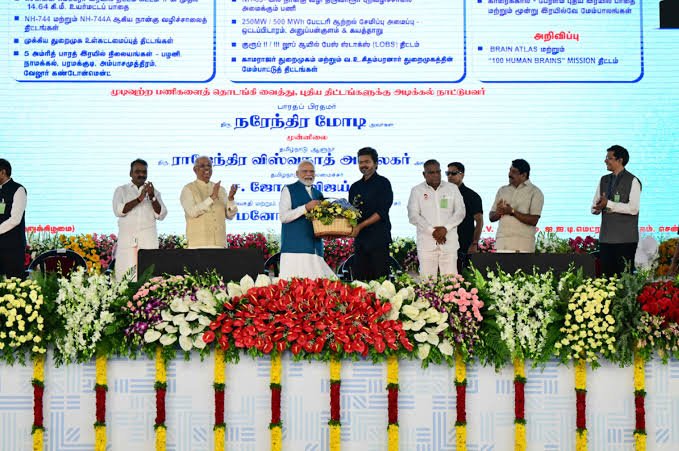
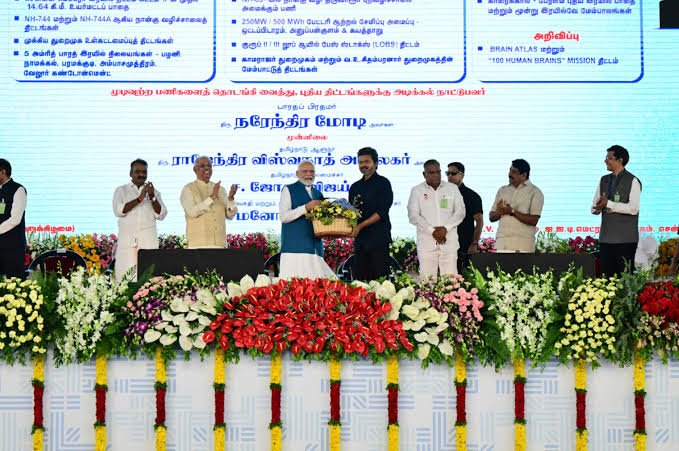
    Prime Minister Narendra Modi has laid the foundation stone for a 250 MW/500 MWh Battery Energy Storage System (BESS) project in Chennai, Tamil Nadu, marking a step towards strengthening the state’s electricity grid and meeting rising power demand.

    The project comprises three standalone battery energy storage units with a combined capacity of 250 MW/500 MWh. The facilities will be installed at substations in Ottapidaram, Anuppankulam and Kayathar, each operating at 400/230/110 kV.

    The battery storage systems are designed to support two full charging and discharging cycles daily. This will enable them to help manage peak electricity demand and improve power availability during periods of high consumption.

    The project was awarded to NLC India Renewables Limited (NIRL), a subsidiary of NLC India Limited, following a tender issued by Tamil Nadu Green Energy Corporation Limited (TNGECL) in June 2025. It represents NLC India’s first large-scale energy storage initiative.

    Under the agreement, Tamil Nadu Power Distribution Corporation Limited (TNPDCL) will procure energy storage services from NIRL for 12 years through a Battery Energy Storage Purchase Agreement (BESPA). The long-term arrangement is expected to support grid reliability and meet the state’s evolving electricity requirements.

    The project will be developed under the Build-Own-Operate model and was awarded through a tariff-based competitive bidding process. It will also receive financial assistance under the state component of the Viability Gap Funding (VGF) scheme.

    The development comes amid growing interest in battery storage solutions to improve grid flexibility, manage peak loads and support the integration of renewable energy. By enabling energy to be stored and discharged when required, the project is expected to contribute to a more flexible and reliable power system in Tamil Nadu.