Blog

  • Waaree ESS Commences India’s Advanced Automated BESS Container Manufacturing Facility

    Waaree Energy Storage Solutions Pvt Ltd (Waaree ESS), a subsidiary of Waaree Energies Limited, announced the commencement of its Battery Energy Storage System (BESS) Container Manufacturing Facility, which we believe marks the major milestone in building India’s integrated energy storage manufacturing ecosystem.

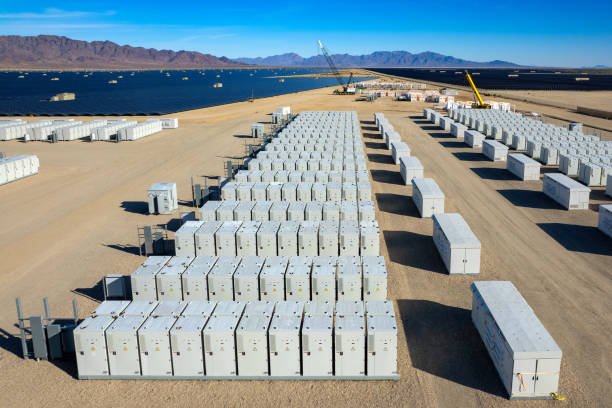
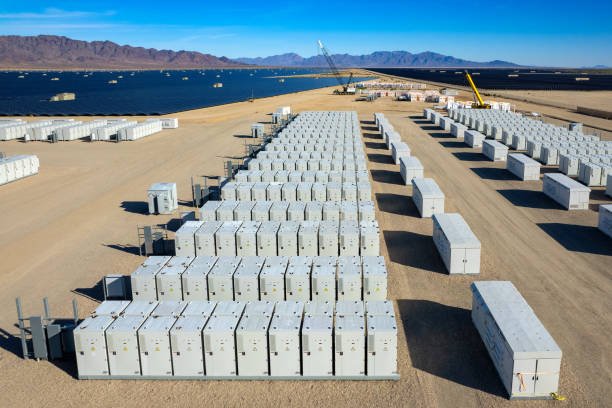
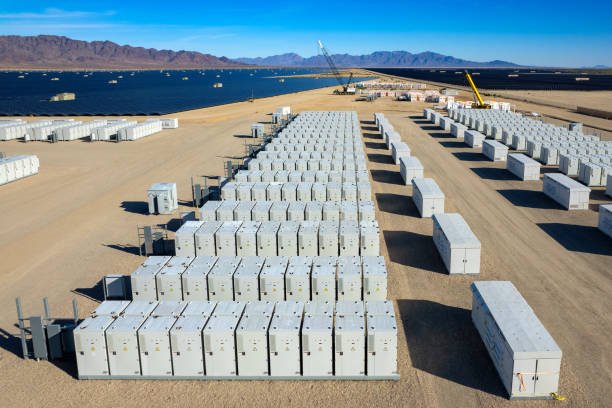
    This BESS Container Manufacturing facility is of 5.15 GWh – uprated from an originally planned 3.5 GWh, driven by debottlenecking of production throughput and improved energy density of battery cells. The facility is equipped with advanced Industry 4.0 technologies, Automated Guided Vehicles (AGVs), intelligent material handling, automated assembly lines, and advanced testing and quality assurance systems. Designed for utility-scale and commercial & industrial applications, we believe the facility will deliver high-quality, reliable, and scalable energy storage solutions.

    The BESS container facility is the first milestone in Waaree ESS’s manufacturing roadmap of 20 GWh. In the current financial year, we intend to operationalize below facilities

    • 5.15 GWh of Battery Pack Manufacturing -uprated from an originally planned 3.5 GWh, driven by debottlenecking of production throughput and improved energy density of battery cells
    • 3.5 GWh of Lithium Cell Manufacturing

    Together, these facilities will create a robust domestic energy storage ecosystem, aiding India’s clean energy ambitions while reducing dependence on imported technologies.

    As India rapidly expands solar and wind power, Battery Energy Storage Systems (BESS) have become critical for ensuring reliable, round-the-clock electricity. BESS enables renewable energy generated during the day to be stored and supplied during peak demand, improving grid stability, reducing renewable curtailment, and minimizing reliance on conventional peaking power plants.

    Energy storage will play a pivotal role in supporting India’s renewable energy targets, enhancing energy security, and enabling a resilient, low-carbon power system.

    Through integrated manufacturing of lithium cells, battery packs, and BESS containers, Waaree ESS is building comprehensive energy storage platforms. This investment supports the Government’s Make in India and Atmanirbhar Bharat initiatives while offering customers reliable, locally manufactured energy storage solutions with quality and faster delivery.

    Speaking on the occasion, Mr. Sunil Rathi, Director, Waaree, said: “Battery Energy Storage Systems are the backbone of a renewable-powered future. As India accelerates its clean energy transition, reliable and domestically manufactured energy storage will be essential for ensuring grid stability, energy security, and sustainable growth.

    The commencement of our advanced BESS container manufacturing facility is an important step towards building a fully integrated energy storage ecosystem. With planned capacities of 3.5 GWh lithium cells and 5.15 GWh battery packs, Waaree ESS is committed to delivering world-class, Made-in-India energy storage solutions that empower our customers and contribute to India’s vision of becoming a global clean energy manufacturing hub.”

  • Servotech Renewable Secures 900 kW Hybrid Solar Rooftop with BESS Project from UPSRLM

    Servotech Renewable Power System Ltd. (NSE: SERVOTECH), India’s leading solar solutions brand, has secured an order from the UPSRLM, Department of Rural Development, Government of Uttar Pradesh for the installation of Hybrid Solar Rooftop System with Battery Energy Storage System across multiple locations in Uttar Pradesh

    Under the project, Servotech has been allocated 12 locations of 75 kW each with a total allocated capacity of 900 kW. Under the scope of the project, Servotech Renewable will be responsible for the design, supply, installation, commissioning, and Maintenance of Hybrid solar systems with BESS across the locations. The hybrid solar systems, integrated with battery energy storage, are designed to provide reliable and uninterrupted clean energy while reducing dependence on conventional power sources.

    The project aligns with the state’s continued focus on decentralised renewable energy adoption and is expected to strengthen energy access across rural communities by promoting sustainable and resilient power infrastructure.

    Commenting on the development, Sarika Bhatia, Whole-Time Director, Servotech Renewable Power System Ltd., said, “We are excited to work with the UPSRLM on this initiative. Reliable access to clean energy has the potential to transform rural communities, and we are proud to contribute to that vision through our hybrid solar solutions. This project reflects our commitment to delivering sustainable energy infrastructure that empowers communities while supporting state’s transition towards renewable energy excellence and accelerating the adoption of solar power across the country.”

  • RAYZON Solar Strengthens Sustainability Leadership with Second Internationally Verified EPD for L’LIOS N-Type TOPCon Series

    The declaration gives global buyers independently verified environmental data for RAYZON Solar’s L’LIOS N-Type TOPCon module series, reinforcing the company’s position in ESG-led solar procurement.

    RAYZON Solar Limited today announced the publication of its second internationally verified Environmental Product Declaration (EPD), covering its L’LIOS 610–650 Wp N-Type TOPCon 16BB Bifacial Glass-to-Glass photovoltaic module series. Registered under The International EPD System, the declaration reports a Global Warming Potential (GWP-total) of 0.393 kg CO₂e/Wp for Modules A1–A3.

    The publication follows RAYZON Solar’s first EPD in May 2026 and reflects a broader shift toward independently verified environmental disclosure across the company’s product portfolio. For buyers, developers, EPC contractors, and investors, the declaration provides comparable life-cycle data at a time when environmental performance is increasingly built into supplier qualification, ESG reporting, and international procurement decisions.

    RAYZON Solar operates an ALMM-listed production capacity of 11.31 GW across its Karanj and Sava manufacturing facilities in Gujarat. With two internationally verified EPDs now published, the company is strengthening its ability to compete in markets where product performance, manufacturing scale, and verified environmental transparency are assessed together.

    Key Highlights

    • RAYZON Solar’s second internationally verified EPD, following its first EPD published in May 2026.

    • Covers the L’LIOS 610–650 Wp N-Type TOPCon 16BB Bifacial Glass-to-Glass series.

    • Independently verified under ISO 14025, EN 15804+A2, ISO 14040, and ISO 14044.

    • Registered under The International EPD System.

    • Reports a Global Warming Potential (GWP-total) of 0.393 kg CO₂e/Wp for Modules A1–A3.

    • Backed by an ALMM-listed production capacity of 11.31 GW across two manufacturing facilities in Gujarat.

    Verified to the Standard Global Buyers Demand

    The EPD is independently verified against ISO 14025, EN 15804+A2, ISO 14040, ISO 14044, and the applicable Product Category Rules. It is supported by a full Life Cycle Assessment covering the module’s footprint from raw material extraction through manufacturing, transportation, installation, use, and end-of-life.

    For procurement teams, this turns sustainability from a broad claim into comparable product-level data. It allows RAYZON Solar’s modules to be assessed on the same verified basis increasingly used by national developers just like to their international counterparts, EPC contractors, institutional investors, and green building stakeholders.

    A Verified Carbon Figure for Global Procurement

    The declaration reports a Global Warming Potential (GWP-total) of 0.393 kg CO₂e/Wp for Modules A1–A3. This gives buyers a clear, third-party verified carbon figure for evaluating the L’LIOS N-Type TOPCon series within supplier scorecards, tender documentation, and ESG-linked procurement frameworks.

    Beyond the headline figure, the declaration includes manufacturing process data, operational performance scenarios, material composition, and circularity considerations, creating a detailed evidentiary record for customers assessing environmental impact across the product life cycle.

    Engineered for the Next Phase of Solar

    The L’LIOS N-Type TOPCon bifacial series represents RAYZON Solar’s advanced module platform, combining N-Type TOPCon cell technology, glass-to-glass architecture, automated manufacturing, and multi-layer quality assurance. The product is part of RAYZON Solar’s ALMM-listed portfolio, supporting participation in India’s government-backed solar projects as well as export markets requiring verified environmental data.

    A Global Market That Rewards Transparency

    Across the United States, India, Europe, and other major solar markets, EPDs are becoming increasingly relevant to procurement specifications, ESG reporting frameworks, green building certifications, and supply chain due diligence. Buyers are no longer evaluating only technical performance and price; they are also assessing whether environmental claims are independently verified and comparable.

    India’s solar ambitions add further urgency to this shift. As the country works toward 500 GW of non-fossil fuel electricity generation capacity by 2030, domestic manufacturers are being asked to compete on scale, technology, cost, and verified sustainability performance. RAYZON Solar’s second EPD supports that transition by expanding the company’s base of independently verified product-level disclosures.

    Transparency as Strategy, Not a Milestone

    RAYZON Solar treats EPD publication as part of an ongoing disclosure discipline rather than a one-time achievement. The company is continuing to measure, verify, and disclose environmental performance product by product as it scales its portfolio for domestic and international markets.

    Leadership Perspective

    “The global energy transition is built on performance, scale, and more importantly trust,” said Amit Barve, Chief Executive Officer, RAYZON Solar Limited. “Publishing our second internationally verified Environmental Product Declaration strengthens the verified data our customers need to make confident procurement decisions. For RAYZON Solar, sustainability is not a separate initiative; it is embedded in how we design, manufacture, and disclose transparently the impact of our products.”

    From the ESG & Sustainability Team

    “Every Environmental Product Declaration represents rigorous assessment, cross-functional collaboration, and independent verification,” said Krunal Rana, ESG & Sustainability Lead, RAYZON Solar Limited. “This second declaration expands RAYZON Solar’s portfolio of verified environmental information and helps customers make more informed sustainability decisions with confidence.”

  • British Standards Institution Renews REC’s ISO 31000:2018 Recognition for Risk Management

    REC Limited, a Maharatna CPSE under the Ministry of Power and a leading Infrastructure Financing NBFC, has successfully renewed its ISO 31000:2018 Letter of Recognition for Risk Management Guidelines following a comprehensive reassessment conducted by the British Standards Institution (BSI). The renewed recognition reaffirms REC’s commitment to maintaining globally benchmarked risk management practices and strengthening organizational resilience in an evolving business environment.

    The reassessment exercise was undertaken by REC’s Risk Management Division to evaluate and enhance the organization’s Enterprise Risk Management (ERM) framework in line with evolving regulatory requirements, emerging business risks, industry best practices, and changing market dynamics. Following an extensive audit and evaluation process, BSI renewed REC’s Letter of Recognition for compliance with the principles and guidelines prescribed under ISO 31000:2018.

    ISO 31000:2018 is an internationally recognized standard that provides principles, framework, and guidelines for effective risk management. It enables organizations to systematically identify, assess, monitor, and mitigate risks, thereby enhancing decision-making, improving governance, strengthening resilience, and supporting long-term sustainable growth.

    REC had earlier achieved a significant milestone by becoming the first Indian Public Sector NBFC to receive recognition from BSI for compliance with ISO 31000:2018 Risk Management Guidelines in July 2025, demonstrating its pioneering approach towards institutionalizing a robust and enterprise-wide risk management culture.

  • GRE Renew Enertech Reports 100 MWp Solar Portfolio and Consolidated EPC Order Book of 75 MWp Worth Approximately INR 224 Crore

    GRE Renew Enertech Limited (BSE SME: GRERENEW) has crossed the milestone of 100 MWp of cumulative solar installations. The company’s current consolidated active order book stood at Approximately 75 MWp and with an Aggregate value of Approximately ₹ 224 crore, reflecting GRE’s accelerated growth.

    The company also successfully commissioned the 7.20 MW (AC)/9.678 MW (DC) ground mounted solar power plant under the RESCO (OPEX) model. This plant was one of the key objectives for its IPO completed in January this year.

    The growth in GRE’s order book has been driven by a series of new project wins during the first quarter of FY26-27. A major anchor of this business growth includes a recently secured ₹175 crore turnkey order from Solarium Green Energy Limited for a 50 MW AC/ 65 MW DC utility-scale, ground-mounted solar PV project based in Maharashtra. Notably, the aggregate value of this single contract is higher than GRE’s consolidated revenue from operations for FY 25-26 of ₹122.9 crore, reflecting the company’s transition toward higher-value projects.

    The company also recently secured a ₹17.75 crore solar EPC contract, marking a cumulative EPC order totaling 75 MWp and worth Approximately ₹ 224 crore as at end of the first quarter of The Financial Year. This expanding order book significantly strengthens GRE’s growing portfolio of large-scale renewable energy projects and reflects its continued focus on delivering end-to-end clean energy infrastructure solutions.

    Commenting on the developments, Mr. Kamlesh Patel, Managing Director, GRE Renew Enertech Limited Said, “Our recent order wins and business acceleration represent an important milestone in our journey as we push towards strengthening our presence in the utility-scale solar segment. The fact that our active order book value has outpaced our entire previous year’s consolidated revenues reflects the trust our customers place in GRE’s execution capabilities. As India’s renewable energy sector continues to witness strong momentum, we remain focused on building reliable clean energy infrastructure and driving sustained business growth for our stakeholders.”

    On a consolidated financial basis, GRE has reported a Profit After Tax (PAT) of ₹13.6 crore (₹136 million) for the financial year ended March 31, 2026, reflecting a remarkable 3-year Compound Annual Growth Rate (CAGR) of 147%. The company’s operational highlights include the installation of over 100 MWp of solar capacity by June 2026. GRE operates through both EPC (CAPEX) and RESCO (OPEX) business models, serving on Captive and Non-Captive basis for industrial, commercial, and government customers. The EPC model generates revenue through execution contracts and annual Operations & Maintenance (O&M) service agreements, while the RESCO model focuses on long-term Power Purchase Agreements (PPAs) for recurring revenue. To support domestic clean energy supply chains, GRE will continue to prioritize the use of domestic solar modules and inverters across its project pipeline.

  • Union Cabinet Clears INR 1.27 Lakh Crore Semicon 2.0 Programme to Strengthen India’s Chip Manufacturing Ecosystem

    In a significant step towards strengthening India’s position in the global semiconductor industry, the Union Cabinet has approved the Semicon 2.0 programme with a budgetary allocation of ₹1.27 lakh crore. The initiative is designed to accelerate the development of a comprehensive semiconductor ecosystem by supporting chip design, manufacturing, research, innovation, and talent development across the country.

    Building on the progress achieved under the first phase of the India Semiconductor Mission, Semicon 2.0 introduces a broader policy framework aimed at establishing a self-reliant and globally competitive semiconductor industry. The programme is expected to enhance domestic manufacturing capabilities while reducing dependence on imported semiconductor technologies.

    The new mission adopts a six-pillar strategy that focuses on strengthening semiconductor fabrication, advanced packaging, design-led innovation, upstream supply chains, research and development, and workforce development. The government expects these measures to create a robust ecosystem that supports both domestic demand and export opportunities.

    Officials estimate that the programme will attract substantial private investment, generate high-value employment, and encourage greater participation from global semiconductor companies. By expanding India’s manufacturing base and innovation capabilities, the initiative is expected to reinforce the country’s role in the international electronics supply chain.

    The Cabinet approval reflects the government’s long-term commitment to positioning India as a leading destination for semiconductor manufacturing and advanced electronics. The programme is expected to complement other manufacturing initiatives and contribute significantly to the country’s vision of becoming a global technology and innovation hub.

  • Amara Raja Unveils INR 500 Crore Lithium-Ion Cell Qualification Facility in Telangana

    Amara Raja Advanced Cell Technologies (ARACT), a wholly owned subsidiary of Amara Raja Energy & Mobility Ltd., has commissioned its Customer Qualification Plant (CQP) at the company’s Giga Corridor in Telangana. The ₹500 crore facility marks a major milestone in the company’s strategy to establish large-scale lithium-ion cell manufacturing in India.

    The newly operational plant has an initial production capacity of 60 MWh and is designed to manufacture lithium-ion cells for customer testing and qualification before the start of commercial-scale production. Acting as a bridge between laboratory research and full-scale manufacturing, the CQP will help validate cell designs, manufacturing processes, and product performance with OEM customers.

    The facility is equipped to produce both cylindrical and prismatic lithium-ion cells across multiple chemistries, allowing flexibility in supporting diverse customer requirements. This qualification stage is expected to reduce manufacturing risks, accelerate technology commercialisation, and streamline the transition to high-volume production.

    Amara Raja plans to begin supplying cells from the CQP to customers for validation from August 2026. The qualification plant will also support the company’s upcoming 2 GWh commercial manufacturing facility, Giga 1, which is scheduled to commence operations in 2027 as part of the broader ₹9,500 crore, 16 GWh Giga Corridor programme.

    The CQP has been launched with a workforce of over 100 employees and forms part of the company’s Phase 1 investment, which has already crossed ₹1,500 crore. Together with the ePositive Energy Labs research centre and the upcoming commercial production facility, the plant strengthens Amara Raja’s ambitions to build a comprehensive battery manufacturing ecosystem in India while supporting the country’s clean energy and electric mobility goals.

  • ACME Solar Raises INR 2,646.64 Crore Project Funding for 450MW/1800MWh FDRE Project from REC Ltd

    ACME Solar has secured Rs 2,646.64 crore long-term project funding for its ACME Greentech Seventh 450MW/1800MWh Assured Peak Power Project from REC Ltd.

    The company will deploy these funds for the development & construction of this project. REC Ltd will serve as the sole financer for this project for 20 years. The PPA for this project was signed with SJVN Limited at a tariff of INR 6.74/unit for a period of 25 years.

    The ACME Greentech Seventh Assured Peak Power Project combines multiple renewable energy technologies including Solar and Battery Energy Storage System (BESS) to meet the supply obligations and, ensures higher predictability and dispatchability.

    ACME Solar Holdings Limited is a leading integrated renewable energy player with a diversified portfolio of 8,070 MW spanning solar, wind, storage, FDRE and hybrid solutions and an operational contracted capacity of 2,990 MW and ~3.3 GWh of BESS capacity and under-construction contracted capacity of 5,080 MW including ~18 GWh of BESS installation. The under-construction PPA-signed portfolio stands at 3,580 MW. With an in-house EPC and O&M division, the company does end-to-end development and O&M of the plants, thereby delivering projects in a time & cost-effective manner while ensuring best-in-class operating performance, evident in its industry-leading CUF and operating margins.

  • Tata Power Launches Odisha’s First-Ever ‘Solar Rath’ to Accelerate Rooftop Solar Adoption

    Marking the auspicious occasion of Rath Yatra, Tata Power launched Odisha’s first-ever Solar Rath—a first-of-its-kind mobile awareness initiative to take the message of clean energy directly to people’s doorsteps and accelerate rooftop solar adoption under the Government of India’s flagship PM Surya Ghar: Muft Bijli Yojana.

    Launched through TP Central Odisha Distribution Limited (TPCODL), a joint venture between Tata Power and the Government of Odisha, the initiative reinforces Tata Power’s commitment to supporting the Government’s vision of expanding rooftop solar adoption, empowering consumers to generate their own clean energy and contributing to India’s transition towards a sustainable and energy-secure future.

    The initiative builds on Odisha’s remarkable progress under the PM Surya Ghar: Muft Bijli Yojana. Recently recognised as the top-performing state in the PM Surya Ghar Excellence Awards among states with a medium consumer base, Odisha has emerged as a national leader in rooftop solar adoption through the efforts of Tata Power-led Odisha DISCOMs in partnership with the Government of Odisha. The state secured top honours for consumer applications, rooftop solar installations and DISCOM technical inspections, reflecting the scale and speed of implementation.

    With over 1.5 lakh rooftop solar installations commissioned through the sustained efforts of Tata Power-led Odisha DISCOMs, the state has emerged as one of India’s leading rooftop solar success stories. The momentum has been particularly strong at the grassroots, with multiple districts crossing 10,000 rooftop solar installations and several villages progressing towards becoming fully solarised, enabling households to reduce electricity bills while moving towards energy self-reliance.

    These achievements are enabling thousands of households to lower their electricity bills while moving towards greater energy self-reliance.

    Building on this momentum, the Solar Rath will travel across Puri and Dhenkanal, taking awareness on rooftop solar directly to consumers.

    Accompanying the initiative is Solar Sanga, a dedicated outreach ambassador who will educate households about the PM Surya Ghar: Muft Bijli Yojana, explain the benefits of rooftop solar, central and state government subsidies, eligibility criteria, the application process and rooftop solar solutions, including the 1 kW ULA Model, helping consumers identify options best suited to their energy needs.

    The initiative aims to make reliable information on rooftop solar easily accessible through village visits, community interactions and awareness sessions. By bringing knowledge and guidance closer to consumers, Tata Power seeks to encourage greater participation in the Government’s flagship rooftop solar programme, enabling households to reduce electricity bills, generate clean energy and become active partners in India’s energy transition.

    Speaking on the occasion, Shri Gajanan S. Kale, CEO, TPCODL and Chief of Odisha Distribution Business, said: “Rath Yatra symbolises taking blessings to the people, and through the Solar Rath, we are taking the message of clean energy and energy independence directly to communities across Odisha. The PM Surya Ghar: Muft Bijli Yojana is transforming the way households consume and generate electricity. Through this unique outreach campaign, we aim to make rooftop solar more accessible by helping consumers understand the benefits, the government support available and the simple process of adopting solar. Building on Odisha’s remarkable progress and national recognition under the scheme, we remain committed to partnering with the Government to accelerate clean energy adoption and empower every household to become a part of India’s energy transition.”

    The Solar Rath will visit villages, marketplaces and prominent public locations, where residents can interact with Solar Sanga and receive end-to-end guidance on adopting rooftop solar.

    Through this first-of-its-kind initiative, Tata Power continues to strengthen consumer engagement while supporting the Government’s renewable energy ambitions and advancing Odisha’s journey towards a cleaner, greener and more energy-secure future.

  • Siemens Energy to Transition to ‘Omterra’ as New Independent Global Brand

    Following the spin-off from Siemens AG in 2020 and the company’s successful development, Siemens Energy is now beginning preparations for the transition to an independent brand. This move is based on the time-limited license agreement governing the use of the brand.

    In the future, the current entities Siemens Energy and Siemens Gamesa Renewable Energy will be united under a single name and brand umbrella: Omterra. The rebranding process is scheduled to begin later this calendar year and will be implemented in stages.

    “Since our spin-off, it has been clear that the licensed Siemens Energy brand would be available to us for a limited period. Today, our company is well positioned strategically, operationally and financially. We have earned the trust of our customers and the capital markets, improved our profitability, and have ambitious growth plans for the years ahead. Against this backdrop and given that the current brand agreement is time-limited, now is the right time to begin the transition to our own independent brand,” says Christian Bruch, CEO of Siemens Energy.

    “We are proud of what our employees have built over the past few years. Our founder’s name opened doors and supported us on our path to independence. This legacy remains both an inspiration and a commitment for us as we actively help shape the energy world of tomorrow,” Bruch adds.

    With Omterra, Siemens Energy is deliberately choosing an independent brand with global appeal. The new name reflects the company’s global footprint, its technological expertise, and its commitment to contributing to reliable energy supplies worldwide.

    The company’s strategic direction remains unchanged for customers, business partners, and employees. The brand transition will be implemented gradually.